

REVIEW · EL ESCORIAL & VALLEY TRIPS
San Lorenzo de El Escorial Monastery: Private Tour
El Escorial looks like a kingdom made stone. This private tour is a fast, art-filled way to experience a UNESCO site near Madrid, with a licensed guide who keeps the story clear and human. I especially liked the priority entrance so you lose less time standing around, and the visit to major rooms that many self-guided trips skip or rush.
Next, I really enjoyed the way the tour connects art to the people who commissioned it. You’ll see highlights tied to the Habsburg world, including the library and its famous frescoed spaces, then move through the basilica, the Royal Pantheon, and the Hall of the Battles. It’s not just big rooms, it’s a guided tour that helps you read what you’re looking at.
One thing to plan for: the monument is not accessible. You’ll climb many steps, and the guidance is to take it easy, but this is not the kind of place where slow mobility works well.
Key points to know before you go

- Skip-the-line entry plus individual headsets, so you hear the guide clearly
- Isabella Trébede leads a private group tour in Spanish and English
- You’ll hit the big rooms: basilica, library, Hall of the Battles, and Royal Pantheon
- Art and politics in one stop, from Habsburg power to Philip II humanism
- Renaissance gardens and mountain views after the interior visit, with a chance to spot peacocks
Leave Madrid for the monastery and sierra
- Royal Site of San Lorenzo de El Escorial Entrance Ticket★ 4.4 · 239 reviews
- Private VIP visit El Escorial Palace, Monastery and Gardens★ 4.9 · 23 reviews
- San Lorenzo de El Escorial Monastery: Private Tour★ 5.0 · 12 reviews
- From Madrid: El Escorial, Valley of the Fallen, & City Tour★ 5.0 · 3 reviews
Why El Escorial feels different from other day trips

El Escorial is one of those places where the building itself explains the mood of an era. From the moment you enter, you can feel the message: power, religion, and culture all under one roof. It is also one of Spain’s most important monuments, a UNESCO World Heritage Site, and it makes a strong day trip from Madrid because you can see major highlights in about 2.5 hours.
What makes this experience work well is the private format. You’re not sharing your guide with a wall of strangers, so questions are practical and answers actually help you connect the dots. And because you get headsets, you’re not guessing what the guide is saying while you’re walking through echoing rooms.
There’s also a nice balance here. Yes, you’re going into ceremonial spaces with serious art. But you finish outdoors too, in gardens created for the kings and the monks, with wide views over forest and the Sierra del Guadarrama mountains.
Meeting point and how to spot your guide fast
You start at a very specific place, and that matters on a busy day. Look for the entrance with the Spanish flag above it, right in front of the Oficina de Turismo. This tour is designed so you meet, get oriented quickly, and then move into the monument with less delay.
Your guide carries a tote bag with the name Isabella Trébede, which is a simple trick to avoid the classic day trip problem of standing around wondering if the right person is already walking away. If you arrive a little early, you’ll feel calmer, not rushed.
One more practical note: there is no hotel pickup or transportation included. You’ll need to get yourself to the meeting point, and you’ll return to the same area at the end.
Priority entrance, security, and why timing matters

Even with priority entry, El Escorial still runs through airport-style security. Plan for it. Everyone should have a passport or ID card ready, and you’ll want to keep things easy in your hands and pockets.
You also need to think about what you bring. Pets are not allowed. Food is not allowed. Luggage or large bags are not allowed either, which means you should travel light. Backpacks and bigger bags go into free individual lockers, and the lockers require a €1 coin. If you’ve ever brought a “small” backpack that turns out not to be small at all, this is your reminder to travel like you actually want to enjoy the day.
All visitors should wear comfortable shoes, because you will climb many steps. The tour says they’ll take it easy, which helps, but the site itself is the kind of historic building where stairs are part of the deal. If you’re expecting smooth, flat walking, adjust your expectations before you go.
The basilica: where the religious setting becomes real

The tour typically begins inside with the basilica. This is a key room because it frames everything else you’ll see. The art isn’t floating in space. It comes from a period when religion, politics, and public display were tightly connected.
Here’s what makes this stop more than just looking up at ceilings. A good guide helps you see how architecture and decoration were used to project authority. Even without getting lost in names and dates, you’ll start to understand why this monastery was designed to communicate status, discipline, and devotion all at once.
On Sundays and religious holidays, the basilica can be closed during masses, and on those days it can mean closure the entire morning. If the basilica is shut when you arrive, your guide will shift your time to other areas like the library or the Chapter Rooms. So you still keep moving through the highlights instead of staring at a locked door.
The library and its frescoed storytelling
If you want one place that makes you stop and look twice, it’s the library. The tour frames it as the finest example of Philip II humanism, plus his taste for science and arts. That combo matters because it explains why a religious monument would also feel intellectual and curious.
The library is especially rewarding with a guide because the room is doing more than decorating. You’re seeing a careful worldview. A monastery like this did not only shelter monks. It also showcased learning and the image of a ruler who supported culture.
You’ll also spend time noticing the impressive frescoes inside the library and on the main staircase. Fresco art can feel abstract if you pass quickly, so having a guide point out what you’re seeing helps you read the symbols and themes instead of just admiring color.
This is also where the private aspect pays off. You can ask questions without worrying about slowing down a big group, and the guide can tailor the pacing to the kind of detail you care about.
Hall of the Battles: big murals with a purpose

Next comes the Hall of the Battles. This is where El Escorial starts to feel like a visual history lesson. The walls and murals create a dramatic atmosphere, built to show conflict, strategy, and victory through art.
What I like about this stop is the emotional punch. It’s not subtle. The Hall of the Battles is the kind of room where you can almost feel the message trying to land. But you still need context to connect it to the people behind it.
Your guide helps you understand what you’re looking at, and that makes the experience stick. Instead of thinking, “Nice murals,” you start thinking, “This was designed to tell a story and reinforce power.”
This is one of those rooms where it’s worth pausing more than you think you should. The art is working on you. Give your eyes a minute, and the room gets more interesting.
Royal Pantheon: Habsburg legacy behind the scenes

Then you’ll move to the Royal Pantheon. This area helps explain how the monarchy wanted to be remembered. The tour specifically highlights characters like John of Austria, the bastard son of Emperor Charles V.
Even if you don’t know every family detail going in, you’ll leave with a clearer sense of how the Habsburg story is woven into the monastery. This is not just “famous people were here.” It’s more like a reminder that rulers used art, architecture, and burial spaces to shape public memory.
This room can feel quieter and more reflective than the battle-focused spaces. It balances the drama with a different kind of weight, which is a nice rhythm for a short tour.
Art highlights you’ll actually talk about during the walk

This tour’s headline names include Titian, El Greco, Velázquez, and Luca Giordano. You’re not just hearing names as trivia. You’re walking through a building where that level of art becomes part of the bigger political and religious message.
The value of going with a guide is simple: you get the “why” behind the “what.” You’ll understand how these masterpieces fit into the setting, not just admire them as standalone works.
If you’re someone who normally scrolls past art labels, this is your chance to slow down. You’ll come away with a stronger sense of the style and the intent behind what you see.
Renaissance gardens and Sierra del Guadarrama views

After the interior visit, you finish outside in the Renaissance gardens. These were created for the kings and the monks, and that purpose shows in the layout and feel.
The big reward here is the change of pace. Inside is stone, ceilings, art, and ceremony. Outside is air, greenery, and panoramic views of the forest and mountains surrounding San Lorenzo de El Escorial.
If you get lucky, you may even see peacocks in the gardens. Even if they don’t show up on cue, the garden walk is still a satisfying way to end, especially because it helps you remember what the monastery sits within.
This ending also makes the tour feel like more than “one building.” You get a taste of the surrounding nature of the Sierra del Guadarrama, which turns a city day trip into a more complete outing.
Price and value: what you’re paying for at $79 per person
At $79 per person, this private tour is not bargain-basement pricing. But it also isn’t overpriced for what you’re getting.
Here’s the value breakdown:
- You get a licensed tour guide for a private group, so time and attention are focused.
- Skip-the-line tickets are included, listed at €12 per person, plus priority entrance through a separate entrance.
- You also get individual headsets, which is a practical upgrade for hearing clearly without leaning in all the time.
The tour lasts about 2.5 hours, which is just enough time to cover major rooms without turning your day into a marathon. And because it’s private, you can ask questions that actually match your interests, whether you care more about art, the monarchy, or how the building tells a story.
The main cost consideration is what’s not included: no transportation to and from your meeting point, and no food or drinks. So budget for a simple meal plan either before you go or after you finish.
Who this private tour is best for
This experience fits well if you:
- Want a high-impact day trip from Madrid with major highlights, not a slow museum crawl
- Prefer a guide who can answer questions in a way that makes the building feel understandable
- Like art that connects to history, not art as isolated beauty
- Appreciate a mix of interior masterpieces and outdoor views
It may be less ideal if you:
- Need a fully step-free experience, because the monument is not accessible and there are many stairs
- Want lots of time to wander on your own without structure, since this is a guided route focused on key rooms
The guide is listed as Isabella Trébede, and the reviews consistently emphasize her ability to explain things clearly and answer questions in a detailed, easy-to-follow way. The tone people describe is professional, with an entertaining narrative, which is exactly what you want in a place that can otherwise feel like a maze of rooms.
Should you book this El Escorial private tour?
I think you should book it if you want the fastest path to understanding one of Spain’s most important monasteries. The big win is the combination of priority entrance, headsets, and a guide who can connect art rooms to the political and religious world that produced them. For $79 per person, it’s a solid value because you’re paying for time saved and for meaning delivered, not just access.
Skip this tour if you’re uncomfortable with stairs or you need full accessibility. Also skip it if you already know exactly what you want to see and you’re happy to navigate the site without a guide, because you’ll miss the story thread.
If you’re visiting Madrid and you want one day that feels both impressive and readable, El Escorial is that day. And ending in the Renaissance gardens with mountain views is a great payoff.
FAQ
How long is the San Lorenzo de El Escorial private tour?
The tour duration is 2.5 hours. Starting times depend on availability.
Do I get skip-the-line tickets?
Yes. Skip-the-line tickets are included, and the tour uses a separate entrance for faster entry.
Where do I meet the guide?
Meet at the entrance with a Spanish flag above it, right in front of the Oficina de Turismo. Your guide will have a tote bag with the name Isabella Trébede.
What language is the tour offered in?
The live tour guide offers Spanish and English.
What should I bring and wear?
Bring your passport or ID card and wear comfortable shoes, since the visit includes many steps. You should also travel with no luggage or large bags, as these are not allowed.
Is the monument accessible for wheelchair users?
No. The tour is not suitable for mobility impairments or wheelchair users, and you will climb many steps.
More Tours in San Lorenzo De El Escorial

More Tour Reviews in San Lorenzo De El Escorial


The sierra road to El Escorial
More ways into El Escorial & Valley Trips
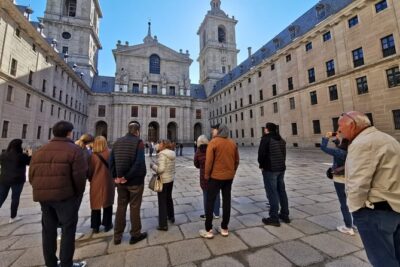 ★ 5.0Escorial Monastery and the Valley of the Fallen Tour from MadridFrom $742,494 reviews
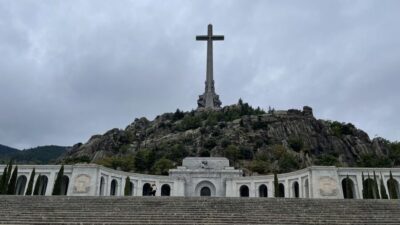 ★ 4.7From Madrid: Escorial Monastery and the Valley of the FallenFrom $731,434 reviews
 ★ 4.0Escorial Monastery and the Valley of the Fallen from MadridFrom $791,023 reviews
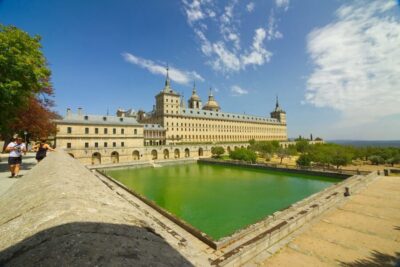 ★ 4.4From Madrid: El Escorial and Valley’s Basilica Half Day TourFrom $78638 reviews
 ★ 4.4From Madrid: Escorial Monastery & Valley of the Fallen TripFrom $78389 reviews
 ★ 4.4Royal Site of San Lorenzo de El Escorial Entrance TicketFrom $21239 reviews
 ★ 4.5From Madrid: El Escorial, Valley and Segovia Day TripFrom $105134 reviews
 ★ 4.8San Lorenzo de El Escorial: Monastery and Site Guided TourFrom $47127 reviews
Try another angle on the same itinerary