
REVIEW · ECO TUK-TUK & ELECTRIC CITY TOURS
Madrid Historical Tour with Local Guide in Eco Tuk Tuk Private
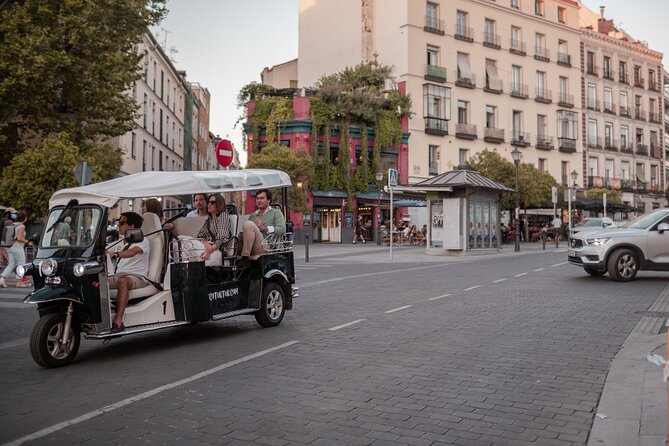
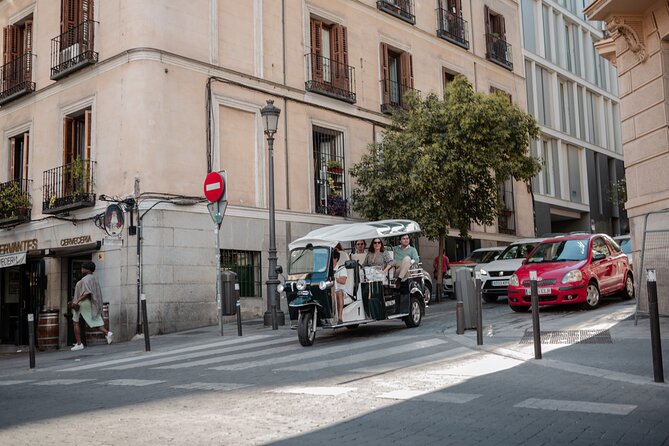
Tuk-tuks make Madrid feel quick. This private eco tour combines 100% electric transport with a short, smart route through the city’s big landmarks, including the Royal Palace area and the Plaza de Cibeles. I especially like the way it stays family-friendly, with blankets for cold weather, and the fact that you start out without queuing or waiting.
One thing to keep in mind: the meeting point is a bit specific. You gather in the underground bus station area near the Puerta del Príncipe by the Royal Palace, so follow the exact instructions so you do not waste minutes.
If you want an easy first look at Madrid, this is a good fit because you get context as you move. You also get pre-selected photo stops, so you spend less time figuring out where to pull over and more time actually seeing.
Key things you will notice on this Eco Tuk Tuk tour
- Private ride for your group only, so you are not stuck listening to other people’s pace
- Electric tuk-tuks (100% electric and sustainable), with drivers who help older travelers board
- No-queue start, which matters when you are on a tight schedule
- Photo stops planned in advance, so you are not constantly asking where to go next
- Winter-ready setup, with blankets and protective layers against rain and wind
- Big Madrid mix, from markets and churches to royal buildings and squares
See the centre from a small electric ride
- Madrid Welcome Tour with Local Guide in Eco Tuk Tuk Private★ 5.0 · 2,936 reviews
- Madrid: Private City Tour by Eco Tuk Tuk★ 4.9 · 2,876 reviews
- Madrid Historical Tour with Local Guide in Eco Tuk Tuk Private★ 5.0 · 876 reviews
- Madrid Express Tour with Local Guide in Eco Tuk Tuk Private★ 5.0 · 413 reviews
Electric transport plus a private pace, not a crowded sprint
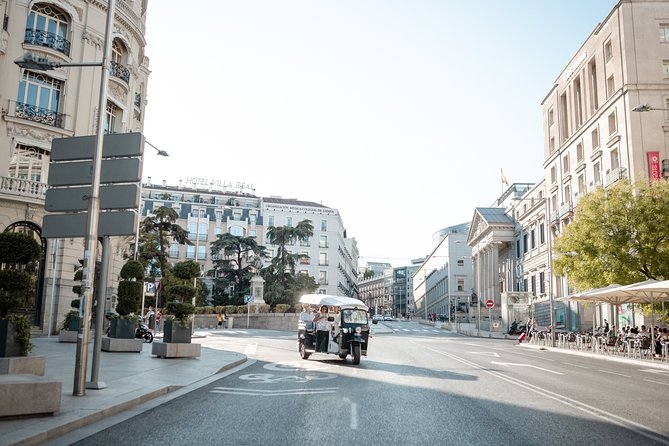
This is built for comfort and orientation. You are in a small vehicle reserved privately for your party, and the route is designed around seeing a lot without long, flat-out walking days.
Madrid is best when you move like a local. The city has grand boulevards, sudden historic corners, and lots of “blink and you miss it” architecture. The eco tuk-tuk format gives you a smooth way to catch views, hear what you are looking at, and still feel like you have time to decide what to explore deeper later.
You’ll also like the practical touches for different weather. The tour runs in rain or heat, and they provide blankets and protective layers for colder conditions. That means you can keep going when your shoes and hands might otherwise beg for a break.
Where to meet by Puerta del Príncipe, and how not to lose time
Meeting point detail matters here. Your start is at C. de Bailén, 4 (Centro, 28013 Madrid), right by the Puerta del Príncipe area near the Royal Palace. The pick-up is described as being in the bus station (underground) of Plaza de Oriente, next to the Royal Palace.
A quick tip that can save you stress: if the address number feels confusing on the street, search Google Maps for Calle Bailén 4 or Puerta del Príncipe. Look for the stairs to access the station, then follow the Eco Tuk Tuk signage.
If anyone in your group has mobility concerns and needs help getting downstairs, contact them by phone or WhatsApp in advance so they can assist with elevator access. That is the kind of small detail that keeps the day easy.
Covered market stop near 1916: food culture in an elegant setting
The tour begins with a taste of daily Madrid life. You stop at a covered market area from around 1916, known for local food, delis, and events, all inside an elegant atmosphere.
This stop is useful because it gives you a feel for how Madrileños shop and snack beyond the obvious tourist streets. Even if you do not buy anything, you can see the rhythm of a working market, which helps you better judge where you might want to return for lunch later.
The main drawback is time. A tuk-tuk route is fast by design, so think of this as a look-and-learn moment rather than a full browsing session.
Another Madrid route worth weighing up


San Francisco el Grande: one of Madrid’s most impressive church interiors
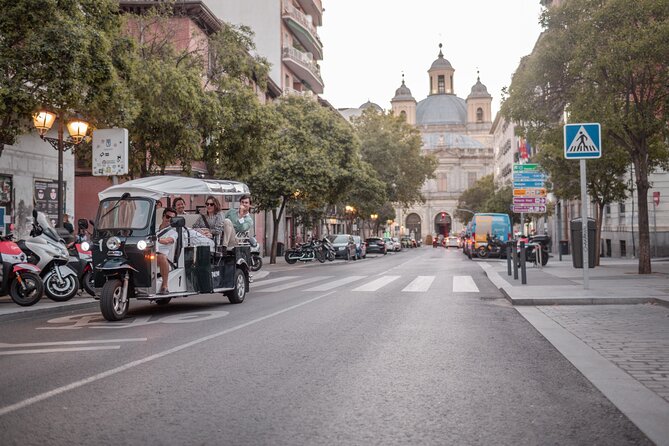
Next comes the Royal Basilica of San Francisco el Grande (also called the Basilica of Our Lady of the Angels). This is a major Catholic church in the Palacio neighborhood, within Madrid’s historic center.
Why this stop works on a tuk-tuk tour: you get a solid architecture and location briefing before you stand and take it in. Madrid has a lot of churches, but this one is “stop-worthy” because of its status and how central it feels once you are there.
Also, if you like history, the surrounding streets matter. Seeing it from the route helps you connect the church to the wider old-city fabric, not just treat it as an isolated landmark.
Atocha station: Madrid’s busiest hub, by rail and by design
You’ll roll through Atocha station, a massive railway complex near Plaza del Emperador Carlos V. It is described as the busiest station in Spain and one of the main ones in Europe.
This stop is not just transportation trivia. It is a way to understand Madrid’s modern pulse. Atocha is where many visitors arrive and depart, so knowing its scale and position helps you plan the rest of your trip with less confusion.
On a short tour, the goal is orientation, not exhaustive exploring. Use the stop to recognize where it is relative to the neighborhoods you are visiting next.
Spanish Courts and power buildings: symbols you can actually point to
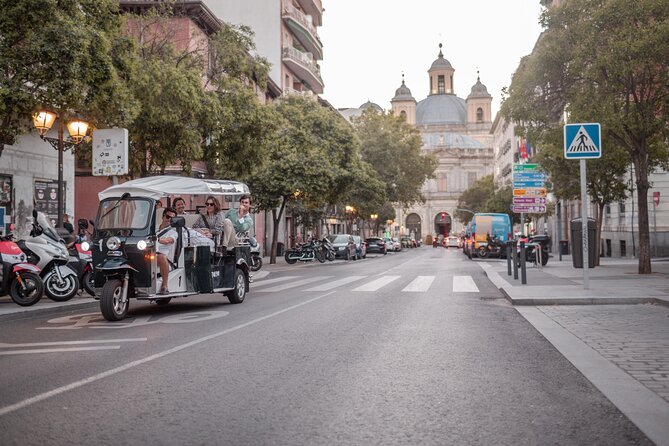
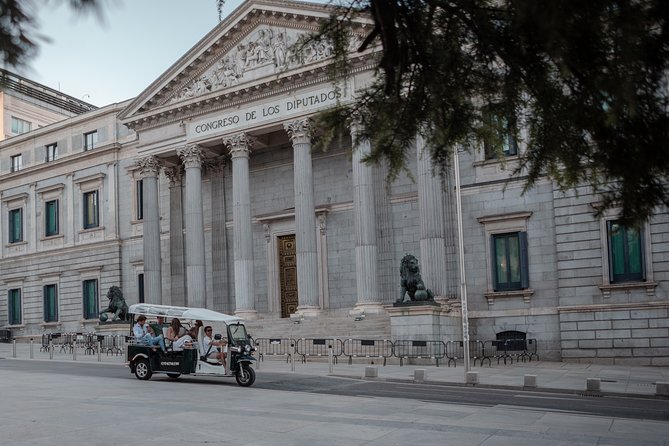
The tour also takes you past the Palace of the Spanish Courts, built on the site of the former convent of the Holy Spirit, which was used as the seat of Congress in the 1800s.
The façade details can be the star if you like architecture. You get the neoclassical portico with six Corinthian columns, plus the sculpted lions near the entrance, described as being cast using iron from cannons captured during the war in Africa. Even if you only catch the exterior, that sort of story makes the building feel real.
One practical consideration: the tour can only stop for photographs in prearranged places, and stops for extra wandering or changing the plan are not possible. So if you want more time inside the Session room or library areas, you’ll likely need a separate visit later.
Plaza de Dios de Mar and Cibeles: the fútbol-shaped city map
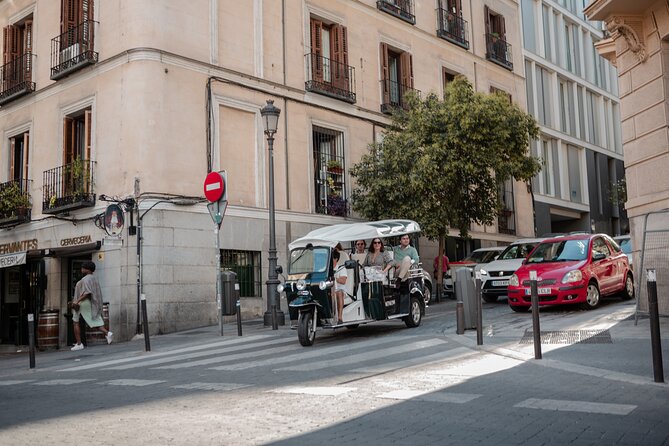
Madrid has a sports mythology, and you get a fun snapshot of it here. The tour stops at the plaza area associated with Atlético de Madrid fans celebrating their victories at the Plaza del Dios del Mar, while Real Madrid fans celebrate at Cibeles.
This is a clever way to learn Madrid through modern identity, not only through old stones. It also helps you map the city geographically, since you will keep hearing about these places even when your schedule does not include a fútbol match.
If you are a sports fan, you’ll likely enjoy how quickly the guide connects names, buildings, and the city’s habits. If you are not, you still get a meaningful landmark pairing that frames Madrid’s “who we are” story.
Prado Museum area and San Jerónimo el Real: European art and late Gothic beauty
Art lovers get a major payoff. The route includes the area near the Prado Museum, described in terms of being an exceptionally important museum for European painting from the 16th to 19th centuries.
Even when you are not going inside, the tour format helps you understand what you are looking at in context. The Prado is a magnet, but Madrid’s museum story includes the smaller religious and civic buildings nearby too.
You then stop at San Jerónimo el Real, popularly known as Los Jerónimos. It is next to the Prado, at the back, and is described as late Gothic with Renaissance influences from the early 1500s. The catch is that little remains of the original building since it has been remodeled and restored many times.
That is actually a good takeaway. You learn how Madrid’s monuments evolve, not just how they were built.
Puerta de Alcalá and the monumental banking zone: the city’s big entrances
A highlight stop is Puerta de Alcalá, a monumental gate built on order of Carlos III to replace a prior 16th-century gate. It was inaugurated in 1778.
This is the kind of landmark that you can photograph quickly but will remember for years. It also acts like a visual anchor, so when you later return on your own, you will recognize the surrounding streets right away.
From there, the tour moves through the broader monumental zone with major nearby buildings, described around Buenavista Palace (Army Headquarters), Linares Palace (America House), Communications Palace (formerly the Post Office, now Madrid City Council), and the Bank of Spain.
There is also a stop tied to the “decorative waste” idea connected to the National Bank headquarters concept. Even if the nickname is blunt, it helps you think about why architecture gets made in the first place: money, politics, and visibility.
Plaza de Santa Ana and Almudena Cathedral: classic square energy and modern importance
Next up is Plaza de Santa Ana, an open space in the Cortes neighborhood dating from 1810. Its appearance has been shaped through multiple urbanization phases, with mixed results over time.
This stop gives you a breathing point in the route. You can take in how Madrid’s squares function as social rooms, where streets meet and people spill out.
Then the tour heads to Almudena Cathedral, described as Madrid’s most important religious building. It was consecrated by Pope John Paul II on June 15, 1993, and noted as the first consecrated cathedral outside Rome.
If you want a museum-style add-on, the Almudena Cathedral Museum is part of the cathedral complex, with dozens of objects in twelve rooms described as covering mosaics, episcopal shields, and other diocese storytelling items. On a tuk-tuk tour, you likely focus more on the exterior and immediate setting, but the stop helps you decide whether you should come back to look inside.
Royal Palace area, gardens, and Temple of Debod: royal Madrid, then ancient time
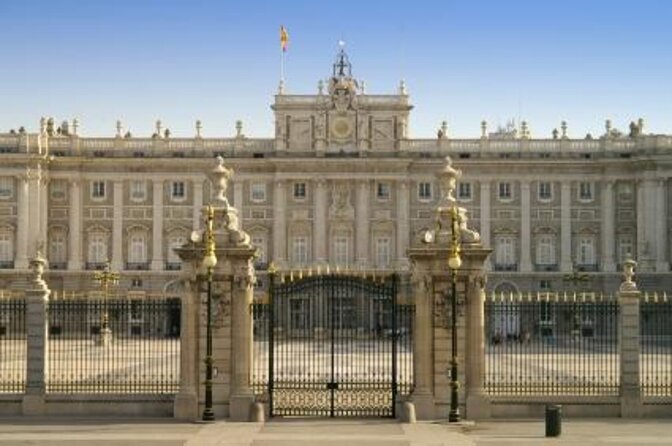
You finish the old-to-new story arc with the Royal Palace area, also called the Palacio de Oriente. Construction began in 1738, lasted about 17 years, and Carlos III established it as a habitual residence in 1764.
This stop matters because it ties together a lot of Madrid’s power imagery. You also get the layout context: it is surrounded by the Campo del Moro gardens and the Sabatini gardens. Campo del Moro is west and dates to medieval times, and Sabatini gardens are in front of the north façade, created in the 20th century.
You’ll likely appreciate the pace here. You can take in the palace and the garden edges without needing a long walking day.
One more standout for history-friends is Templo de Debod. The tour description calls out a 10-minute stop with free admission ticket, located west of Plaza de España near Paseo del Pintor Rosales.
It’s a good contrast after royal Spain. Ancient Egypt in Madrid is one of those details that makes the city feel surprising, even on your first day.
The guide experience: why Carlos, Laura, Fernando, Clara, and others land well
The tour is offered in English, and the guides are described as expert companions and drivers. In the reviews you provided, names like Carlos, Laura, Christian, Fernando, Alejandro, Gloria, Clara, Sandra, Nerea, and Juan come up often, with people praising how the stories connect places to meaning.
Here is what that typically means for you. You get more than dates. You get explanations that help you visualize what Madrid looked like before you arrived, and you get answers when you ask follow-up questions.
It also helps that some guides are described as funny, or as proud locals who can point out small naming details and neighborhood quirks. That sort of personal voice is what turns a sightseeing loop into a city you can navigate later.
Price and value at about $28.66 per person
At $28.66 per person, this is a value play if you want orientation plus key sights without spending the day in transit lines.
The big value points are:
- Private vehicle for your group only, which can reduce the annoyance factor of crowded tours
- No-queue start and pre-selected photo stops, which saves time
- Electric vehicle, plus blankets and protective layers if weather shifts
- A route that covers a lot of classic Madrid, from markets and churches to royal buildings and major civic landmarks
Your time matters here. The duration is listed as about 1 to 4 hours, and that range gives you options depending on your energy level and how quickly you want to see the city’s key map points.
One budgeting note: this tuk-tuk setup is priced based on how many tuk-tuks you need for your group, with the legal maximum of 4 passengers per tuk-tuk. So if you are traveling with more people, the per-person cost stays reasonable because you are sharing the ride, but your total depends on the number of vehicles required.
Who should book this Eco Tuk Tuk Madrid tour, and who should skip it
This tour is a strong match for:
- First-time visitors who want a fast, guided orientation
- Families with kids who prefer less walking
- Older travelers who value a vehicle that is easier to get on than a long walking route
- Anyone who wants a plan that already bundles the highlights into a coherent loop
It might be less ideal if you:
- Want long stops at museums or churches, since the schedule is built around short photo moments
- Prefer fully flexible stop changes, because the route and photograph stops are prearranged and cannot be modified
- Are worried about finding the meeting point, since the start is in an underground bus station area near the Royal Palace
Should you book this private eco tuk-tuk tour?
Yes, if you want a calm, efficient first look at Madrid with a private feel and a vehicle that makes the city easier to enjoy. The mix of major landmarks like Puerta de Alcalá, Almudena Cathedral, and the Royal Palace area, plus a few high-context stops like Atocha station and San Francisco el Grande, gives you a fast mental map.
Book it early in your trip if you want to learn what to return to. And do not guess on meeting location. Follow the directions to the underground bus station near Puerta del Príncipe, and you will start your day on time instead of chasing your tour.
FAQ
How long is the Madrid Historical Tour by Eco Tuk Tuk?
The duration is listed as approximately 1 to 4 hours, depending on the tour timing and route on the day.
Is this tour private, or will I share it with strangers?
It is private. Only your group participates, and the vehicle is reserved for your party.
What language is the tour offered in?
The tour is offered in English.
Is the tuk-tuk electric?
Yes. The vehicle is described as 100% electric and sustainable.
Do you provide blankets for cold weather?
Yes. Blankets and protective layers are included to help against cold weather, rain, and wind.
Where exactly is the meeting point?
The start is at C. de Bailén, 4, Centro, 28013 Madrid. The pick-up point is in the underground bus station area of Plaza de Oriente, next to the Royal Palace, near the Puerta del Príncipe. You can find it by searching Calle Bailén 4 or Puerta del Príncipe on Google Maps.
Are pets allowed on this tour?
No. Pets are not allowed for security reasons.
More Tours in Madrid



More Tour Reviews in Madrid


Electric loops through the centre




Fresh ways to see Madrid
- Tour to Toledo & Madrid CitySight Seeing Tour
- 2-Day Guided Tour to Cordoba and Seville from Madrid
- Private Transfer from Madrid Airport to Madrid Hotels
- Wine Tasting and Flamenco Master Class in Madrid
- Prado Museum and Royal Palace Private Tour in Madrid
- Monastery Royal Barefoot Visit with entrance without waiting for queues
More ways into Eco Tuk-Tuk & Electric City Tours
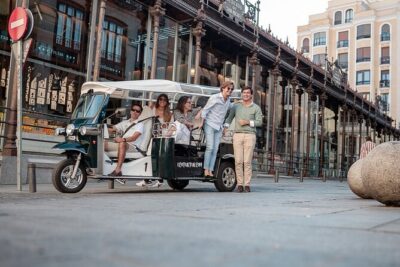 ★ 5.0Madrid Welcome Tour with Local Guide in Eco Tuk Tuk PrivateFrom $282,936 reviews
 ★ 4.9Private City Tour by Eco Tuk TukFrom $612,876 reviews
 ★ 5.0Madrid Express Tour with Local Guide in Eco Tuk Tuk PrivateFrom $28413 reviews
 ★ 4.4City Highlights Tuk Tuk TourFrom $94334 reviews
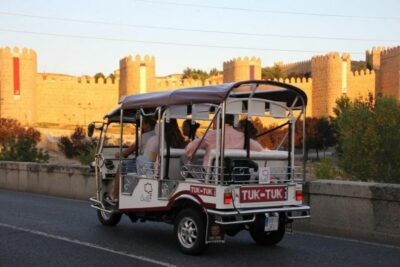 ★ 4.4Tour Guiado En Tuk Tuk Recorre Avila De La Forma Mas ComodaFrom $10235 reviews
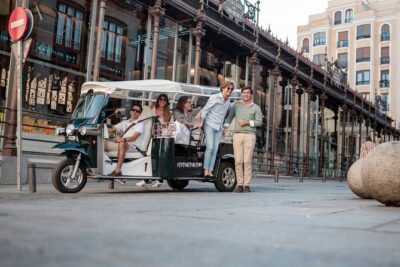 ★ 5.0Madrid Expert Tour with Local Guide in Eco Tuk Tuk PrivateFrom $28220 reviews
 ★ 5.0Madrid Expert Plus Tour with Local Guide in Eco Tuk Tuk PrivateFrom $28162 reviews
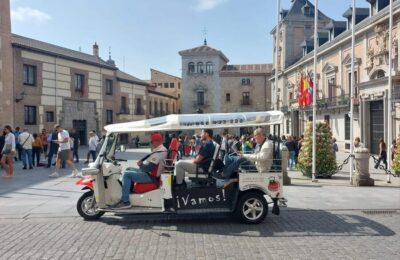 ★ 4.6Tour Madrid: Secrets in a Electric Tuk TukFrom $102155 reviews
Try another angle on the same itinerary