
REVIEW · HALF-DAY
Half-Day Private Tour in Madrid with Art Historian Guide
Madrid rewards you when you walk with a pro. This private half-day art and architecture tour runs about 3 hours 30 minutes, built for first-time orientation and smart landmark spotting.
Two things I really like: you get a real art historian leading the route, and the pace stays manageable with a chance to pause for coffee or snacks in selected cafes. One thing to consider is that monument entry is not included, so you may still want a plan for tickets if you decide to go inside certain stops.
Key Points to Know Before You Go
- Private, English-guided, art historian-led with route planning tailored to your interests
- Starts and ends at Puerta del Sol, so you can easily connect to the rest of your Madrid day
- Mix of big sights and smaller neighborhoods, from Teatro Real and the Royal Palace area to La Latina and Barrio de las Letras
- Time-boxed stops (usually about 10 to 30 minutes) that help you see a lot without exhausting your feet
- Café breaks are possible at selected places, which matters when you want a real-life Madrid moment
- Mobile ticket provided, plus you’ll get confirmation within 48 hours of booking (subject to availability)
Another Madrid route worth weighing up
- Madrid: Royal Palace Expert Guided Tour with Skip-the-Line★ 4.7 · 6,986 reviews
- From Madrid: Guided Day Trip to Toledo by Bus★ 4.1 · 5,280 reviews
- Madrid: Toledo & Segovia Full Day Guided Tour with Alcázar★ 4.6 · 4,394 reviews
- From Madrid: Toledo Guided Day Trip★ 4.3 · 3,501 reviews
A Smart Half-Day Plan for Madrid’s Art and Architecture
This tour is the kind of half-day move that makes a full trip easier. You spend about 3.5 hours getting an art-and-city context that most guidebooks do not give you fast enough. And because you can choose a morning or afternoon slot, it fits how you actually travel, not how an itinerary demands.
The route is private, meaning it’s just your group, not a big cattle herd. That matters in Madrid, where the streets change character block by block. A good guide can slow down when you care about details, and speed up when you want the views and the big picture.
Price-wise, $72.10 per person is not a budget bargain, but it’s also not a “skip it” expense. You’re paying for a specialist guide and a structured route that hits major architectural layers in a short time. If you’d otherwise spend hours researching and still miss the connections, the guide helps you save that energy.
Puerta del Sol: Your Orientation Point, King Charles III Included
Most Madrid trips start in the classic chaos of the city center. This one gives you a clean starting line at Puerta del Sol, meeting at the King Charles III statue. That’s a smart move because Sol is the place where key streets radiate out, so after the tour you can branch off with confidence.
From there, you walk through the historic center with your guide shaping what you notice. Instead of treating landmarks like isolated photos, you learn how the city’s power and tastes shaped its streets and buildings. Even if your Spanish is limited, the art-historian lens helps you “read” what’s in front of you.
One practical benefit of a walking start here: you’re near transport options and major pedestrian flow. If you want to add a museum stop later, or drop back for tapas, Sol makes it easy.
Teatro Real and the Royal Palace: Big Madrid, Fast Glances
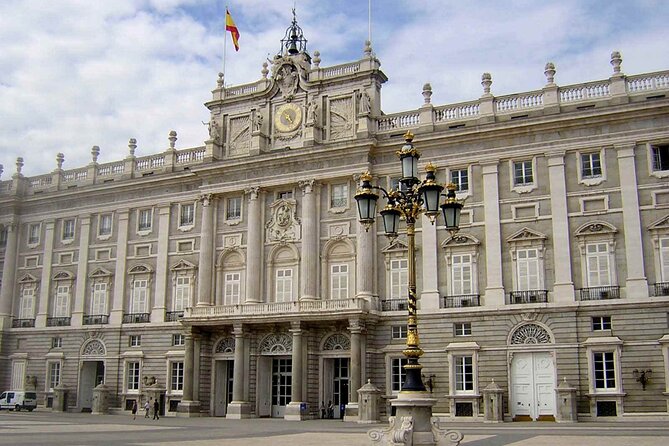
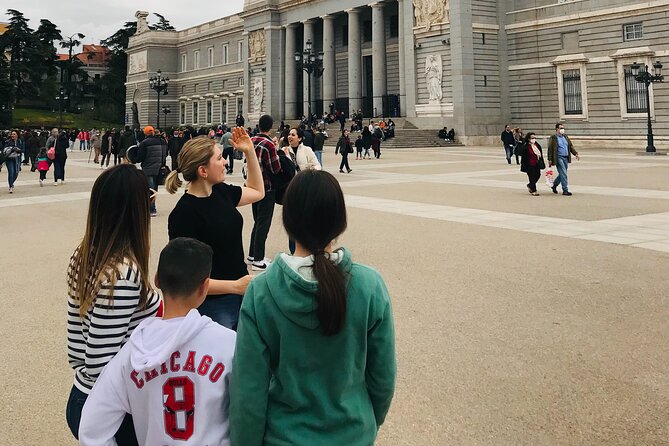
Two of the most famous cultural and royal landmarks show up early: Teatro Real and the Royal Palace of Madrid. Each gets around a short stop, so this is not an in-depth interior museum experience. But it is valuable for seeing how Madrid’s identity is split between spectacle, ceremony, and power.
At Teatro Real, you’ll look at one of Europe’s prestigious opera houses. The focus here is not on going inside, since entry is not included, but on what the building represents and why opera has mattered for centuries in major European cities. If you care about architecture, you’ll also learn what to look for in the façade and setting.
Then comes the Royal Palace of Madrid, described as the largest functioning royal palace in the city, and also noted as the largest by floor area in Europe. It still serves as the royal family’s official residence for state ceremonies, even though it operates mainly as a museum. Again, the point is exterior and context, not interior tickets.
If you think you want more time inside the palace or at Teatro Real, plan for a separate visit. This tour is designed to give you the “why” first, then let you choose how deep you go later.
Another Madrid route worth weighing up

Almudena Cathedral: Where Neo-Gothic Meets Modern Religious Art
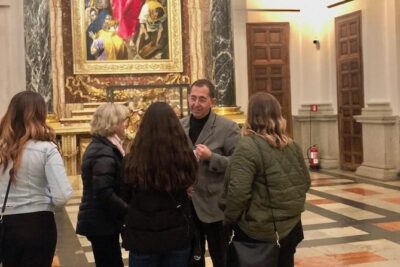
Almudena Cathedral is one of those stops that turns a walking tour into something more than sightseeing. The timing is short, but the story is big: the cathedral was consecrated by Pope John Paul II on 15 June 1993, and it’s noted as the first cathedral to be consecrated outside Rome. That date alone helps you understand how Madrid’s architectural story keeps going into the modern era.
What makes this church especially interesting for art lovers is the contrast between period and style. Construction began in 1879, which places it in a different Madrid phase than older cathedrals you might see elsewhere in Spain. Inside, the cathedral is described as Neo-Gothic, but also uniquely modern in how chapels and statues of contemporary artists appear within heterogeneous styles, from historical revivals to pop-art style decor.
In other words, this isn’t a “quiet, old, medieval” cathedral. It’s a living example of how Madrid could look forward while still dressing in older visual languages. If you like when your guide points out symbolism, this is the stop where you’ll probably look up more than usual.
Plaza de la Villa and the Squares That Explain Madrid
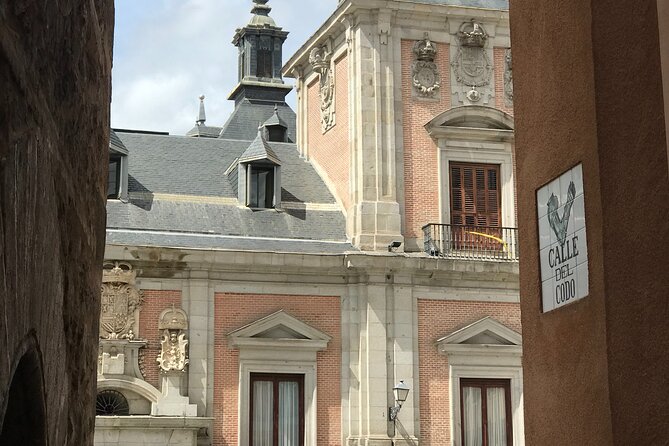
After the grand landmarks, the tour shifts to smaller spaces with architectural clues you can actually feel. You stop at Plaza de la Villa, described as a lovely small square bordered by buildings that represent different Madrid styles, including Múdejar and Baroque. In the 17th century, it was the main square, so it’s the kind of place where you can sense civic life without needing to enter a building.
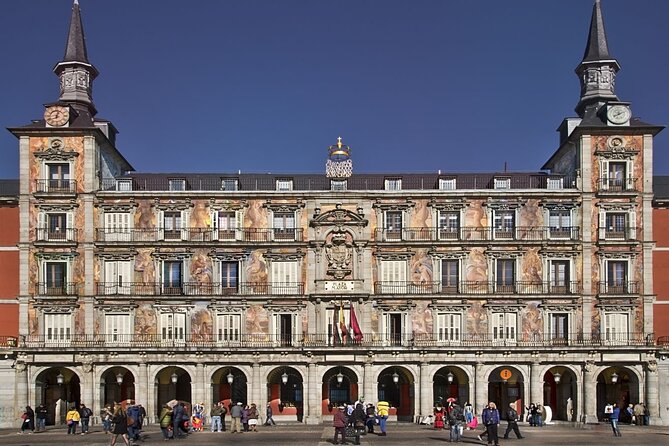
Then you move into the big central symmetry of Plaza Mayor. This is the grand arcaded square many visitors photograph first, but with a guide, it becomes more than a backdrop. You learn that it was first built between 1580 and 1619 during Philip III’s reign, and that it used to be the center of Old Madrid. The key value of the stop is understanding why the square’s uniform architecture matters, and how it reflects power and planning.
These “square stops” are more than quick breaks. They’re the spine of Madrid’s story. Once you understand why squares were designed the way they were, the rest of the city makes more sense.
Mercado de San Miguel: Food Culture as Part of the Architecture
Right in the city heart, Mercado de San Miguel enters the tour as a living landmark of Spanish cuisine. You’re not going there as a formal food tour with a long tasting menu. Instead, you get a short look at why this market is famous and how markets function as social spaces, not just places to buy food.
A market like this works well in a half-day tour because it gives you a change of pace. It also gives your guide an opening to point out food culture as part of city identity, not as an afterthought. If you time your Madrid days right, you can connect the market stop to your later choices for lunch and snacks.
Cava Baja and La Latina: Tapas Streets and Medieval Street Logic
Now you hit the “real Madrid” streets where you can feel the energy without turning the tour into a late-night party. The route includes Calle de la Cava Baja, known for having a high quantity of tapas bars. The street is described as winding and cheerful, with colorful taverns and bars on both sides, and it runs straight through the city’s heart. Even with a short stop, it’s the kind of street that gives you immediate context for where people actually go to eat.
Then you walk into La Latina, an area of narrow, winding streets laid out irregularly and dating mostly back to the Middle Ages. Your guide connects street patterns to commerce. The streets, mostly outside an older medieval walled village, provided housing for merchants who sold goods at the market. That commercial tradition lingers in street and square names such as Plaza de la Cebada and Plaza de los Carros, plus El Rastro, linked to the blood trail from the old slaughterhouse name origin.
You might not need every historical naming detail to enjoy the neighborhood, but it makes the place feel less random. Suddenly you understand why the streets bend and how the market life shaped the area.
Barrio de las Letras: Golden Age Authors in a Walkable Pocket
The tour also reaches Barrio de las Letras, named for the Golden Age of Spanish Literature. Here, figures such as Cervantes, Lope de Vega, Quevedo, Tirso de Molina, and Góngora had homes. This is where your guide can connect literature to place, showing how cultural power leaves physical traces in street names and neighborhoods.
The time at this stop is longer than most of the quick photo moments, around 30 minutes. That extra time helps you actually enjoy the small streets, pause for questions, and let the cultural context land. If you like Madrid as a city of artists and writers, this neighborhood makes the whole tour feel more specific and less generic.
The Art Historian Guide Factor: Veronika’s Kind of Tour
What makes this experience stand out is the guide’s style and the way the art historian lens is applied to real streets. In the standout feedback, Veronika is praised for deep knowledge of Madrid’s history, art, and architecture, plus her ability to find the right pace for the group.
Two of the most practical takeaways you can expect from this kind of guide:
1) She can identify what you care about fast, then steer the route and explanations accordingly. That’s huge if your group includes different interests, like one person focused on architecture and another who wants stories and street life.
2) She answers questions without rushing you out the door.
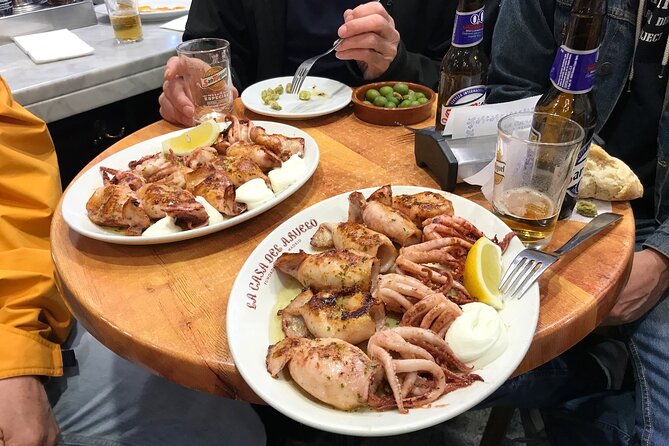
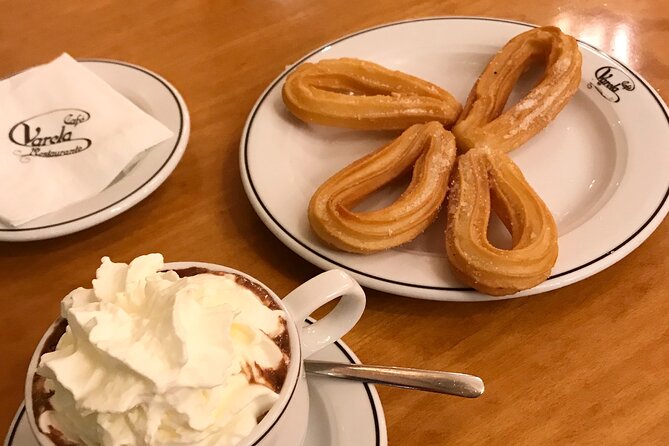
The tour format also supports small breaks. The experience includes breaks in selected cafes possible, and that shows up in real-life ways, like getting a coffee in La Latina or taking a short sweet and snack detour. One guide-led highlight mentioned orange cookies, and it’s exactly the kind of food tip you can use later to keep your day feeling local rather than checklist-driven.
You’ll also get “after the tour” ideas tied to what you just saw. Notes included suggestions for places for cocktails, people-watching, and other off-the-beaten-track activities, which is the value you want from a guide. You’re not only learning history, you’re leaving with a plan.
Price and Value: What $72.10 Buys You in Madrid
Let’s talk value in a plain way. $72.10 per person for about 3.5 hours of private guidance is paying for:
- A specialist art historian, not a generic walking guide
- A structured route that hits major architectural themes efficiently
- Route planning flexibility, so the guide can adjust to your group’s interests
- A format that can include small cafe pauses in selected places
- A mobile ticket that keeps logistics simple
The main “cost not included” item is monument and museum entry. Stops like Teatro Real, the Royal Palace, and Almudena Cathedral are presented for viewing and interpretation, with entry tickets not included. If you expect the tour to pay for every ticket, you’ll need to budget separately.
My advice: treat this tour as the context layer. Then pick one or two interiors you truly care about and do those on another day. That way, you avoid paying for everything, and you get better understanding from the guide first.
Who Should Book This Madrid Half-Day (and Who Might Pass)
This is a good match if you want:
- A strong orientation in central Madrid without spending an entire day
- Art and architecture explanations that connect politics, power, and style to what you see
- A private guide who can tailor questions and pacing
- A mix of famous landmarks and street-level neighborhoods, like La Latina and Barrio de las Letras
It may be less ideal if you want a deep interior-heavy itinerary. Most stops are short, and entry is not included, so you won’t get long museum time here. Also, if your travel style is “set me free,” this route structure might feel a bit planned.
The nice part is the tour format is designed for most people to participate, and service animals are allowed. It’s also near public transportation, which helps if you plan to add extra stops.
Quick Decision: Should You Book This Tour?
I think you should book if you are:
- Doing Madrid for the first time and want the city to “click”
- Interested in how architecture and art reflect the people who paid for it and lived in it
- Traveling with companions who want both landmark time and neighborhood life
- Short on time but still want something smarter than photos
Skip it if you already have a detailed plan for every interior you want to visit, and you only need transportation between places. In that case, a self-guided day might be enough.
If you want a guided route that makes Madrid feel understandable and personal, this is a strong half-day choice.
FAQ
How long is the Madrid half-day private tour?
It lasts about 3 hours 30 minutes.
Is this tour private or shared?
It’s a private tour/activity, so only your group participates.
What language is the tour offered in?
The tour is offered in English.
Does the price include admission to monuments and museums?
No. Entry into monuments and museums is not included, including stops like Teatro Real, the Royal Palace of Madrid, and Almudena Cathedral.
Where does the tour start and where does it end?
It starts at Puerta del Sol in Centro, Madrid, Spain (meeting at the King Charles III statue) and ends back at the meeting point.
Is there a food or cafe break included?
Breaks in selected cafes are possible, but snacks are not listed as included.
What happens if the weather is bad?
The experience requires good weather. If it’s canceled due to poor weather, you’ll be offered a different date or a full refund.
More Guided in Madrid

More Tours in Madrid



More Tour Reviews in Madrid

Fresh ways to see Madrid
- Tour to Toledo & Madrid CitySight Seeing Tour
- 2-Day Guided Tour to Cordoba and Seville from Madrid
- Private Transfer from Madrid Airport to Madrid Hotels
- Wine Tasting and Flamenco Master Class in Madrid
- Prado Museum and Royal Palace Private Tour in Madrid
- Monastery Royal Barefoot Visit with entrance without waiting for queues
More ways into Half-Day
 ★ 5.0Half-Day Spanish Cooking ClassFrom $100345 reviews
 ★ 4.5Toledo Half-Day Tour with St Tome Church & Synagoge from MadridFrom $62314 reviews
 ★ 4.4From Madrid: Toledo & Jewish Quarter Half-Day TourFrom $61251 reviews
 ★ 3.9From Madrid: Half-Day or Full-Day Trip to SegoviaFrom $50211 reviews
 ★ 4.0Escorial & Valley Half-Day Morning Tour from MadridFrom $79104 reviews
 ★ 3.5Panoramic Madrid Tour and Toledo Half-Day Trip from MadridFrom $9651 reviews
 ★ 5.0Half-Day Madrid History and Legends Private Walking Tour with Hotel Pick UpFrom $24028 reviews
 ★ 5.0The Best of Madrid: Private Half-Day Tour including Prado MuseumFrom $27517 reviews