

REVIEW · THYSSEN-BORNEMISZA MUSEUM TOURS
Madrid: Thyssen-Bornemisza & Reina Sofia Private Tour
Art and context in one tight route. This private tour pairs Thyssen-Bornemisza and the Reina Sofía so you can see major movements of European painting without wasting time, and you also skip the ticket line. I love how the guide ties big themes to specific works, and I love that you’re guided through both museums in a single 4-hour block. One drawback to think about, though: transportation is not included, so you’ll need to handle how you get to the meeting point.
Your tour starts at the Thyssen, then you walk with your guide to Reina Sofía in the former General Hospital of Madrid, a huge neoclassical building designed by Italian architect Sabatini. You get entrance tickets for both museums plus a live guide in Spanish or English, so you can focus on art instead of logistics. The pace is set for understanding, not just photo-taking, which is a big deal when you only have half a day.
Key highlights you will actually feel

- Skip-the-line entry so your time goes to galleries, not queues
- A private 4-hour guide to explain what you’re seeing and how the collections connect
- Thyssen-Bornemisza coverage from 14th to 20th century European art
- Reina Sofía core works tied to Picasso, Dalí, and Miró
- A museum swap that happens inside the former General Hospital setting of Reina Sofía
- Wheelchair accessible, with a meeting point at the Thyssen hall desk area
Continue from Guernica into the Reina Sofía collection
- Madrid: Reina Sofía Museum Entrance Ticket★ 4.5 · 6,889 reviews
- Madrid: Reina Sofía Museum Guided Tour★ 4.3 · 659 reviews
- Reina Sofia Museum Small Group Tour -6 people maximum-★ 5.0 · 433 reviews
- Madrid: Guided Tour of Reina Sofía Museum with Entry Ticket★ 4.9 · 363 reviews
Why this 4-hour pairing works for Madrid art lovers

Madrid has a way of overwhelming first-timers with options. Two of the biggest art names in Spain are Thyssen-Bornemisza and Reina Sofía, and this tour gives you a smart shortcut. You are not just getting two visits, you’re getting a guided comparison of old masters, modern breakthroughs, and the Spanish artists who shaped the 20th century.
What makes the pairing especially useful is the range. At the Thyssen, you move across centuries and styles, from early European painting traditions to the modern movements that changed how artists thought. Then Reina Sofía shifts toward the Spanish modern school, with surrealism, cubism, and figures connected to New Figuration.
Entering Thyssen-Bornemisza the time-saving way
You meet your guide at the Hall of the museum, next to the desk. From there, the tour is built around a key benefit: you skip the ticket line. That matters because museum lines can eat up the exact minutes you want for looking closely.
Also, this is a private group tour, which changes the vibe. You can ask questions as you go, and your guide can steer you toward what you care about, instead of sticking to a one-size-fits-all script. If you’ve ever felt rushed in a museum, this setup is meant to protect your attention.
Thyssen-Bornemisza: from old masters to 20th-century modern art

The Thyssen-Bornemisza is known for variety, and this tour leans into that. You explore the museum’s major threads, with particular attention to how different periods show up in the same space.
Fill the gap between the Prado and the Thyssen
The early European and Renaissance ground rules
You start with a range that includes Italian and Flemish painters of the 14th and 15th centuries, plus Renaissance works. Even if those labels sound broad, your guide helps you read them. You’ll be looking at how artists built visual rules during periods when painting was becoming more naturalistic, more structured, and more expressive.
Then you move forward into later European styles. Dutch Baroque painting is on the route, which is a big hint that you’ll see dramatic lighting and strong character in composition. After that, the tour also points you toward Italian Vedutism of the 18th century, which is essentially the art of views, city scenes, and landscapes rendered with a different kind of precision and atmosphere.
Dutch Baroque and 18th-century Vedutism in practice
Here is the practical value: these categories are not just for trivia. Once you see how Baroque painters use contrast and drama, you start noticing those tools everywhere. And once you see Vedutism, you start noticing how artists handle space, distance, and detail.
This is the kind of museum experience where a guide can turn random looking into targeted looking. I like tours like this because you leave with a mental map of what you saw and why it matters, not just a memory of impressive paintings.
Impressionist repertoire, then the modern shocks
From there, the tour shifts into impressionist repertoire and then moves through multiple currents of 20th-century modern art. You’re not limited to one school. You’ll encounter Cubism, German Expressionism, abstract painting, Pop Art, and figuration of the 1980s.
That’s a lot of ground. But it’s also how the Thyssen collection is designed to work, since it’s built for people who want breadth. With a private guide, you don’t have to “figure it out” alone.
If you tend to feel lost in big museums, this is where the structure pays off. Your guide can help you notice how each movement changes the goal of painting. Some are about breaking forms, some about distortion, some about everyday imagery, and some about emotion coded into shape and color.
What to focus on while you’re seeing Cubism, Expressionism, and Pop Art
When a museum covers several modern movements in a single visit, it can get messy fast. The trick is to focus on signals your brain can track, like method and intention.
Here’s how you can use your tour guide for this part:
- Ask for the one reason a painting matters in its movement, not just what style label it has.
- Track how the subject changes, for example from realistic cues to fractured forms and then to simplified everyday imagery.
- Watch how color and edges behave in different movements, since those choices often explain the emotional tone.
You’ll come out of the Thyssen with a clearer sense of how modern art moved from representing the visible world to challenging what representation even means. That makes the Reina Sofía visit more satisfying, because you arrive with eyes that already know how to read disruption.
The short walk to Reina Sofía, inside Sabatini’s hospital building
After the Thyssen, you walk to the Reina Sofía with your guide. This is not just a transfer. The museum sits in the former General Hospital of Madrid, a large neoclassical building from the 18th century designed by Italian architect Sabatini.
That setting matters because it changes the way you experience the collection. Before you even start looking at art, you get a sense of scale and structure. Museums in historic buildings often make you slow down, and that can be helpful when you’re moving from one big art story to another.
Reina Sofía: Picasso, Dalí, Miró, and the modern Spanish pulse
Reina Sofía is where the tour becomes very Spanish and very 20th century. Your guide focuses on core works by major Spanish artists of the 20th century, especially Pablo Picasso, Salvador Dalí, and Joan Miró.
You also get the surrounding movements those artists connect to. The tour route includes surrealist art and cubism, plus the presence of New Figuration artists such as Francis Bacon and Antonio Saura. That selection is useful because it shows how Spanish artists didn’t just participate in European modernism, they reshaped it.
Why these artists are the center of the story
Picasso, Dalí, and Miró are not just famous names to collect. Each one represents a different way to think about modern painting. When your guide links their styles to surrealism, cubism, or figurative tension, you get a clearer sense of how the 20th century fractured and reassembled itself.
And then when Francis Bacon and Antonio Saura enter the picture, the focus turns toward New Figuration, which helps explain a later emotional intensity in the figurative world. Even if you already know their reputations, you’ll likely find it easier to see the connections with a guided route.
Surrealism and cubism: spotting the logic with help
Surrealism can feel like a dream you cannot translate. Cubism can feel like puzzles. In a private guided tour, your job is easier, because your guide can point out how imagery is organized and what kinds of contradictions the artists are building.
That’s also where the best moments of this kind of tour happen. I’ve found that when the explanation is strong, you stop asking what you should be looking at and start asking what the artist is doing with form, symbolism, and perception.
One detail worth highlighting: a guide named Carmen has gotten praise for exceptional knowledge and explanations of artworks the group cared about. That lines up with the tour’s whole promise, which is expert interpretation, not just walking room to room.
Price and value: is $283 per person a good deal?
At $283 per person for 4 hours, this is not a cheap activity. But the value math is clearer when you factor in what is included.
You get:
- A live guide for 4 hours
- Entrance tickets for both Thyssen-Bornemisza and Reina Sofía
- Public liability insurance and taxes
Transportation is the only thing not included. That means the price is mostly paying for guide time plus admissions, and your schedule is built to get through both museums without wasting time.
So who gets value?
- You get strong value if you want two top museums in one half-day and you care about understanding what you see.
- You get weaker value if you only want a casual browse with minimal guidance.
- You can get even more value if you’ve got limited time in Madrid, because the route is designed for efficiency.
The private format is the big reason the price can feel fair. You’re not sharing your guide with strangers or competing for attention. You can keep the focus on what you personally want to learn.
Practical tips so you enjoy every minute

This tour is built for art attention, not sightseeing sprawl. A few simple moves help you get the best results.
- Wear comfortable shoes. You’ll be moving through two large museums plus a walk between them.
- Plan your questions in advance. If there’s a style you love or hate, tell the guide early. A good guide can steer examples.
- Pace your photos. Use them as reminders, not as your main viewing time.
- If you start feeling overloaded by modern art labels, ask your guide to pick the single most important work to interpret first, then build from there.
Because the tour runs for 4 hours, you’re not meant to see everything. You’re meant to see the right things, in the right order, with a clear explanation trail.
Who should book this private museum tour
This is a great fit if:
- You want a structured route through two of the biggest art museums in Madrid.
- You like modern art but also want context for earlier European masters.
- You prefer a guide-led experience where you can ask questions and slow down on what interests you.
It’s also a strong option if you travel with mobility needs, since the tour is wheelchair accessible. The meeting point is straightforward, at the Thyssen Hall by the desk, which reduces guesswork.
Should you book this Madrid museum private tour?
If your goal is to see major art highlights with interpretation, I think this is a smart booking. Two big museums, guided explanation, entrance tickets included, and a time-efficient structure in 4 hours.
Book it if you want more than a checklist of paintings. The guide-driven comparisons, from European art traditions at the Thyssen to Spanish modern works at Reina Sofía, are exactly what makes the experience feel worth your time.
Skip it or rethink it if you’re only looking to wander independently, or if getting to the meeting point is hard for you, since transportation is not included. But for most people who want a meaningful art-focused half-day, this private format is the kind of planning that pays off fast.
FAQ
How long is the Madrid Thyssen-Bornemisza and Reina Sofía private tour?
The tour lasts 4 hours.
What is included in the price?
The tour includes a guide for 4 hours, entrance tickets for both museums, public liability insurance, and taxes.
Is transportation included?
No. Transportation is not included.
Where do I meet the guide?
Meet the guide at the Hall of the Thyssen-Bornemisza museum, next to the desk.
What languages is the guide available in?
The live tour guide is available in Spanish and English.
Is this a private group tour?
Yes, it is a private group tour.
Can I get a refund if I cancel?
Yes, you can cancel up to 24 hours in advance for a full refund.
More Tour Reviews in Madrid

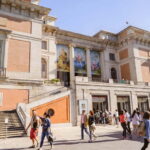


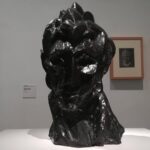
Across the Thyssen collection
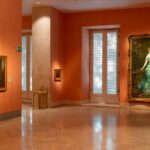


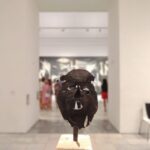
Modern Madrid at the Reina Sofía

Fresh ways to see Madrid
- Tour to Toledo & Madrid CitySight Seeing Tour
- 2-Day Guided Tour to Cordoba and Seville from Madrid
- Private Transfer from Madrid Airport to Madrid Hotels
- Wine Tasting and Flamenco Master Class in Madrid
- Prado Museum and Royal Palace Private Tour in Madrid
- Monastery Royal Barefoot Visit with entrance without waiting for queues
More ways into Thyssen-Bornemisza Museum Tours
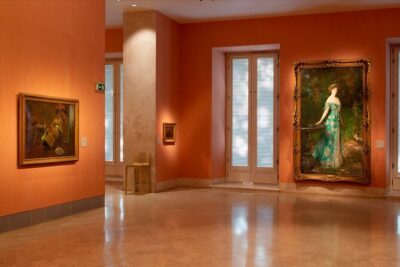 ★ 4.5Museo Nacional Thyssen-Bornemisza with Skip the line ticketFrom $16435 reviews
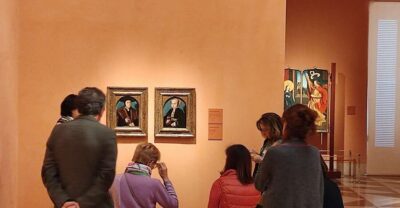 ★ 4.5Thyssen Museum Guided Tour with Skip-the-Line EntryFrom $55165 reviews
 ★ 4.6Thyssen-Bornemisza Museum Guided Tour & Entry TicketFrom $7470 reviews
 ★ 5.0Madrid Thyssen Museum Small Group Guided TourFrom $5759 reviews
 ★ 4.9Madrid Thyssen Museum Guided Tour with Small GroupFrom $5656 reviews
 ★ 5.0Guided Tour Thyssen Museum Skip the LineFrom $4636 reviews
 ★ 4.5Guided Visit to Thyssen-Bornemisza MuseumFrom $7719 reviews
 ★ 4.2Guided visit to Reina Sofia & Thyssen MuseumFrom $1369 reviews
Try another angle on the same itinerary