

REVIEW · THYSSEN-BORNEMISZA MUSEUM TOURS
Guided Visit to Thyssen-Bornemisza Museum
A small-group art shortcut in Madrid. This semi-private visit to the Thyssen-Bornemisza Museum is built for momentum, with up to 7 people and a guide who links centuries of painting into one readable story. You also get radio guides inside so you can keep your eyes on the works, not on the distance between you and your guide.
I like that the museum time is efficient without feeling rushed in a sloppy way. In strong moments, guides like Miguel or Laura help you follow the timeline and pick out what matters, from Italian and Flemish early works to later Modern experiments. The other thing I really appreciate is the range: you move across styles without having to guess what you are looking at.
One consideration: 1 hour 30 minutes is not enough to slow-walk every masterpiece. If you prefer long, quiet looking, you may want to return later on your own, or be ready to accept that some rooms get more “overview” than “linger.”
Key things that make this tour worth your time
- Small group size (up to 7) keeps questions alive and makes the route feel human
- Radio guide inside helps you hear clear art commentary while you stay focused on paintings
- Ticket included means you avoid the extra ticket step and start learning faster
- 13th to 20th century coverage gives you a smart backbone for the whole museum
- Famous names across movements from Titian and Caravaggio to Kandinsky and Picasso
- Guides with solid pacing skills, praised by name in past tours like Miguel, Laura, Pablo, and Ana Cristina Carvajal
Fill the gap between the Prado and the Thyssen
- Museo Nacional Thyssen-Bornemisza with Skip the line ticket★ 4.5 · 435 reviews
- Madrid: Thyssen Museum Guided Tour with Skip-the-Line Entry★ 4.5 · 165 reviews
- Madrid: Thyssen-Bornemisza Museum Guided Tour & Entry Ticket★ 4.6 · 70 reviews
- Madrid Thyssen Museum Small Group Guided Tour★ 5.0 · 59 reviews
Why this 90-minute Thyssen-Bornemisza visit feels different

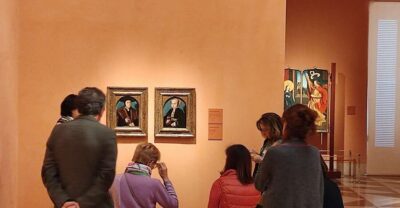
The Thyssen-Bornemisza is one of those museums where people show up thinking they’ll “just see a few paintings,” then realize they have been standing in front of something major for 20 minutes. This guided format solves the main problem: you still get a lot of art, but you also get a path through it. With a group capped at 7 travelers, you avoid the awkward chaos of big tours where you spend half your time trying to hear.
A second advantage is the radio guide during the museum visit. That matters in a place like this, where rooms can be loud and paths can shuffle you around. Radio means you can listen while you move close enough to actually see brushwork, gestures, and details.
Price-wise, $77.08 per person makes sense only because key items are already bundled in. You’re getting (1) the museum ticket, (2) an expert guide for the full time, and (3) the radio system inside. If you were to arrange these pieces separately, the cost usually climbs fast, and you would lose the guided structure that makes the museum easier to digest.
The Art Triangle on Paseo del Prado, and why the Thyssen matters

The Thyssen-Bornemisza opened in 1992, and it helped create Madrid’s “Art Triangle” along the Paseo del Prado, linking three heavy hitters: the Prado, the Reina Sofía, and the Thyssen. The idea is simple and useful for your planning. If the Prado is your Renaissance strength, and Reina Sofía is your Spanish Modern focus, the Thyssen becomes the connector, filling in big gaps between eras and schools.
This tour is timed and shaped for that connector role. You don’t just pop into one time period. You get a guided sweep that helps you understand how painting changes, sometimes in huge jumps, as Europe moves from religious and court art into the avant-garde experiments of the 20th century.
If you’re using Madrid for serious art time, this is a smart way to start or rebalance your “triangle day.” Afterward, you’ll be better equipped to choose what you want to see next, because you’ll recognize the language of each movement.
The museum sweep: what you’ll see across 13th to 20th century art
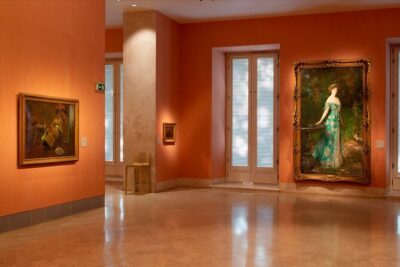
This is a “big range” museum, and the tour is built around making that range readable. You’re looking at nearly 1,000 works spanning the 13th to the 20th centuries, so your guide’s job is basically translation: where your eye might wander, the commentary gives it a direction.
You can expect the route to touch major categories of art history and the names that anchor them. The collection includes international stars like Titian, Rubens, Rembrandt, and Caravaggio, then moves through Manet and Renoir, and later into the Post-Impression and Modern orbit with Van Gogh and Gauguin. For the 20th century, you’ll encounter avant-garde currents like Fauvism, Expressionism, Surrealism, Abstraction, and Pop Art, plus artists associated with Spanish Modern such as Picasso and Dalí. You’ll also see how 20th century abstraction and experimentation can sit next to older “rules” instead of feeling like a separate universe.
The best part of this approach is that you don’t need to be an art historian. Your guide helps you keep track of what changes: subject matter, color choices, brushwork, realism versus distortion, and the shift from painting as representation to painting as idea.
Another Madrid route worth weighing up




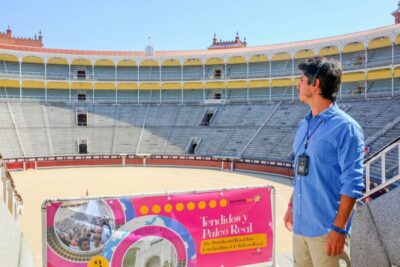
Getting started at P.º del Prado, 8: how the visit begins
The meeting point is P.º del Prado, 8, Centro, 28014 Madrid, and the tour ends back there. That loop matters because it keeps your logistics simple. You meet near the corridor that links the museums, so you are already in the right neighborhood for an art day.
From there, the experience leans on one thing: clarity. Since the group stays small and the route focuses on highlights, you’ll spend your time walking less blindly. If you’ve ever visited a museum where you feel like you’re chasing rooms instead of paintings, this tour format is a fix.
Also, the tour runs for about 1 hour 30 minutes. That doesn’t sound long until you remember that you’re trying to cover centuries in one shot. The time commitment pushes the guide to explain in a way that supports quick comparisons, like how Renaissance structure differs from later expression and how Impressionism’s light logic transitions into bolder color and form.
From early Italian and Flemish work to Renaissance foundations

Early galleries can be tricky. If you aren’t sure what you’re looking for, you might miss why the paintings mattered in the first place. This tour helps you catch the signal fast. You start with the museum’s strengths in Italian and Flemish primitives, then move into Renaissance “rules” and key works that set expectations for composition, realism, and story.
This is where the guide’s storytelling style becomes important. Past guides on this format are praised for giving clear timelines and digestible connections across centuries. One standout example from past tours is how Ana Cristina Carvajal offered an overview that stretches from early Flemish works toward later masterpieces, keeping the thread intact instead of turning each room into a random stop.
What you’ll gain here is pattern recognition. You start noticing how artists handle faces and hands, how they build depth, how symbolism communicates status or belief, and what changed when art shifted toward new ideas about the world.
Impressionism through Post-Impression: light, color, and attitude

Once the tour hits the Impressionist era, it’s like the museum turns the volume up. Expect focus on key painters from this period, including Monet and Degas, and then the Post-Impression energy you see in Van Gogh and Gauguin. These artists aren’t just famous names. In a guided visit, you learn to look for what’s different in how they see.
Impressionism is often explained as light and moment, but it’s also about technique. You’ll get reminders on how color works differently when painters trust visible brushwork instead of hiding it. The Post-Impression section then builds on that, where emotion, structure, and interpretation begin to outweigh “just what the eye saw.”
This is also a good section to ask yourself a simple question while you look: are you seeing the subject, or are you seeing the artist’s choices? A strong guide helps you answer that without making it feel like homework.
Into the avant-garde: Fauvism, Expressionism, Surrealism, and more

The leap from the 19th century into the 20th can feel abrupt if you’re walking alone. That’s exactly why this tour’s structure matters. The guided sweep explicitly includes major 20th century movements like Fauvism, Expressionism, Surrealism, Abstraction, and Pop Art.
This part is often where museum visitors either light up or feel lost. If you’re the “I want to understand what changed” type, you’ll likely enjoy the way the guide connects the dots from earlier realism and Impressionist color into later experiments that prioritize mood, symbolism, distortion, and new visual language.
In many past tours, guides like Miguel and Pablo were praised for walking the group through art history in a smooth way, including spending time on detours and questions. That’s useful here because avant-garde art tends to reward curiosity. You’ll get prompts for what to look for, and why artists were willing to break older expectations.
Spain’s Modern story: Picasso, Dalí, and the museum’s national backbone

Spain’s presence in the collection is a key reason the Thyssen feels like more than a greatest-hits European sampler. The tour includes major modern names such as Picasso and Dalí and frames them in the broader movement shifts happening across Europe.
This matters because Picasso and Dalí can feel like they belong to “their own lane” if you only read the headlines. On this tour format, you’re seeing them after a guided walk through what came before. That context helps you understand why Modern artists were reacting to earlier styles and why new movements spread the way they did.
This section is also where you may notice how the museum can feel like two museums in one: classic European mastery in one direction, then a fast turn into playful, strange, and challenging modern thinking in the other. A good guide holds both halves in your head at once.
The guide factor: when the tour becomes personal

With a group capped at seven and a radio system, the guide makes a huge difference. And you have evidence of strong performance from a set of guide styles.
For example:
- Miguel is praised for patience, a clear art history walk-through, and a pace that takes detours and answers questions instead of bulldozing forward.
- Ana Cristina Carvajal is praised for sharing an overview from early Flemish works to modern masterpieces, with just the right depth and clear explanations.
- Laura is praised for being energetic and passionate, and for giving the tour an easy rhythm, sometimes described as feeling like you had more space because of timing and crowd levels.
- Pablo is praised for full explanations and also for spending more time than expected, which can be a big deal if you worry you will miss context.
- Names like Erea and Myra also show up in past feedback, with emphasis on coverage and engagement even when the guide is newer.
What you can take from this for your decision is simple. Choose this tour if you want an expert to help you see the museum as a coherent story, not as a pile of impressive paintings.
Value check: is $77.08 a smart deal?
Let’s be honest about the math. A guided museum tour can feel expensive until you compare it to the actual cost of doing the pieces yourself with a ticket plus a guide plus audio.
Here, you’re paying $77.08 per person for:
- The Thyssen-Bornemisza ticket included
- An expert guide throughout
- High-quality radio guides inside
- A small group size (up to 7 travelers)
That bundle matters. The radio guides reduce the frustration of trying to hear over other visitors. The guided structure reduces the “museum fatigue” that happens when you realize you’re walking through rooms with no clue what to prioritize.
Is it worth it for everyone? Not always. If you are the “I love wandering and choosing slowly” type, you might prefer a self-guided visit. But if you want the museum’s century-spanning range explained in a tight window, this price is fair.
Also, the tour is commonly booked about 31 days in advance. That doesn’t guarantee anything, but it does hint that the time slots and small-group size attract people. If your dates are firm, booking earlier can protect your preferred timing.
Practical tips to enjoy the paintings, not just the route
Because this tour covers a long timeline in a short window, your strategy matters.
First, go in with a goal. Pick two or three movements or periods you want to understand, like Impressionism, early Flemish work, or 20th century avant-garde. Then use the guide to connect the dots as you move through rooms.
Second, accept that you are getting an overview. Some guides may choose to show around 15 to 20 works, aiming for broad coverage. That’s great for building a foundation, but it also means you might only get a few minutes per highlight.
Third, if you are picky about pacing, pay attention to how the guide balances speed and pause. Past feedback includes two different experiences: some tours felt perfectly paced, while others felt a bit fast because the guide tried to cover too much. If you hate feeling rushed, you can still do this tour, but you might want to set up follow-on time at the museum later.
Fourth, plan comfortable walking. One hour 30 minutes inside plus moving between rooms adds up. Comfortable shoes beat fashion almost every time.
Who should book this Thyssen visit, and who might skip it
Book it if:
- You want a clear art timeline from the 13th through the 20th century
- You like museum visits where the guide helps you “know what you’re seeing”
- You want a small group, up to 7, with radio assistance inside
- You are fitting art into limited time in Madrid and still want range
Consider skipping or supplementing if:
- You prefer long, quiet looking without explanations
- You want to focus on just one movement or one narrow period
- You get stressed when you feel the pace is tight
If you book, I’d plan a second round later if a specific era grabbed you. The Thyssen rewards return visits, and a guided first pass can make your second pass feel like a different museum.
Should you book this semi-private Thyssen-Bornemisza guided visit?
I’d book it if you want to turn a famous museum into a structured learning experience without spending all day. The sweet spot is the combination of ticket included, radio guides, and a guide who can connect the centuries, from early Italian and Flemish work to Picasso and Dalí, then onward through the 20th century avant-garde.
I would not book it alone if you already know you only want slow looking and zero commentary. You’ll probably enjoy the museum more in that style, on your own schedule, after the tour clock is done.
If you are torn, do this: aim for a time slot that feels comfortable for you, and then trust the format. A strong guide, like the ones named in past experiences such as Miguel or Laura, can make the collection feel like a coherent story instead of a maze of rooms.
FAQ
How long is the guided visit?
It lasts about 1 hour 30 minutes.
What does the tour cost?
The price is $77.08 per person.
How big is the group?
The tour is a semi-private experience with a maximum of 7 travelers.
Is the museum ticket included?
Yes, the Thyssen-Bornemisza Museum ticket is included.
Do I get help hearing the guide inside the museum?
Yes. You receive high-quality radio guides during the visit inside the museum.
What is the meeting point?
The start is at P.º del Prado, 8, Centro, 28014 Madrid, Spain, and the tour ends back at the meeting point.
Does the tour include an expert guide?
Yes. An expert guide is provided throughout the tour.
What time period and types of art does the museum cover?
The collection includes nearly 1,000 works from the 13th to the 20th century, featuring major European painters and major movements across that span.
Can I cancel for a full refund?
Yes, you can cancel up to 24 hours in advance for a full refund.
What if I book and want confirmation quickly?
Confirmation is received at the time of booking.
More Guided in Madrid




More Tour Reviews in Madrid



Across the Thyssen collection


Fresh ways to see Madrid
- Tour to Toledo & Madrid CitySight Seeing Tour
- 2-Day Guided Tour to Cordoba and Seville from Madrid
- Private Transfer from Madrid Airport to Madrid Hotels
- Wine Tasting and Flamenco Master Class in Madrid
- Prado Museum and Royal Palace Private Tour in Madrid
- Monastery Royal Barefoot Visit with entrance without waiting for queues
More ways into Thyssen-Bornemisza Museum Tours
 ★ 4.5Museo Nacional Thyssen-Bornemisza with Skip the line ticketFrom $16435 reviews
 ★ 4.5Thyssen Museum Guided Tour with Skip-the-Line EntryFrom $55165 reviews
 ★ 4.6Thyssen-Bornemisza Museum Guided Tour & Entry TicketFrom $7470 reviews
 ★ 5.0Madrid Thyssen Museum Small Group Guided TourFrom $5759 reviews
 ★ 4.9Madrid Thyssen Museum Guided Tour with Small GroupFrom $5656 reviews
 ★ 5.0Guided Tour Thyssen Museum Skip the LineFrom $4636 reviews
 ★ 4.2Guided visit to Reina Sofia & Thyssen MuseumFrom $1369 reviews
 ★ 5.0Paseo del Arte: Prado, Reina Sofía and Thyssen Museum6 reviews
Try another angle on the same itinerary