
REVIEW · STREET ART
Madrid: Street Art Tour with Local Graffiti Hunter
Street art in Madrid is not background noise. This 2-hour walk uses real neighborhoods and real walls to teach you how graffiti, stencils, and stickers work in daily city life. You go through Lavapiés, Embajadores, and La Latina, with a local guide who knows the scene beyond what you see in photos.
Two things I especially like: first, you get an insider lens on the art itself, not just a list of spots. Second, the tour hits heavyweight locations like La Tabacalera (the former tobacco factory) and the veteran work around Plaza del Sombrerete. One practical caution, though: no beverages are included, so plan for water if it’s warm.
Key highlights worth your time
- Small-group energy that keeps questions coming, even if you are new to graffiti
- La Tabacalera walls inside the former tobacco factory arts space
- Plaza del Sombrerete stop, including Esta es una Plaza and veteran-style work
- A guided street-art “reading lesson” on stencil, sticker, and wall compositions
- Workshops culture nearby, from photography and dance to yoga and longboarding
- Possible artist sightings if your timing lines up with active mural work
Look beyond the formal galleries
- Madrid: Street Art Tour with Local Graffiti Hunter★ 4.8 · 270 reviews
- Street Art Guided Tour in Madrid★ 5.0 · 175 reviews
- Madrid: Street Art Bike Tour★ 4.5 · 21 reviews
- Private Segway Tour Madrid: Lavapiés & Historical Center★ 4.5 · 15 reviews
Why these districts are the real street-art classroom in Madrid
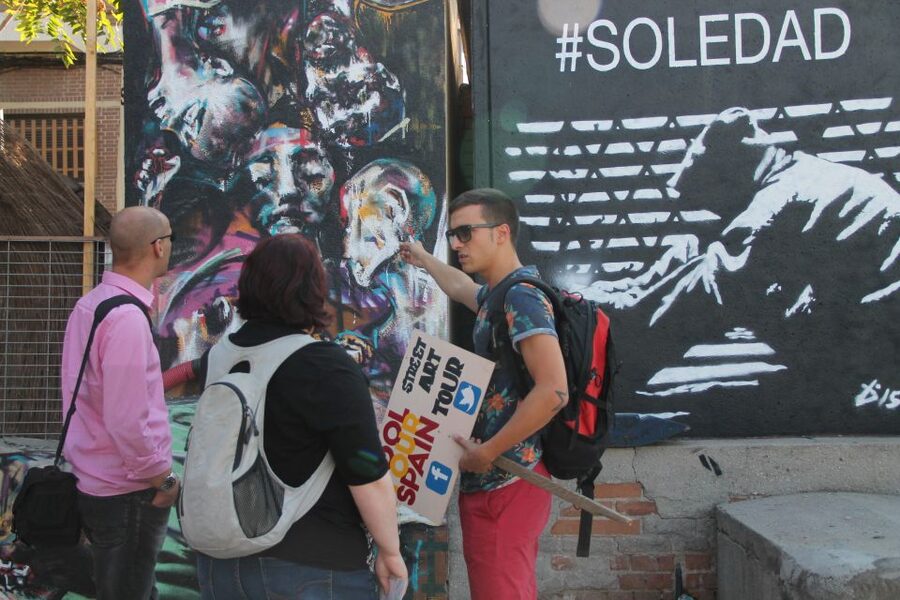
If you want street art that feels connected to people, you should aim for Lavapiés and Embajadores. This part of Madrid has a mix of cultures, languages, and communities, and the walls reflect that. Instead of treating graffiti like a museum object, the tour frames it as a living language used by artists and neighborhoods.
The route also reaches La Latina, which matters because it shows how street art is not isolated in one “cool area.” You’ll see how styles can shift block to block, depending on who lives nearby and what spaces artists can use. The guide also points out the social and artistic context around the works, so you start noticing patterns like how stencils fit tight facades, and how stickers often show up as small messages in busy streets.
One smart touch: the tour does not rely only on famous names. It helps you understand technique and street logic, so even if you do not recognize an artist, you can still “read” the wall.
Meeting at Teatro Valle Inclán and how the 2-hour timing works
You meet at the entrance of Teatro Valle Inclán, Calle de Valencia 1, 28012 Madrid. The closest metro is Lavapiés, which is convenient if you are combining this with other neighborhood stops.
The walk is two hours, so the rhythm is steady. You are going to cover multiple streets and several art clusters, which means you should wear comfortable shoes and be ready to keep moving. The pace is not rushed, but it is active. In reviews, people repeatedly praised that pacing and the fact that the group did not get lost or left behind, which is exactly what you want on a city-walking tour.
This tour is English-speaking and wheelchair accessible, so you can plan your day without stressing about language or access issues. Just remember that it is still a streets-and-sidewalks experience, so the best comfort comes from good footwear.
The local graffiti hunter element: what you learn beyond the photos
This is not a “look, admire, move on” type of tour. The guide includes insider information from a local graffiti writer who collaborates with events like CALLE Lavapies, Urvanity, and Muros Tabacalera. That matters because it changes what you notice.
Here’s what you can expect to pick up:
- Why certain styles show up where they do, like stencils on textured walls or stickers near foot-traffic corridors
- How artists think about permission and visibility, and how “legal wall” opportunities can shape the overall look
- How neighborhoods influence the work, especially in areas like Lavapiés where different communities intersect
In multiple guide experiences listed, people mentioned guides like Ester, Ester(h), Julian, Julien, Javier, Hector, Ana, and others. The common theme is that the guides are comfortable talking art and neighborhood history in clear English, and they keep the group involved by asking questions along the way. If you like hands-on explanations, this kind of back-and-forth makes a big difference.
Also, if you are the type who gets curious about the artist side of things, you might get a bonus moment. Some groups reported seeing an artist painting during the walk. You can’t bank on it, but the tour’s focus on active spaces makes it more likely than a purely static “tour photo stops” route.
Another Madrid route worth weighing up
Lavapiés and Embajadores streets: the practical street-art walkthrough
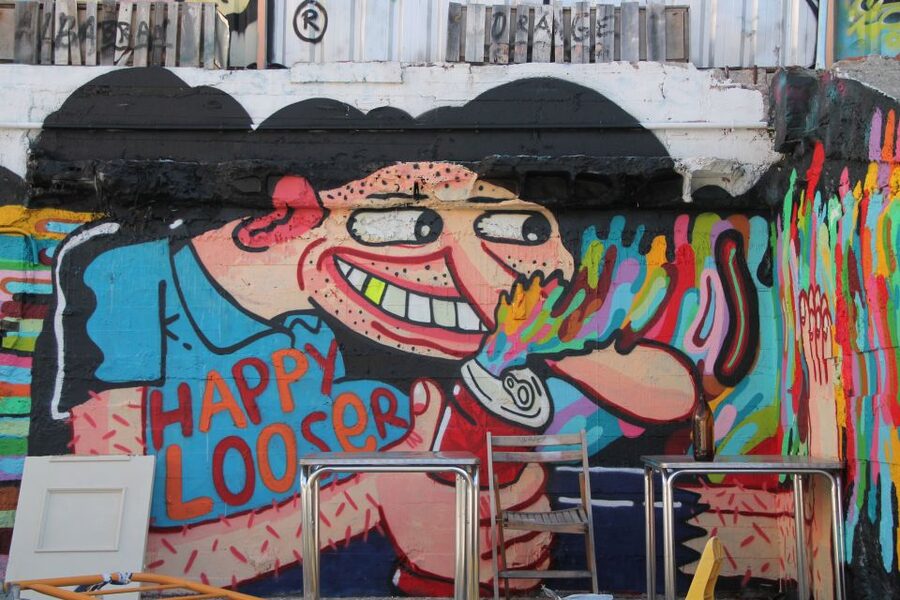
Once you start moving through Lavapiés, you begin to see how the street art scene functions as a map. The guide points out pieces on walls along the way and explains what to look for, such as how artists use color blocks, layering, and placement to control attention.
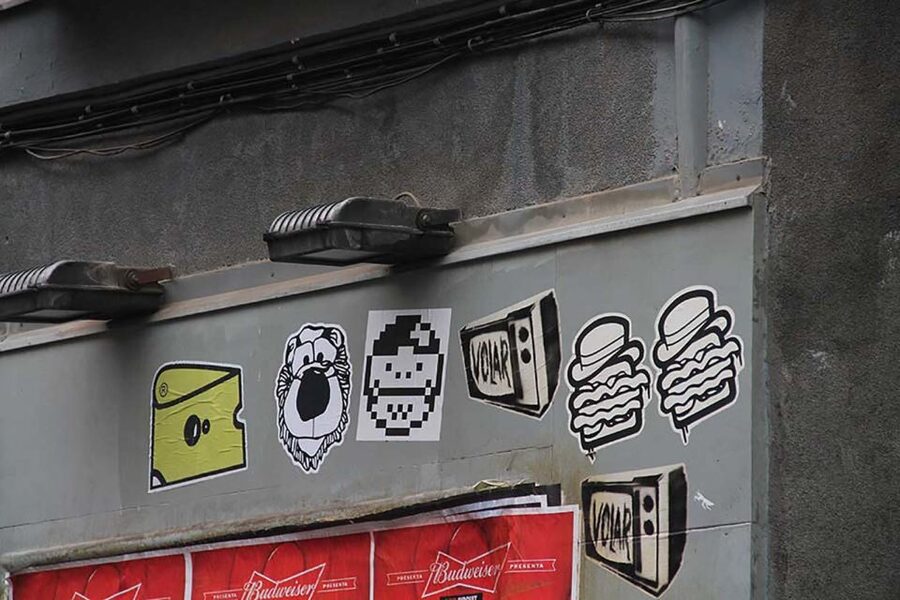
The tour specifically includes street art by underground urban artists, including graffiti walls and stencil and sticker art. That mix is important, because graffiti, stencils, and stickers are not interchangeable. They each have different goals and constraints:
- Graffiti often reads as larger statements meant to be seen and remembered.
- Stencils can be faster, repeatable, and highly graphic.
- Stickers can behave like street-level postcards, small signals that accumulate over time.
You’ll also walk along streets like Calle Argumosa and Calle de Embajadores. Those stops are not random. They help you compare how the wall surfaces, the street width, and the neighborhood flow affect what artists choose to put up.
A nice detail from people who did the tour: some guides also tie in practical neighborhood perspective, like how Lavapiés feels day to day, and even a few Saturday-night suggestions. If you are planning your evenings, it’s worth asking your guide what they recommend after the tour.
La Tabacalera: former tobacco factory walls and why the setting matters
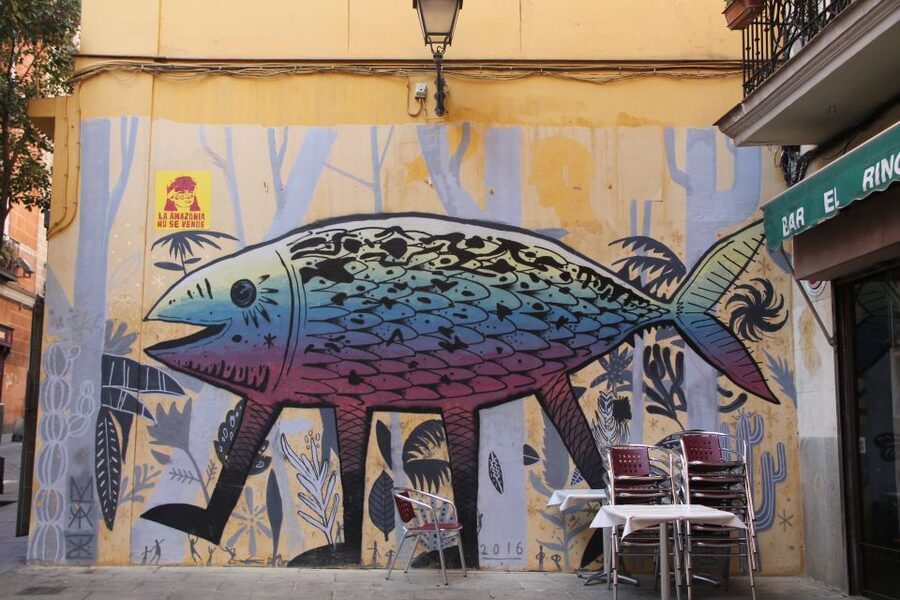
One of the biggest “wow” areas is the urban art on the walls of the former tobacco factory at La Tabacalera. This is where the tour stops feeling like a sightseeing walk and starts feeling like you are inside a city art experiment.
Why this location is so valuable:
- It’s a major arts space connected to the neighborhood’s creative energy.
- The building itself gives artists a variety of textures, surfaces, and sightlines.
- The result is a concentrated feeling of street art as part of the area’s identity, not just something sprayed on random corners.
When you’re there, focus on the scale and the “reading order.” Some walls are designed to be looked at in layers. Others hit you with a single dominant mural or composition. The guide helps you notice those choices, which makes the whole area click faster.
If you care about street art beyond aesthetics, this is a strong stop. You can see how different styles coexist, and how artists respond to the same environment from different angles.
Esta es una Plaza and Plaza del Sombrerete: reading veteran work
Another key stop is Esta es una Plaza, Plaza del Sombrerete. This is where the tour shifts from general street art appreciation into a more interpretive mode.
You’ll learn an insider guide to the works here, including veteran artists’ approaches. In practice, that means you are not only looking at the artwork, you’re being taught how to interpret it:
- what themes show up in the compositions
- how lettering, shapes, and icon styles communicate quickly
- why certain pieces are placed where they are, so they catch the right kind of attention
People who did the tour repeatedly highlighted that guides explained both history and technique. That combination is what turns a wall into a lesson. Instead of asking yourself “what is this,” you start asking “why this style, why here, why now.”
Calle de Embajadores, Calle Argumosa, and the center district mural moment
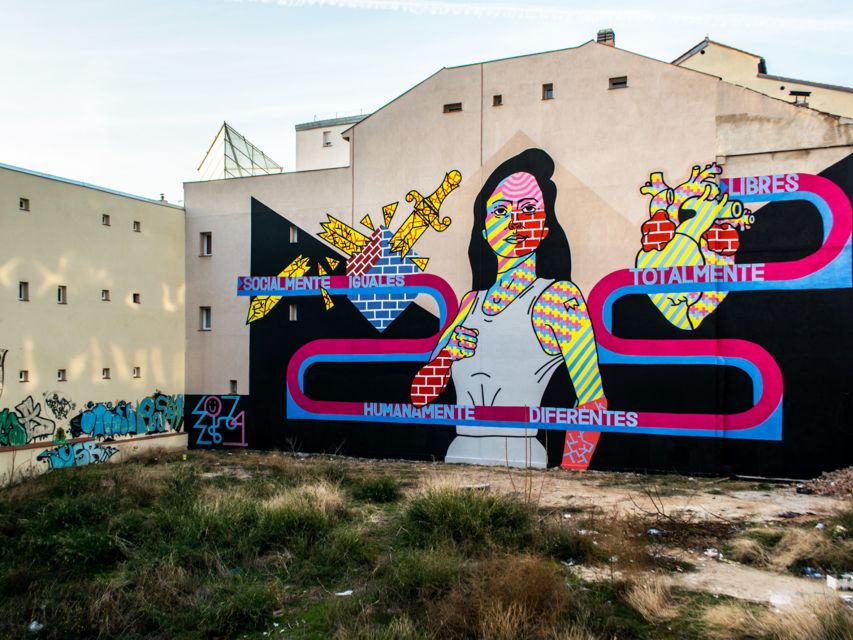
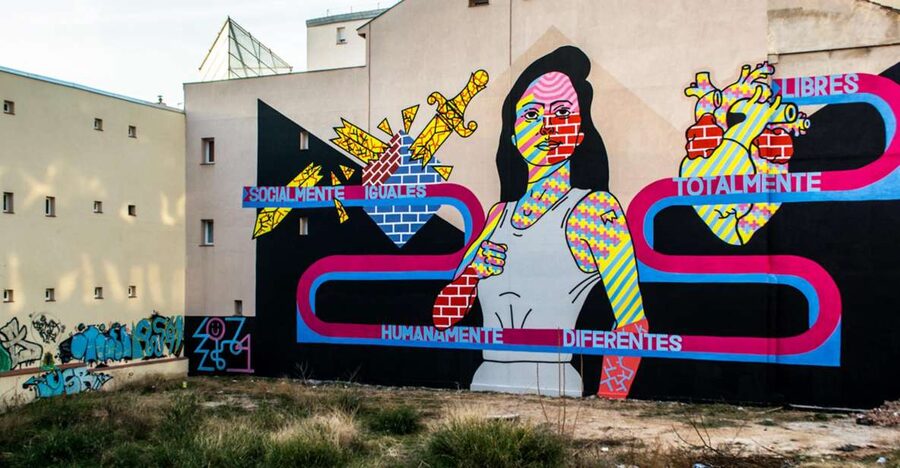
The walking route includes Calle Argumosa and Calle de Embajadores, and it also includes the chance to see the biggest mural in Madrid’s Center District. That matters because large murals change how you experience street art.
A big mural forces your eyes to slow down. It also changes how you stand and take photos. You will likely find that your perspective shifts from looking at details to looking at the full composition.
When you see work at this scale, the guide’s role becomes extra useful. They help you avoid the common mistake of only focusing on the most eye-catching element. You’ll learn how the surrounding details frame the main subject, and how the mural fits into the street context instead of floating above it like a postcard.
Calle Sombrete and the “up-and-coming” side of Madrid’s street scene
The tour also includes Calle Sombrete, presented as a place to see newer talents. This part is valuable because it shows street art as a pipeline, not a finished product.
You can treat this as a contrast stop:
- At veteran-focused sites, you look for refinement, consistency, and recognizable styles.
- At newer talent sites, you look for experimentation and fresh visual language.
If you like spotting artistic evolution, this is one of the best ways to do it in a single walk. You are not just consuming one era of street art. You are seeing how styles keep moving forward in the same city.
Workshops and the culture around street art, not just the walls
The tour also connects the dots between art on walls and the broader creative scene. You’ll hear about free workshops offered nearby, including photography, dance, yoga, cycling, longboarding, and more.
Even if you do not attend a workshop the same day, this changes your understanding of street art. It stops being just paint and stickers, and becomes part of a wider culture where people meet, learn, and practice creative skills. That is a big reason this tour feels different from the standard “street art hit list.”
Practical tip: after the tour, if any workshop topics interest you, ask your guide what they recommend and when those sessions typically run. The tour gives you enough context to know what you’re looking for when you go searching on your own.
Price and value: is $29 a good deal for this Madrid street art walk?
At $29 per person for two hours, the value is strong if you care about context. This is not just a photo tour. The price buys you:
- an English-speaking guide who can explain street art styles and neighborhood history
- multiple high-impact stops, including La Tabacalera and Plaza del Sombrerete
- insider perspectives tied to real street art festivals and local collaborations
If you compare it to museum tickets, it is clearly cheaper. But the real question is different: will you get enough interpretation to make the walk feel worth your time? Based on the consistently high ratings and repeated comments about engagement, most people leave feeling they learned how to see street art differently, not just where to stand for a picture.
One note for budget planners: beverages are not included, so factor in water or a quick drink before or after.
Who should book this tour, and who might want another option
This tour fits you if:
- you like street art enough to want context, not just locations
- you want a smart way to see Lavapiés, Embajadores, and La Latina without picking through it blindly
- you enjoy asking questions and listening to a guide who can connect art to the neighborhood
You might consider a different type of tour if:
- you dislike walking or want a mostly indoor experience
- you prefer a museum-style format with fewer street stops
For families, the general tone described by visitors seems engaging and discussion-based, and people mentioned teens and younger visitors connecting to ethics and community questions around street art. Still, you should bring your own judgment for comfort on sidewalks and street crossings.
Should you book the Madrid street art tour with a local graffiti hunter?
I think you should book this if street art is on your Madrid “must see” list and you want it explained in plain, practical terms. The stops are well chosen, and the guide is the main reason it works. With La Tabacalera and Plaza del Sombrerete in the mix, you get both large visual impact and the kind of talking-through of technique that makes the whole walk stick.
If you do book, show up ready to walk and take a few moments to ask questions. And bring water, because the only thing “missing” from the tour is a built-in drink stop.
FAQ
What is the duration of the Madrid street art tour?
The tour lasts 2 hours.
How much does the tour cost?
The price is $29 per person.
Where do I meet the guide?
Meet at the entrance of Teatro Valle Inclán, Calle de Valencia 1, 28012 Madrid. The nearest metro station is Lavapiés.
What language is the tour in?
The tour has an English-speaking guide.
What should I bring?
Bring your passport or ID card and wear comfortable shoes.
Is anything included besides the guide?
The tour includes an English-speaking guide. Beverages are not included.
More Tours in Madrid




More Tour Reviews in Madrid

Murals beyond the museum mile


Fresh ways to see Madrid
- Tour to Toledo & Madrid CitySight Seeing Tour
- 2-Day Guided Tour to Cordoba and Seville from Madrid
- Private Transfer from Madrid Airport to Madrid Hotels
- Wine Tasting and Flamenco Master Class in Madrid
- Prado Museum and Royal Palace Private Tour in Madrid
- Monastery Royal Barefoot Visit with entrance without waiting for queues
More ways into Street Art
 ★ 5.0Street Art Guided Tour in MadridFrom $30175 reviews
 ★ 4.5Street Art Bike TourFrom $4621 reviews
 ★ 5.0Madrid Hidden Street Art TourFrom $3212 reviews
★ 5.0Hidden Street Art TourFrom $3311 reviews
★ 5.0Madrid Hidden Street Art TourFrom $3212 reviews
★ 5.0Hidden Street Art TourFrom $3311 reviews
Try another angle on the same itinerary