

REVIEW · MADRID BIKE & E-BIKE TOURS
Madrid: Street Art Bike Tour
Street art in motion hits different. This Madrid bike tour is guided by a local graffiti artist, so you’re not just sightseeing walls, you’re learning how the city’s biggest artists leave their marks and why it matters in neighborhoods like Malasaña and Lavapiés. I especially like the festival-focused street art you’ll see, and I really like that the tour is run by someone who treats graffiti as an art form, not a backdrop. One thing to consider is that this is a traffic-in-city bike ride, so you’ll want to be comfortable pedaling and stopping often.
What makes it work well is the way you roll from origin stories into specific sites, with built-in pauses like a restroom break. I also like the chance to photograph and track key work, including the preserved Muelle tag from 1989 and a first-piece stop connected to Boa Mistura near Alonso Martinez. The main drawback is that there is only one uphill, but you still shouldn’t plan on it being a total breeze if you’re brand-new to cycling or balancing in busy streets.
Key highlights worth planning for

- Local graffiti artist guidance with a focus on techniques and street-art history
- Festival artwork stops, including Pinta Malasaña references in Malasaña
- Malasaña to Lavapiés by bike, including Plaza Dos de Mayo and community street-art gardens
- Preserved 1989 Muelle tag, plus a look at how Madrid’s graffiti movement started
- Lavapiés hubs like Solar Antonio Grilo and Esto es una Plaza, where art and community mix
Look beyond the formal galleries
- Madrid: Street Art Tour with Local Graffiti Hunter★ 4.8 · 270 reviews
- Street Art Guided Tour in Madrid★ 5.0 · 175 reviews
- Madrid: Street Art Bike Tour★ 4.5 · 21 reviews
- Private Segway Tour Madrid: Lavapiés & Historical Center★ 4.5 · 15 reviews
Street art that actually makes sense when you ride it

Madrid’s street art can feel like a visual free-for-all until you learn the basics. This tour works because you get explanations in real time, moving from one recognizable piece to the next, so the city’s graffiti language starts clicking. The guide talks about the history of street art and the techniques artists use on walls, metal shutters, and other urban surfaces you’d normally walk right past.
You’re also getting a very practical way to explore. With a bike, you can cover more ground than a foot tour without turning it into a long haul. And since the tour includes a city map, you’re not just taking photos, you’re leaving with a tool you can use later to keep chasing murals on your own.
One more detail I like: the tour doesn’t present graffiti as random vandalism. It treats it like a creative scene with names, locations, and a timeline. That makes the neighborhoods you visit feel more lived-in and less like a museum.
Getting started at Carrefour Express, then staying safe in real traffic
The meeting point is straightforward: the entrance of the small Carrefour Express on C/Montera 32, near the Gran Vía and Sol metro area. You’ll get your bike rental, plus a helmet and lock, and that setup matters because it removes stress at the start. You also get a Madrid city map so you can mentally connect the artwork to the street layout.
Before you roll, there’s a bike safety talk, which is especially important in Madrid’s traffic rhythm. The route includes at least some uphill effort and you’ll do a lot of short stops, so you want to be ready to slow down on cue. If you’re traveling with a kid, the structure here can work well because there’s a guided pace and the emphasis is on safe movement, not speed.
The guide I’ve seen mentioned for this tour style, Javier, comes up as a calm, capable presence. That kind of experienced leadership matters because it keeps the ride smooth when people in the group have different comfort levels with cycling in traffic.
The preserved Muelle tag and how graffiti started in Madrid

The tour begins by grounding you in the movement itself. You’ll learn about the history of street art, then the city becomes a classroom. You’ll also see the kind of surface graffiti artists target, including metal shutters and other parts of the street scene that many visitors ignore.
A key early stop is Muelle, described as a pioneer of the graffiti movement in Madrid. You’ll observe a tag that has been preserved from 1989, which is a rare thing in a world where most street art disappears fast. Standing near a piece this old gives you immediate perspective on how today’s murals fit into something that started decades ago.
There’s also a story element, including the note about a very young fellow involved in launching a new cultural movement in town. That kind of detail helps you understand graffiti as culture and community, not just visual style.
Cover more ground on two wheels
Alonso Martinez and the Boa Mistura connection you can photograph
Once the safety instructions are done, you head toward Alonso Martinez. This isn’t just a transit section, it’s part of the tour’s “follow the artists” logic. You’ll stop near Alonso Martinez to photograph a first piece created by Boa Mistura.
Boa Mistura is described as a crew born and raised in the outskirts of Madrid, and they’ve worked on street art projects around the world. Knowing that local roots can lead to global projects is one of those ideas that makes the city feel bigger than your travel bubble. When you see a piece from an internationally recognized group while still in the Madrid street fabric, it helps you connect the dots between local scenes and worldwide street art culture.
Even if you’re not a graffiti expert, this stop gives you a clear anchor. You can remember it later because the tour explicitly ties it to the artists and the work, not just the location.
Malasaña by bike: Pinta Malasaña festival pieces and Plaza Dos de Mayo

Malasaña is the kind of neighborhood that feels like it’s always in on a trend, and the tour leans into that. You’ll cross artwork by national artists tied to the 2017 edition of Pinta Malasaña, a street art festival that colors the area during April. That timing detail matters because it hints that some murals are seasonal or festival-driven, not permanent in the way you might assume.
Then you get a stop at Plaza Dos de Mayo, which is presented as the center of that festival atmosphere. Here, you’ll see traffic elements artwork titled Bolardo Voy, Bolardo vengo. It’s a clever reminder that street art isn’t always huge walls and dramatic murals. Sometimes it’s small urban objects, bright color, and a punchline for anyone walking the streets with their eyes open.
The value of visiting Malasaña by bike is that you can keep moving without losing your sense of place. You get the feeling of the neighborhood’s energy without spending an entire day stuck on one block waiting for the next photo angle.
Lavapiés murals, community gardens, and Solar Antonio Grilo
After Malasaña, the tour shifts into Lavapiés and nearby Noviciado areas. This is where the street art becomes more community-focused. You’ll have time to visit Solar Antonio Grilo and Esto es una Plaza, both described as local hubs created for and by the community.
These urban gardens full of street art were once abandoned places. That detail matters because it changes what the murals mean. Instead of treating them as decoration, you see them as part of a local transformation, where people turned neglected spaces into shared cultural space.
The tour also points out the idea of hybrid economy systems in these areas. Even if you’re not going to analyze economics on vacation, knowing that art can connect to real local solutions makes the whole neighborhood feel more grounded. It helps you read the walls as outcomes of people organizing, not just artists painting for attention.
You’ll also be shown the interventions of multiple street artists, including names like El Rey de la Ruina, Cassassola, Ze Carrión, Por Favor, and more. This list is useful because it gives you a way to remember what you saw. Later, when you spot a similar style, you can often tell it belongs to a specific voice rather than a generic mural.
Techniques you’ll start noticing on your next Madrid walk
One of the most practical takeaways is learning how artists decorate different city surfaces. The tour explains techniques used to put street art on walls, metal shutters, and other elements you’ll encounter while riding. Once you’ve heard that, it gets easier to spot what looks intentional versus what looks like random tagging.
You’ll also learn how the history of graffiti connects to specific eras and preserved markers. That means you can look at new work and ask, where does it fit in the timeline? Is it festival-driven? Is it part of a longer street culture? That simple habit turns Madrid street art from background noise into a map of creative movements.
And because you’re moving neighborhood to neighborhood, the differences start showing up fast. You can feel how Malasaña’s festival vibe and Lavapiés community identity lead to different kinds of murals and wall treatments.
The biggest mural moment in Madrid center district

One of the highlights is the chance to see the biggest mural in Madrid’s Center District. That matters for two reasons. First, it gives you a “wow” scale moment so the tour doesn’t stay only in detail work. Second, seeing a very large piece helps you understand how artists plan for distance, viewing angles, and street-level impact.
Big murals can sometimes feel like they’re meant only for tourists who want a dramatic photo. But on this tour, you’re learning context as you approach, so the mural lands with more meaning. You’ll likely understand the style and the role it plays in the surrounding street art environment rather than treating it like a standalone attraction.
Price and included value for a 2.5 hour ride

At $46 per person, this tour is priced in a zone that can feel reasonable or pricey depending on what’s included. The good news is that the price comes with the essentials that add cost fast if you do them on your own: bike rental, a helmet and lock, and a live guide in English or Spanish.
You also get a restroom break and a city map. Those are small details, but they’re the difference between an enjoyable ride and one that turns into a logistics puzzle mid-tour. If you’ve ever tried renting a bike while also trying to find safe routes and keep track of street art locations, you know how quickly that adds up.
Beverages are not included, so plan to carry water. If you’re sensitive to heat or you cycle slowly, bringing a bottle makes the tour feel easier. Comfortable shoes are also a must, since you’ll park the bike and walk in short bursts to take in certain stops.
What the “medium level” biking really means for you
The tour is described as a medium level activity with just one uphill. That sounds simple, but the real test is traffic confidence and stop-and-go rhythm. Madrid streets can be active, so if you’re the kind of rider who hates sudden braking or weaving, you’ll want extra caution.
The good part is that the guide is used to handling mixed skill levels. One of the strengths called out for this tour experience is that the route can be adjusted to accommodate participants who are not as comfortable with cycling. That is exactly what you want from a guided street ride, because it protects the quality of the tour for the whole group.
If you can ride a bike confidently on flat ground and you’re willing to slow down when the guide signals, you’ll get the most out of the artwork stops. If you’re brand-new to bikes, you might still manage, but you should expect more careful pacing and possibly less time at certain photo angles.
Who should book this street art bike tour
This is a great pick if you want street art with context and you love neighborhoods on wheels. You’ll enjoy it most if you like learning the stories behind the walls and you’re curious about how graffiti grew from early tags into festival-level murals and community spaces.
It also fits well for families, including riders who are old enough to cycle independently. The tour experience described includes a family setup where a 7-year-old rode on their own bike, with the guide keeping the experience smooth and fun. That doesn’t mean every child will feel comfortable, but the point is that the structure can work when everyone is ready to follow safety cues.
You might skip this tour if you hate cycling in traffic or if you’re looking for only wall-hopping on foot. Here, the bike is the main tool, and that brings speed and coverage, but also the need for basic riding confidence.
Should you book the Madrid Street Art Bike Tour?
Yes, if your goal is street art you can understand, not just street art you can photograph. For $46, you get the guide, the bike setup, and the route that links iconic names and specific neighborhood spots like Malasaña’s Plaza Dos de Mayo and Lavapiés community gardens at Solar Antonio Grilo and Esto es una Plaza.
I’d book it especially if you care about the “how” and “why” behind graffiti, including the preserved 1989 Muelle tag and the Boa Mistura stop near Alonso Martinez. Bring water, wear comfortable shoes, and plan for one uphill plus traffic reality, and you’ll feel like you’re seeing Madrid street art the smart way.
FAQ
How long is the Madrid Street Art Bike Tour?
It runs for about 2.5 hours, and you can check availability to see starting times.
Where does the tour start and end?
It starts at the entrance of the small Carrefour Express on C/Montera 32 (near the Gran Via and Sol metro). It ends back at the meeting point.
What’s included in the price?
Bike rental, a helmet and lock, a Madrid city map, an English or Spanish live guide, and a restroom break.
What language is the guide available in?
The live guide is available in English or Spanish.
Is the tour hard to bike?
It’s described as a medium level activity with just one uphill.
What should I bring?
Bring your passport or ID card and wear comfortable shoes.
Are beverages included?
No, beverages are not included.
Is there a cancellation option?
Yes. You can cancel up to 24 hours in advance for a full refund.
More Tour Reviews in Madrid


Madrid on two wheels



Murals beyond the museum mile



Fresh ways to see Madrid
- Tour to Toledo & Madrid CitySight Seeing Tour
- 2-Day Guided Tour to Cordoba and Seville from Madrid
- Private Transfer from Madrid Airport to Madrid Hotels
- Wine Tasting and Flamenco Master Class in Madrid
- Prado Museum and Royal Palace Private Tour in Madrid
- Monastery Royal Barefoot Visit with entrance without waiting for queues
More ways into Madrid Bike & E-Bike Tours
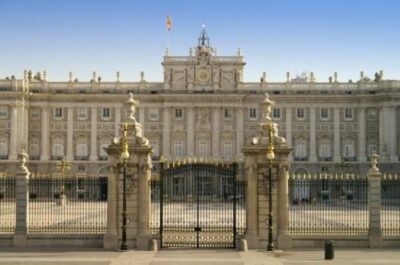 ★ 5.0Madrid Highlights Bike TourFrom $331,731 reviews
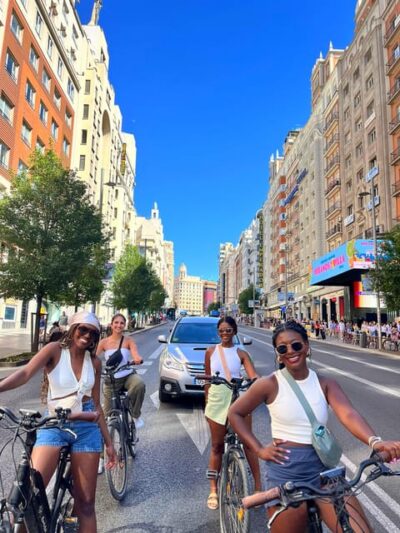 ★ 4.8Best of Madrid: 3-Hour Guided Bike Tour in Small GroupsFrom $331,417 reviews
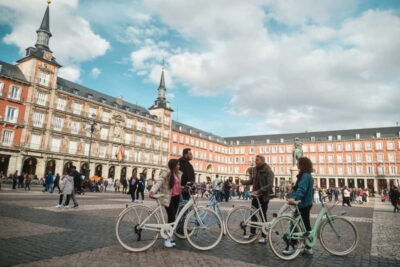 ★ 4.9Highlights Guided Vintage Bike Tour and Tapas OptionFrom $32962 reviews
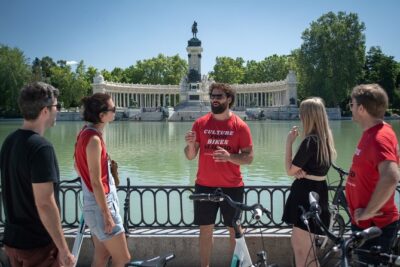 ★ 5.03 hour Guided Highlights Bike Tour with Optional TapasFrom $35443 reviews
 ★ 4.8Madrid City Guided Bike/E-Bike Tour for Small GroupsFrom $41308 reviews
 ★ 5.0City Highlights Guided Vintage Bike TourFrom $33283 reviews
 ★ 4.63-Hour Sightseeing Tour by Electric BikeFrom $53192 reviews
 ★ 5.0Madrid E-Bike Small Group TourFrom $49155 reviews
Try another angle on the same itinerary