

REVIEW · PRADO MUSEUM GUIDED TOURS
Madrid: Private Tour of the Prado Museum
A great museum visit needs a guide. This private Prado tour turns big names into clear stories you can actually remember. I especially like the structured path through eras and how the guide handles questions in real time, even when the group gets specific. One watch-out: the museum ticket is not included, so you’ll pay entry at the venue first.
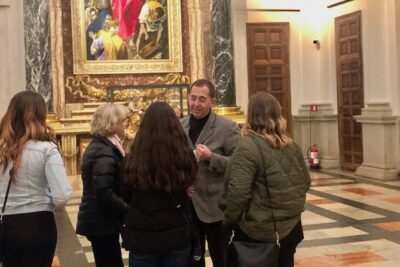
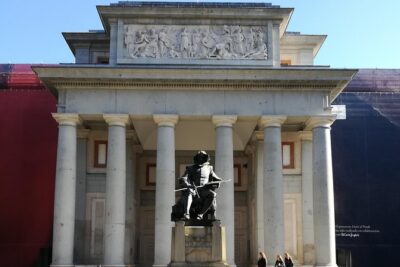
You meet at the Goya Statue right outside the main Prado entrance, and then you’re off for about 2 hours with a live German guide, with no other participants in your group. If you want to see the highlights but still feel like you have breathing room to ask questions, this format works well. Still, because it is private and time-limited, you won’t be able to see every corner of the museum in a single visit.
Key things that make this Prado tour worth it

- A private, no-other-participants setup that keeps the conversation flowing
- A guided arc through art eras, from the Middle Ages to the start of the 20th century
- Strong storytelling about famous painters, including Van der Weyden, Rafael, Titian, El Greco, Velázquez, Rubens, Tintoretto, and Goya
- German-language explanations that stay clear and practical, not museum-speak
- A track record of flexibility, with guides like Javier and Anne known for engaging pacing
- You get time after the tour to follow your own interests at your own speed
Stay on the Paseo del Arte with another Prado route
- Madrid: Prado Museum Entry Ticket★ 4.6 · 17,509 reviews
- Madrid: Small Group of Prado Museum Tour & Optional Tapas★ 4.6 · 2,437 reviews
- Madrid: Prado Museum Guided Tour with Skip-the-Line Ticket★ 4.5 · 2,018 reviews
- Madrid: Prado Museum Guided Tour With Fast Access★ 4.8 · 1,785 reviews
Why the Prado works best with a private guide

The Prado is one of those museums where you can get “painting fatigue” fast. There’s so much here that even serious art fans can start to blur things together. A good guide fixes that by giving you a map in your head. That’s the real value of this private tour: it’s not just facts, it’s a way to connect paintings to time periods and techniques so your visit clicks.
What I like most is the tour’s focus on development across eras. You get a guided sense of how art changes from the Middle Ages onward, then you move through the Renaissance and Baroque into works from later centuries. The result is that the masterpieces feel less random. They feel like steps in a story.
The second big strength is how the guide talks about skill and “secrets,” not just names. You should expect explanations that help you notice craft. Artists such as Van der Weyden and Rafael get treated as more than historical figures, and painters like Titian and El Greco become understandable through how they paint light, figures, and emotion. Later, the tour brings you through the world of Velázquez, Rubens, Tintoretto, and Goya, where technique and viewpoint matter just as much.
Meeting at the Goya Statue, then getting your bearings fast
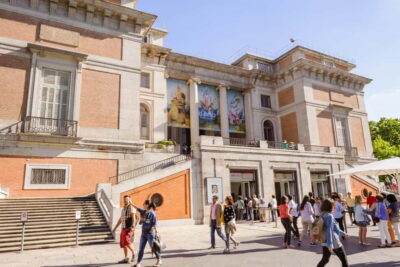
The meeting point is simple: the Goya Statue in front of the main entrance of the Prado, Paseo del Prado, s/n, 28014. Show up a few minutes early. Even if you are great at finding your way in museums, it helps to start calmly, especially when you want the guide to explain what you are about to see.
One practical note: the tour includes the guide, but museum entry is not included. So plan for that first payment step at the venue. Also, the Prado has a rule that headphones are required for certain group setups. For your specific experience, the tour is private, so you won’t be in the “large group with extra headphone cost” scenario. Still, it’s smart to be ready for museum headphone guidance when you arrive.
Once you’re inside and the guide sets the tone, you’ll follow a path that makes sense for a first visit. Think of the opening minutes as a shortcut. You are not wandering randomly. You’re learning how to look, what to compare, and what to watch for as you move through rooms.
Your 2-hour art history sprint through the Prado’s main eras

This is a 2-hour tour, so the guide is going to be selective, on purpose. That can sound limiting until you realize the alternative is worse: getting overwhelmed and leaving with a vague feeling of having seen a lot.
Here’s how the time works in practice. You start with the earliest stretches of art history covered in the Prado’s story, then progress forward. The guide connects what you see to what changed over time, so you understand not only individual paintings, but also why styles shift. You move through the Middle Ages, then the big turns of the Renaissance, and the intensity of the Baroque period, before reaching works from the beginning of the 20th century.
That era-by-era structure is especially helpful if you have limited days in Madrid. You’ll likely appreciate this approach if you do not want to spend hours “researching” in advance. The guide brings the context, so you can focus on what you are seeing.
There is also a built-in pacing benefit: the guide’s explanations are designed to land while you are still in front of the artwork. You can ask follow-up questions then, which keeps you from losing your curiosity midway. In one example, the visit even ran longer than the planned 2 hours, which tells you the guides are not rigid about timing when there is real interest in the room.
Another Madrid route worth weighing up



Master painters you’ll hear about, and what to notice in their work
The tour highlights a lineup of artists that can feel like a greatest-hits playlist, but the key is how the guide explains them. Instead of treating these names as a memory test, you should expect the guide to point out what makes each artist’s approach distinctive.
For example, Van der Weyden is typically explained through the way he shapes emotion and form, so you know what to look for in faces and gestures. With Rafael, you’ll likely get context for balance and harmony, and why that matters when you compare him to earlier styles. When Titian comes up, the focus tends to be on color and atmosphere, which is exactly the kind of thing you notice more when someone guides your attention.
Then you move toward El Greco, where elongated figures and dramatic lighting make more sense once you understand what the artist was trying to express. Later, the tour connects to powerhouse painters like Velázquez, who is often discussed in relation to realism and perspective, and how courtly scenes or everyday moments become more than surface detail.
Rubens and Tintoretto are also part of the flow, and you should expect explanation about motion, composition, and how the drama is built. And finally, Goya helps bring the story closer to modern sensibilities, which is a satisfying way to end if you want the museum visit to feel like an actual progression.
The biggest practical tip I can give you: be ready to look with a purpose. After the guide’s explanation, take 10 to 20 seconds to re-check the painting yourself. You’ll catch details you would otherwise skip because they look “obvious” once they are explained. That’s how the tour turns into something more than just standing and listening.
What makes it feel truly private, not just a small-group tour
The group size is a big deal here. This is a private tour with a personal guide, with no other participants joined. That changes the entire experience. You can ask a question that fits your interests and get an answer without waiting for a group discussion format.
The guide style also matters. Names like Javier and Anne show up as standouts, and the common thread is clear: they tell stories in a way that keeps things moving. Javier, for example, is described as funny and informative, with engaging storytelling tied to each painting. Anne is praised for guiding visitors smoothly through the Prado’s eras and key works, and for adapting explanations to children as well.
That last part matters if you are traveling with kids. The Prado can be tough for children if everything feels like lectures. But the tour format here can work because the guide is responsive. In at least one family scenario, the guide engaged two kids aged 11 and 9 in a way that kept them interested. If your family wants a structured overview without making it feel like school, this private approach helps.
Another quiet benefit: you can steer. If you are more into portraiture than religion, or you are curious about a specific painter the guide mentions, you can request more focus on that theme. The best guide behavior here is practical, not showy. They answer questions, and they adjust.
Value and price: what you really pay for

The tour price is listed as $171 per group up to 2 for a 2-hour guided visit. That covers the private guide experience, not the museum entry fee.
To judge value, you have to add the ticket cost. The museum entry fees listed are:
- Adults: EUR 15
- Seniors over 64: EUR 7.50
- Students up to 25: free
So if you are two adults, the arithmetic is straightforward: you are paying for the guide plus two adult tickets. If you are one adult, the guide is still priced per group up to 2, which can make it feel less “cheap” but still worthwhile if you care about a guided path and conversation.
One more museum detail that affects value perception: headphones. The provided info says headphone requirements come from museum guidelines for certain group sizes (and it also notes there is an extra cost structure for larger groups). Since this is a private group with a guide, you’ll want to follow what the museum requires when you arrive, but you are not automatically in the larger-group pricing tier.
Is this tour a smart buy? For me, it’s a yes when you fit one of these profiles:
- You want your first Prado visit to be coherent, not random.
- You care about art history context and want it explained in real time.
- You prefer German guided explanations and want a private format rather than waiting for a larger tour group.
- You might not have enough time to wander and “figure it out” alone.
What happens after the tour, and how to use that free time

One of the underrated advantages is what you do after the guided portion. After your private tour, you can see other rooms and paintings at your own pace.
That matters because it lets you follow your curiosity. If a particular era or painter grabbed you during the explanation, you can go back for a longer look. Or if you want a quieter break, you can take one. This is especially useful in a museum like the Prado, where the layout can feel like it was designed for marathon walkers.
To get the most out of this, plan your schedule like this: treat the guided tour as your orientation and your shortlist. Then use the follow-up time for deeper looking on what the guide highlighted.
If you are trying to see Madrid efficiently, you’ll also benefit from the fact that the guide gives you a sense of priorities. Instead of deciding once you are tired and standing in front of too many paintings, you’ll know what to chase and what to skip.
Should you book this Prado private tour?
Book it if you want a German-language private guide who helps you connect paintings to eras and techniques, in about two hours. The strongest reasons to choose it are the clear storytelling, the attention to questions, and the way guides like Javier and Anne are described as engaging and practical, including for families with kids.
Skip or consider something else if you expect a full museum marathon. This is not designed to cover everything. It’s designed to make sense of the Prado’s big moments and the artists you most want to understand. If that matches your goal, this tour is a high-value way to see Spain’s famous picture gallery without getting lost in the crowd, or in information overload.
FAQ
Is the Prado museum ticket included?
No. Museum entry fee is not included and is paid at the venue. Adults are listed at EUR 15, seniors over 64 at EUR 7.50, and students up to 25 are listed as free.
How long is the private tour?
The tour duration is listed as 2 hours.
Where do we meet the guide?
You meet at the Goya Statue in front of the main entrance of the Prado Museum, Paseo del Prado, s/n, 28014.
What language is the live guide?
The live tour guide language is German.
Is this tour private?
Yes. It is listed as a private group with a personal guide and no other participants.
Do I need headphones?
The information provided says headphones are required by museum guidelines for certain group setups. Since this is private, follow whatever the museum requires when you arrive.
What is the cancellation policy?
Free cancellation is listed up to 24 hours in advance for a full refund.
Is the tour wheelchair accessible?
Yes. Wheelchair accessibility is listed as available.
More Tours in Madrid




More Tour Reviews in Madrid

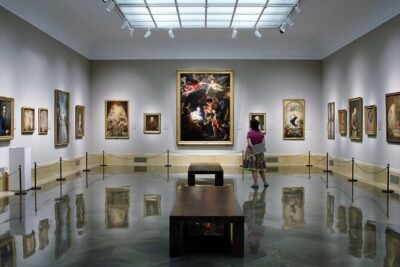
The Prado, room by room


Fresh ways to see Madrid
- Tour to Toledo & Madrid CitySight Seeing Tour
- 2-Day Guided Tour to Cordoba and Seville from Madrid
- Private Transfer from Madrid Airport to Madrid Hotels
- Wine Tasting and Flamenco Master Class in Madrid
- Prado Museum and Royal Palace Private Tour in Madrid
- Monastery Royal Barefoot Visit with entrance without waiting for queues
More ways into Prado Museum Guided Tours
 ★ 4.6Prado Museum Entry TicketFrom $2117,509 reviews
 ★ 4.6Small Group of Prado Museum Tour & Optional TapasFrom $532,437 reviews
 ★ 4.5Prado Museum Guided Tour with Skip-the-Line TicketFrom $462,018 reviews
 ★ 4.8Prado Museum Guided Tour With Fast AccessFrom $281,785 reviews
 ★ 5.0Prado Museum Small Group Tour with Skip the Line TicketFrom $541,738 reviews
 ★ 4.5Royal Palace & Prado Museum Skip the Line Guided TourFrom $821,347 reviews
 ★ 3.6Prado Museum Ticket with In-App Audio GuideFrom $351,154 reviews
 ★ 4.5Prado Museum Guided Tour with Skip-the-Line TicketFrom $451,146 reviews
Try another angle on the same itinerary