

REVIEW · GHOSTS, LEGENDS & INQUISITION WALKS
Escape the Inquisition in Madrid Exploration Game
Madrid gets more fun when you solve clues on foot. Escape the Inquisition turns a usual sightseeing day into a self-guided puzzle walk with smartphone directions. It is a practical alternative if you want to wander at your pace, with quick stops and built-in breaks.
I like that you can start at many times and pause and resume whenever you want. I also like the offline setup, so you can keep moving without worrying about spotty data. One thing to consider: because it is puzzle-led and phone-led, it can feel frustrating if you want a classic, guided explanation the whole way, or if you expect a human host at the start.
Key Highlights at a Glance
- Self-guided smartphone game with no physical guide
- Play offline, so you are not dependent on internet
- Flexible schedule, start any hour and take breaks
- Central Madrid route with 9 quick stop points
- Private experience for only your group, no crowds
Turn down Madrid's darker lanes
- Madrid: Spanish Inquisition and Legends Evening Walking Tour★ 4.7 · 1,396 reviews
- Madrid Oscuro: Torture, Ghosts, Crimes and Legends★ 5.0 · 1,363 reviews
- Madrid: Entry Ticket to Legends The Home of Football Museum★ 4.7 · 563 reviews
- Evening Walking Tour: Spanish Inquisition & Legends of Old Madrid★ 4.5 · 311 reviews
Escape the Inquisition in Madrid, a game instead of a guide-led tour

If you like cities where you can move fast and think on your feet, this is a good fit. Escape the Inquisition uses a trail of clues and puzzles that carry you from one central location to the next, and it also feeds you information as you go.
The big idea is simple: you walk to each stop, solve what the game asks, then get instructions for where to go next. That format is why it often feels more personal than a traditional tour, even though it still hits famous central areas.
This also means the experience is not about waiting around. You keep control of the rhythm. Want a slow pace for photos? Do it. Want to speed-run the puzzles between nearby streets? You can.
Price and time: what $7.14 per person buys you
At about $7.14 per person for roughly 1 hour 10 minutes, you are paying for convenience and structure. You are not paying for a guide’s time. You are paying for the route, the clue system, and the smartphone experience that keeps you progressing.
For this price and timeframe, I think the best value comes if you:
- already plan to walk around central Madrid anyway
- enjoy solving small puzzles
- want something that feels different from a bus tour
If you want a long, lecture-style tour with constant human interaction, the pricing might feel too low for what you expected. But if you want a guided-feeling route without paying for a guide, this is pretty efficient.
One more reality check: the time estimate is approximate. Since it is puzzle-based, your pace matters. If you get stuck, it can stretch. If you fly through, you may finish faster.
Meeting points and the no-human-contact setup
You start at C. de San Bernardo, 1, Centro, 28013 Madrid and finish at Calle de la Ventosa, 21, Centro, 28005 Madrid. The route ends a bit away from the exact starting corner, which is helpful if you are building a day itinerary around where you want to go next.
This is also described as private and no human contact. In plain terms, do not expect someone to meet you in person holding a sign. The self-guided instructions are sent to you, and your smartphone becomes the “guide.”
Why that matters: one of the biggest real-world friction points is when people arrive looking for a physical pickup. If you prefer clear face-to-face check-ins, this format might feel odd at first. Your best move is to have your email instructions and your phone ready before you arrive.
Another Madrid route worth weighing up


Playing in English and offline, what to expect on your phone
This experience is offered in English, and it works offline, so you do not need an internet connection during gameplay. That is a big practical win in a city where signals can bounce around and your battery gets drained fast.
You will receive directions through your smartphone, then follow clues that lead you to each stop. At each location, you solve a puzzle and get indications on how to continue, plus you learn about the place you have discovered.
A quick tip: charge your phone beforehand and bring a power bank if you know you use maps often. Even though the game can run offline, your phone still needs battery for navigation and reading instructions.
Your route through central Madrid: 9 stops, clue-by-clue

This game breaks your walk into short segments. Each stop is basically a mini-mission: arrive, solve, learn a bit, then move on. Most stops are around 5 minutes, with one longer stop at 10 minutes. That structure keeps it from dragging, especially if you are traveling with kids or a mixed group.
Here is the flow you will follow, in order:
Stop 1: Calle de San Bernardo
You begin at C. de San Bernardo, 1. You reach this point by following a clue and solving a puzzle. Once you arrive, the game gives indications on what comes next, plus some learning tied to the place you just found.
What I like about this start: it gives you momentum right away. You are not waiting for a lecture. You are already doing the activity.
Stop 2: Calle de Isabel la Católica
From there, you move to Calle de Isabel la Católica using the next clue and puzzle. Again, you get directions forward and a bit of place-based information once you solve your mission here.
This kind of second-stop transition is where the game finds its stride. By now you understand the format, so the puzzles feel less like a mystery and more like a rhythm.
Stop 3: Tribunal del Santo Oficio de la Inquisición
Next comes Tribunal del Santo Oficio de la Inquisición. This is the thematic center of the experience, and it is allocated a bit more time, about 10 minutes.
Because it takes a little longer, this is a good spot to slow down, read carefully, and confirm you understood the last clue. If your group tends to rush, this stop helps reset your pacing.
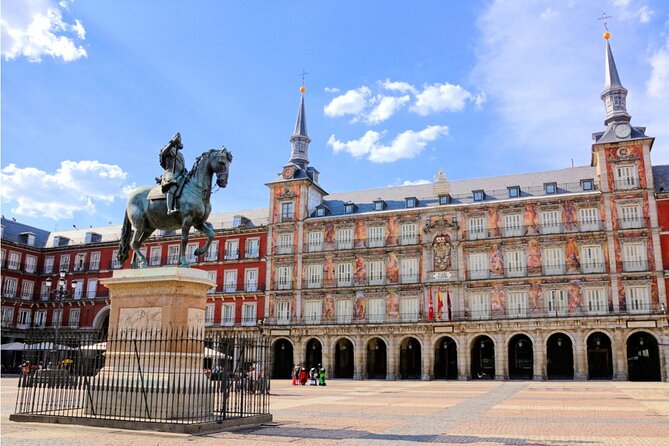
Stop 4: Plaza Mayor
You then go to Plaza Mayor. Like the earlier locations, you use a clue to get there, solve the puzzle when you arrive, and then receive the next set of instructions.
Why this stop is practical: Plaza Mayor is easy to recognize, so it helps keep the experience grounded. It is also a natural photo pause, even if you keep the game moving.
Stop 5: Mercado San Miguel
Next is Mercado San Miguel. The game again uses clue and puzzle mechanics, with brief learning and directions to continue. This is another “arrive, solve, continue” moment designed for short attention spans.
If your group likes to snack while walking, this stop naturally fits that. You can treat it as a quick mission checkpoint rather than a full market visit.
Stop 6: Plaza de la Cruz Verde
After the market area, you head to Plaza de la Cruz Verde. You repeat the same pattern: follow a clue, solve a puzzle, and then get indications for your next move, plus some information about what you found.
This stop works well as a mid-walk reset. By now, you have enough familiarity to feel confident, but you still have enough mission energy to keep going.
Stop 7: Restaurante La Muralla
Then you reach Restaurante La Muralla as another puzzle stop. The game tells you what to do next after you solve, and it adds some learning tied to the location.
A useful mindset here: treat these “normal” street or venue stops as part of the route logic. Even if the place itself is not what you came for, the puzzle mechanism keeps the sightseeing from feeling random.
Stop 8: Placa de la Cebada
Next is Placa de la Cebada (spelled as shown). Again, you solve the puzzle and get the directions onward, with brief information about the place you discovered.
By stop 8, many groups start moving a bit faster because they understand the game’s cadence. If you want to finish strong, keep an eye on the clue sequence so you do not lose time.
Stop 9: Real Basilica de San Francisco el Grande
Your final mission lands at Real Basilica de San Francisco el Grande. The stop still follows the same formula, puzzle first, then the game gives you indications to finish, plus the learning piece.
This ending spot also helps the walk feel like a real day out. You finish in an area that is different from where you started, and the route’s ending point is set to Calle de la Ventosa, 21.
How the historical info fits the puzzles, and when it may feel long
The game’s structure includes both puzzle tasks and information. At each stop, you are told something about the place you discovered, but it is delivered in the context of the mission.
That can be a great thing if you like learning in small bites between walking and problem-solving. It can also be a mismatch if you want the story told in a fast, casual way rather than what might feel like lengthier explanations between puzzles.
So here is my practical take: this is not a “stand and talk” history tour. It is a puzzle experience with learning inside it. If your group reads a lot while solving, you will likely enjoy the flow. If your group is more action-oriented, you may want to set expectations going in.
Who this experience suits best, families, groups, and the puzzle style
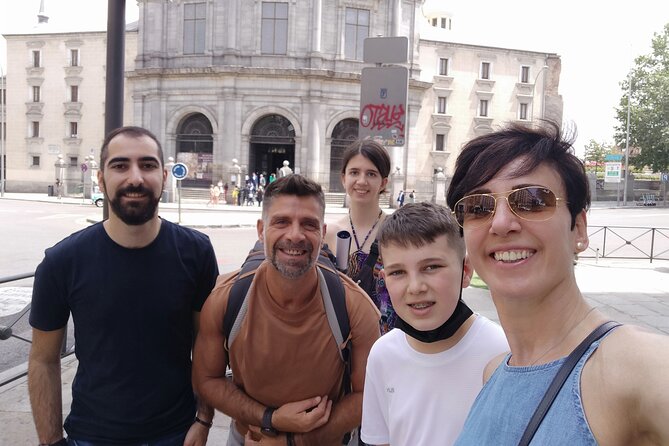
This game is positioned as ideal for adventurous travelers, families, and groups. That can be true, but only if your group enjoys the idea of figuring things out.
It tends to work best when:
- you are comfortable using a smartphone for directions
- you do not need constant human coaching
- you can solve puzzles together, or at least try
- you like the idea of short stops rather than long museum-style segments
If you are traveling with children, the key is temperament. Some kids enjoy puzzles and will stay engaged between stops. Others get bored if they feel the tasks are too easy or if the written info takes more time than they want.
For mixed groups, this experience can still work because you can play at your own pace. You can pause, regroup, and resume when everyone is ready. That flexibility is one of its strongest selling points.
Common friction points to plan around
With a rating around 3.9 out of 5, there are a few recurring issues worth calling out so you can avoid them.
First, the experience is self-guided, and that can surprise people who expect a physical pickup. If you arrive looking for a person, you can easily lose time. Your fix is simple, read the email instructions and start the game on your phone before you begin walking.
Second, puzzle difficulty can feel like a “personal match” issue. Some groups find puzzles too hard to finish, while others feel tasks are too straightforward. Since we only know the game is meant to work broadly across ages, the best move is to treat it like an activity that is fun to try, not a guaranteed win for every skill level.
Finally, if you are expecting a nonstop stream of guided explanations, you may find the information pacing less engaging. The format alternates puzzles and learning, so plan your expectations around a mix of both.
Practical tips so your day goes smoothly
Here are the moves I recommend for the best experience:
- Start with your phone ready: load the game instructions, check your audio and screen brightness.
- Use offline mode intentionally: offline is supported, but your phone still needs battery and basic functionality.
- Assign one clue-solver per group: rotating every stop can slow you down.
- Plan a quick rest window: it is allowed to take breaks and resume later, so you can keep energy up.
- Bring water: the game is short, but central Madrid walking adds up fast in heat.
Also, if you hit a real problem, you can reach the provider at [email protected]. That is a practical contact point if your instructions did not arrive or you cannot start properly.
Should you book Escape the Inquisition in Madrid?
Book it if you want a low-cost, flexible, offline-friendly way to explore central Madrid on foot, with a clear path and short puzzle stops. It is especially appealing if you are traveling with a group that enjoys activities more than lectures, or if you prefer to set your own pace.
Skip it or think twice if you need a traditional guided tour with constant human help, or if you know your group will be upset by any smartphone-led start. Since there is no physical guide, your success depends mostly on being ready with your phone and following the clue flow.
If you want a fun alternative to a standard sightseeing day, this one makes a solid choice, and at around $7.14 per person for about 1 hour 10 minutes, it is easy to fit into a busy Madrid itinerary.
FAQ
How long is Escape the Inquisition in Madrid?
It takes about 1 hour 10 minutes (approx.).
What language is the game offered in?
It is offered in English.
Do I need internet to play?
No, you can play offline and you do not need an internet connection.
Can I start at any time?
Yes, you have full flexibility to start at any hour, and the game is described as always available to book with 24/7 support. The listed operating window is 5:00 AM to 9:30 PM.
Where does the game start?
The start point is C. de San Bernardo, 1, Centro, 28013 Madrid, Spain.
Where does the game end?
The end point is Calle de la Ventosa, 21, Centro, 28005 Madrid, Spain.
Is this a guided tour with a person meeting you?
No. It is self-guided with smartphone instructions and private, no human contact.
Is it a private experience?
Yes, it is private, and only your group will participate.
Is free cancellation available?
Yes. You can cancel up to 24 hours in advance for a full refund.
Are service animals allowed?
Yes, service animals are allowed, and most travelers can participate.
More Self-Guided Tours in Madrid


More Tour Reviews in Madrid




Legends beneath the streetlights




Fresh ways to see Madrid
- Tour to Toledo & Madrid CitySight Seeing Tour
- 2-Day Guided Tour to Cordoba and Seville from Madrid
- Private Transfer from Madrid Airport to Madrid Hotels
- Wine Tasting and Flamenco Master Class in Madrid
- Prado Museum and Royal Palace Private Tour in Madrid
- Monastery Royal Barefoot Visit with entrance without waiting for queues
More ways into Ghosts, Legends & Inquisition Walks
 ★ 4.7Spanish Inquisition and Legends Evening Walking TourFrom $231,396 reviews
 ★ 5.0Madrid Oscuro: Torture, Ghosts, Crimes and LegendsFrom $31,363 reviews
 ★ 4.7Entry Ticket to Legends The Home of Football MuseumFrom $21563 reviews
 ★ 4.5Evening Walking Tour: Spanish Inquisition & Legends of Old MadridFrom $24311 reviews
 ★ 4.7Toledo: Mysteries and Secrets Tour in SpanishFrom $14106 reviews
 ★ 5.0Inquisition, The Executioner, Witches, Expulsion Jews and MuslimsFrom $385 reviews
 ★ 4.52-Hour Tour of the Madrid of MysteriesFrom $1475 reviews
 ★ 5.0Medieval Madrid: Discover Legends & HistoryFrom $267 reviews
Try another angle on the same itinerary