

REVIEW · GHOSTS, LEGENDS & INQUISITION WALKS
Inquisition, The Executioner, Witches, Expulsion Jews and Muslims
Fear and faith share the same street corners. This 2h 15m walk turns central Madrid into a living lesson on the Inquisition, the executioner, and how the period targeted Christianity, Islam, and Judaism, plus the themes of witches and the expulsion of Jews and Muslims. I love how the guide connects each stop to a specific step in the process, and I love the way the route ends with legacies of Jews and Muslims in Spain, not just old stone and silence. One thing to consider: you will hear descriptions tied to torture and executions, so it is heavy material, even if it is explained clearly.
What makes this tour work is the storytelling. Guides like Jackie and David Onion (both praised for keeping things easy to follow) use dramatic performance and steady pacing, so the 8 stops do not feel like random name-dropping. A small consideration is that the tour is popular, and the subject matter is intense, so it helps to choose this when you have energy to process the day and not just rush onward.
Key things you will notice on this route

- 8 core stops across central Madrid that map the Inquisition from faith to punishment
- Execution methods get named including gallows, beheading, garrote vil, and burning at the stake
- Modern echoes are part of the ending, with reflection on legacies and current religious conflicts
- Performance-style guiding that keeps you engaged, including examples like David Onion and Jackie
- Practical learning tools like printed materials made for the walk
- A surprisingly strong value at the stated per-group price for a 2h 15m route in English
Turn down Madrid's darker lanes
- Madrid: Spanish Inquisition and Legends Evening Walking Tour★ 4.7 · 1,396 reviews
- Madrid Oscuro: Torture, Ghosts, Crimes and Legends★ 5.0 · 1,363 reviews
- Madrid: Entry Ticket to Legends The Home of Football Museum★ 4.7 · 563 reviews
- Evening Walking Tour: Spanish Inquisition & Legends of Old Madrid★ 4.5 · 311 reviews
A 2h 15m walk through Madrid’s Inquisition landmarks
This is a compact, center-city route, built for people who want more than a textbook vibe. The walking time is about 2 hours 15 minutes, and the group is kept to a maximum of 30 with the tour offered in English and confirmed at booking time.
Logistics are refreshingly simple. You get a mobile ticket, plus printed material and teaching tools along the way, and you also receive a link to personalized recommendations for what to do in Madrid after. The tour starts at Plaza Mayor (Centro, Madrid) and ends at Plaza de la Armería, with the end point about 3 minutes from Metro Opera.
Theme-wise, the tour is blunt. It is organized around the Inquisition, the executioner, and the way authorities treated different faith communities through accusations and punishment. If you are the type who likes to connect ideas to places, you’ll likely enjoy how the route keeps returning to the same question: how did people justify control in the name of faith?
From Plaza Mayor to Iglesia de Santa Cruz: where faiths meet

You start in the thick of Madrid’s center, right near Plaza Mayor, and the first meaningful anchor is Iglesia de Santa Cruz. This opening stop sets the tone by talking about the Spanish Inquisition and how it related to the three monotheistic religions: Christianity, Islam, and Judaism.
I like the way this stop frames the whole walk. It gives you a mental map before the route gets darker, so when the guide later talks about investigation and accusations, you understand the logic they were trying to enforce. It also makes the tour feel more human, because you can see the focus shift from power to identity.
The main drawback is also obvious. Even though this is an early stop, it is still about persecution, and that can feel unsettling right away.
Plaza de la Provincia and the executioner: investigations, torture, confessions
Next up is Plaza de la Provincia, where the tour zooms in on the machinery behind the Inquisition. This is where you hear about the executioner and how investigations worked, including torture and confessions.
This stop is one of those that works best when you let the guide pace you. The route is only 15 minutes here, but the point is not to memorize dates. The goal is to understand how questioning could become a system, how confession could be treated as proof, and how fear could be turned into control.
If you are sensitive to descriptions of violence, plan for it. This part is not a gentle overview, it is a direct look at how the process was portrayed and explained.


Casa de la Carnicería: carts of faith and the big public trial
At Casa de la Carnicería, the tour shifts from interrogation rooms to public theater. The focus is on carts of faith in Madrid, the idea of the big trial, and a reference to the most famous painting tied to the story being discussed.
What I like about this stop is the contrast. It shows how punishment was not just private discipline, it was staged as an event that communicated what society should believe and fear. Even if the painting reference stays more conceptual than art-history detailed, it helps you picture how culture and coercion can overlap.
A small consideration here is that “big trial” and “most famous painting” can sound like shorthand. The stop is brief, so if you want maximum detail, bring a curious mindset and let the guide steer you to what matters most in the context of the walk.
Basilica de San Miguel: edicts of faith and false allegations
Then you move to Basilica de San Miguel, and the language gets sharper. This stop is about how authorities tried to spot a false Jew or a false Moorish, plus proclamations of edicts of faith and the reality of false allegations.
This is where the tour becomes especially valuable for modern readers, because it is about the pattern. You are not just learning that persecution happened, you are learning how people were classified through accusation and how rules could be written to justify harm. The wording in the tour description is harsh on purpose, and the guide’s job is to explain it in a way that helps you understand the mechanism without accepting it as normal.
If you are looking for a calm, pretty walk through churches, this stop might feel more like a lesson in propaganda than architecture. On the other hand, if you want insight into how identity policing worked, this is a core reason to choose the tour.
Casa Cisneros: Cisneros vs Torquemada in one tense frame

At Casa Cisneros, you step into a comparison moment: Cisneros vs Torquemada. The tour treats them as historical characters in the story, and you’ll get a sense of how their roles were set against each other in the broader narrative being explained.
I appreciate this stop because it adds texture. After learning about accusation and punishment, you see the human side of leadership, argument, and hard choices, even if the details are presented at a walkable, high-level pace.
This stop is only about 10 minutes, so don’t expect a full biography. Think of it as a guide-led snapshot that keeps the bigger theme clear: power did not come from nowhere.
Plaza de la Cruz Verde: symbol, gallows, garrote vil, burning at the stake

Plaza de la Cruz Verde is the symbolic center of the darker themes. This stop is described as a symbol of the Inquisition, and it covers implementation: the gallows, beheading, Garrote Vil, and burning at the stake, with a mention of Bruges.
Even if you have read about the Inquisition before, hearing the list of execution methods laid out like this makes it feel immediate. The tour is not trying to shock you for fun. It is trying to make you understand the range of punishments that were part of the same system.
One more practical note: because the tour is timed and brief here, it helps if you are comfortable standing still for a short stretch. This is where you’ll want your full attention, not your phone.
Almudena Cathedral: Vatican Archives, John Paul II, and the end of the Inquisition

At Catedral de Sta Maria la Real de la Almudena, the tour pulls back from the street-level horror and points to later steps and records. The stops described here include Vatican Archives, John Paul II and the Pardon of the Catholic Church, plus the end of the Inquisition.
This is also where the tour includes a detail that hits hard because it is relatively late: the last execution of the Inquisition, described as 1974, and tied to Garrote Vil.
I like that the tour refuses to end with old brutality alone. It follows the story into aftermath, which helps you see how institutional thinking can shift, but also how fear and prejudice can leave long echoes. The stop also brings in legacies of the Jews in Spain and legacies of Muslims in Spain, which sets you up for the final reflection.
Plaza de la Armería: legacies and today’s religious conflicts
The walk ends at Plaza de la Armería, where the tour ties the past to the present. You’ll hear about current religious conflicts, referred to as holy wars, and how the discussion of legacies connects forward.
This last part matters. Many tours about dark topics stop when the facts end. Here, the closing reflection uses those facts to ask what changes and what does not. If you like tours that leave you with a more thoughtful mind, this ending is a good fit.
The route ends after about 20 minutes at this final plaza, and then you’re back in the center with easy options to keep exploring Madrid on your own.
Price and value: why this can be a smart buy
The stated price is $3.61 per group (up to 15), and the tour runs about 2h 15m. In practical terms, this is the kind of price that can feel almost too good, which usually means the value is driven by the guide and the included learning materials rather than expensive ticketed museum time.
The good news is that you get several things that help on a walking route: a local guide, printed material and teaching tools, a mobile ticket, and that link to personalized recommendations afterward. The sites are also listed as not requiring entries for this experience, which keeps the tour from turning into a constant add-on expense.
If you care about maximizing value, this is a strong choice. If you hate intense topics, you’ll need to weigh the educational payoff against the emotional weight. This is not an all-comedy kind of route.
What the best guiding looks like here
The route lives or dies on the guide. The strongest praise you can count on for this experience is how well the guide keeps people engaged and how easy the material feels to follow.
Two names show up in the strongest stories: Jackie is praised for being clear and making the experience interesting and easy to follow, and David Onion is praised for using dramatic talents to keep the group engaged. There is also praise for how the guide handles the end-of-tour tipping conversation in a tactful way with no pressure, which matters if you prefer a low-key close.
So before you book, ask yourself what you want from a walking tour. If you want facts plus structure plus performance, this route delivers that combination.
Should you book Inquisition, The Executioner, Witches, Expulsion Jews and Muslims?
Book it if you want:
- A walking tour that connects ideas to real Madrid locations
- Clear explanations of the Inquisition’s process themes, including investigation, torture, and confessions
- A route that covers multiple angles, including edicts of faith, accusations, and later reflections tied to Vatican Archives and John Paul II
- A guide style that uses drama to keep a dark topic understandable
Skip it or choose another option if you:
- Prefer lighter city walking where violence is not part of the script
- Get overwhelmed by topics like execution methods and false allegations
- Want a purely art-focused or architecture-focused tour rather than a theme-driven history lesson
If you do book, I’d treat it like an “intellectual workout.” Wear comfortable shoes, and give yourself time afterward to wander and reset your brain. The ending in Plaza de la Armería is designed to leave you thinking, not just checking boxes.
FAQ
Is this tour offered in English?
Yes. The experience is offered in English.
How long is the tour, and how many stops are there?
It lasts about 2 hours 15 minutes and includes 8 stops across central Madrid.
How much does it cost?
The price is $3.61 per group, up to 15 people.
Do I need to pay separate entry fees for the sites?
No. Entries to the sites are not required for this experience.
Where does the tour start and end?
It starts at Plaza Mayor, Centro, Madrid and ends at Plaza de la Armería (Pl. de la Armería, Centro, 28013 Madrid). The end point is about 3 minutes from Metro Opera.
What if I need to cancel?
There is free cancellation. You can cancel up to 24 hours in advance for a full refund.
More Tour Reviews in Madrid

Legends beneath the streetlights




Fresh ways to see Madrid
- Tour to Toledo & Madrid CitySight Seeing Tour
- 2-Day Guided Tour to Cordoba and Seville from Madrid
- Private Transfer from Madrid Airport to Madrid Hotels
- Wine Tasting and Flamenco Master Class in Madrid
- Prado Museum and Royal Palace Private Tour in Madrid
- Monastery Royal Barefoot Visit with entrance without waiting for queues
More ways into Ghosts, Legends & Inquisition Walks
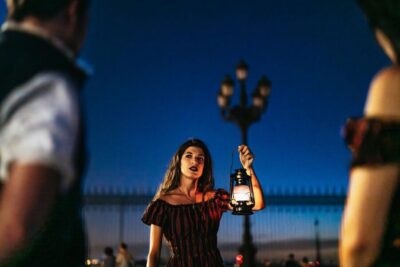 ★ 4.7Spanish Inquisition and Legends Evening Walking TourFrom $231,396 reviews
 ★ 5.0Madrid Oscuro: Torture, Ghosts, Crimes and LegendsFrom $31,363 reviews
 ★ 4.7Entry Ticket to Legends The Home of Football MuseumFrom $21563 reviews
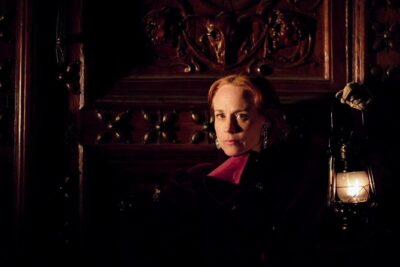 ★ 4.5Evening Walking Tour: Spanish Inquisition & Legends of Old MadridFrom $24311 reviews
 ★ 4.7Toledo: Mysteries and Secrets Tour in SpanishFrom $14106 reviews
 ★ 4.52-Hour Tour of the Madrid of MysteriesFrom $1475 reviews
 ★ 5.0Medieval Madrid: Discover Legends & HistoryFrom $267 reviews
 ★ 4.5Night Walking Tour of Toledo to learn about Secrets and LegendsFrom $1056 reviews
Try another angle on the same itinerary