
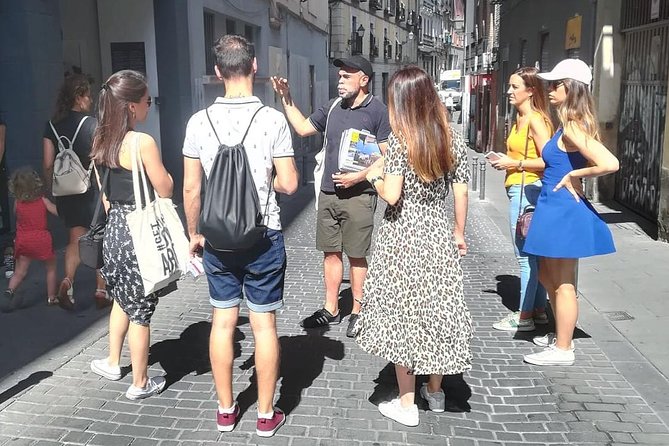
REVIEW · MADRID STREET ART & ALTERNATIVE TOURS
Architour through Lavapiés and Rastro with an architect
Madrid’s architecture hides in plain sight. This 3-hour walk with an architect turns the streets around Lavapiés and the Rastro area into a clear story about Madrid’s urban design.
I love how the route blends big cultural landmarks with smaller, functional architecture, like the Imprenta Municipal print works and the Jean Nouvel extension at Museo Reina Sofía. I also like the human side of the tour at Plaza Lavapiés, where you stop and actually read what daily life looks like in a changing neighborhood. The main drawback to plan for is that this is a tight walking route, so it is not a slow, sit-down museum day.
Key highlights you will feel on the walk
- Architect-led explanations that connect buildings to Madrid’s politics and city planning
- Rationalism and modernism in real streets, including a 1930 print shop and a modern-movement theater
- Jean Nouvel at Reina Sofía, with quick hits at the restaurant, library, and covered patio
- Neighborhood culture stops, including Plaza Lavapiés and La Tabacalera de Lavapiés
- A practical finish for your trip, with tapas and drink recommendations at Mercado San Fernando
Look beyond the formal galleries
- Madrid: Street Art Tour with Local Graffiti Hunter★ 4.8 · 270 reviews
- Street Art Guided Tour in Madrid★ 5.0 · 175 reviews
- Madrid: Street Art Bike Tour★ 4.5 · 21 reviews
- Private Segway Tour Madrid: Lavapiés & Historical Center★ 4.5 · 15 reviews
A three-hour architour built around real places, not slides
This tour is built for people who like to look closely. You walk, you stop, and you get a guided read of what you are seeing, from façades to courtyards and the way the city organizes public space.
It runs for about 3 hours and is offered in English. It is also a private setup, so it is only your group, not a big crowd. You get a mobile ticket, and the meeting point is easy to reach by public transportation.
Two practical notes for your comfort. First, you should plan for steady walking between stops, with quick transitions rather than long stays. Second, the experience needs good weather, so keep a backup day in mind if Madrid is gray or rainy.
Finally, bring the right mindset. This is not just sightseeing. The architect guide treats each place like a clue, then connects those clues into a bigger picture of Madrid.
Start at Plaza de Tirso de Molina, then get the neighborhood’s timeline
The tour begins at Plaza de Tirso de Molina, where you get a history briefing for the area. This matters more than you might think, because Lavapiés and the surrounding districts are not one uniform style. They are layered. Different eras crowd together, and the city keeps reshaping itself.
Expect the guide to set the stage with how the neighborhood developed and why certain streets and blocks look the way they do today. It is also a good moment to ask early questions, since the rest of the walk moves fast and you will want to know what to watch for.
You spend about 15 minutes here, and the stop is free. Think of it as orientation time. Once you leave the plaza, your job is simple: watch how the guide’s themes show up in the buildings and in the street life.
Carcel de la Inquisición: prison beneath a corrala
Next up is the Inquisition Jail (Carcel de la Inquisicion), described as an Inquisition prison under a corrala. This is one of those stops where the architectural logic is tied directly to the city’s older residential fabric.
You will only have around 10 minutes at the site, so do not expect a long lecture. Instead, listen for the big takeaways: how spaces can be hidden inside a lived-in neighborhood, and how architecture can reflect power, control, and social structure.
This stop is also free. The value here is context, not ticketed entry. If you like urban history, this is the moment the tour starts feeling like more than a “walk and look” program.




El Rastro market streets: architecture by way of everyday life
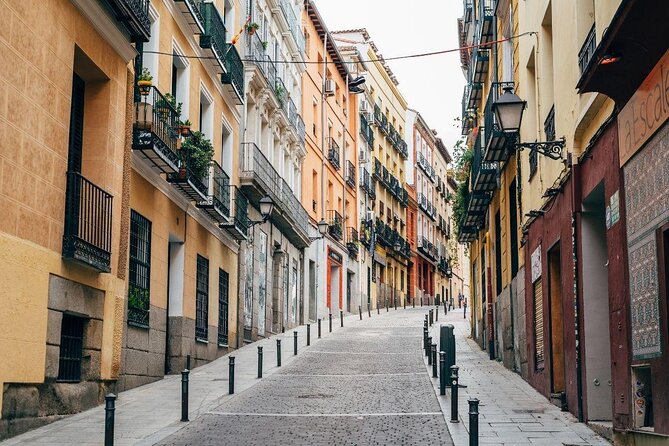
Then you head to El Rastro, the famous street market area. The timing detail helps: if you do the tour on a Sunday, you visit the market when it is in full rhythm. If you go another day, you still see the street, and the vintage furniture stores may be open during the rest of the week.
You get about 15 minutes here. That is enough time to notice the street economy: what kinds of shops cluster together, how the market shapes foot traffic, and how the neighborhood supports commerce year-round, not only during the busiest day.
This is also a good stop for people who care about “real Madrid,” not only postcard views. Even if you do not buy anything, you learn how commercial streets are part of the architectural story.
Teatro Kamikaze façade and the small art-deco details
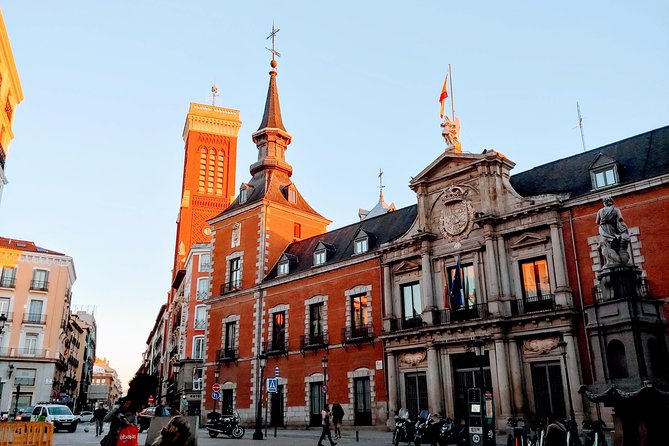
At El Pavon Teatro Kamikaze, you pause to see the façade, including an art-deco clock. This is a short stop, around 5 minutes, but it is the kind of detail that can get lost when you walk past without context.
If you want, there is also a chance to grab a coffee at the cafe in the middle of the architour. Drinks are not listed as part of the included items, so I would treat any coffee as extra, based on what you choose.
The takeaway from this stop is simple: Madrid’s style changes over time, but you can still find the old fashion cues in the middle of today’s streets.
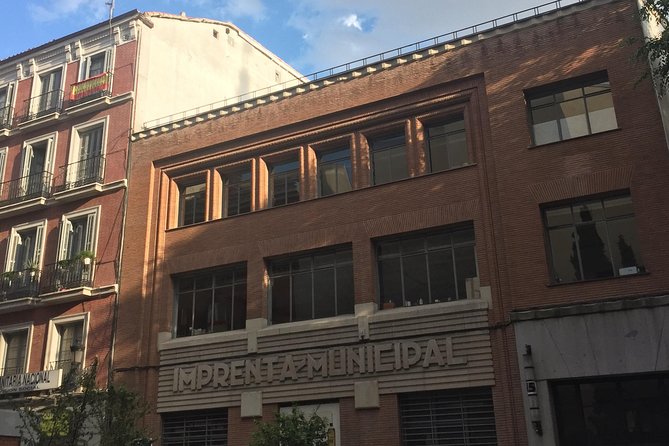
Imprenta Municipal: rationalist architecture from 1930, up close
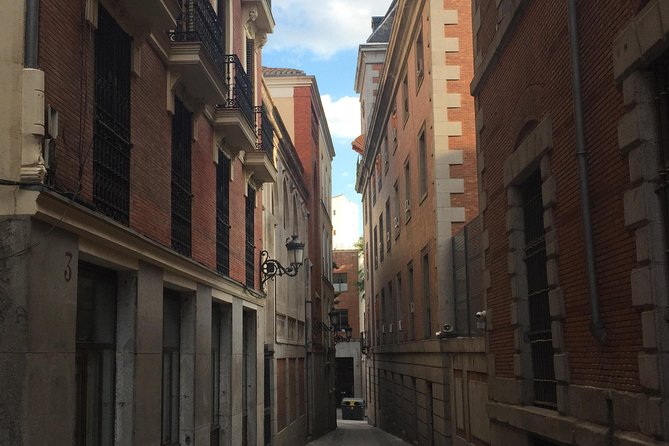
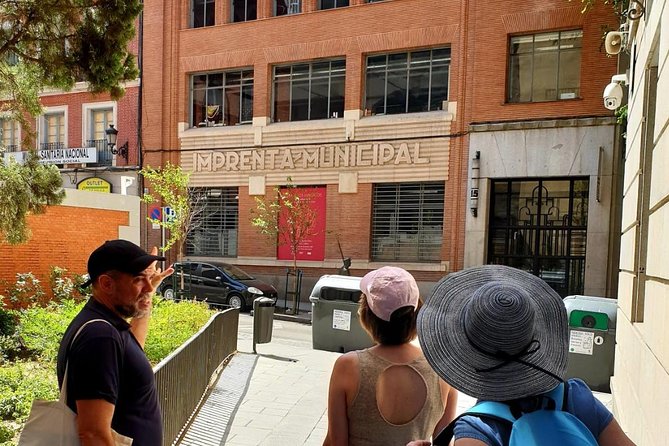
One of the most meaningful stops is the Imprenta Municipal. Here you visit a 1930 rationalist building, described as a hidden jewel of Madrid’s rationalist architecture.
This stop is included, and you spend about 15 minutes. That inclusion matters, because it signals that the guide is not only offering street explanations. You also get access to architecture that is harder to appreciate from the outside.
Rationalist buildings can feel “serious” on first glance, but the tour approach helps you see what rationalism was trying to do: make function and structure readable. In a city like Madrid, that creates a sharp contrast with older residential forms and later styles you will see around Lavapiés.
If you care about design beyond aesthetics, this is the stop to focus on. Look at proportions, materials, and how the building holds space for work and civic life.
Plaza Lavapiés: a square with a neighborhood’s changing face
At Plaza Lavapies, the tour shifts from architecture objects to the architecture of people in public space. This is the square that gives its name to the neighborhood, and it is described as the center where different races and cultures coexist.
You get about 5 minutes here, and the goal is not a lecture-heavy stop. It is more like a reset: you watch how the square functions, how neighbors and new residents share space, and how daily life changes the meaning of a location over time.
I like this stop because it keeps the tour honest. Architecture is not only buildings. It is also the way streets get used, and how a public square becomes a social stage.
Reina Sofía’s Jean Nouvel extension: patio, library, and the 1999 contest
Next comes Museo Nacional Centro de Arte Reina Sofía, but specifically the extension designed by Jean Nouvel. You do not get a full museum route here, and that is okay. You are there to read the architecture.
You spend about 10 minutes, and you will stop at the restaurant, the library, and a covered patio. You also learn about different proposals from a contest held in 1999, which gives you useful context for why the extension looks the way it does.
This is a great stop if you want architectural ideas without committing to a full museum day. It is also a smart way to decide if you want to come back later. If you like what you see, you can plan your own longer visit to the collection areas at your pace.
Tip for your time here: keep your attention on transitions, light, and how outdoor space gets “covered.” Those design choices are often what make the Nouvel style feel modern but still usable in daily life.
Mercado San Fernando: tapas, drinks on you, and practical Madrid advice
Your last main area is Mercado San Fernando, a neighborhood market where you take some tapas and drink something while the guide offers suggestions for your stay in Madrid. The key detail is that drinks are not included, so budget for what you order.
You spend about 15 minutes here, which is perfect for a short reset after a lot of walking. This is also where the tour becomes more personally useful. When someone who lives in the district shares where to go next, it usually saves you time later.
I recommend you use this moment with intention. Ask about which neighborhoods feel most like what you liked on the walk. Ask what to see that is nearby and not too touristy. And if you have a day trip in mind, ask for a practical route suggestion.
The tour finishes at Mercado de San Fernando, at C. de Embajadores, 41.
La Tabacalera de Lavapiés: abandoned industry turned neighborhood space
After Mercado-level neighborhood life, you do a very different kind of stop at La Tabacalera de Lavapiés. You visit this abandoned industrial building that now houses exhibitions and an area that is self-managed by neighbors.
You also see works by urban artists on the walls. The art here is part of the site’s story, because it reflects how people repurpose buildings instead of only waiting for official changes.
Time is about 15 minutes. The important practical detail is that La Tabacalera de Lavapiés is closed for works from July 25. If your trip falls around that date, you might want to check if your tour route can adapt.
Even with a shorter stop, this is the kind of place that makes the tour feel real. You see how architecture and community action combine.
Teatro Figaro: a modern-movement theater you can spot fast
The final stop is Teatro Figaro, where you see the first theater built in Spain with the criteria of the modern movement. Expect about 5 minutes here.
Because it is short, the best strategy is to focus on your “why.” A modern-movement theater is not just a pretty façade. It reflects how performance spaces were being shaped for a new idea of society and design.
This stop is a strong close because it pulls the tour back into architecture themes: styles change, and even cultural buildings follow those changes.
Price and logistics: what $210.12 really buys you
At $210.12 per person for about 3 hours, you are paying for more than walking. You are paying for an architect-led route that includes access to all buildings on the program.
Some entrances are listed as free (and many stops are free), but Imprenta Municipal is explicitly included. In practice, what you are buying is guided entry and, more importantly, guided interpretation. A building can look “interesting” in passing. With the right context, it becomes legible.
There is also a value-of-time element. The itinerary hits a range of design eras and styles in one outing, including rationalist architecture from 1930, modern-movement theater, and Jean Nouvel’s Reina Sofía extension. If you tried to stitch this together alone, you would spend time hunting and still risk missing the connections.
Two cost considerations to plan for. First, drinks are not included at markets and bars where you stop for a bite. Second, there may be optional purchases like coffee at the Kamikaze cafe, so keep a little extra budget ready.
If you can, book early. The tour is often booked about 91 days in advance on average, which tells me it is a popular way to see central Madrid through an architectural lens.
Who should book, and who might skip it
This is an excellent fit if you:
- care about architecture and city planning, not only museum collections
- want a route focused on Lavapiés and the nearby Rastro area
- like explanations that connect streets, buildings, and social history
- prefer a private group experience in English
You might want to skip or choose another type of tour if you want:
- long stays inside major museums
- a no-walking plan
- a day that is mainly about shopping or a food-only itinerary
Should you book this architect-led Lavapiés and Rastro walk?
If you enjoy architecture with context, I think you will like this one. The best part is the mix: serious design stops like the Imprenta Municipal and Jean Nouvel’s extension, plus neighborhood-life stops like Plaza Lavapiés and La Tabacalera. You get to see how Madrid’s layers show up in real places, not just in textbooks.
The deciding factor for me is your tolerance for a focused walking route. If you can handle steady walking and short, targeted stops, this tour can make your Madrid days feel smarter and more connected. If you want slow museum time or minimal street walking, it may feel too compact.
FAQ
How long is the tour?
It is about 3 hours (approx.).
What is the price per person?
The price is $210.12 per person.
Is the tour offered in English?
Yes, it is offered in English.
Is this a private tour?
Yes. Only your group will participate.
Where does the tour start and end?
It starts at Plaza de Tirso de Molina and ends at Mercado de San Fernando (C. de Embajadores, 41, Centro, 28015 Madrid, Spain).
Are building entrances included in the price?
Yes. Access to all buildings is included in the price, and the Imprenta Municipal stop is specifically listed as included.
Are drinks included?
Not at markets, bars, and restaurants where stops happen. Drinks are not included, though you may have tapas at Mercado San Fernando.
Is there any date when La Tabacalera might be closed?
Yes. La Tabacalera de Lavapiés is closed for works from July 25.
What is the cancellation policy?
You can cancel up to 24 hours in advance for a full refund.
More Tour Reviews in Madrid




Murals beyond the museum mile




Fresh ways to see Madrid
- Tour to Toledo & Madrid CitySight Seeing Tour
- 2-Day Guided Tour to Cordoba and Seville from Madrid
- Private Transfer from Madrid Airport to Madrid Hotels
- Wine Tasting and Flamenco Master Class in Madrid
- Prado Museum and Royal Palace Private Tour in Madrid
- Monastery Royal Barefoot Visit with entrance without waiting for queues
More ways into Madrid Street Art & Alternative Tours
 ★ 4.8Street Art Tour with Local Graffiti HunterFrom $29270 reviews
 ★ 5.0Street Art Guided Tour in MadridFrom $30175 reviews
 ★ 4.5Street Art Bike TourFrom $4621 reviews
 ★ 4.5Private Segway Tour Madrid: Lavapiés & Historical CenterFrom $5115 reviews
 ★ 5.0Madrid Hidden Street Art TourFrom $3212 reviews
★ 5.0Hidden Street Art TourFrom $3311 reviews
 ★ 5.0Lavapiés: The most multicultural neighbourhood of Madrid, Private Walking TourFrom $1214 reviews
Try another angle on the same itinerary