

REVIEW · DESSERT TOURS
2-Hour Patisserie Experience for Dessert Lovers
Dessert stops, Madrid style, in two hours. This small-group sweet walk connects famous squares to real bakery stories, and it keeps you moving with coffee or tea included. You get to see how Madrid’s dessert culture shows up in the city’s street life, not just on a menu.
I love how the tour is built around learning recipes and designs right from the patisseries, so you taste with context. I also like the variety of tales, from king-linked sweets to a Nobel literature connection. One drawback to factor in is the pace, with short stops of about 30 minutes each, so it is more tasting and storytelling than long, slow café time.
Key things to know before you go

- Up to 15 people means you can actually hear the details and ask questions.
- Four central dessert stops keep the walk easy to follow around top landmarks.
- Admission tickets included for the bakery entries, not just a quick sample.
- Coffee or tea included with sweets, so you do not need to plan extra breaks.
- English offered for travelers who want the history and food explanations clearly.
Another Madrid route worth weighing up
- Tapas and history tour ending with churros with chocolate★ 5.0 · 119 reviews
- Madrid: 1-Hour Segway Tour with Chocolate and Churros★ 4.9 · 65 reviews
- KAICAO bean to bar and design your chocolate experience★ 4.5 · 18 reviews
- Madrid Segway Tour with Chocolate and Churros★ 4.5 · 16 reviews
Meeting at Mercado de San Miguel: the 11:00 am start and the walking rhythm
This tour starts at Mercado de San Miguel (Plaza de San Miguel, s/n, Centro, 28005 Madrid). You also end right back there, which is a big deal in a city this large. The route is designed for an easy, central stroll, so you should be able to slot it into almost any Madrid day without stress.
Expect a total duration of about 2 hours. The timing works like a sequence of mini food experiences. Each stop is roughly 30 minutes, so you get enough time to taste, learn a few specific details, and move on before the next square.
That short-stop structure is also why this tour is best for people who like momentum. If you want one or two desserts and then settle into a relaxed, sit-down meal, you may feel slightly rushed. If, on the other hand, you want variety and stories packed into a single morning, this format fits nicely.
It is also offered in English and capped at a maximum of 15 travelers, which usually helps the guide keep things conversational rather than lecture-style. One small planning note: if you are sensitive to standing around while groups enter bakeries, wear comfortable shoes. You are in the center of Madrid for this one, and the walk adds up even when it does not feel long.
Puerta del Sol and the oldest-bakery entry: a king-named sweet with a once-a-year rule

The first stop is Puerta del Sol, one of Madrid’s most famous squares. Here, you taste a dessert that is also named after the kings, and you hear the reason it is eaten only once a year, plus the timing behind that tradition. That is the kind of detail that makes dessert feel less random and more like culture.
You then enter one of the oldest bakeries in Madrid. That matters because it changes what you think you are doing. Instead of just trying something sweet, you are stepping into the setting that helped these desserts become part of the city’s rhythm. When a recipe comes with a seasonal schedule and a royal-linked story, it instantly feels more meaningful than a generic pastry.
Practical tip: arrive ready to taste, not just to look. Your guide will connect the dessert’s name, its royal link, and the once-a-year timing to how people in Madrid view these treats. If you are the type who likes to understand what you are eating, this stop is a strong opener.
Possible snag: because this first segment includes both a tasting and a bakery entry, you may get less time lingering at the window after you taste. I treat the first stop as the one where I let the guide set the tone. If you do that, the rest of the tour clicks faster.
Plaza de Jacinto Benavente: a Nobel literature link and a dessert that only fits here
Next you head to Plaza de Jacinto Benavente. This stop leans into the intersection of food and storytelling. You make the connection between the Nobel laureate in literature linked to the square and a unique dessert that can only be eaten in this square.
That detail is memorable for two reasons. First, it forces you to look at Madrid as a place where food is location-specific, not just generic “Spanish-style.” Second, it shows you how famous names and city spaces can shape what people eat and when they bother to seek it out.
You get about 30 minutes here. Use that time well. I recommend you taste first, then ask how the dessert relates to the literature connection. The guide’s explanation is what turns a sweet bite into a mental map of Madrid.
A small reality check: a dessert that only fits one square can mean the tour’s samples are special, but it also means you should not expect a huge menu choice. This stop is about one meaningful tasting plus context, not browsing.
Another Madrid route worth weighing up


Calle del Arenal: shoes on the avenue and the national dessert of Spain

Your third stop takes you along Calle del Arenal, described as the avenue of shoes. That is not just a cute street detail. It is part of the tour’s method: it uses what you see in Madrid’s streets to frame what you taste.
Along the way, you eat the national dessert of Spain. The guide ties that choice into the broader picture of how desserts show up as everyday identity, not just special-occasion treats. Even if you think you already know what Spanish desserts are, this is the moment where you get to see how Madrid people talk about their favorites and traditions.
This is another 30-minute segment, so it stays focused. The best way to enjoy it is to lean into contrast. One stop has royal naming and once-a-year rules, another has a Nobel-literature square connection, and now you get a dessert that is framed as national. If you pay attention to how the guide compares the stories, you will probably come away with a clearer sense of what makes Madrid desserts feel distinctly Madrid rather than just Spanish in general.
A consideration for taste preferences: if you do not usually like very sweet desserts, you may want to pace yourself across the stops. The structure includes multiple sweets in a short window, so plan for it like you would a tasting menu day. I like to bring a water bottle afterward for walking, even though your coffee or tea is included during the tour.
Carrera de San Jerónimo and the museum-triangle area: royal candy, royal mistresses, and why sweets travel through stories

The final tasting stop is on Carrera de San Jerónimo, where you get to see the way to the museum triangle area. Then the story gets deliciously dramatic. You taste the candy that the king loved to distribute to his mistresses.
That is a wild line, and it works because it shows you how sweets were part of social life, not just nutrition or comfort. Food is often remembered through the people who used it to signal status, affection, or power. In this case, you get a royal candy tale that reframes candy as a kind of history you can literally taste.
Like the other stops, you get about 30 minutes. This final segment is the one where I usually pay attention to design details, textures, and the aftertaste. By now, you are not just collecting sweets, you are comparing how each story shapes the experience. The guide’s explanation helps you remember the flavors in a more organized way.
One thing to keep in mind: because this last stop ends back at the meeting point, you may feel like you are winding down right after the most story-heavy candy. I like having a simple plan afterward, like a nearby stroll or a café stop where I can reflect without rushing. Ending where you started is useful for exactly that.
What you actually get for $120.16: value built on tastings plus bakery entry

The price is $120.16 per person for a total of about 2 hours. On paper, it looks like a lot for a dessert walk, but the value is in how it is packaged.
Here is what is covered, based on how the tour is run:
- Multiple sweets tastings across central stops
- Coffee or tea included for convenience
- Admission tickets included for each stop’s bakery entry experience
So you are not paying only for the guide’s talk. You are paying for guided access to places, guided tasting time, and multiple components that add up fast if you booked them yourself.
Also, the group size is limited to 15 travelers, which usually helps the guide actually spend time with each stop instead of rushing everyone through. That is part of what you are buying.
One more small value indicator: this kind of experience is commonly booked well in advance. If you care about a specific date, do not wait for last-minute luck. The experience also requires a minimum number of travelers, which means it might be offered on fewer days when demand is low.
If you are a dessert lover who enjoys learning the story behind what you eat, the math tends to work out. If you are only lightly interested in dessert culture and mostly want a quick sweet, this might feel like you are paying extra for the context.
The guide experience in English, including the praised conversational style
You tour with a guide in English, and the format is built for talk. The most consistently praised part is not just the food. It is the guide’s ability to make the details easy to follow, with real local insight.
One guide name that has shown up positively is Nana, described as a wonderful guide who helped people learn a lot, with history and great traditional Spanish desserts. Another strong signal from the guide style is conversation, not just recitation. If you like asking questions and hearing how a local frames a dessert tradition, you should feel comfortable here.
That said, I would be aware of one rare-but-serious concern: there has been at least one reported case of a guide not showing up and not communicating. Most tours run smoothly, but for peace of mind, I recommend you double-check your day-of plan. Keep an eye on any confirmation message you receive close to the start time, and make sure you know exactly where the tour begins at Mercado de San Miguel.
Overall, the guide matters here because the tastings are tied to specific stories: kings, royal candy distribution, and a Nobel literature link. Without that explanation, you would still get dessert, but the experience would feel flatter.
Who should book this Madrid dessert tour (and who should skip it)
This tour is a great fit if you:
- Love dessert and want multiple samples in one short window
- Enjoy learning the why behind flavors, names, and seasonal rules
- Prefer small groups and a guide who talks rather than just walks
- Want a simple, central plan around top Madrid sights
You might want to skip or reconsider if you:
- Want a long, slow café-style experience with lots of free time
- Have a very limited tolerance for sweet tasting across several stops
- Need a tour that is guaranteed to be perfectly punctual every time, with no possibility of last-minute disruption
A helpful mindset: treat this as a dessert education walk. You are not trying to eat your favorite pastry only once. You are tasting your way through Madrid’s dessert culture, one story at a time.
Should you book the 2-hour patisserie experience?
If your goal is authentic Madrid dessert stories paired with real tastings, I think this is worth it. The combination of sweets plus coffee or tea, plus admission tickets included, plus a small group makes it feel like more than a simple snack stop.
Book it if you like history that you can taste, and if you are excited by the idea that some desserts have strict timing or location-linked meaning. The Puerta del Sol king-named tradition, the Nobel literature square connection, and the royal candy story are exactly the kind of details that turn a food tour into a memory.
Pause before booking if you are very schedule-sensitive or prefer long sit-down meals. In that case, you might be happier with a more flexible dessert crawl.
If you do book, show up a few minutes early at Mercado de San Miguel, wear comfortable shoes, and go in hungry but ready to pace yourself. That is the easiest way to get full value from a two-hour sweet sprint.
FAQ
How long is the Madrid patisserie experience?
It lasts about 2 hours.
What is the price per person?
The price is $120.16 per person.
What is included during the tour?
Sweets are included, along with coffee or tea. Admission tickets are also included for the stops.
Where does the tour start and where does it end?
It starts at Mercado de San Miguel (Plaza de San Miguel, s/n, Centro, 28005 Madrid, Spain) and ends back at the same meeting point.
What time does the tour start?
The start time is 11:00 am.
Is the tour offered in English?
Yes, it is offered in English.
When will I get confirmation, and can I cancel?
You should receive confirmation within 48 hours of booking, subject to availability. You can cancel for a full refund if you cancel at least 24 hours before the experience start time.
More 2-Hour Experiences in Madrid


More Dessert Tours in Madrid


More Tour Reviews in Madrid



Fresh ways to see Madrid
- Tour to Toledo & Madrid CitySight Seeing Tour
- 2-Day Guided Tour to Cordoba and Seville from Madrid
- Private Transfer from Madrid Airport to Madrid Hotels
- Wine Tasting and Flamenco Master Class in Madrid
- Prado Museum and Royal Palace Private Tour in Madrid
- Monastery Royal Barefoot Visit with entrance without waiting for queues
More ways into Dessert Tours
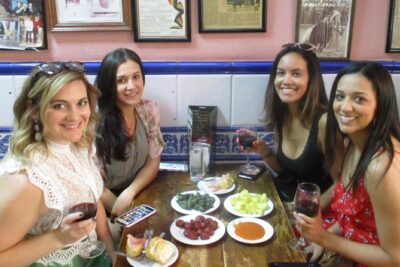 ★ 5.0Tapas and history tour ending with churros with chocolateFrom $102119 reviews
 ★ 4.91-Hour Segway Tour with Chocolate and ChurrosFrom $5265 reviews
 ★ 4.5KAICAO bean to bar and design your chocolate experienceFrom $5418 reviews
 ★ 4.5Madrid Segway Tour with Chocolate and ChurrosFrom $5216 reviews
 ★ 4.5KAIACAO Bean to Bar and Design your own chocolate experienceFrom $536 reviews
Try another angle on the same itinerary