

REVIEW · PRADO MUSEUM GUIDED TOURS
2-Hour Madrid – Prado Museum Private Tour
Prado can feel like a picture warehouse. This private, 2-hour tour turns it into a focused story, led by a licensed guide with art historian depth, and it lets you pick the kind of paintings you want. You can choose from four different routes, each built around how artworks were made and what they meant in their time, from Bosch to Goya to Sorolla.
I like the way the tour combines close-looking with straight talk. You get clear audio equipment so the guide’s explanations stay understandable even inside a busy museum, and the tour is customizable, so you are not stuck with a one-size-fits-all highlight reel.
One thing to consider: the price is for the guide, not the museum ticket. If you are traveling as a small group, the total cost can feel heavy compared with doing a self-guided visit, especially since Prado admission is not included.
Key things I’d zero in on before booking

- Four themed private routes so you can match the paintings to your mood and interests
- Licensed, art-historian-level guidance that explains context and composition, not just facts
- Audio gear that keeps the tour clear even when the museum crowds get thick
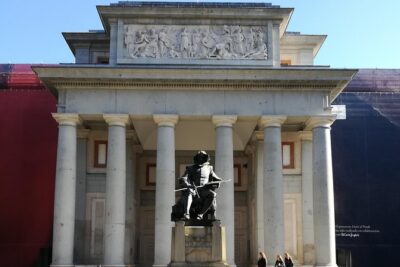
- A meeting point that’s easy to find by the Goya Statue near the main ticket counter
- 19th-century Spanish painters get real attention instead of being skipped over
Stay on the Paseo del Arte with another Prado route
- Madrid: Prado Museum Entry Ticket★ 4.6 · 17,509 reviews
- Madrid: Small Group of Prado Museum Tour & Optional Tapas★ 4.6 · 2,437 reviews
- Madrid: Prado Museum Guided Tour with Skip-the-Line Ticket★ 4.5 · 2,018 reviews
- Madrid: Prado Museum Guided Tour With Fast Access★ 4.8 · 1,785 reviews
Meeting by the Goya Statue, then getting your bearings fast

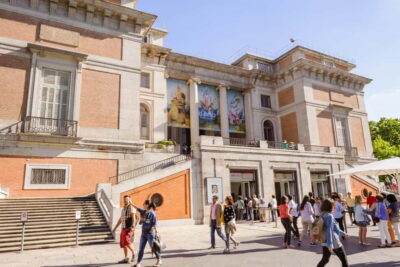
You meet at the Goya Statue, with views over the main ticket counter of the Prado. The guide arrives with a badge from Madrid Museum Tours, so you should have no trouble spotting the right person.
This is a smart start because Prado is big, and wandering without a plan wastes time. With a guide setting the route, your two hours stays focused on what matters most for the theme you picked.
What a licensed art historian actually changes at the Prado
A normal tour can send you from painting to painting without explaining why any of it matters. This format is different because you are led by someone licensed and also trained like an art historian, so you get the story behind the images.
That shows up in how the guide talks about composition techniques. Instead of only naming artists, you learn how painters built a scene, guided your eye, and used symbolism to land emotional impact.
You also benefit from a deeper focus on cultural context. It is not just What do you see, it is Why it was made that way, and what the world around the artist made possible.
Four private routes, and how to pick the one that fits you

You do not just choose a tour number and hope for the best. You can tailor your experience to what you care about most, and the four route themes are designed to shape your path through the museum.
Here is the easiest way to choose based on your interests.
- If you want a big-picture sweep of European art history, choose Tour 1: The Great Evolution.
- If you love one master and want emotional intensity, go with Tour 2: Velázquez and Goya.
- If you want Golden Age portraits and court power, plus Goya’s major scenes, pick Tour 3.
- If you feel Prado is often treated like a museum of older masters, select Tour 4 for 19th-century Spanish art.
In short: the tour choice controls the “story arc” you’ll experience in those two hours.
Another Madrid route worth weighing up

Tour 1: The Great Evolution, a guided tour through how styles changed

Tour 1 is built like an art-history chain reaction. It moves from earlier influences toward later masterpieces, showing how techniques, subject matter, and ideas shift over time.
You can expect stops tied to artists such as Bosch, Dürer, Titian, Tintoretto, Veronese, and El Greco. Then the tour expands into Baroque and beyond, including Caravaggio, Rubens, Ribera, Velázquez, Murillo, and Goya.
One of the benefits of this route is that it helps you stop thinking in isolated paintings. You start noticing patterns, like how certain lighting ideas, gestures, and storytelling approaches echo across centuries.
It also includes later Spanish highlights connected to Sorolla and other figures like Rosales, so you do not leave feeling Prado is frozen in time.
Tour 2: Velázquez and Goya when you want mystery plus raw emotion
If your favorite Prado moments involve people caught in tense scenes or painted with psychological bite, Tour 2 is the one. It starts with Velázquez, celebrated for blending perfection with an unsettling sense of mystery.
Then it turns hard toward Goya. You get major works including The Attack of the Mamelukes, The Shootings of May 3, and the haunting Black Paintings.
This route is excellent if you want the guide to explain how painting can feel like theater and witness at the same time. You will likely spend more time discussing the emotional mechanics, like how composition and contrast amplify fear, chaos, and grief.
Tour 3: Golden Century masters and Goya, with court portraits in the spotlight

Tour 3 keeps the focus on the Golden Age and Spanish royal power, then lands on Goya’s most unforgettable scenes. It brings together artists such as Ribera, Murillo, and Velázquez.
From there, it shifts into Goya through both portraits and the political shock of scenes like The Royal Family of Carlos IV and The Shootings of May 3.
The reason this lineup works is simple: you see how portraiture functions in Spain’s court culture, and then you see Goya use similar spaces and faces for something far darker and more intimate. You are not just seeing masterpieces, you are watching a shift in tone and intent.
Tour 4: 19th-century Spanish artists you might otherwise miss

Tour 4 is the “wait, why aren’t these bigger?” option. It zooms in on painters from the 1800s, including the Madrazo brothers, Rosales, Fortuny, Pradilla, and Sorolla.
This route matters because Prado can be overwhelming, and 19th-century Spanish work often gets less attention than the museum’s most famous older names. Here, you get a guided explanation of what makes these artists worth your time, including how they use detail, scene-setting, and light.
If you like art that feels more narrative and contemporary in mood, you will probably enjoy the emphasis on Spanish subjects and storytelling. And if you already know the famous old masters, this route helps you learn new faces fast.
Audio gear and pacing, so the tour stays readable

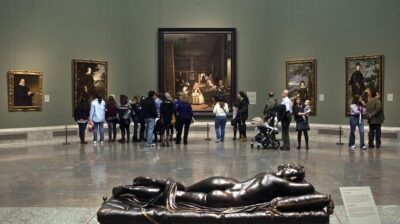
Prado is not a calm museum. In a single corridor you can go from quiet viewing to crowds pressing in close. That is exactly why the tour includes audio equipment.
With clear audio, you keep up with the guide’s explanations instead of doing the usual museum trick, which is nodding politely while hoping you hear the important part. It also helps the guide steer you quickly between paintings without turning the tour into a blur.
Pacing is especially important because your time is short: 2 hours. A guide can make those hours feel like a coherent lesson instead of a sprint.
Price and value at $306 for up to 7 people

The cost is $306 per group, with a maximum group size of 7, and your tour lasts 2 hours. Admission to the Prado is not included, so you should budget separately for entry.
To judge value, it helps to think in group math. If your group fills to the max, the guide cost can work out to roughly $44 per person, before considering museum tickets. If you are traveling as two or three, it costs more per person, but you gain real private attention and a route tailored to your interests.
This is not the cheapest way to see Prado. It is a good-value way to see Prado well, especially if you care about art context, or you want to understand why paintings feel the way they do.
Who this private Prado tour suits best
This tour fits best if you want more than a list of famous paintings. You want the guide to explain how the work is built, what it references, and what was happening in Spanish culture and power during the time period.
It is also a great match if you dislike museum guesswork. Prado’s size can make self-guided visits feel like checking boxes. With this private structure, you are more likely to leave with real understanding instead of just photos.
A practical bonus is the language options. The tour runs in English, German, Russian, and Spanish, so you can choose the language that keeps your attention on the artwork, not on translation.
Practical tips to get the most out of your 2 hours
First, pick your route before you arrive. If you are torn between Goya and 19th-century Spanish art, choose based on what you want to think about afterward. The tour theme is how your brain organizes what you see.
Second, give yourself enough mental energy for concentrated art talk. One guide style note from past experiences: some people love how intense and detailed the explanations get, but you should not plan this right after a day where you are completely wiped.
Third, plan your Prado admission ahead online to help avoid queue time. That keeps your tour start feeling smooth instead of stressful.
Booking details that matter for your day
The tour runs daily (Mondays through Sundays), with times between 10:00 and 15:00. It is a private group experience, and it is listed as wheelchair accessible, which matters for planning a comfortable route through the museum.
Languages are clearly supported across English, German, Russian, and Spanish, so you should be able to match your comfort level.
Should you book the 2-Hour Madrid Prado Museum Private Tour?
If you are the type of person who wants to understand art, not just see it, I think this is an easy yes. The combination of licensed guidance, art-historian depth, and audio clarity makes the short format work.
If you are traveling solo on a tight budget and you mainly want a quick highlights run, you might prefer self-guided tickets and an audio app. But if your goal is to walk away knowing what you just saw and why it hits so hard, this private approach is one of the smarter ways to spend two hours at the Prado.
FAQ
Is Prado Museum admission included in the tour price?
No. Prado Museum admissions are not included, so you will need to purchase entry separately.
Where do I meet the guide for the private tour?
Meet by the Goya Statue, overlooking the main ticket counter of the Prado Museum. The guide has a badge from Madrid Museum Tours.
How long is the private tour?
The tour duration is 2 hours.
What times does the tour run?
It runs Mondays to Sundays from 10:00 to 15:00.
What languages are available for the live guide?
The tour is available in English, German, Russian, and Spanish.
Is the tour wheelchair accessible?
Yes, the tour is listed as wheelchair accessible.
If you tell me which Prado vibe you want most (Velázquez mystery, Goya intensity, Golden Age court scenes, or 19th-century Spanish painters), I can help you choose the best matching route number.
More Tours in Madrid




More Tour Reviews in Madrid

The Prado, room by room


Fresh ways to see Madrid
- Tour to Toledo & Madrid CitySight Seeing Tour
- 2-Day Guided Tour to Cordoba and Seville from Madrid
- Private Transfer from Madrid Airport to Madrid Hotels
- Wine Tasting and Flamenco Master Class in Madrid
- Prado Museum and Royal Palace Private Tour in Madrid
- Monastery Royal Barefoot Visit with entrance without waiting for queues
More ways into Prado Museum Guided Tours
 ★ 4.6Prado Museum Entry TicketFrom $2117,509 reviews
 ★ 4.6Small Group of Prado Museum Tour & Optional TapasFrom $532,437 reviews
 ★ 4.5Prado Museum Guided Tour with Skip-the-Line TicketFrom $462,018 reviews
 ★ 4.8Prado Museum Guided Tour With Fast AccessFrom $281,785 reviews
 ★ 5.0Prado Museum Small Group Tour with Skip the Line TicketFrom $541,738 reviews
 ★ 4.5Royal Palace & Prado Museum Skip the Line Guided TourFrom $821,347 reviews
 ★ 3.6Prado Museum Ticket with In-App Audio GuideFrom $351,154 reviews
 ★ 4.5Prado Museum Guided Tour with Skip-the-Line TicketFrom $451,146 reviews
Try another angle on the same itinerary