

REVIEW · TOLEDO DAY TRIPS FROM MADRID
Tour of the Inquisition and Witchcraft in Toledo
Toledo gets grim on purpose. This 90-minute tour uses Plaza de Zocodover and nearby streets to explain how the Spanish Inquisition’s fear machine worked, and why witchcraft accusations spread. I especially liked how the guide connects public punishment to real places, not just vague dates.
I also like that you get the story with religious and cultural context, from the Jewish Quarter area to major churches like Toledo Cathedral. The focus stays on what the tribunal did, the hierarchy behind it, and how it eventually ended in Spain.
One thing to consider, though, is the topic weight. You will hear about arrests, interrogation, torture to obtain confessions, and even execution at the stake, so it is not a light wander.
Key things to know before you go

- Follow the pink flag at the Plaza de Zocodover area, then start with the setting for autos de fe.
- You are not chasing myths only. The tour ties witchcraft claims back to the Inquisition’s rules and actions.
- Expect street-level history at key stops like Posada de la Hermandad and San Pedro Mártir.
- A clear look at the process from detection to punishment, including how the headquarters operated.
- Churches and neighborhoods matter. The route includes Toledo Cathedral, Iglesia de los Jesuitas, and the Jewish Quarter.
- Small-group format matters for attention, but it also means scheduling can be touchy if minimum numbers are not met.
Turn down Madrid's darker lanes
- Night Walking Tour of Toledo to learn about Secrets and Legends★ 4.5 · 56 reviews
- Tour of the Inquisition and Witchcraft in Toledo★ 3.3 · 13 reviews
- Night Tour of Aranjuez Mysteries and Legends★ 4.5 · 9 reviews
A 90-minute Toledo walk that turns fear into facts
This is the kind of tour that makes you look at Toledo twice. You start in the same area where public acts took place, then you move through streets and religious buildings that helped shape daily life during the Inquisition era.
If you are into history that feels specific, you will enjoy the guided links between places and what happened there. The tour keeps the story grounded in the Catholic Monarchs era, starting in the 15th century and running until the 19th century.
And yes, the subject matter is dark. The guide talks about persecution, superstition, and punishment, including public penance and execution at the stake.
Price and value: the $10 bet you are making

At $10 per person for about 1.5 hours, you are paying for a focused narrative with a live guide. That is good value in Toledo, especially because the route includes multiple major landmarks without you needing to line up for separate tickets.
The real value here is interpretation. You are not just seeing buildings, you are learning how an ecclesiastical court operated, how accusations were handled, and why public trials were used to control the population.
Finding the pink flag at Plaza de Zocodover
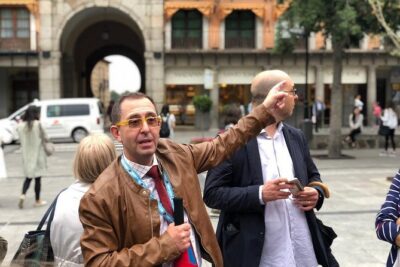
Meet at Calle Armas 3, directly across from RODILLA café, at the beginning of Plaza de Zocodover. Your guide carries a small colored flag, and the experience description specifically points you to a PINK FLAG.
Plan to arrive a few minutes early. This tour depends on everyone showing up, and you do not want to spend your short walking time searching for a group.
Take the road south to Toledo
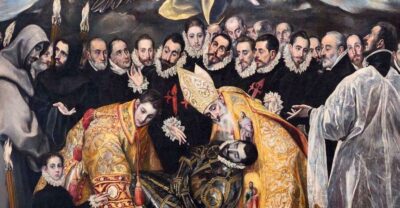
Stop-by-stop: Zocodover, prisons, cathedral stops, and the Jewish Quarter
The route is designed like a story moving through space. You begin with the public face of punishment, then shift to places tied to confinement and procedure, and finish with endings and consequences.
Plaza de Zocodover: where autos de fe made fear public
You start at Plaza de Zocodover, the setting for many autos de fe in the city. These were public acts where the condemned abjured their sins and showed repentance to reconcile with the Catholic Church.
This first stop matters because it frames the rest of the tour. You quickly understand the Inquisition was not only about private questioning, it was also about turning punishment into a public message.
Practical note, the pace stays on the moving story. If you are sensitive to heavy topics, give yourself a moment here before you continue.
Plaza Mayor and Posada de la Hermandad: punishments and what institutions did
As you walk, the guide brings you past Plaza Mayor and toward Posada de la Hermandad. This is where the tour discusses prisons, punishments, and torture methods used by the Holy Inquisition.
Because the tour is historical, you are not meant to treat this as shock value. Still, the descriptions can be uncomfortable, especially when the goal was obtaining confessions.
If you like tours that are honest and direct, you will probably appreciate the tone. If you prefer lighter sightseeing, you might find this section the hardest.
Toledo Cathedral: power, religion, and reminders in stone
The itinerary includes a guided visit related to Toledo Cathedral. The cathedral stop gives you a visible reminder of how deeply religion was woven into public life during the Inquisition period.
You get context for why an ecclesiastical court could hold authority and how religious buildings shaped the atmosphere of obedience and fear. It is a shift from the street-level punishment story to the larger religious setting that made it possible.
Jewish Quarter: understanding the neighborhood under pressure
The tour also includes a Jewish Quarter stop. The guide ties this area to the city’s past as a religious and cultural hub, including what happened when the Inquisition had strong control over the population.
This is one of the stops where you may feel the most emotional weight. Even without naming specific individuals, you can connect the dots between authority, accusation, and daily insecurity.
The big takeaway is perspective. You come away seeing how persecution pressures were not limited to one group or one courtroom.
Convento de San Pedro Mártir: the process, and the 700-person moment
Another key stop is Convento de San Pedro Mártir. The tour connects this place to the first auto-da-fé leaving in the 15th century, mentioning more than 700 people.
More than the number, the guide uses this moment to explain organization, the tribunal’s structure, and the steps from detection of a crime to execution. You get the hierarchy and how procedure worked, not just the outcome.
This section is useful if you want the mechanics. It helps you understand why fear could spread fast, because accusations moved through a system with clear expectations and outcomes.
Iglesia de los Jesuitas and Plaza de San Vicente: endings and famous cases
Next, you pass by Iglesia de los Jesuitas and then head toward Plaza de San Vicente. Here, the guide talks about the end of the Inquisition in Spain, plus stories of some of the most famous prisoners from Toledo.
The Plaza de San Vicente segment is a natural emotional landing point. You go from procedure and punishment to the closing chapter, which helps the earlier sections feel less random.
How the Inquisition worked, in plain language
What makes this tour satisfying is that it tries to map the Inquisition into a logical flow. You learn the Inquisition was an ecclesiastical court established by Ferdinand and Isabella to pursue and eradicate heresy and other practices considered contrary to Catholic faith.
From there, the guide explains the tribunal’s hierarchy and the process stages. You hear how detection of an alleged crime could lead to interrogation, and how confessions were targeted through torture.
Then you hear what sentences could include: confiscation of property, public penance, and in extreme cases execution at the stake.
I like tours that do not just say the word Inquisition. This one gives you a workable mental model for how a system of authority can turn suspicion into punishment.
Witchcraft, legends, and the tour’s tone
Witchcraft is treated as part of the broader framework, not a separate folklore show. The tour explains that witchcraft was considered heresy, so people accused of practicing witchcraft or sorcery were often arrested, interrogated, and tortured to obtain confessions.
You also hear about Toledo’s folklore, full of stories about witches and sorcerers meeting in secret places. The guide’s job is to keep these legends in context, so you understand them as reflections of fear and superstition.
One thing I think you should note is the emphasis. The tour description and the guide approach lean more historical than sensational, so expect explanations over shock.
The guide makes the difference: energy and sensitivity

A few details from real experiences point to what you can hope for. One review highlighted Vanesa as especially nice and sensitive about handling the subject, even when a Jewish person was in the group.
Another review liked the guide’s energy and strong knowledge of the city, but also noted the tour leans more historical than focused on intense mystery or made-up stories. That combination makes sense for this topic, since the goal is understanding what happened, not turning it into entertainment.
If you are booking for a group conversation kind of experience, this is where it helps to have a guide who sets a respectful tone. The subject matter hits differently when the approach is thoughtful.
Who should book this tour, and who might prefer something else
This tour fits you if you want a structured, 1.5-hour education with a clear location-based narrative. It is also a good pick if you like walking Toledo’s old streets and want your stops to mean something.
You may want to skip it or choose a different style of tour if you know you will struggle with heavy topics. Expect real discussions of persecution methods and executions, plus witchcraft accusations tied to interrogation.
It also helps if you speak at least some Spanish. The live guide speaks Spanish only, so you will get the most from it if you can follow along at street pace.
Small groups, minimum numbers, and day-of expectations
There is a maximum per group of 6 for family or friends, and a minimum of 6 people required for the tour to run. That matters because it can affect whether your departure date stays locked.
Keep a bit of flexibility in your schedule. If you have tight connections after the tour, give yourself a buffer so a change does not wreck the rest of your day.
The tour duration is about 1.5 hours, so this is not a half-day recovery project. Plan for a proper walking session through old streets.
Good news: the tour is listed as wheelchair accessible. If you rely on a wheelchair, you can feel safer booking than with many older-street walking tours, but still consider contacting the provider if you need confirmation about route specifics.
Should you book this Tour of the Inquisition and Witchcraft in Toledo?
Yes, if you want a serious, place-based look at how the Inquisition worked in Toledo, and you can handle uncomfortable history. At $10 for 1.5 hours with a live guide, it is good value, especially because it connects major landmarks with the tribunal’s structure and public punishment.
Be cautious if you hate last-minute uncertainty or you are easily shaken by persecution details. Also make sure Spanish works for you, because this is not described as a multilingual tour.
If your goal is to understand why Toledo’s streets feel so charged, this tour is one of the most direct ways to do it.
FAQ
How long is the Tour of the Inquisition and Witchcraft in Toledo?
The tour lasts 1.5 hours.
What does the tour cost?
It costs $10 per person.
Where is the meeting point, and how do I spot the guide?
Meet at Calle Armas 3, across from RODILLA café, at the start of Plaza de Zocodover. The guide carries a small colored flag, with the tour noting a PINK FLAG.
What language is the tour in?
The live tour guide speaks Spanish.
Is the tour wheelchair accessible?
Yes, the tour is listed as wheelchair accessible.
Are there group size limits?
Yes. The maximum allowed per group is 6, and a minimum of 6 people is required for the tour to take place.
Do I need tickets, and is payment flexible?
No extra tickets or additional expenses are required for the tour. It also offers a reserve now and pay later option and free cancellation up to 24 hours in advance for a full refund.
More Tour Reviews in Toledo

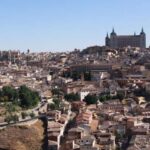
Toledo above the Tagus
Legends beneath the streetlights


More ways into Toledo Day Trips from Madrid
 ★ 5.0Three Cities in One Day: Segovia, Avila and Toledo from MadridFrom $1268,402 reviews
 ★ 4.7Segovia and Toledo Tour, Alcazar, and CathedralFrom $487,797 reviews
 ★ 5.0Toledo Tour from Madrid: Cathedral, Synagogue & St. Tome’s ChurchFrom $816,784 reviews
 ★ 4.5Toledo Half or Full Day Tour with Optional Lunch from MadridFrom $645,807 reviews
 ★ 4.1From Madrid: Guided Day Trip to Toledo by BusFrom $405,280 reviews
 ★ 4.6Toledo & Segovia Full Day Guided Tour with AlcázarFrom $454,394 reviews
 ★ 4.3From Madrid: Toledo Guided Day TripFrom $323,501 reviews
 ★ 5.0Toledo Tour & Vineyard Walk with Wine Tasting from MadridFrom $1332,546 reviews
Try another angle on the same itinerary