

REVIEW · TOLEDO DAY TRIPS FROM MADRID
Toledo: History of the Three Cultures Guided Walking Tour
A city this layered can’t be explained in a museum. This guided walk through Toledo’s three cultures turns big landmarks and quiet corners into one story you can actually follow on foot. I love how the route connects everyday neighborhood life to major religious architecture, and I like that it leans on real interpretation, not just dates and name-dropping. One possible drawback: it’s a rain-or-shine walking tour, so comfort shoes and a steady pace matter.
You’ll get two things that make this tour worth your time. First, you’ll understand the coexistence of Jews, Christians, and Muslims inside these historic walls, in a way that feels human and local. Second, you’ll get a guided way to spot the Mudejar influence in the buildings and transitions between communities.
The main consideration is simple: you’re on your feet for about three hours, moving through narrow streets. If you prefer to sit down often or you want a monument-by-monument deep cataloging with lots of museum time, this may feel a bit fast and more “walk and read the city” than “slow and linger.”
Key points to know before you go

- Zocodover Square start: you’ll launch from a central historic hub, easy to find and built for people-watching
- Three-faith story, not three disconnected stops: the guide ties each landmark to the larger coexistence theme
- Mudejar buildings spotlight: you’ll learn what to look for in the architecture as you move
- Old Jewish Quarter focus: the tour spends time on the streets and synagogues that shaped local life
- Top guides named in reviews: Juan Ignacio and Laura Garcia come up often for expertise and clear answering
- No museum entries included: you’ll still enjoy the sights, but you may pay separately for indoor access
Take the road south to Toledo
- Guided Walking Tour of Immortal Toledo★ 5.0 · 1,116 reviews
- Toledo Private Tour with Licensed Local Guide★ 5.0 · 884 reviews
- Toledo: City Sightseeing Hop-On Hop-Off Bus Tour & Extras★ 4.3 · 683 reviews
- Madrid: Full-Day Guided Tour of Toledo with Cathedral Visit★ 4.6 · 647 reviews
Entering Imperial Toledo from Zocodover Square

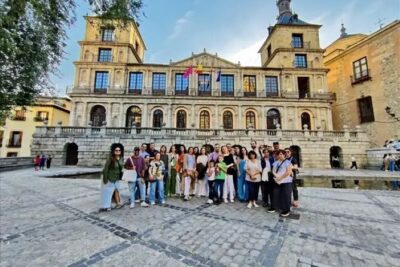
Toledo’s magic is that it’s compact. In just a few blocks, you go from a loud public square into lanes that feel like they’re holding onto older rhythms. The tour starts around Zocodover Square, with the guide meeting you near the arch with a clock, next to the Santo Tomé store. It’s a smart starting point because you get orientation fast, and the city’s layout makes the walk feel intuitive rather than confusing.
I also like that the tour feels designed for comprehension. You aren’t bouncing randomly from one famous church to the next. Instead, the guide keeps your mental map organized around the idea of coexistence, so each stop answers the question: how did these communities live side by side, and how do the buildings still show it?
One small thing you’ll thank yourself for, even if it sounds obvious: arrive with time to regroup near the meeting spot. Toledo streets can be twisty, and you want to start the walk relaxed.
Arco de la Sangre, the walk’s first historical cue
The first stop on the route is Arco de la Sangre. Even if you only catch it as a quick landmark photo, it works as a signal flare. You’re stepping into an old city where entrances, thresholds, and changes in street direction all matter. It’s a reminder that Toledo didn’t grow in a straight line. It grew by layering, and this tour uses that layering to guide how you read the streets.
From here, the tour begins to build a rhythm: pause, look up, connect what you see to what you learned, then keep moving. This is where walking tours can either feel like a blur or feel like a story. The better ones, including this one, give you enough structure so you don’t lose the thread.
If you’re sensitive to steps or uneven ground, take it slow at the beginning. Old-city walking often has a few “gotchas” early, and once you settle into the pace, it usually gets easier.
Toledo Cathedral, reading faith and power in stone

Next comes Toledo Cathedral, and this is one of the big “wow” moments on the route. The tour frames it as more than a standalone sight. You’ll look at the cathedral presence as part of the Christian layer of the city, and you’ll connect it back to the larger theme of how religious communities coexisted across centuries.
What I appreciate about this stop is the focus. You’re not just seeing an impressive structure; you’re learning how imposing buildings functioned socially in their neighborhoods. Even when you don’t go inside, the exterior works as a visual anchor for the rest of the tour. You’ll understand why it’s impossible to talk about Toledo without talking about the cathedral skyline.
A practical note: cathedrals and major monuments often come with busier approach areas. If you want great photos, give yourself a second to step slightly aside and let groups pass. That way you keep the walk moving without feeling rushed in the key moment.
Another Madrid route worth weighing up


Church of Santo Tomé, where the three-culture theme tightens
The route then includes the Church of Santo Tomé. This stop helps connect architecture to the coexistence story, especially the city’s blended influences. The tour specifically calls out Mudejar buildings, and this is the kind of location where you’ll understand why those details matter in Toledo. You’re learning to notice how styles and design choices carried over between cultures.
I like the way the guide uses these stops to train your eyes. A lot of travelers see Toledo as “pretty streets plus famous buildings.” This tour pushes you one level deeper by giving you interpretive clues. That makes the walking feel rewarding instead of repetitive.
If you’re hoping for indoor time at every church, you’ll want to plan for that mindset. Entries to museums and monuments are not included, so you may decide on-site whether indoor access is worth the extra cost and time.
Synagogue of Santa María la Blanca, architecture tied to community
Then you’ll reach the Synagogue of Santa María la Blanca. This is where the tour shifts from broad architectural statements to a more specific conversation about community life. The goal isn’t only to point at a landmark. It’s to help you understand how Jews lived in their neighborhood and what these spaces meant in daily terms.
This is also one of the reasons people rate this tour highly. The best part is the clarity. The guide’s job here is to connect what you’re looking at to how a community lived and organized itself. When that’s done well, you don’t just remember a building name. You remember a relationship between places.
One more practical consideration: indoor spaces can have different lighting and crowding depending on the day. If you want photos, ask the guide about the best timing, and be ready that your time inside may be shorter if there’s a line or rules at the entrance.
Old Jewish Quarter streets and synagogues as living context
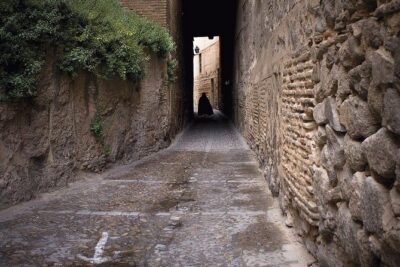
The tour continues through the Jewish Quarter of Toledo, focusing on narrow streets and the feeling of old neighborhood life. This is a big part of why it works even if you’ve seen photos of Toledo before. Photos flatten the city, but street scale changes everything. Walking through the lanes gives you a sense of how close communities were, how movement shaped social life, and why certain landmarks mattered at street level.
This is also where the tour tends to feel most “local.” Reviews tied to this experience highlight anecdotes, small details, and the way guides connect both small and large history. You’ll likely come away with a stronger sense of Toledo not as a postcard, but as a place with texture and personality.
If you’re traveling with kids or with anyone who gets tired walking, this part can still work because it’s interesting and story-driven. Just pace it. Toledo’s streets can be tiring even when the walking distance isn’t huge.
Monastery of San Juan de los Reyes, a strong finishing note

The next major stop is the Monastery of San Juan de los Reyes, with sightseeing time that helps close the theme. The monastery stop brings another layer into the three-cultures narrative, and it helps the route feel complete rather than scattered.
By the time you reach this point, the walk has likely already taught you a “reading method.” You’re comparing structures, looking for the Mudejar influence, and linking the physical city to the lived reality of coexistence. This stop is where that method starts to click.
Expect a final stretch of walking through older streets before the route ends at C. de los Reyes Católicos, 45002 Toledo, Spain. It’s a good finish point because you’re positioned for an easy exit back toward other areas of town.
Price and value for a private 3-hour group walk
The price is $265 per group up to 10, with a duration of about 3 hours. If you break that down, the value depends on your group size. For a solo traveler, it might feel like a premium. But for a small group, it can become a budget-friendly way to get a guided story instead of piecing together sights on your own.
Here’s why I think the pricing makes sense for the right traveler. You’re paying for a local guide who can explain the coexistence theme and translate architectural clues into understandable context. The route is timed, and the guide keeps the connections clear so you don’t waste energy trying to figure everything out yourself.
Also, it’s a private group. That usually means you can ask more questions without waiting your turn. Reviews for this tour strongly emphasize guides who answer questions well and handle interruptions with patience, which is exactly what you want in a city where small details can lead to big questions.
One thing to budget for: entrances to monuments are not included. Since the tour is already packed into three hours, if you choose to add indoor tickets at any stop, you may pay extra on-site.
What makes the guides stand out, based on real feedback
This tour’s reputation is strongly tied to guide quality. Names that show up in feedback include Juan Ignacio and Laura Garcia, and people praise them for expertise and the ability to handle questions clearly. Other guides mentioned, like Celia and Irena Fernandez, are also described as friendly and strongly knowledgeable, with a conversational style that turns the walk into an exchange rather than a lecture.
Even if you never meet one of these specific guides, the pattern matters: this isn’t a “point and move” walk. The guide is expected to help you understand what you’re seeing and why it fits the three-culture story. You can use that expectation to choose this tour over a cheaper, generic option.
For the best experience, come with one question ready. For example, ask what architectural detail signals Mudejar influence in the places you pass. When you ask something like that, you’ll get more out of every stop.
Who this tour suits best (and who should pick something else)
This is a great fit if you want Toledo to make sense fast. If you like history that connects to real places, and you’re curious about Jewish, Christian, and Muslim coexistence, this three-hour format is ideal. It also works well for travelers who feel overwhelmed by Toledo’s complexity. The guide gives you a structure so you don’t get lost in facts.
It’s also a solid option if you enjoy architecture with questions in mind. You’ll be taught what to look for, especially around Mudejar buildings and the ways different faith communities left physical marks.
If you prefer long museum time, or you want a detailed, ticket-heavy plan with lots of indoor access included, you might feel constrained because entries are not included and the tour is walking-focused. In that case, pair this with additional time on your own after the tour.
Quick planning tips for comfortable, rain-ready walking
You’ll want comfortable shoes. That’s the biggest and most honest advice for this kind of Toledo walk, because the city’s streets and steps can be unpredictable.
The tour runs rain or shine, so bring something simple for weather control, like a light rain layer you can tolerate for a few hours. Also, plan your day so you’re not rushed afterward. Even a well-paced three-hour walk can leave you wanting a slow drink and a moment to absorb everything you learned.
Finally, if you’re using indoor tickets at any point, keep an eye on timing. The tour is designed as a flow of stops, and adding too much indoor time can shift the pacing.
Should you book this Toledo three cultures walking tour?
I think you should book it if you want a clear story of Toledo’s three-culture coexistence delivered through a guided walk, not a scattered self-guided day. The value is strongest for small groups who can share the $265 cost, and the guide quality is a major reason people rate it so highly, with names like Juan Ignacio and Laura Garcia showing up in positive feedback.
Skip it or consider a different format if you hate walking, expect many museum hours, or want all monument entry costs included. Since tickets are not included, be ready to decide on-site what’s worth the extra time and money.
If your goal is to leave Toledo with streets that still feel meaningful, not just pretty, this tour is one of the best ways to get there in three hours.
FAQ
How long is the Toledo Three Cultures guided walking tour?
The tour lasts about 3 hours.
Where does the tour meet?
Meet in Plaza de Zocodover under the arch with a clock, next to the Santo Tomé store.
What is included in the price?
It includes a local guide and a walking tour of Toledo.
Are museum or monument entrance fees included?
No. Entrances to museums and monuments are not included, and you would buy them in situ.
What languages are available for the live guide?
The tour is offered with live guides in Spanish, English, French, Italian, German, and Portuguese.
What should I bring and expect for the walk?
Bring comfortable shoes. The tour takes place rain or shine, and it is a walking tour.
More Tours in Toledo


More Tour Reviews in Toledo
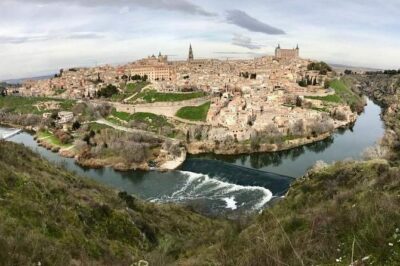
Toledo above the Tagus
More ways into Toledo Day Trips from Madrid
 ★ 5.0Three Cities in One Day: Segovia, Avila and Toledo from MadridFrom $1268,402 reviews
 ★ 4.7Segovia and Toledo Tour, Alcazar, and CathedralFrom $487,797 reviews
 ★ 5.0Toledo Tour from Madrid: Cathedral, Synagogue & St. Tome’s ChurchFrom $816,784 reviews
 ★ 4.5Toledo Half or Full Day Tour with Optional Lunch from MadridFrom $645,807 reviews
 ★ 4.1From Madrid: Guided Day Trip to Toledo by BusFrom $405,280 reviews
 ★ 4.6Toledo & Segovia Full Day Guided Tour with AlcázarFrom $454,394 reviews
 ★ 4.3From Madrid: Toledo Guided Day TripFrom $323,501 reviews
 ★ 5.0Toledo Tour & Vineyard Walk with Wine Tasting from MadridFrom $1332,546 reviews
Try another angle on the same itinerary