

REVIEW · TOLEDO DAY TRIPS FROM MADRID
Toledo: City of the Three Cultures Guided Walking Tour
Toledo feels like three centuries stacked on one street. This guided walk ties together Jewish, Christian, and Muslim stories, with standout stops like the Plaza Zocodover viewpoints and the Jewish Quarter monuments. I also like that the tour can be guided by locals such as Jesus, who brings serious passion for the city.
Two things I especially like: you get fast orientation early, then you earn deeper context as you move from square to square. One consideration though, is that the experience depends on the guide and your language comfort, since one past guest found parts hard to follow, and another felt the route leaned more toward shopping streets than only monuments.
Key highlights to look for

- Plaza Zocodover start for an easy orientation in the heart of the historic quarter
- Alcázar and Alonso de Covarrubias viewed from the north façade, early in the walk
- Alcaná streets tied to Cervantes for a literary stop you can picture
- The Cathedral area with the Campana Gorda and a 92-meter tower
- Jewish Quarter monuments including Santo Tomé, Santa María la Blanca, and del Tránsito
- Architectural context around the Archbishop’s Palace and the Town Hall by Juan de Herrera
Take the road south to Toledo
- Guided Walking Tour of Immortal Toledo★ 5.0 · 1,116 reviews
- Toledo Private Tour with Licensed Local Guide★ 5.0 · 884 reviews
- Toledo: City Sightseeing Hop-On Hop-Off Bus Tour & Extras★ 4.3 · 683 reviews
- Madrid: Full-Day Guided Tour of Toledo with Cathedral Visit★ 4.6 · 647 reviews
City of the Three Cultures, at walking pace

Toledo is one of those places where the past is visible even when you are just walking. You see it in the street plan, the building shapes, and the way different religious communities left marks over centuries. This tour is built around that idea, with a route that connects major landmarks in a way that helps you understand why Toledo is often called the City of the Three Cultures.
I like that the focus is practical, not just theoretical. You start with a central square, then you move through recognizable districts, so the story sticks because you can point at what you are seeing. It is also a good length, since 1.5 to 3 hours usually feels doable even if you have a busy day.
That said, you will be walking in historic streets, so wear comfortable shoes and expect some uneven ground. If you want a strictly monument-only itinerary with minimal time on commercial streets, you may want to keep that preference in mind when choosing your time and guide.
Plaza Zocodover to the Alcázar façade, where you get your bearings
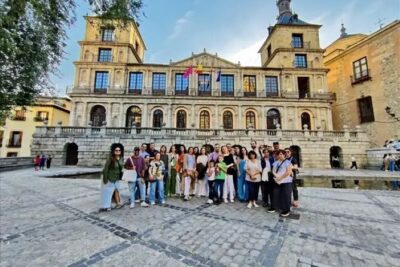
Every good Toledo day needs a starting point, and Plaza Zocodover does that job. The tour meets here, next to the yellow mailbox, and your guide carries a white umbrella, so it is fairly easy to spot the group at the start. From this nerve center of the historic area, you immediately get the big picture of how the city is arranged around key landmarks.
One of the first visual treats is the north façade of the Alcázar, created in the 16th century by Alonso de Covarrubias. Even if you are not entering the building, that façade view helps you anchor the rest of the walk. It also gives you a reference point so later streets and squares feel connected, not random.
You will also feel the pace set here. The tour is structured to keep momentum, and that helps if you are new to Toledo or if you only have a half day. For many people, this early orientation is a big reason the tour gets strong marks, including the consistent praise for guides who can explain the city clearly and with enthusiasm.
The Alcaná street story, Cervantes in the flow of the city

After getting your bearings, the tour moves into the Alcaná, an old commercial area. This is not a stop where you just look at one monument and leave. Instead, it is a streetscapes moment, where you can imagine how daily life played out long before today’s shops took over.
There is a literary connection here: it is said that Miguel de Cervantes, author of Don Quixote de La Mancha, used to walk these routes. I like moments like this because it turns geography into something personal. You start seeing the city not only as architecture, but as a lived place, with people moving between markets, homes, and institutions.
If your mental goal is to understand Toledo, the Alcaná helps. It bridges the gap between the grand buildings you will see next and the normal human movement that made those buildings matter. It is also where you might notice the “touristy” feel of some streets. One caution from prior experience is that a few visitors expected more of the top sights and less of the shopping street atmosphere, so keep your expectations aligned: this tour is part history walking, part city-feel walking.
Another Madrid route worth weighing up


Ayuntamiento Square and the Cathedral tower, Campana Gorda in view
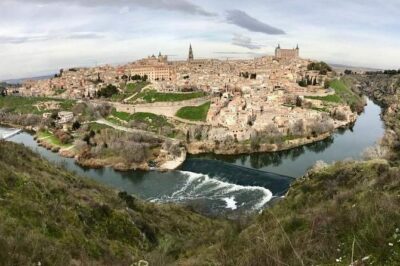
Next up is Ayuntamiento Square, where the architecture tightens and the viewpoints get more dramatic. This is where the Cathedral takes center stage, with a 92-meter-high tower. Even if you are not going inside right away, this sightline makes the cathedral feel like the city’s gravity.
The tour highlights the Campana Gorda, often called the Fat Bell, described as the largest bell in Spain. That kind of detail matters because it gives the cathedral a specific, memorable feature, not just a general label of big and old. When your guide connects a building to a concrete element like this bell, you end up remembering the stop longer.
Ayuntamiento Square also introduces you to more than one major institution at once. The tour frames the cathedral as Dives Toletana, which points to its status as a particularly wealth-filled artistic and historical center. You will be encouraged to visit the interior with a guide, which is smart, because cathedrals reward interpretation. If you only stand outside, you mostly get size. If you understand what is inside, you get meaning.
A small practical note: the cathedral area can feel like a lot of information in a short time, so if you are the type who likes to pause and take photos, build in an extra minute. The 1.5 to 3 hour time window moves quickly.
Archbishop’s Palace and Juan de Herrera, where style becomes a clue

From the cathedral zone, the walk shifts to power and administration, starting with the Archbishop’s Palace. This was the residence of the Archbishop of Toledo, so it signals how central the church was in the city’s structure and daily life.
Then you move to the Town Hall, designed in the 16th century by Juan de Herrera. Herrera is a name worth clocking because his last name connects to the Herreriano style, a recognizable architectural approach. I like this stop because it teaches you to look at buildings with a “style lens.” Once you connect names to shapes, you start reading the city more easily on future walks.
This portion of the tour is a good balance to the more emotional feel of the cathedral and the narrative streets like the Alcaná. You get a mix of storytelling and architecture. It is also where the tour’s “three cultures” idea stays present in the background, because the institutions reflect how communities interacted, governed, and competed for influence over time.
Jewish Quarter monuments: Santo Tomé, synagogues, and San Juan de los Reyes
This is the part many people hope for before they even book. The tour heads into the Jewish Quarter, where your guide explains how that community shaped Toledo’s architecture and city history. You do not just hear generalities. You get a sequence of major sights packed into an area that feels like it was designed for walking and discovery.
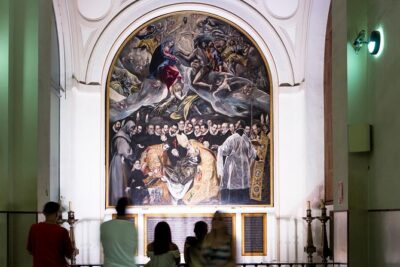
One standout stop is the Church of Santo Tomé, which preserves what is described as the most important painting by El Greco. Even without deep art knowledge, the El Greco link gives you a clear reason to care. It is also a reminder that Toledo’s significance is not only about medieval history, but also about art and patronage later on.
Next are two synagogues: Santa María la Blanca and del Tránsito. Seeing multiple synagogues close together helps you compare how different periods and influences show up in architecture. It also reinforces the reality that Jewish life was not a single landmark. It was a network of buildings and traditions spread through the city.
The tour rounds out the district with the Monastery of San Juan de los Reyes. A monastery stop can sometimes feel like a detour on a short walk, but here it fits the pattern. You are moving from community spaces (synagogues and church art connections) into a religious institution context that helps you understand the broader landscape of sacred buildings in Toledo.
If you like structure, this Jewish Quarter section delivers. It gives you a set of names you can remember later, and it turns a confusing district into a clear route of stops.
The guides make or break the experience, and language matters
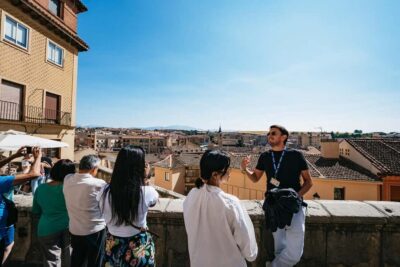
This tour runs with live guides in English and Spanish, and you can find both private and small group options. The guide is the engine of the tour, since the route depends on interpretation to connect one stop to the next.
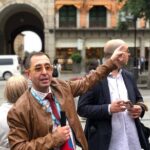
From guide feedback patterns, Jesus stands out for passion and a wealth of information about Toledo’s history. Another guide, Noelia, also earned strong praise for being a great tour guide and covering different parts of the city. The same also shows why you should pay attention to language comfort: one guest noted difficulty understanding a guide, and that is the kind of problem you only notice once you are already on the street.
So here is my practical advice: choose the language you are most comfortable following for a full 1.5 to 3 hours. If you worry about accents or pace, arrive a few minutes early at Zocodover Square, confirm you are at the right umbrella and group, and settle in your head that you will need to listen carefully.
Price and value: why $14 can be a good deal in Toledo
At $14 per person, this walking tour is positioned as a value-first option. The guide-led format matters here. At this price point, you are mostly paying for interpretation and route structure, not for expensive admissions or transport.
That makes it a smart pick if you want:
- a guided way to connect major Toledo highlights without a car or taxi plan
- a short time investment that improves your self-guided exploring afterward
- a city-orientation story you can carry into museums and cathedral visits later
It also helps that the highlights are concentrated: Alcázar exterior views, multiple cathedral area landmarks, then a tight cluster in the Jewish Quarter with several named stops. Even if you only retain a few of the monument facts, you still gain a coherent mental map.
One honest caution on value: because the tour is walking and time-limited, the experience may feel more like a city route than a slow museum-style approach. If you are expecting long guided time inside major sites, you might need separate planning for interior visits, especially if you want context for what you see in the cathedral or art-linked church.
How long 1.5 to 3 hours feels in real time
The tour duration is listed as 1.5 to 3 hours, so the exact length can vary with the group, pace, and how long photos and explanations take. In practical terms, you should treat it as a half-day warm-up rather than a full day.
A good way to think about it: if you want this tour to set the tone, plan a second activity after. For example, return to one of the areas you loved most, or choose an interior visit where you can spend more time.
If you are the kind of visitor who needs frequent breaks, consider carrying water and taking small pauses at natural stops, like squares where you can stand and reposition. Historic streets offer fewer convenient rest points than modern city centers.
Should you book this Toledo three-cultures walking tour?
Book it if you want a guided way to understand why Toledo is famous for Jewish, Christian, and Muslim landmarks, and you like learning through names, architecture, and street context. It is especially strong when the guide is energetic and clear, and the guide lineup includes standouts like Jesus and Noelia.
Consider skipping or pairing differently if you need a monument-only tour with minimal time on commercial streets. Also, if language clarity is a must for you, pick your language carefully and plan to listen closely for the full 1.5 to 3 hours.
If you want one practical strategy: after the tour, go back on your own to the stop that hooked you most, whether that is the cathedral exterior area with the Campana Gorda, or the Jewish Quarter sites linked to El Greco and the synagogues. This tour gives you the map, then you choose how deep to go.
More Tours in Toledo

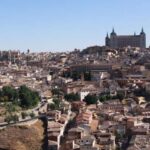
More Tour Reviews in Toledo
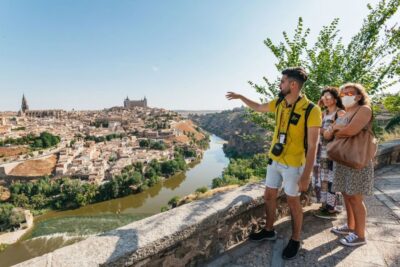
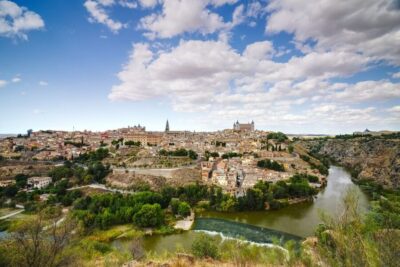
Toledo above the Tagus
More ways into Toledo Day Trips from Madrid
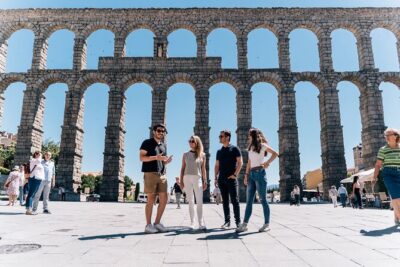 ★ 5.0Three Cities in One Day: Segovia, Avila and Toledo from MadridFrom $1268,402 reviews
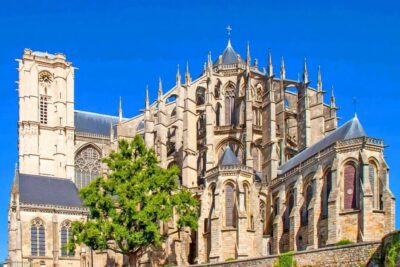 ★ 4.7Segovia and Toledo Tour, Alcazar, and CathedralFrom $487,797 reviews
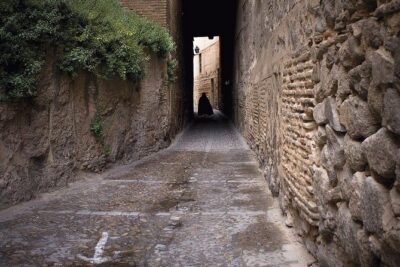 ★ 5.0Toledo Tour from Madrid: Cathedral, Synagogue & St. Tome’s ChurchFrom $816,784 reviews
 ★ 4.5Toledo Half or Full Day Tour with Optional Lunch from MadridFrom $645,807 reviews
 ★ 4.1From Madrid: Guided Day Trip to Toledo by BusFrom $405,280 reviews
 ★ 4.6Toledo & Segovia Full Day Guided Tour with AlcázarFrom $454,394 reviews
 ★ 4.3From Madrid: Toledo Guided Day TripFrom $323,501 reviews
 ★ 5.0Toledo Tour & Vineyard Walk with Wine Tasting from MadridFrom $1332,546 reviews
Try another angle on the same itinerary