

REVIEW · MADRID BIKE & E-BIKE TOURS
Tapas & Guided tour on a Vintage Bike through Madrid
Madrid by bike cuts through the noise fast.
A guided vintage bike tour like this is a smart way to get your bearings quickly, rolling past big-name landmarks while someone handles the where-and-why. You cover a lot of ground in about 3 hours, and the stops are chosen to mix palace views, major plazas, and classic park moments.
What I really like is the combo of guided storytelling and an easy rhythm. You’re not stuck staring at a map, and you can set your own pace so the ride stays fun instead of rushed. The second thing I like is the finish at two of the area’s long-time tapas spots, where you end with three tapas plus a drink.
The main drawback to consider is the outdoors factor. This experience needs good weather, so if Madrid is rainy or miserable that day, you’ll need to switch dates or go for a refund.
Key things that make this Madrid bike and tapas tour worth your time

- Vintage-style bike sightseeing that helps you cover serious distance without tiring out
- Small group size (up to 15), so questions and photo stops feel natural
- An efficient route that hits top Madrid sights in a single morning or afternoon-style window
- Stops include major free-entry photo viewing, so you’re not stuck paying for every location
- Tapas at the end with three tapas and a drink, not just a vague suggestion of where to eat
- English guided tour with mobile ticketing, designed for easy planning on the go
Cover more ground on two wheels
- Madrid Highlights Bike Tour★ 5.0 · 1,731 reviews
- Best of Madrid: 3-Hour Guided Bike Tour in Small Groups★ 4.8 · 1,417 reviews
- Madrid: Highlights Guided Vintage Bike Tour and Tapas Option★ 4.9 · 962 reviews
- Madrid: 3 hour Guided Highlights Bike Tour with Optional Tapas★ 5.0 · 443 reviews
Why Madrid feels easier from a vintage bike ride
Madrid can look complicated fast. Streets twist, squares expand in unexpected places, and the big sights are spread out enough that walking the whole thing can eat your day.
A guided vintage bike route solves that. Instead of pacing yourself through traffic on your own, you get a plan that links sights with nearby streets. The bikes also make it easier to move between landmarks, like transitioning from the art-history style of CaixaForum to the park calm of Retiro without feeling like you’re grinding miles.
Meeting point at C. del Espejo and how the ride actually works

You start at C. del Espejo, 9, Centro, 28013 Madrid, and the tour ends back near that same starting area. That matters because it prevents the annoying problem of finishing across town and then spending the rest of your energy figuring out transit.
Expect a guided flow with regular stops. The schedule is built around short viewing windows, so you get quick orientation at each stop, plus time for photos. One of the best parts is the sense that you’re not on rails, many groups note the ride feels manageable and the pacing is flexible enough for normal sight-seeing needs.
The value of paying $56.62 for 3 hours of guided “sight coverage”
At $56.62 per person, you’re paying for three things: a guide, bike logistics, and a structured route that hits the headline sights. Three hours in Madrid is just long enough to see a lot, but it’s also long enough to lose patience if you’re trying to organize it all yourself.
Here the math works because the tour gives you a concentrated tour of major spots, then throws in food at the end. You’re not only buying convenience, you’re also buying the sanity of not hunting down the best streets and history nuggets on your own.
If you’re the type who wants a full first look at Madrid without exhausting yourself, this is one of the better-value ways to do it.
Another Madrid route worth weighing up
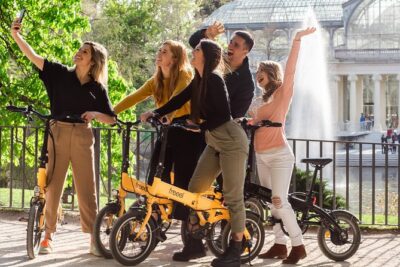
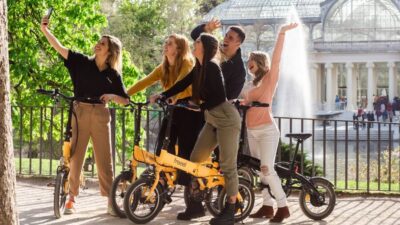
CaixaForum (1900-era power plant) to Los Jerónimos: art, architecture, and atmosphere

Stop 1 is CaixaForum, described as an old power plant dating back to 1900 that once supplied energy to the southern sector. Even if you’re just seeing it from the viewing spot, this is a great starting point because it sets up Madrid’s layers: the city constantly reuses old bones for new life.
Stop 2 moves to Los Jerónimos, including San Jerónimo la Real. This is a Gothic-style church connected to the Catholic Kings, and the stop also includes exterior garden views linked to the Prado Museum area. This is the kind of stop where the guide’s job matters. You get context for what you’re looking at, not just a checklist photo.
A practical tip for this section: keep your eyes up. At Jerónimos, the exterior details are what make it memorable, and you’ll get more out of the stop if you glance at carvings and proportions rather than only the front entrance.
Retiro Park and its oldest-tree moment: slow down without losing time
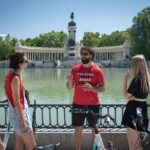
Stop 3 is Parque del Retiro, framed around the park’s oldest tree and the park’s story. You also get a trip through the lagoons and monuments of Retiro Park.
This stop is a perfect mid-tour reset. After city architecture and stone landmarks, the park gives your brain a breather. You still move through key areas quickly, but this is the stop where you’re most likely to linger for a photo, enjoy the space, or just feel the temperature shift when you’re under trees.
Drawback to consider: Retiro can feel busy depending on the time of day. If you dislike crowds, arrive ready for that. The good news is the tour keeps your time here focused, so you still get the essence without getting stuck in wandering mode.
Puerta de Alcalá and Puerta del Sol: triumphal arches and Madrid’s pulse
Stop 4 is Puerta de Alcalá, a neoclassical triumphal arch described as one of the first built after the fall of the Roman Empire. This is one of those landmarks you recognize instantly from photos, and the guide’s role is to explain why it looks like it does and what it symbolizes.
Stop 5 brings you to Puerta del Sol, Madrid’s busiest square. You’ll see the Carlos III statue, the Bear and the Madroño tree, plus quirky city stories that help the place feel less generic and more like a living stage.
This is where the tour’s structure really helps. If you visit Sol on your own, it can feel like you’re standing in traffic-adjacent chaos. With the guide, you get a sense of what to look for and why those details mattered enough to become part of Madrid identity.
The main street segment and the Austrian Madrid old-town feel

Between major landmarks, the route includes stretches that act like connective tissue. You’ll roll along the city’s main street area, with views of palaces, museums, shops, and banks. Then you’ll move onto an old street section tied to the beginning of the Austrian Madrid area, which is Madrid’s older core.
These segments are underrated. They’re not always as postcard-perfect as the palace or Sol, but they teach you how Madrid’s neighborhoods knit together. You start seeing patterns: where the wealth and institutions cluster, how the old streets lead you toward the big squares, and how the city’s center keeps pulling you back.
Royal Palace of Madrid and Almudena: royal-looking exteriors and cathedral power

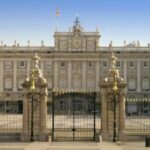
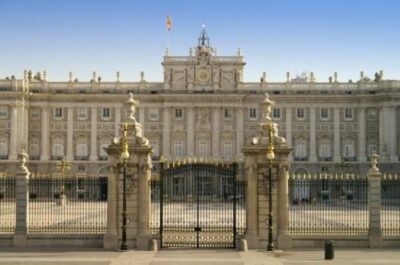
Stop 6 is the Royal Palace of Madrid, a Neo-Classical palace built in the 18th century on the site of the old Alcázar fortress. Even if the main part of the stop is about viewing, it’s still a major moment. The palace dominates the skyline in a way that makes you understand why Madrid always calls itself royal.
Stop 7 is Museo de la Catedral de la Almudena, tied to the Catholic Cathedral of Madrid, Santa María la Real de la Almudena. This stop keeps the religious and architectural thread going, and it’s a good balance after the palace grandeur.
What to watch for here: proportions. In palace-and-cathedral architecture, the shapes tell the story. Look at vertical lines and symmetry at a quick glance, then use the guide’s explanation to connect the visual style to the era.
Plaza de la Villa and Plaza Mayor: old governance meets the city’s favorite square
Stop 8 is Plaza de la Villa, a historic place with among the oldest buildings in Madrid and a former city office role. This stop is useful because it shifts you from “pretty buildings” into “Madrid as a functioning city,” meaning you’re learning how power and administration shaped the streets around you.
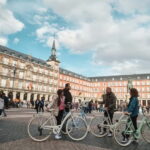
Stop 9 is Plaza Mayor, Madrid’s main square dating back to 1576, with Herrerian or Escurialesque style. This is one of the spots where Madrid looks like it has been waiting for you forever. It’s also one of the easiest places to feel the scale of the city, because you can see how crowds would flow through it.
A practical note: Plaza Mayor can be lively. If you want quieter photos, the timing matters. The bike tour schedule keeps your time efficient, so you get your key views without spending ages hunting a perfect angle.
Barrio de Las Letras: writers’ streets where names feel real
Stop 10 is the Literary Quarter (Barrio de Las Letras). You’ll learn the area’s name comes from literary activity in the 16th and 17th centuries, including rivalry between Miguel de Cervantes and Lope de Vega.
This is a smart stop for first-timers. Madrid isn’t only about royal statues and grand squares. It’s also about ideas, words, and how famous writers mapped onto real neighborhoods.
Even with a short stop time, it helps to slow slightly when you’re in the quarter. The streets are easy to walk, and the guide’s framing makes it more meaningful than just a scenic wander.
Casa Alberto Tapas finish: three tapas and a drink that turns the tour into a meal
Stop 11 is the end at a classic tapas setting, described as Casa Alberto or Taberna La Elisa Tapas Bar. Here you get the payoff: three tapas plus a refreshing drink of your choice.
This matters more than it sounds. Many “tours with food” treat tapas like a checkbox, but a structured three-tapas meal gives you variety. You taste multiple things instead of choosing one dish and calling it dinner.
If you’re planning your day after the tour, this finish is a great buffer. You’re not forced into a full meal right away, and you get to recharge in an atmosphere that feels local.
Small group size, flexible pace, and why it feels less stressful
The tour is capped at 15 travelers, which is the sweet spot. You’re not stuck watching a guide disappear into a crowd, and the group doesn’t move like a tour bus line.
You also get a sense that the pace can adjust to your group. That’s a big deal in a city where there’s always something interesting around the corner. If someone wants extra time for photos, the ride rhythm can stretch without turning into chaos.
Who this Madrid vintage bike and tapas tour is best for
This fits best if you:
- Want a first visit to Madrid and need major landmarks connected into a coherent story
- Prefer active sightseeing, but not something that turns into a long daily workout
- Like guided history with short stops where you can ask questions and keep moving
- Want your afternoon (or morning) to end with tapas included
It may be less ideal if you hate crowds in central Madrid squares, or if you’re sensitive to outdoor stops during weather changes. The tour is designed for good conditions, and Madrid can shift quickly depending on season.
A note on booking timing and what to do before you go
This tour averages booking about 14 days in advance, so you might want to grab a spot sooner rather than later if you’re traveling in peak weeks. The experience uses a mobile ticket, which is one less thing to manage.
Before you arrive, do one small thing that pays off: set your expectations for short stops. You’re not doing museum deep-dives here. You’re doing high-quality orientation and photo moments, then letting the tapas finish the job.
Should you book this Madrid bike tour with tapas?
If your goal is to see Madrid efficiently, with guided context and a built-in food stop, this is a strong yes. The route covers headline areas like Retiro, Puerta del Sol, and the Royal Palace zone, and it ends with a proper tapas moment instead of an optional recommendation.
I’d book it if you want an easy way to get oriented on your first trip, and if you’re happy trading slow wandering for a tighter, more structured route. I’d think twice if you’re traveling during a rain-prone stretch or you’re the type who insists on long museum stays, because this tour is made for movement and quick, meaningful stops.
FAQ
How long is the tour?
It lasts about 3 hours.
How much does it cost and is it in English?
The price is $56.62 per person, and the tour is offered in English.
Where do you meet, and where does the tour end?
You meet at C. del Espejo, 9, Centro, 28013 Madrid. The tour ends back at the meeting point area.
How many people are in the group?
The tour has a maximum of 15 travelers.
Is the tapas included?
Yes. The tour includes an ending at a tapas bar for three tapas plus a refreshing drink of your choice.
Do the sights require admission tickets during the stops?
The provided stop details list admission ticket free for the viewpoints and time you spend at each location.
More Tours in Madrid



More Tour Reviews in Madrid

Madrid on two wheels

Fresh ways to see Madrid
- Tour to Toledo & Madrid CitySight Seeing Tour
- 2-Day Guided Tour to Cordoba and Seville from Madrid
- Private Transfer from Madrid Airport to Madrid Hotels
- Wine Tasting and Flamenco Master Class in Madrid
- Prado Museum and Royal Palace Private Tour in Madrid
- Monastery Royal Barefoot Visit with entrance without waiting for queues
More ways into Madrid Bike & E-Bike Tours
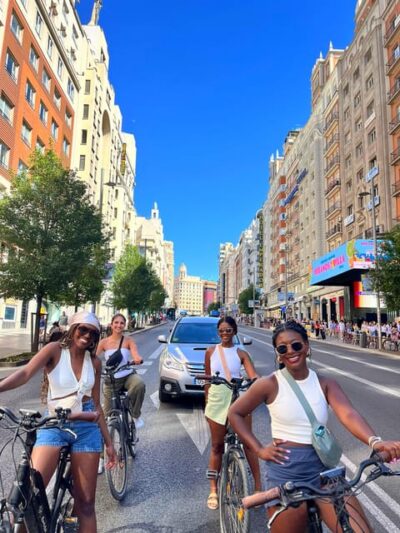
 ★ 5.0Madrid Highlights Bike TourFrom $331,731 reviews
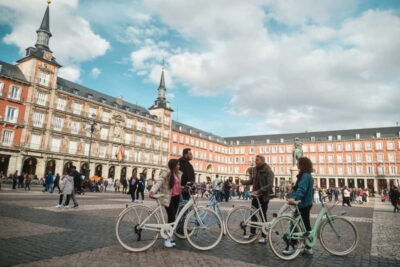
 ★ 4.8Best of Madrid: 3-Hour Guided Bike Tour in Small GroupsFrom $331,417 reviews
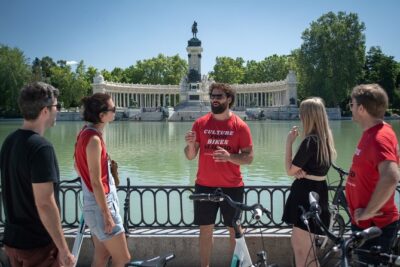
 ★ 4.9Highlights Guided Vintage Bike Tour and Tapas OptionFrom $32962 reviews
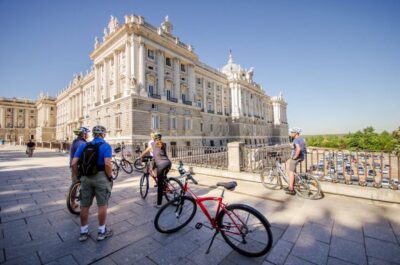
 ★ 5.03 hour Guided Highlights Bike Tour with Optional TapasFrom $35443 reviews
 ★ 4.8Madrid City Guided Bike/E-Bike Tour for Small GroupsFrom $41308 reviews
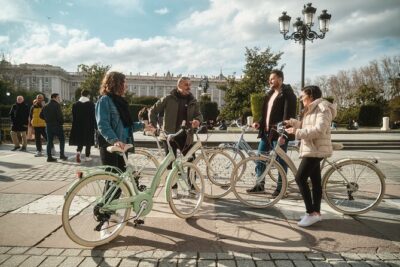 ★ 5.0City Highlights Guided Vintage Bike TourFrom $33283 reviews
 ★ 4.63-Hour Sightseeing Tour by Electric BikeFrom $53192 reviews
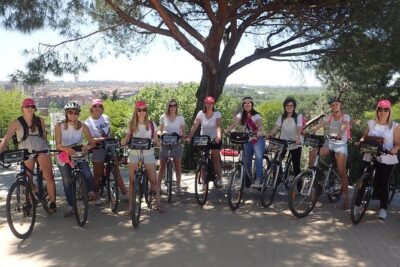 ★ 5.0Madrid E-Bike Small Group TourFrom $49155 reviews
Try another angle on the same itinerary