

REVIEW · PRADO MUSEUM GUIDED TOURS
Small Group Prado Museum Guided Tour with Skip the Line
Four painters, two hours, and a calmer Prado. This small-group skip-the-line visit is built for people who want to see the Prado’s biggest names without spending your morning in a queue.
I love the skip-the-line advantage, because it protects your time and your energy in one of Europe’s most visited museums. I also like the tight focus on landmark works like Goya’s The Third of May 1808 and Velázquez’s Las Meninas.
One possible drawback: two hours moves fast, so if you’re the type who likes to stand and stare for a long time, you may feel a bit rushed when the route keeps rolling, especially around stops like El Greco.
Key things to know before you go

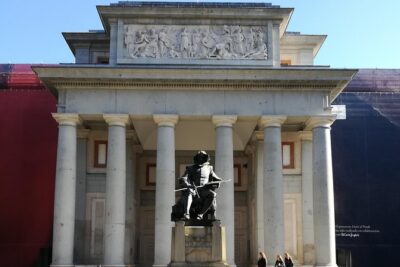
- Meeting point is specific: Monumento a Velázquez, Paseo del Prado 11, 28014, Madrid, and you return there.
- Skip-the-line uses a separate entrance, so you spend more time looking, less time waiting.
- Goya is front and center, with attention on The Third of May 1808 and the mood of his Black Paintings.
- The highlights plan is clear: Velázquez, El Greco, and Rubens are all part of the same route.
- Small-group format helps you talk back to the guide, and some guides like Juan or Enrique ask questions to keep you engaged.
- It’s wheelchair accessible, but you need to arrive on time since there’s a 10-minute courtesy waiting window.
Stay on the Paseo del Arte with another Prado route
- Madrid: Prado Museum Entry Ticket★ 4.6 · 17,509 reviews
- Madrid: Small Group of Prado Museum Tour & Optional Tapas★ 4.6 · 2,437 reviews
- Madrid: Prado Museum Guided Tour with Skip-the-Line Ticket★ 4.5 · 2,018 reviews
- Madrid: Prado Museum Guided Tour With Fast Access★ 4.8 · 1,785 reviews
Meeting at the Velázquez Monument, then straight into the Prado

Your tour starts at the Monumento a Velázquez on Paseo del Prado 11. This is a smart setup because it places you right where you want to be, already oriented to the Prado area instead of scrambling across the city later.
From there, you head into the museum with your guide and group. The pace is designed to help you see major works efficiently, without turning the visit into a checklist sprint.
Skip-the-line tickets: what you gain, and what you still control
The big win here is the skip-the-line ticketing through a separate entrance. In practice, that means you’re less likely to lose the first chunk of your visit to people-watching in a queue.
But here’s the reality check: the Prado is still the Prado once you’re inside. Even with a smoother entry, some galleries will feel busy, so it helps to keep your expectations flexible and follow your guide’s timing.
The tour is only 2 hours, so the skip-the-line isn’t just a convenience. It’s part of how the whole experience stays focused.
A tight, smart walkthrough of Goya, Velázquez, El Greco, and Rubens

This tour is built around a classic Spanish-and-European sweep, from Renaissance influences through later shifts into the early 20th century. You won’t see everything the Prado holds, but you do get a guided route through paintings people genuinely use as reference points for the museum.
Another Madrid route worth weighing up




Goya first: The Third of May 1808 and the weight of his Black Paintings
You start with Goya, and the guide’s job is to make his paintings feel personal, not just famous. The Third of May 1808 is the kind of work where context changes everything, and Goya’s message about violence and human cost lands differently when you know the story behind it.
The tour also touches his Black Paintings, which are famous for their unsettling, inward atmosphere. If you’ve ever looked at a painting and wondered why it feels so heavy, this is where your guide can put language to that feeling.
Velázquez next: Las Meninas and the art-reality puzzle
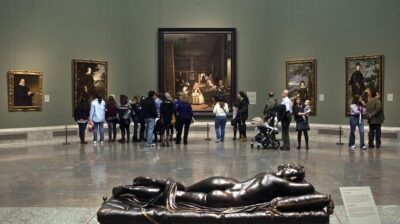
Then you move to Velázquez, with Las Meninas as the headline. This painting is a test of perception, and it’s exactly the sort of work that benefits from commentary that points out how the scene is constructed.
A well-led Velázquez stop helps you notice the trick: the painting is not just a royal court portrait. It’s also about who is watching, who is being represented, and how art builds its own reality.
El Greco: The Burial of the Count of Orgaz and spiritual intensity
After that, El Greco brings the dramatic shift. His style can look instantly recognizable, with elongated figures and intense color choices that feel more spiritual than observational.
The tour includes The Burial of the Count of Orgaz, which works well in a guided setting because you can connect the religious scene to Spanish Renaissance thinking. One caution from real feedback: the El Greco moment can feel tight if your group is moving quickly, so if this is your priority, be ready to ask questions on the spot.
Rubens to close: Descent from the Cross and Baroque energy
Finally, you end with Peter Paul Rubens, where the mood swings toward motion, spectacle, and anatomy. Descent from the Cross is the kind of painting that rewards attention to composition and emotion, because it’s designed to pull your eyes where you’re supposed to react.
Rubens is also a good reminder that painting styles are cultural signals. When you learn why this Baroque look happened when it did, the museum stops feeling like a random wall of masterpieces and starts feeling like a timeline you can read.
Why small groups change the way you look at paintings
The format matters. A small group helps the guide do two things that large audio tours often can’t: keep you engaged and answer questions in real time.
In particular, I like how this tour can work well for mixed groups. Some guides have been praised for being patient with kids, and that’s a big deal if you’re traveling with family and don’t want the museum experience to turn into a kid-sitting test.
For solo visitors, the small group can also be a relief. Instead of being alone with your thoughts in every gallery, you get a chance to compare what you notice with what the guide is pointing out, and you can ask follow-ups when something clicks.
Also, several guides are described as interactive, with one guide style noted for asking questions that make you look again. If you enjoy that, you’ll likely find this tour more satisfying than a passive walk-through.
Pacing in two hours: the good part and the trade-off
Two hours at the Prado is a balancing act. You’re going to see key works and get guided context, but you won’t have unlimited time at any single canvas.
That’s not automatically bad. For first-timers, a focused route is often the best path. It helps you build a mental map of what to return to later, so the next time you come back, you’ll know what you care about.
The practical trade-off is simple: if you want to linger in front of El Greco or Goya longer than the group schedule allows, plan to do a little extra looking after the tour ends back at the Monumento a Velázquez.
Price and logistics: is $67 a good value?
At $67 per person for a 2-hour guided visit, the value depends on what you want from the Prado.
If your main goal is to see the must-sees with context and not waste time at the entrance, you’re paying for two things at once: skip-the-line access and an expert guide to explain what you’re looking at. For most people, that combo feels worth it, because the guide helps you translate technique, symbolism, and historical mood into something you can actually understand while you’re standing there.
If you’re the type who loves slow, independent wandering, you might feel less pressure to pay for the route. In that case, you could choose to self-tour and spend your time exactly how you like. But if you’re limited on time, this tour is built for getting you to the right places efficiently.
Other logistics to keep in mind: food and beverages aren’t included, and there’s no hotel pickup. So you’ll want to eat on your own schedule before or after and arrive ready for a couple of focused hours indoors.
Should you book this tour?

Book it if you want a high-impact overview of Goya, Velázquez, El Greco, and Rubens, plus a guide who helps you spot details you’d probably miss on your own. It’s also a strong choice if you’re traveling with kids, because some guides have been recognized for patience and for making the experience work for families.
Skip it or reconsider if El Greco (or any single stop) is your one obsession and you want plenty of quiet time there. In a 2-hour format, there’s always a chance you’ll wish you had a few extra minutes.
FAQ

How long is the Prado skip-the-line tour?
The tour lasts 2 hours. Starting times vary, so check availability for the schedule.
Where does the tour start and end?
It starts at Monumento a Velázquez at Paseo del Prado 11, 28014, Madrid. The tour ends back at the same meeting point.
Is the tour offered in English?
Yes. The live tour guide is English.
What’s included in the ticket price?
Your price includes skip-the-line tickets to the Prado Museum and a professional bilingual tour guide.
Does the tour include food or hotel pickup?
No. Food or beverages are not included, and there is no hotel pick-up or transfer.
Are there dates when the tour does not run?
Yes. The tour does not run on certain holidays, including December 25 and January 1.
More Tours in Madrid




More Tour Reviews in Madrid


The Prado, room by room


Fresh ways to see Madrid
- Tour to Toledo & Madrid CitySight Seeing Tour
- 2-Day Guided Tour to Cordoba and Seville from Madrid
- Private Transfer from Madrid Airport to Madrid Hotels
- Wine Tasting and Flamenco Master Class in Madrid
- Prado Museum and Royal Palace Private Tour in Madrid
- Monastery Royal Barefoot Visit with entrance without waiting for queues
More ways into Prado Museum Guided Tours
 ★ 4.6Prado Museum Entry TicketFrom $2117,509 reviews
 ★ 4.6Small Group of Prado Museum Tour & Optional TapasFrom $532,437 reviews
 ★ 4.5Prado Museum Guided Tour with Skip-the-Line TicketFrom $462,018 reviews
 ★ 4.8Prado Museum Guided Tour With Fast AccessFrom $281,785 reviews
 ★ 5.0Prado Museum Small Group Tour with Skip the Line TicketFrom $541,738 reviews
 ★ 4.5Royal Palace & Prado Museum Skip the Line Guided TourFrom $821,347 reviews
 ★ 3.6Prado Museum Ticket with In-App Audio GuideFrom $351,154 reviews
 ★ 4.5Prado Museum Guided Tour with Skip-the-Line TicketFrom $451,146 reviews
Try another angle on the same itinerary