

REVIEW · AUDIO TOURS
Self-Guided Audio Tour – Cervantes Literary Experience in Madrid
Cervantes walks with you on your phone. This self-guided literary Soundwalk sends you through Madrid’s Barrio de las Letras, with actor-performed audio you can download for offline listening. You get a themed route that connects writers to the streets they knew, without the timing pressure of a group tour.
Two things I really like: the flexibility to move at your pace, and the way the narration gives context right as you pass key spots like Plaza de las Cortes and the area around Casa Museo Lope de Vega. The main consideration is practical, not literary, since the tour does not include a smartphone or headsets, so you’ll want to have your own device charged and ready.
Key highlights worth planning for
- Offline audio chapters so you can keep listening even if service is spotty
- Your pace, your route rhythm, ideal if you like stopping for photos and side streets
- Barrio de las Letras route tied to Cervantes and Lope de Vega’s world
- A built-in narrative flow with stops that include a convent, a statue, and an iconic street
- Mobile ticket format for a simple start at Plaza de las Cortes
Find the Madrid its writers left behind
- Madrid: Literary Quarter & Retiro Park Electric Bike Tour★ 4.8 · 31 reviews
- Madrid: Retiro Park and Literary Quarter by Bike★ 4.9 · 22 reviews
- Madrid Retiro Park and Literary Quarter by Bike★ 5.0 · 5 reviews
Entering Madrid’s literary quarter at Plaza de las Cortes
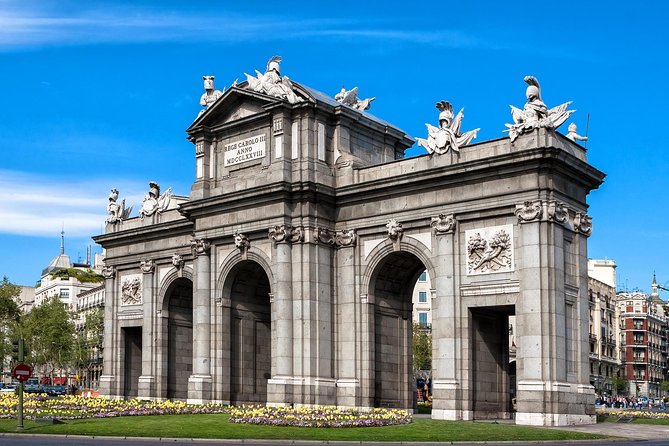
If you like Madrid when it is quietly human-scale, the Barrio de las Letras is a great place to start. The walk begins at Plaza de las Cortes (Pl. de las Cortes, Centro, 28014 Madrid), and it’s a good launch pad because it puts you right in the center of the action. You are not starting from some far-off corner where you then have to figure out how the neighborhood works.
The format is also friendly. You follow the story by listening to the next chapter and then walking to the next stop. The tour is listed as private, meaning only your group participates, which is a nice fit for families and small groups who want to travel without “tour herd” energy.
Time wise, plan for about 1 hour to 1 hour 30 minutes. That range matters because it tells you this is meant to be a compact walk, not an all-day mission. I’d schedule it when you still have energy for a second plan after, like a café stop or a museum visit nearby.
How the offline app and mobile ticket actually help
This is a self-guided audio experience with a mobile ticket and offline audio chapters. The big benefit is that it shifts the experience away from “find the right guide at the right moment” and into “press play when you are ready.”
You’ll also get maps and tips to explore Madrid as part of the chapters. That’s important because the Barrio de las Letras is easy to enjoy, but it can be confusing if you are trying to connect famous names to specific corners. The audio approach keeps you oriented, and it reduces the number of times you have to stop, pull out a map, and second guess your direction.
Two practical notes before you start:
- Bring your own headsets, since they are not included.
- Confirm you can access the app and download your offline content before you begin.
The tour runs for very long hours on the calendar provided, basically from midnight to 11:30 PM daily during the listed periods. In real life, I still recommend doing it when daylight is on your side, so the streets you pass feel like a place you can picture, not just lines you walk through.
Stop by stop: how the Cervantes storyline works on the ground

The tour is built as a sequence of story beats. You move from one literary moment to the next, and each chapter is tied to what you’re seeing outside. That’s the trick of this kind of Soundwalk. You are not just learning facts, you’re translating the neighborhood into a mental map.
Another Madrid route worth weighing up



Stop 1: the neighborhood of letters comes alive with Cervantes
The first stop sets the tone. You begin with the Soundwalk theme of the neighborhood of letters, and the narration focuses on Cervantes and the story behind how these streets became part of his literary world.
What I like about a first stop like this is that it gives you a way to read the neighborhood right away. Even if you only know Cervantes as a name, the audio positioning helps you attach meaning to what you see, so the walk feels like it has a spine.
Possible drawback: if you rush the beginning and skip the first couple of minutes of audio, you miss the context that makes later stops click. I’d give the first chapter your full attention before you start speed-walking for photos.
Stop 2: Lope de Vega and the dispute in the neighborhood
Next, the story shifts from Cervantes to Lope de Vega. This chapter adds a sense of tension and competition, described as a dispute in the neighborhood of letters. That angle is useful because it turns the walk from a simple highlights tour into a story you can follow.
Why it matters for you: a literary walk gets more fun when it has stakes. If the audio just lists author facts, it can feel like a slow slideshow. But when the narration frames people as active writers in a real place, you start imagining them as neighbors, not statues.
This stop also sets you up for what follows, because the tour then continues on toward a convent area and Lope de Vega street. If you enjoy narrative pacing, this middle section is where the Soundwalk starts to feel like it is moving with purpose.
Stop 3: walking along Lope de Vega street and passing the convent
The tour then has you pass by a convent as you walk along Lope de Vega street. This is a nice change of pace, because it interrupts the writer-to-street pattern with something more grounded in the physical city.
Even without specific building details in the information provided, the idea is clear: you’re not only learning where writers worked and lived, you’re also absorbing the neighborhood’s religious and everyday backdrop. Madrid’s old districts often layer functions on top of each other, and a convent stop helps you feel that continuity.
Tip: keep your eyes forward and take one “slow look” as you pass. If you constantly stop and start the audio, you lose the flow of the narration.
Stop 4: statue stop for a quick pause and reset
Then comes a statue stop. This is exactly the kind of small structure that makes self-guided audio tours work. Statues are natural pause points, and they give you a moment to reorient, capture a photo, and focus again.
This stop is also handy if you’re traveling with anyone who wants breaks. A 20-second pause for a photo can reset your attention, especially if you are doing the walk alongside other sightseeing.
Stop 5: an iconic street moment
After the statue, you reach an iconic street stop. The naming here is brief, but the purpose is clear: you get a visual payoff. This is where the Barrio de las Letras likely starts to feel more cinematic, with architecture, street width, and perspective doing their job.
For you, this is a great time to slow down and listen to the chapter without distraction. If you want good street photos, take them after you’ve listened to the audio cue. You’ll likely understand why that stretch matters, and that makes the photo feel more intentional.
Stop 6: a restaurant stop to end the walk with an option
The final listed stop is a restaurant. This is not an admission ticket or a meal included. It’s a useful finishing nudge, because it tells you where your day can naturally shift next.
I like ending here because it turns your literary walking time into a real-world break. You can keep exploring after dinner plans, or you can just grab something quick while the neighborhood story is still fresh in your head.
The route finish: where the story ends at Calle de las Huertas
Your tour ends at Calle de las Huertas (C. de las Huertas, Centro, Madrid). Finishing on a street like Huertas is smart because it tends to keep you close to more dining options and ongoing city life.
Before you start walking, it helps to know you are ending in a different street than you begin. The start at Plaza de las Cortes and end at Calle de las Huertas also makes the walk feel like a real “line” through the neighborhood rather than a loop.
My practical advice: plan your next move before you reach the last chapter. Decide if you’ll head toward dinner, a late snack, or another nearby attraction. That way you don’t spend the last minutes hunting for what comes next.
Price and value for a $6.99 offline Madrid walk
At $6.99 per person, this Soundwalk is priced like an add-on you can actually afford even if you’re on a tight travel budget. The value comes from duration and structure.
You’re getting:
- about 1 to 1.5 hours of guided pacing
- offline chapters with maps and tips
- a private experience setup for your group
- a clear start and end point across a specific Madrid district
What you are not getting is admissions or a provided phone and headsets. So your personal value calculation depends on whether you already travel with a charged smartphone and earbuds.
To me, the best part about this price is that it lets you experiment. If you love it, you can build more self-guided walks into your Madrid itinerary. If you’re not into audio tours, you have still only spent a small amount for a walk that is basically guaranteed to deliver neighborhood texture.
Who this Cervantes and Lope de Vega Soundwalk fits best
This tour suits you if you like:
- literature-themed walking with your own pace
- learning in context, right where you stand
- a short, targeted outing that doesn’t swallow your whole day
It’s also a strong pick for families and mixed groups. The “most travelers can participate” note, plus the private format, makes it easier to manage than a large group tour with strict timing.
If you tend to get impatient on audio walks, try this strategy: listen to the next chapter only once you’ve reached the next stop. Don’t start the audio while still wandering. That keeps you focused and prevents the common frustration of “I’m lost and the narration is talking anyway.”
And one more practical note: one user complained about the Spanish audio and found the pronunciation distracting. I can’t tell you the audio will be perfect for everyone, so if Spanish is your only option, do a quick check right at the beginning. If it bothers you, switch to the language option if the app offers it, or consider listening in English if that is available to you.
Practical tips so the walk stays smooth

Here are a few small moves that make a self-guided literary walk go better.
- Download offline chapters first. Then start the tour and test sound at the first stop.
- Bring your own earbuds or headphones. The tour does not include headsets.
- Keep your phone battery happy. If you’re also using maps or taking photos, battery drain happens fast.
- Use the maps at the chapter breaks. It’s easier than trying to solve the route mid-paragraph.
- Plan your photo timing. Listen first, then take pictures so the street scenes match the story you just heard.
This is also a good walk to pair with casual wandering. The route is literary-themed, but you’re still in Madrid. If you spot a side street that looks interesting, take a short detour, just make sure you’re back on track before the next chapter.
Should you book this Cervantes Literary Audio Tour?

I’d book it if you want a low-cost, low-stress introduction to the Barrio de las Letras, and you like learning while walking at your own pace. The offline chapters are the core reason to choose this one, and the start at Plaza de las Cortes plus the finish at Calle de las Huertas makes it easy to plug into a normal sightseeing day.
I’d skip it if:
- you don’t want to rely on your smartphone and headphones
- you prefer guided tours with live Q and A
- you need a very detailed plan with named stops and exact addresses for every point, since the experience is structured around audio chapters and listed stops rather than a highly specific checklist
If you fit the first group, this Soundwalk is a fun way to feel Madrid’s literary past without paying for a long, formal tour.
FAQ
Where does the self-guided tour start and end?
It starts at Plaza de las Cortes (Pl. de las Cortes, Centro, 28014 Madrid) and ends at Calle de las Huertas (C. de las Huertas, Centro, Madrid).
How long does the Cervantes Literary Soundwalk take?
The experience is listed as about 1 hour to 1 hour 30 minutes.
Is admission included for the sites mentioned in the audio?
No. Admission ticket(s) are not included.
Do I need internet while walking?
You can use the audio offline. The chapters include offline use, along with maps and tips.
What do I need to bring?
You should have your own smartphone and headsets, since they are not included. You’ll also want to be ready to use the offline app.
Can I cancel for a refund?
Yes. You can cancel for a full refund up to 24 hours in advance. If you cancel less than 24 hours before the experience starts, the amount paid will not be refunded.
More Tours in Madrid




More Tour Reviews in Madrid


Pages written in Madrid


Fresh ways to see Madrid
- Tour to Toledo & Madrid CitySight Seeing Tour
- 2-Day Guided Tour to Cordoba and Seville from Madrid
- Private Transfer from Madrid Airport to Madrid Hotels
- Wine Tasting and Flamenco Master Class in Madrid
- Prado Museum and Royal Palace Private Tour in Madrid
- Monastery Royal Barefoot Visit with entrance without waiting for queues
More ways into Audio Tours
 ★ 4.6Las Ventas Bullring Tour with Audio GuideFrom $183,154 reviews
 ★ 3.6Prado Museum Ticket with In-App Audio GuideFrom $351,154 reviews
 ★ 4.5Audio Guided Tour of the Bullring of Las Ventas in MadridFrom $19290 reviews
 ★ 3.5Royal Palace Skip-the-Line Entry with Audio GuideFrom $36244 reviews
 ★ 3.1Reina Sofía Museum Ticket with In-App Audio GuideFrom $35231 reviews
 ★ 3.8El Retiro Park Self-Guided Audio TourFrom $14134 reviews
 ★ 4.3Archaeological Museum E-Ticket and Audio GuideFrom $6115 reviews
 ★ 3.0Skip-the-line entrance to the Prado Museum with Digital Audio GuideFrom $3591 reviews
Try another angle on the same itinerary