

REVIEW · SEGOVIA & ALCAZAR DAY TRIPS
Segovia: guided route on an electric bicycle (ebike)
Segovia without the slog is possible. This guided route uses e-bikes to string together big sights, river paths, and side streets in just 3 hours.
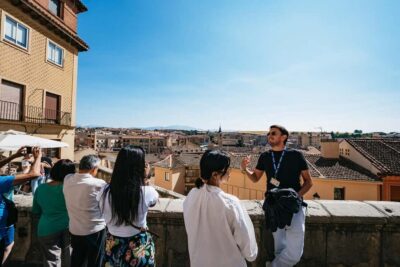
I especially like two things here. First, you can actually cover the city wall and river route without turning it into a sweat fest, even when the terrain feels old-world and uneven. Second, the guide, Ángel, makes the stones and legends click into place while keeping the group safe and moving.
One consideration: the Church of Vera Cruz is not included, so plan for the +€3 entry if you want to go inside.
Key things to know before you ride

- Start at the Aqueduct and follow it along to Plaza del Azoguejo for an easy first hit of Segovia’s signature landmark.
- Medieval wall views along nearly 3.5 km of historic fortifications, with strategic lookouts built into the route.
- Jewish Quarter shortcuts by bike through the intramural streets via the Arco del Socorro, instead of marching only along the main tourist lanes.
- Eresma River and Senda de los Molinos for a calmer feel, then back into the monumental center near Alameda del Parral.
- Alcázar area plus Church of Vera Cruz with its dodecagonal plan, plus a viewpoint stop at the foot of the fortress.
- Aperitif included at a local bar, a nice pause that keeps the tour from feeling like one long sight sprint.
Keep the day moving with these well-rated choices around Segovia.
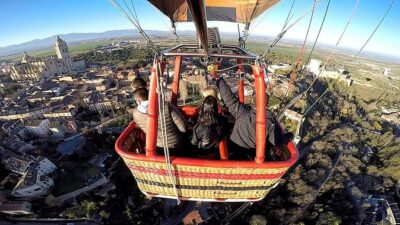
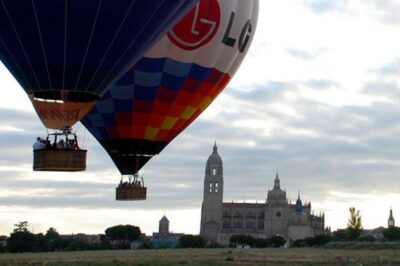
- Hot-Air Balloon Ride over Segovia with Optional Transport from Madrid★ 5.0 · 582 reviews
- Hot Air Balloon Flight Over Segovia or Toledo★ 5.0 · 507 reviews
- Hot Air Balloon over Segovia with Optional Transfers from Madrid★ 5.0 · 388 reviews
- Segovia from the Skies: Sunrise Balloon Ride★ 5.0 · 335 reviews
Why Segovia is perfect for an e-bike day

Segovia is one of those cities where the highlights are close together, yet the walking can still wear you down. You get steep bits, old stone lanes, and viewpoints that look like they were designed for postcards, not for tired legs. This e-bike tour solves that problem in a smart way.
You do still ride a bike, so it is not a free-for-all. But the electric assist means you stay in the moment. You can focus on what you see: the Aqueduct’s scale, the medieval wall system, and the way Segovia Cathedral and the Alcázar area rise up from the city.
The group is small, capped at 10 people. That matters. It usually keeps the pace human, and it helps Ángel give clear guidance at turns and along busier stretches.
Starting at the Aqueduct of Segovia and learning the big story fast
You begin at the Acueducto de Segovia at Avenida Padre Claret. This is a good choice because the Aqueduct is not just a photo stop. It is the spine of the whole experience.
You’ll get a short bike segment right away, then move through the area as the guide frames what you’re looking at. At Plaza del Azoguejo, you can appreciate the Aqueduct up close in a way that feels more “real city” than “museum model.” And later, when you see viewpoints from different angles, the whole structure starts to make sense.
If this is your first e-bike ride, you should feel confident. One thing I like in how this tour is run is the emphasis on instructions and safety. The electric bike does a lot, but you still pedal, and you learn how to handle it in traffic-like conditions so you are not white-knuckling every turn.
Iglesia Parroquial de San Lorenzo, then the river route vibe

After the Aqueduct, the tour heads toward Iglesia Parroquial de San Lorenzo, with time to take in the Romanesque charm around Plaza de San Lorenzo. It’s a break from the Aqueduct’s dramatic verticality and gives you a steadier look at Segovia’s older church architecture.
From there, the route starts to feel more spacious as you work your way toward the Eresma River via the Senda de los Molinos. This is where the “guided bike tour” concept really pays off. On foot, you might skip this kind of stretch because it is not on the tightest tourist loop. By e-bike, you can reach it without burning half your energy before the best viewpoints.
Along the river path, you head toward Alameda del Parral, where you’ll find Monastery of Santa María del Parral and also get a chance to see the Royal Mint area. Even if you do not go in everywhere, the guide’s framing helps. It turns these stops into a connected Segovia map, not isolated landmarks.
Pair Segovia's aqueduct with its Alcázar

Royal Mint Museum area: a calmer kind of Segovia

The Royal Mint Museum of Segovia is one of those spots that works well on a route like this. You get it as a transition point rather than a standalone mission. That means you can give the place attention without needing hours.
Even without long museum time, this stop helps balance the tour. The Aqueduct and Cathedral are loud, visually speaking. The Royal Mint area reminds you Segovia was also a functioning city tied to craftsmanship, money, and administration, not only legend and monuments.
Church of Vera Cruz at the foot of the Alcázar area

One of the tour highlights is the Church of Vera Cruz, approached near the esplanade of Fuencisla and the foot of the Alcázar zone. This is a special stop because of the church’s dodecagonal plan and its association with the Order of the Maltese Cross.
Important practical note: the Church of Vera Cruz visit is not included, and it costs +€3. If you are the kind of traveler who likes to go inside major monuments, I’d budget for it. If you prefer just the exterior views, you can treat this as a landmark photo moment and keep moving.
This area also gives you a classic Segovia feeling. You’re not only looking at the Alcázar from a faraway angle. You’re getting positioned near it so the fortress dominates the skyline in a more personal way.
Segovia Cathedral and the Antonio Machado House Museum connection

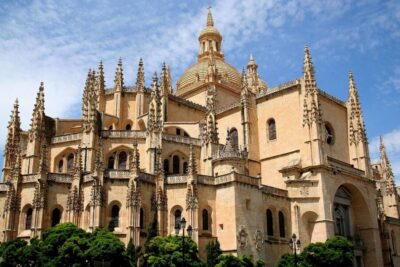
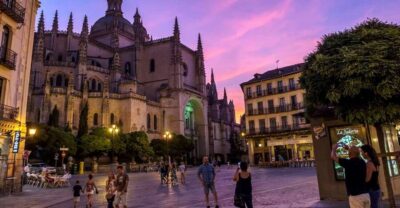
Next comes Segovia Cathedral, with time to appreciate the scale and the way the Cathedral anchors the city’s historic center. After that, you’ll pass by Casa-Museo de Antonio Machado, which is an important cultural thread in Segovia.
What I like about this pairing is that it prevents the day from becoming purely stone-and-stairs. Machado’s connection helps you see Segovia as more than architecture. It is a city that inspired writers and lives beyond tourism.
In the broader flow, these stops also help you learn where the Cathedral sits in relation to the surrounding neighborhoods. Later, when you’re near the Jewish Quarter and viewpoints like those by the Aqueduct, your mental map will be sharper.
Aperitif break at a local bar

About midway through, you get a 20-minute aperitif at a local bar. This is not just a snack break. It’s a small reset that keeps the tour enjoyable.
Aperitif time also helps you absorb everything you’ve seen so far. You can pause, hydrate, and decide what you might want to explore on your own afterward, especially if there’s a viewpoint or church you want to see from a different angle.
Just plan to keep it light so you still feel good for the final stretch through the Jewish Quarter and the Aqueduct views.
Entering the Jewish Quarter through Arco del Socorro

One of the most valuable parts of this tour is how it handles the Jewish Quarter. Instead of only giving you the obvious highlights, the route guides you through the intramural streets and unique corners of the neighborhood.
You’ll enter through the Arco del Socorro and explore the area on the bike, then as needed on foot for the most interesting spots. Along the way, you’ll pass by or get a look connected to several famous points in this zone, including the back of the Cathedral and the Antonio Machado House Museum area again in a different context.
The guide also points out landmarks that help you understand legends and city layout, such as the Mirador del Postigo at the top of the Aqueduct. This is one of those moments where the Aqueduct stops being a single object and becomes an organizing structure for how people moved and looked at the city.
Church of San Esteban: the Romanesque tower you should not miss

The tour includes Iglesia de San Esteban, described as the tallest Romanesque tower of Spain. Even if you are not the type who studies architectural measurements, that title matters. The tower changes the way you notice Segovia’s skyline.
This is also a good moment to slow down mentally. When you are on an e-bike, you keep traveling, but you are not rushing between viewpoints. You can appreciate height, materials, and how the old streets climb and curve around the big buildings.
If you like photography, San Esteban is a natural anchor for that. You’ll also see how the tower relates to the Aqueduct when the route brings you back toward viewpoints later.
Aqueduct viewpoints and the Devil statue legend
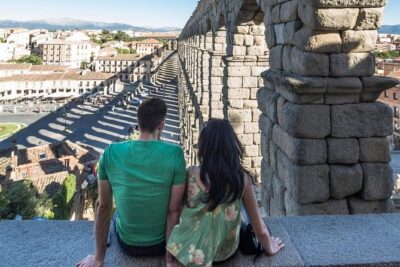
The end portion leans hard into Segovia’s Aqueduct mythology. You’ll have time for the Mirador del Acueducto and additional viewpoint moments, including the area that features the Imp statue. The guide connects it to the legend about how the Aqueduct was constructed.
This is where guided storytelling earns its keep. The legend does not just sound cute. It gives you a reason to look at the Aqueduct as a human project full of ideas, conflict, and stubborn ambition. Once you hear that framing, you stop seeing the Aqueduct as only a landmark and start seeing it as a city achievement.
The route is designed so you keep getting slightly different angles and impressions, which is exactly what you want. The best part of a bike tour is often that it changes your perspective without turning the day into a long hike.
Practical value, group size, and how to get the most out of 3 hours
This tour is listed at $59 per person for 3 hours. Is it worth it? I think it usually is, if you want to see a lot of Segovia highlights without spending the whole day stuck in transit on foot.
Here’s why the value holds up:
- You get the Aqueduct, wall-area viewpoints, Jewish Quarter access, and multiple cultural stops in one guided flow.
- You also get an included helmet and insurance coverage, plus a qualified guide in English or Spanish.
- The small group size helps keep the experience personal enough that you can ask questions, not just listen in a blur.
You’ll ride an e-bike, and that changes what “seeing a city” means. Instead of choosing between monuments and neighborhood wandering, you can do both. And because you return to the starting point at the Aqueduct, you are not juggling transfers afterward.
Who this tour fits best, and who should consider another plan
This is a strong match for:
- People who want a guided overview but hate exhausting walking days.
- Travelers who like legends and want them tied to real places, not told in a generic way.
- First-time e-bike riders, since the tour has an instruction and safety-first approach.
- Families old enough to bike safely, since the tour is set up for correct bicycle sizing based on height.
It is not suitable for:
- Pregnant women.
- People who cannot ride a bike.
- People over 287 lbs (130 kg).
- People over 75 years old.
- Children under 9 years old. The bike availability also notes that bikes are not available between 6 and 9 years old.
Also plan ahead with bike sizing. You’ll need to indicate your height so they set the correct bicycle size. If you’re traveling with children, you may need to provide details for the right bike size, and the tour also notes that a baby carrier can be included for a child age 1 to 5 at no extra cost.
Should you book NATURCLETA’s Segovia e-bike tour?
If your goal is to see Segovia’s headline sites and also catch the side streets that most people miss, this tour is a smart buy. The route connects the Aqueduct, medieval wall areas, the Alcázar zone, the Jewish Quarter, and the San Esteban tower, all with a guide like Ángel who pairs local storytelling with practical safety and pacing.
I’d especially recommend it if you want to travel efficiently without losing the city’s character. The included aperitif helps too, since it breaks up the sightseeing rhythm.
My only hesitation is simple: if you want long stays inside churches and museums, this is built as a moving, 3-hour guided loop. In that case, book it for the orientation and highlights, then plan extra time separately for the single place you care about most.
FAQ
How long is the Segovia electric bike tour?
The tour duration is 3 hours.
Where do we meet for the tour?
You meet at the beginning of the Acueducto de Segovia, on Avenida Padre Claret.
What is the price per person?
The price is $59 per person.
What is included in the tour?
The tour includes the electric bicycle, a titled guide in English and Spanish, helmet, insurance (civil liability and accident insurance), and a guided route through the main areas of Segovia plus a 20-minute aperitif at a local bar.
Is the Church of Vera Cruz included?
No. The Church of Vera Cruz visit costs an additional +€3.
What languages does the guide speak?
The guide speaks English and Spanish.
What should I bring and prepare?
Bring your passport or ID card and comfortable clothes. You also need to indicate your height so the staff can set the correct bike size.
Is this tour suitable for children or anyone with riding limits?
It is not suitable for children under 9 years old, and it is not suitable for people who cannot ride a bike. It is also not suitable for pregnant women and people over 287 lbs (130 kg) or over 75 years old.
More Tour Reviews in Segovia


Aqueduct, cathedral and Alcázar
Fresh ways to see Segovia
- Segovia: DYC Distillery guided visit with whiskey tasting
- Madrid: Private Segovia Day Trip with Local Guide
- Segovia: Private Balloon Ride for 2 with Cava and Breakfast
- Private 3-hour Walking Tour of Avila with official tour guide
- Segovia: private tour with Alcazar, Cathedral and wine tasting
- Segovia: Hot Air Balloon Ride with Picnic and Activity Video
More ways into Segovia & Alcazar Day Trips
 ★ 5.0Avila & Segovia Tour with Tickets to Monuments from MadridFrom $819,762 reviews
 ★ 5.0Three Cities in One Day: Segovia, Avila and Toledo from MadridFrom $1268,402 reviews
 ★ 4.7Segovia and Toledo Tour, Alcazar, and CathedralFrom $487,797 reviews
 ★ 4.6Avila and Segovia Day Trip with Tickets to MonumentsFrom $744,568 reviews
 ★ 4.6Toledo & Segovia Full Day Guided Tour with AlcázarFrom $454,394 reviews
 ★ 4.5Avila with Walls and Segovia with Alcazar from MadridFrom $603,293 reviews
 ★ 4.3From Madrid: Segovia & Avila Day Trip with Optional TicketsFrom $592,161 reviews
 ★ 4.5Segovia and Toledo Day Tour from Madrid with Optional AlcazarFrom $771,745 reviews
Try another angle on the same itinerary