

REVIEW · REINA SOFIA MUSEUM TOURS
Reina Sofia Museum Madrid Exclusive Guided Tour
Guernica makes more sense with a guide. This Reina Sofia exclusive tour pairs skip-the-line access with a private-style lesson on 20th century Spanish art, from Picasso to surrealism. I like how the guide ties the big masterpieces to the politics and social pressures behind them, so you are not just looking, you are understanding. One thing to keep in mind: even with skip-the-line, security can still create some waiting, and the museum can have occasional schedule changes.
For me, the best part is how the tour helps you slow down in the right places. You move at your own pace, ask questions as you go, and still get a clear path through a museum that can feel endless on your own. Admission is included, and you are using a mobile ticket, which makes entry smoother.
Plan for a moderate walking pace inside the museum galleries. You also will not have hotel pickup or drop off, so you’ll want to get yourself to the start point near public transportation.
Key things I’d watch for
- Skip-the-line entry helps you start sooner, even though security lines can still happen
- 20th century Spanish art explained through movements like cubism and surrealism
- Guernica and other must-sees including Picasso, Miró, and Dalí
- You control the pace with time to ask questions, not just a rushed script
- Former hospital setting that makes the museum feel like part of the story
Continue from Guernica into the Reina Sofía collection
- Madrid: Reina Sofía Museum Entrance Ticket★ 4.5 · 6,889 reviews
- Madrid: Reina Sofía Museum Guided Tour★ 4.3 · 659 reviews
- Reina Sofia Museum Small Group Tour -6 people maximum-★ 5.0 · 433 reviews
- Madrid: Guided Tour of Reina Sofía Museum with Entry Ticket★ 4.9 · 363 reviews
Guernica, Picasso, and the context that changes everything
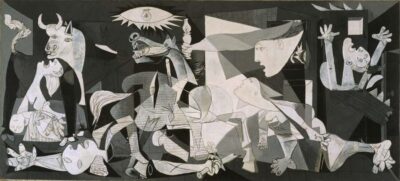
The Reina Sofia is the kind of museum where your first instinct might be to hunt for the headline artwork. You will do that, of course. This tour makes sure you get to Picasso’s Guernica, and it also makes sure you understand why it became a world symbol of war and outrage.
What I really like is that the guide does not treat Guernica like a standalone poster. Instead, you connect it to what was happening in Spain and Europe as artists reacted to conflict, censorship, and modern life. The result is a much stronger experience, because you are seeing choices, not just images.
This is also true for the other big names you’ll see on the route. When you know the thinking behind Joan Miró and Salvador Dalí, their work goes from quirky surprises to deliberate (sometimes playful) experiments. That shift is what makes the two and a half hours worth it.
What skip-the-line means in the real world (and what it does not)
The tour advertises skip-the-line access, and that matters. You typically spend less time stuck at the main entry point, which is a big deal in Madrid museums where lines can form.
But there is a catch worth respecting. The tour information notes that, due to increased security measures at many attractions, some lines may still form on tours with skip-the-line. So I plan my arrival with a little buffer anyway, even if I booked this specifically to avoid the long wait.
One more practical point: the experience uses a mobile ticket, and you are also asked to provide a mobile phone number with country code. That helps the operator manage your entry details smoothly.
Entering the Reina Sofia: a former hospital with a modern art mission
The Reina Sofia you see today started life as a former hospital. In the 1990s, it became a gallery space devoted to 20th century art, which is exactly the time period this tour is built around.
That setting matters. When you are walking through galleries in a building originally designed for healthcare, the museum feels more like a living space than a sterile display hall. The guide uses that contrast well, steering you through how modern artists were breaking rules, challenging traditions, and responding to a fast-changing world.
If you have ever felt overwhelmed by modern art, this tour is a smart way to get your footing. You get a structured tour that still leaves breathing room, so you can look longer at the works that grab you.
Another Madrid route worth weighing up




The heart of the itinerary: Picasso, Miró, and Dalí in sequence
This tour is focused, not scattershot. Your main stop is the Museo Nacional Centro de Arte Reina Sofia, and within that, the route is designed to lead you from major ideas to the masterpieces that represent them.
You start by getting your bearings. Then your guide walks you through the art movements you will encounter, including abstractionism, cubism, surrealism, and modernism. You do not just get definitions. You learn what those styles are trying to do and how artists use form, distortion, and symbolism to make emotion and meaning visible.
Picasso’s Guernica, explained as more than a single masterpiece
You will come face to face with Picasso’s Guernica. This is the moment most people book for, and the tour makes it more powerful by placing it in its historical frame. You learn how social and political pressure shaped the art, including the Spanish Civil War context that influenced the era.
You also learn how to look. The guide helps you pay attention to composition and theme, so you start noticing how the painting communicates distress and moral urgency. It is still intense, but it becomes clearer.
Miró’s The Man with a Pipe, and why surreal choices feel logical
Joan Miró’s The Man with a Pipe is one of the works you’ll see on this route. The guide helps you connect the personality of Miró’s imagery to the larger ideas of the time. You also learn about techniques and strategies behind the work, which makes the strange feel intentional instead of random.
When you understand the logic, even the playful oddness lands harder. You may catch yourself slowing down, trying to read the shapes the way the artist likely wanted.
Dalí’s Face of the Great Masturbator, with an eye for technique and strategy
Salvador Dalí’s Face of the Great Masturbator is another stop on the tour. The key here is that you get context for why the imagery is so bold. The guide talks about techniques and the strategies artists used to create works that could be quirky, startling, and psychologically suggestive.
It is the kind of work that can leave people reacting at first glance. With guidance, you move from just judging the shock factor to understanding the underlying intent.
Art movements explained in a way that helps you actually see
One reason this tour earns top marks is how clearly the guide connects movements to the physical artworks in front of you. You are not stuck with theory. You learn patterns you can apply while you walk.
Here’s what that looks like in practice:
- Cubism becomes something more than broken objects. You learn what it does to space and perspective.
- Surrealism becomes a tool for representing ideas you cannot reach through realistic painting alone.
- Modernism becomes a big shift in what art is allowed to do, and how artists challenge older habits.
And you tie all of it to the world outside the museum. The guide discusses social and political movements that shaped artists and their work, including the Spanish Civil War. That adds a layer of meaning that is easy to miss when you are just moving from piece to piece without any storyline.
Guides you might get: how their styles affect the experience
A tour can sound the same on paper. The guide makes it feel different.
From past experiences, guides like Andrea, Jaime, Jose, Beatrice, and Marta are described as engaging, organized, and good at explaining art in a way you can follow. The biggest theme in these strong guides is how they connect multiple works into a few clear threads.
For example, Andrea is noted for tying paintings, photographs, and installations into themes grounded in the historical moment. Marta is praised for showing how the museum’s modern art challenged deep-seated traditions in Spanish culture. Jose is highlighted for framing works through historical context and the way the art world intersects with history itself. Beatrice stands out for going above and beyond with helpful guidance for what to do next, including showing subway direction at the end, and she is described as flexible with people who move more slowly.
This matters because modern art is easier when you have a guide who can help you build a mental map. If one artwork feels like a puzzle, the guide gives you the tools to solve the pattern across rooms.
Your pace, your questions, and a tour that does not bulldoze you
This experience is set up so you can pause and ask questions as you go. That sounds minor, but in real museums it is huge. Without that freedom, you end up sprinting. With it, you can hover on the details that earn your curiosity.
You also get a 2 hours 30 minutes tour length, with admission included. The time is long enough to see the key works without feeling like you are being herded. It is also short enough that you can still wander on your own afterwards with better instincts.
Group size is another point worth noting. The experience is described as private, meaning only your group participates. If you select the semi-private option, you might lose some perks like exclusive guide time.
If you care about attention and pacing, choose the option where your guide is fully focused on your group.
Price and value: is 127.23 a smart move?
At $127.23 per person for about 2.5 hours, this is not the cheapest way to visit the Reina Sofia. But you are paying for several things that add up quickly.
You get:
- Guided museum tour
- Admission ticket included, plus all entrance fees
- A guide that can explain movements and the historical context
- Time to ask questions at your pace
- Skip-the-line access
The best value is not just the ticket. It is the fact that you walk in knowing what to look for. When you understand why Guernica matters, why Miró looks the way it does, and why Dalí’s imagery is built with intent, the museum becomes less confusing. That is the sort of payoff that makes a guided experience feel like money well spent.
Logistics that matter in Madrid: getting there and moving through the museum
There is no hotel pickup or drop-off. That means you have to handle transportation to the start yourself. The tour starts at Museo Reina Sofía, Arganzuela, 28012 Madrid, Spain, which is near public transportation.
My practical advice: plan on using taxi or Uber to keep the morning simple, then walk the last bit to the meeting point. If you rely on transit, give yourself extra time to match the meeting spot precisely, since museums can have multiple entrances and your guide will need you on time.
Dress matters. The tour notes that appropriate dress is required for entry into some sites on this tour. A safe bet is comfortable layers and shoes you can stand and walk in for a while.
Who should book this tour, and who might not need it
This tour is a strong fit if:
- You want the quickest path to the museum’s 20th century core
- You care about understanding modern art, not just taking pictures
- You like historical context, especially around Spain’s political upheaval
- You prefer a paced route with room for questions
It may be less ideal if:
- You enjoy museums best with total freedom and minimal structure
- You are only interested in the single famous artwork and do not want any context beyond that
- You plan to spend most of your day on temporary exhibitions, since temporary exhibitions are not included
Before you go: closures, security, and the one detail you cannot forget
Museums can change schedules. The tour information says the Reina Sofia might have occasional closures or delayed openings or special events limiting access. When that happens, you should get a reschedule option or an appropriate alternative.
Also, the operator provides a link to verify exceptional closing days online. I recommend checking that before your visit, especially if you are traveling on tight dates.
Finally, remember the phone number requirement. You are asked to provide a guest mobile phone number, including country code. It is not a nice-to-have, it is part of how the tour confirms your details.
Should you book the Reina Sofia Exclusive Guided Tour?
Book it if you want to see the works and understand the why behind them. The tour is built around the museum’s 20th century mission, and it connects the masterpieces you came for, Guernica, Miró, and Dalí, to the movements that explain the styles. The strongest part is how the guide turns modern art into a story you can follow, while still letting you move at your own pace.
I’d skip it and just wander if you already feel fluent in modern art and you prefer unstructured time, or if you mainly want temporary exhibitions. But if you are looking for a confident, guided first visit, this is the kind of tour that helps you leave with a real sense of how the museum hangs together.
FAQ
What art and themes will this tour focus on?
The tour focuses on 20th century Spanish art and walks you through major art movements such as abstractionism, cubism, surrealism, and modernism. You also see major works by Pablo Picasso (including Guernica), Joan Miró (including The Man with a Pipe), and Salvador Dalí (including Face of the Great Masturbator), with context tied to social and political movements including the Spanish Civil War.
What’s included in the tour price?
The price includes the guided museum tour, admission ticket, all entrance fees, and the tour duration of about 2.5 hours. It is offered in English and uses a mobile ticket.
Is the guide exclusively for my group?
The experience is private, meaning only your group participates. The tour guide exclusively for you is included, but this does not apply if you choose the SAVE! BOOK SEMI-PRIVATE option.
Is this tour wheelchair friendly?
It is listed as wheelchair friendly, but this does not apply if you choose the SAVE! BOOK SEMI-PRIVATE option. The tour description also notes that moderate physical fitness is required.
What happens if the museum has a closure or delayed opening?
The museum might have occasional closures, delayed openings, or special events that limit access. In those cases, you are offered a reschedule option or an appropriate alternative. The information provided also notes that refunds or discounts are not available in these situations.
Can I cancel for a full refund?
Yes. You can cancel for free up to 24 hours in advance for a full refund. If you cancel less than 24 hours before the start time, the amount paid is not refunded.
More Tours in Madrid




More Tour Reviews in Madrid

Modern Madrid at the Reina Sofía

Fresh ways to see Madrid
- Tour to Toledo & Madrid CitySight Seeing Tour
- 2-Day Guided Tour to Cordoba and Seville from Madrid
- Private Transfer from Madrid Airport to Madrid Hotels
- Wine Tasting and Flamenco Master Class in Madrid
- Prado Museum and Royal Palace Private Tour in Madrid
- Monastery Royal Barefoot Visit with entrance without waiting for queues
More ways into Reina Sofia Museum Tours
 ★ 4.5Reina Sofía Museum Entrance TicketFrom $146,889 reviews
 ★ 4.3Reina Sofía Museum Guided TourFrom $38659 reviews
 ★ 5.0Reina Sofia Museum Small Group Tour -6 people maximum-From $59433 reviews
 ★ 4.9Guided Tour of Reina Sofía Museum with Entry TicketFrom $59363 reviews
 ★ 4.6Reina Sofia and Prado Museum Tickets and Guided TourFrom $68342 reviews
 ★ 4.0Prado Museum with Reina Sofia Museum Guided TourFrom $81311 reviews
 ★ 4.3Reina Sofía Guided Tour with Skip-the-Line TicketsFrom $44293 reviews
 ★ 3.1Reina Sofía Museum Ticket with In-App Audio GuideFrom $35231 reviews
Try another angle on the same itinerary