
The Prado can feel like a maze. Skip-the-line access helps you start strong, then a guide steers you through the stories behind some of Europe’s biggest names. I like that you are not just staring at paintings, you are learning how Spanish masters shaped the course of European art.
The second big win is the Italian commentary, which keeps the tour moving at a smart pace through major highlights. One possible drawback is that you are limited to 1.5 hours, so if you love lingering in front of one canvas for a long time, you may want extra time on your own afterward.
Key things to know before you go
- Priority entry with separate access means you avoid the long immediate lines.
- A focused 1.5-hour route keeps the Prado manageable, even if you have never been.
- Major masterpieces are built into the walk-through, including Las Meninas and Bosch’s Garden of Earthly Delights.
- Italian live guide provides context, techniques, and historical background as you look.
- Guides spotlight the Prado’s big story, including how Charles III ordered the museum’s construction.
- One guide name stands out in feedback: Loreta, praised for clarity, passion, and a smooth group rhythm.
Stay on the Paseo del Arte with another Prado route
- Madrid: Prado Museum Entry Ticket★ 4.6 · 17,509 reviews
- Madrid: Small Group of Prado Museum Tour & Optional Tapas★ 4.6 · 2,437 reviews
- Madrid: Prado Museum Guided Tour with Skip-the-Line Ticket★ 4.5 · 2,018 reviews
- Madrid: Prado Museum Guided Tour With Fast Access★ 4.8 · 1,785 reviews
Why skip-the-line access changes the Prado experience
Madrid’s Prado Museum is famous for a reason, but fame comes with lines. Even if you get there at a decent time, the slow part can still be the start. This tour’s whole premise is simple: you get skip-the-line entry, using a separate entrance so you do not waste your energy waiting outside.
That matters because the Prado itself is not a quick stop. The museum holds nearly 3,000 works, spanning the 14th to the 19th centuries. When you finally step inside, you want momentum. A guided route helps you hit the works that most strongly represent the Spanish masters and their impact on European art. Without that help, it is easy to wander and end up seeing some famous titles, but missing the connections that make the collection feel like one big conversation.
With the tour, I like the pacing choice. You are there for 1.5 hours, so you get a curated pathway rather than the classic problem of staring at ten rooms and remembering none of them.
The Italian guided format: 90 minutes, big payoff
This is a live guided tour in Italian. That is great if you speak it or you want to practice listening, and it is a deal-breaker if Italian is not on your comfort list. Since the tour is timed, the guide uses the language to explain what you are seeing in a way that keeps you moving, not just collecting facts.
In those 90 minutes, you are set up to understand more than the name of the artist. The guide focuses on why each work matters, including techniques and inspiration, plus historical context. That is the difference between seeing a painting as a picture and seeing it as a document of its time.
If you are new to European art, this format is also practical. You start with the works people talk about most. Then the explanations add meaning fast, so the museum stops being a test of endurance and starts becoming a story you can follow.
If you already know a lot, you might appreciate the structure too. Even experts sometimes bounce between rooms without a plan. Here, the plan is built around key Spanish and European figures like Velázquez, El Greco, Goya, Raphael, Bosch, and Caravaggio.
The Prado masterpieces you will actually see
One reason people love the Prado is that it is not a single-artist museum. It is an art history sampler platter, with standout works that shaped tastes across Europe. This tour builds its route around recognizable masterpieces, so you walk away with more than vague impressions.
Here are the highlights you will encounter as part of the guided experience:
Another Madrid route worth weighing up




Velázquez and the puzzle of Las Meninas
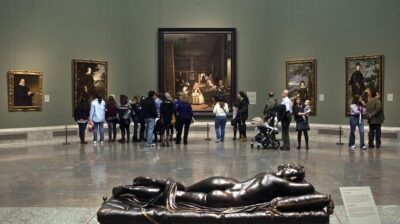
Las Meninas is the kind of painting that makes you look twice, then three times. With the guide’s approach, you are not just shown the image. You get the thinking behind it, including how it connects to Spanish painting’s strength in observation and composition. When you understand what is going on, the work feels less like a trick and more like a carefully designed statement.
Bosch’s world in The Garden of Earthly Delights
Bosch can be intimidating at first, because his imagery is full of symbolic energy. The guide’s explanations help you read it instead of just staring at the chaos. You start spotting how the composition guides your eye and how the scenes reflect the ideas of its era.
Caravaggio’s drama in David and Goliath
Caravaggio’s name often comes with a short list of famous traits, but the tour context helps you connect those traits to what the scene is doing. You get a sense of how dramatic lighting and storytelling work together. Instead of treating it as a standalone famous piece, you place it within the broader European art story the Prado represents.
The Spanish and European masters in one line
Even if you do not memorize every artist, the tour gives you a strong throughline: Spanish masters and key European figures are shown as part of a wider history. You also get coverage of major names such as Raphael, El Greco, and Goya, so the experience feels balanced, not one-note.
How the guide connects technique, inspiration, and history
A good Prado visit is not only about what you see. It is about how you learn to see. This tour is built around the idea that the guide will explain techniques, inspiration, and historical context as you look at each work.
That’s especially useful at the Prado because the collection covers centuries. The guide helps you avoid the most common trap: you end up treating art history as a set of disconnected dates. Here, you are shown how style evolves and how European art ideas travel and transform.
One of the most interesting historical threads is the museum itself. The guide shares an account of the Prado’s construction ordered by Charles III. That detail sounds like “background,” but it changes how you think about the building you are standing in. You start to see the museum as more than a housing unit for masterpieces. It is part of the story of what Spanish culture chose to preserve and promote.
Also, the explanations are designed for real people. One standout in feedback praises Loreta for being prepared, clear, and passionate, and for making even complex concepts feel simple. That combination matters on a tour like this. If the guide speaks clearly and keeps a steady rhythm, the museum feels doable, not exhausting.
What the route feels like inside the museum
The Prado can overpower your brain, even when you love art. Rooms can blur together. That is why a guided highlights route works well here. You move from masterpiece to masterpiece with explanations timed to what you are looking at.
You should expect:
- Major masterpieces and recognizable works as anchors
- Explanations that add meaning to each anchor
- A flow that is built for learning within a tight schedule
What you might not get is open-ended time. This is not a slow, choose-your-own-painting adventure. It is a guided overview designed to cover the most important works you can cover in 1.5 hours. If you are the type who needs to re-read the same detail for ten minutes, plan to come back for a second pass on your own.
Where to meet Todo Tours and what to look for
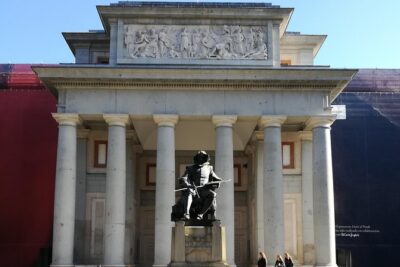
Logistics matter, because the Prado is not a place you want to start late. Your guide meets you next to the Goya statue, carrying a blue umbrella from Todo Tours.
That is helpful because the meeting point is specific, and the blue umbrella makes it easy to spot your group leader. The tour then ends back at the meeting point. So you are not left figuring out how to escape the museum after the final painting.
One practical tip: arrive a little early. Not because you are required to, but because being relaxed makes the first room feel exciting instead of rushed.
Price and value: is $50 for a Prado highlight tour fair?
At $50 per person for 1.5 hours, this sits in the “serious add-on” category, not the budget category. But the value case is clear.
You are paying for three things:
- Skip-the-line tickets, which protect your time at a high-demand museum
- A professional live guide, which is where the learning payoff happens
- A route that focuses on major masterpieces and connects them with context
If you go on your own, you can still enjoy the Prado, of course. But you would need to do the work of turning information into understanding. This tour handles that part for you, in Italian, with a live person guiding your attention to the most meaningful details.
For art lovers, it is often worth paying for interpretation, especially at a museum as large as this one. For casual visitors, the price can feel steep, but if you want a fast path through iconic works like Las Meninas and Bosch’s Garden of Earthly Delights, the structure is doing a lot of the heavy lifting.
If Italian is a challenge, the value drops fast. The tour is designed for Italian language learners and native speakers, not for everyone.
Who this Prado tour is best for
This tour fits best if you want your Prado visit to be guided, focused, and story-driven.
You will likely enjoy it if:
- You want to see big-name masterpieces without getting lost
- You like explanation, technique, and context as you look
- You understand Italian, or you are comfortable listening in Italian
- You prefer a timed highlights route over wandering room by room
It may be less ideal if:
- You only have a little interest in structured art history explanations
- You do not speak Italian and need the tour in another language
- You want lots of unstructured time in front of one painting
A few small details that make a real difference
The Prado collection is huge, so your experience depends on how you manage attention. This tour is built to help you do that.
Two details matter in practice:
- The guide focuses explanations on techniques, inspiration, and context, not just artist names.
- The route includes major works across Spanish and European masters, so you get breadth while still feeling coherent.
And based on feedback, the guide approach seems to be a key strength. Loreta is praised for being clear, prepared, and passionate, with a rhythm that keeps the group comfortable from start to finish. That is the kind of tour quality you feel after the visit when you realize you actually remember what you saw.
Should you book this Prado Museum guided tour without queuing?
If you want an efficient, high-impact Prado visit in Italian, I would book it. The combination of skip-the-line access plus expert guided explanations is a strong match for a museum where time can vanish fast.
It is especially a smart choice if you have limited hours in Madrid and you care about more than just checking off famous titles. Seeing Las Meninas, Bosch’s Garden of Earthly Delights, and Caravaggio’s David and Goliath is already a win. The guide’s job is to connect the works to technique and history, including the museum’s Charles III construction story. That turns your visit into something you can talk about, not just something you scroll past later.
Before you book, check one thing: language. Italian is central to the tour. If that does not work for you, the experience value may not land.
FAQ
What is the duration of the Prado Museum guided tour?
The tour lasts 1.5 hours.
Is the tour conducted in Italian?
Yes, the live tour guide speaks Italian.
Do I have to wait in the long lines to enter the Prado?
No. The tour includes skip-the-line tickets and uses a separate entrance.
How much does the tour cost?
The price is $50 per person.
Where do I meet the guide?
Meet your guide next to the Goya statue. The guide carries a blue umbrella from Todo Tours.
Can I cancel for a refund?
Yes. You can cancel up to 24 hours in advance for a full refund.
Is the tour wheelchair accessible?
Yes, it is wheelchair accessible.
More Tours in Madrid




More Tour Reviews in Madrid

The Prado, room by room


Fresh ways to see Madrid
- Tour to Toledo & Madrid CitySight Seeing Tour
- 2-Day Guided Tour to Cordoba and Seville from Madrid
- Private Transfer from Madrid Airport to Madrid Hotels
- Wine Tasting and Flamenco Master Class in Madrid
- Prado Museum and Royal Palace Private Tour in Madrid
- Monastery Royal Barefoot Visit with entrance without waiting for queues
More ways into Prado Museum Guided Tours
 ★ 4.6Prado Museum Entry TicketFrom $2117,509 reviews
 ★ 4.6Small Group of Prado Museum Tour & Optional TapasFrom $532,437 reviews
 ★ 4.5Prado Museum Guided Tour with Skip-the-Line TicketFrom $462,018 reviews
 ★ 4.8Prado Museum Guided Tour With Fast AccessFrom $281,785 reviews
 ★ 5.0Prado Museum Small Group Tour with Skip the Line TicketFrom $541,738 reviews
 ★ 4.5Royal Palace & Prado Museum Skip the Line Guided TourFrom $821,347 reviews
 ★ 3.6Prado Museum Ticket with In-App Audio GuideFrom $351,154 reviews
 ★ 4.5Prado Museum Guided Tour with Skip-the-Line TicketFrom $451,146 reviews
Try another angle on the same itinerary