

REVIEW · GRAN VIA, SOL & PLAZA MAYOR ROUTES
Madrid Monumental and Retiro Park : Gran Vía, Cibeles and more
Madrid has a talent for making big ideas feel close. This walk links the city’s key monuments with clear, story-driven explanations, so you can get your bearings fast.
What I like most is the mix of major squares and landmark streets plus the payoff at Retiro Park, where the route ends on calmer, greener ground. One thing to consider: it is a longish central-city stroll, and the tour needs good weather, so plan for comfortable shoes and a bit of walking time.
Key Highlights Worth Planning For

- Puerta del Sol plus Km 0 context: You learn what the square meant, including the meaning of the Bear and the Madroño and the radial road symbolism at Km 0.
- Gran Vía architecture storytelling: You get the backstory behind standout facades like the Metropolis Building and the Telefónica.
- Calle de Alcalá as a historical corridor: This is not just a pretty walk, it connects ancient routes with a major arts landmark, the Circle of Fine Arts.
- Money and myth at Banco de España: You see the exterior of a monumental economic building and hear the urban legends tied to its security.
- Cibeles and the Art Walk sequence: The route uses Plaza de Cibeles, Paseo del Prado, and Neptune Fountain as a guided path through Madrid’s cultural center.
- Retiro Park finale with big, classic sights: Crystal Palace, the Big Pond, and historic gardens help you close the day in a proper reset.
Take the quieter path through Retiro
- Madrid Walking Tour from Puerta del Sol to Retiro Park★ 5.0 · 2,285 reviews
- Madrid: Iconic Retiro Park Segway Tour★ 4.9 · 848 reviews
- Madrid Segway Private Tour in Retiro Park★ 5.0 · 336 reviews
- Magical and Iconic Retiro Park Segway Tour in Madrid★ 5.0 · 278 reviews
Getting Oriented at Puerta del Sol and Km 0

Puerta del Sol is where Madrid feels like a turning point. You start here for a reason: the square is packed with symbols, and you get an explanation that makes those details click.
You’ll look at the Bear and the Madroño, and you’ll also learn what Km 0 represents. That’s the point tied to Spain’s radial road system, and it’s one of those facts that sounds small until you realize it is a built-in way to understand how Madrid connects the country.
Why this stop matters: if you leave the tour with one clear mental map of Madrid’s center, Puerta del Sol is the anchor. It also sets the tone for the rest of the walk, since you’re learning to read buildings and streets like part of one story.
Gran Vía Architecture Stories That Actually Stick
From Sol, you head to Gran Vía, Madrid’s most famous main thoroughfare. You walk through the street’s most recognizable architecture, including the historic theatre vibe and the famous commercial and office facades that people photograph even on short visits.
Two examples that you hear about clearly are the Metropolis Building and the Telefónica. Instead of treating them like random landmark backdrops, the guide connects them to what was going on in the city when they appeared, and why their styles became part of Madrid’s visual identity.
The practical upside for you: if you are the type who wants to understand what you are looking at, Gran Vía is one of the best places in Madrid to practice. You see a lot in a small area, but you get context so it does not blur together.
Calle de Alcalá, a Long Street With Old Roots
Calle de Alcalá is one of Madrid’s oldest and longest streets, and that time depth becomes part of the walk. You’re not only admiring the scale of the street, you’re learning why it matters historically as a connector, linking the city from earlier times toward the Madrid you see today.
A standout along the way is the Circle of Fine Arts Building. You get the kind of explanation that helps you notice the building details without needing to be an architecture expert.
Possible drawback to keep in mind: because it is a central-street stop, the street can be busy around you. The tour format helps, but if crowds make you tense, mentally plan for a few minutes of navigation while the guide keeps the group moving.
Connect Gran Vía, Sol and Plaza Mayor
Banco de España Exterior, Monumental and Full of Legends

Next comes Banco de España, and this is where the tour leans into “Madrid stories you can’t unlearn.” You explore the exterior of this monumental building tied to the Spanish economy, and you get the background that makes it feel more than just a big stone facade.
Then the guide shifts to the myths. You hear about urban legends connected to treasures and the building’s complex security setup. Even if you take legends with a grain of salt, the explanations help you understand why people tell these stories and how they attach to powerful institutions.
Why it’s good value in a short tour: a lot of walking tours only point out what you can read on a plaque. This one adds layers that make the street scene feel alive and slightly mysterious.
Plaza de Cibeles, the Fountain, and Sporting Symbolism

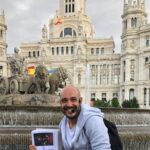
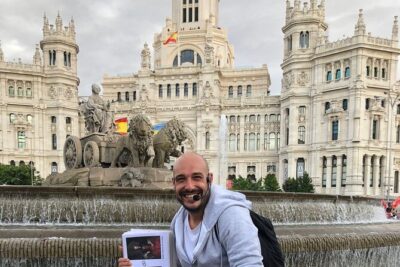
Plaza de Cibeles is one of those squares that seems made for photos, and the tour uses that reality the right way. You see the famous fountain of the goddess Cibeles, one of Madrid’s symbols, and you get the explanation that connects it to sporting celebrations.
Around the square, you also take in surrounding monumental buildings like the City Hall and the Palace of Cibeles. The walk helps you understand how the fountain sits within a larger civic picture, not as a lone attraction but as a centerpiece of the area.
For your planning: if you like a “big moment” in the middle of your day, Plaza de Cibeles does that. It is also an easy place to pause, look around, and reset your eyes before moving into the Art Walk section.
Paseo del Prado and Neptune Fountain as Your Art Walk Spine

After Cibeles, the route shifts into the long, celebrated avenue: Paseo del Prado. You walk a historic corridor that is part of Madrid’s World Heritage story and is often treated like an Art Walk. You learn about its cultural legacy and the way it links to major museums.
Then you reach Fuente de Neptuno, the Neptune Fountain. Here, the tour makes the mythology feel current by explaining how Atletico Madrid fans celebrate there when victories happen. That small link between myth and modern life is exactly the kind of detail that makes a city tour feel personal.
What you will likely enjoy most: the pacing works. You go from civic square drama to a museum-centered avenue, then to a myth-and-sports photo stop. It feels like a guided path instead of a list of disconnected sights.
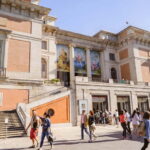
The Big Museum Exterior With Velázquez, Goya, and El Bosco

You also stop for the exterior of a major world-famous museum. The key point is what the guide emphasizes: the museum’s history and the treasures inside, including masterpieces by Velázquez, Goya, and El Bosco.
Even as an exterior stop, it works because you are not just looking at a building you’ve seen in photos. You are connecting what you learn on Paseo del Prado to the kind of art housed here, which gives you a reason to remember the facade.
One caution: since this portion is about the outside and the context, it is best as a “set up” rather than a full museum visit. If you want to go inside, use this tour as the moment to decide which museum you want to spend your paid time on.
Retiro Park Finale, Crystal Palace, Big Pond, and Calm Gardens

All the monument walking has a payoff at the end: Parque del Retiro. This is where Madrid slows down on purpose, and the guide wraps up the experience in a World Heritage setting that feels like a city breath.
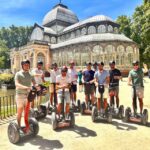
The tour focuses on classic Retiro sights including the Crystal Palace, the Big Pond, and the historic gardens. After the streets and squares, this is a welcome reset, especially if you have been standing in the sun or weaving through crowds.
Why the ending is so smart: you end where you can actually linger on your own. You’re not rushed into the next transit task right away, and you can keep exploring in a calmer environment once the guided portion ends.
Price, Timing, and Group Size: Is It Good Value?
On paper, the price looks unusually low: $3.11 per group, up to 6 people, for about 2 hours 30 minutes. For most people, value comes down to whether you feel you gained understanding quickly. With this kind of route, the “win” is that a professional guide turns scattered landmarks into a connected mental map.
A few practical points that matter for value:
- You get an English-speaking guide and a history-focused narration that is clearly designed to help you follow the city, not memorize dates.
- The tour is capped at a maximum of 25 people, which usually keeps the group tight enough to hear the guide and not feel swallowed by a huge crowd.
- You should treat it as a popular pick since it is typically booked about 24 days in advance. If you’re traveling during peak season, getting a reservation earlier is simply smart.
There is also the included “extras” layer: you get recommendations on where to eat and what else to do next. That kind of guidance is not flashy, but it is practical, and it saves you time when you are hungry.
The Kind of Guide You Want on This Walk
The route relies on storytelling, and the guides are a big part of the reason people rate the experience so strongly. Names that come up include Stuart, Carlota, Paula, and Charlotte, with consistent praise for being funny, expressive, and very focused on making architecture and history understandable.
One detail I’d treat as a sign of quality: the guides do more than talk. They tend to give enough structure that the walk feels like a timeline rather than random facts. That is especially useful when you move through places like Gran Vía and the Banco de España area, where the buildings can otherwise blur together.
If photo moments matter to you, this tour also has a bit of an unofficial photo-help vibe, which can be handy when you are trying to frame fountains, big facades, and wide avenues without blocking others.
Who This Tour Fits Best
This is a strong choice if:
- You want a high-signal overview of central Madrid in one guided walking block.
- You like learning the meaning behind monuments, not just where they are.
- You want to end with real breathing space in Retiro Park.
It might feel less ideal if:
- You dislike walking on busy central streets and want fewer stops.
- You want a long, inside-the-museum day, since the museum part here is focused on the exterior and context rather than a full gallery visit.
Should You Book This Madrid Monumental and Retiro Tour?
I think this is an easy yes for first-time Madrid visitors who want a guided “spine” through the city. The route makes sense: start at Sol so you understand the center, build outward through architecture and civic symbolism, then land in Retiro to decompress.
Book it if you value clear storytelling, enjoy photo-friendly stops like Cibeles and Neptune Fountain, and want a guided plan that naturally points you toward what to explore next. If you hate walking or you know you struggle with timing in crowds, then you might prefer a slower format, but for most people, this is one of the more efficient ways to understand Madrid’s monumental core.
FAQ
How long is the Madrid Monumental and Retiro Park tour?
The tour lasts about 2 hours 30 minutes.
Where does the tour start and end?
It starts at Puerta del Sol, Centro, 28013 Madrid and ends in El Retiro Park, Retiro, 28009 Madrid.
Is the tour offered in English?
Yes, it is offered in English.
What is the group size?
The experience has a maximum of 25 travelers. The price is listed per group, up to 6.
Do I get a mobile ticket?
Yes, the tour uses a mobile ticket.
What is included in the tour price?
Included items are a professional guide, a guided walking tour of the main monumental attractions, storytelling and historical data, personalized recommendations, and tips for restaurants and additional activities.
Are admissions included?
Admission tickets are included for several stops, including Puerta del Sol, Calle de Alcala, Banco de España, Plaza de Cibeles, Fuente de Neptuno, and Parque del Retiro. Other parts like Gran Vía and Paseo del Prado are listed as free.
Is food included?
No. Snacks are not included.
Are gratuities included?
Gratuities are not included, and the tip to the guide is typically delivered at the end of the visit.
Is the tour dependent on weather?
Yes, this experience requires good weather. If it is canceled due to poor weather, you will be offered a different date or a full refund.
Is it suitable for most people?
The tour is listed as suitable for most travelers, and service animals are allowed.
More Tour Reviews in Madrid



Across the centre, landmark by landmark



Retiro beyond the main gate


Fresh ways to see Madrid
- Tour to Toledo & Madrid CitySight Seeing Tour
- 2-Day Guided Tour to Cordoba and Seville from Madrid
- Private Transfer from Madrid Airport to Madrid Hotels
- Wine Tasting and Flamenco Master Class in Madrid
- Prado Museum and Royal Palace Private Tour in Madrid
- Monastery Royal Barefoot Visit with entrance without waiting for queues
More ways into Gran Via, Sol & Plaza Mayor Routes
 ★ 5.0Madrid Essential: Historic Center, Plaza Mayor & Royal PalaceFrom $36,416 reviews
 ★ 5.0Madrid Walking Tour from Puerta del Sol to Retiro ParkFrom $32,285 reviews
 ★ 5.0Wine Tasting near Plaza Mayor in MadridFrom $30210 reviews
 ★ 5.0Street Food Walking Tour in the Plaza Mayor AreaFrom $76119 reviews
★ 5.0Madrid Street Food Walking Tour in the Plaza Mayor AreaFrom $7175 reviews
★ 5.0Street Food Walking Tour in the Plaza Mayor AreaFrom $76119 reviews
★ 5.0Madrid Street Food Walking Tour in the Plaza Mayor AreaFrom $7175 reviews
 ★ 5.0Architecture tour Gran Vía from its best rooftops 20thCFrom $21674 reviews
 ★ 4.9Photoshoot in Plaza MayorFrom $7719 reviews
 ★ 5.0Gran Vía Rooftops and Architecture TourFrom $3874 reviews
Try another angle on the same itinerary