

REVIEW · HISTORICAL TOURS
Madrid Historic with an architect : Arabs, Austrias and Bourbons
Madrid’s buildings narrate the centuries. On this architect-led walk, you follow the city’s evolution from Arab-era layouts to the power of Austrias and Bourbons, using plans and historical photos to make the shifts make sense.
I especially like two things: the guide is an architect, Emilio, so you get design logic behind what you see, not just names and dates. And you get a very good value mix, because most stops are free and the tour leans on interpretation rather than paid admissions.
One consideration: the tour focuses on exteriors and urban form, not an inside visit to the Royal Palace. If you want a full interior palace walkthrough, this route may feel slightly like architecture from the sidewalk.
Key highlights you should know

- Meet an architect, Emilio, who explains the why behind the buildings
- Arabs to Austrias to Bourbons, told through streetscapes and facades
- Most stops are free, so your money goes to the guiding
- You walk through major squares that shaped Madrid for centuries
- You end at Puerta del Sol, right at Kilometer 0
- A realistic pace with time to pause and regroup if needed
Another Madrid route worth weighing up
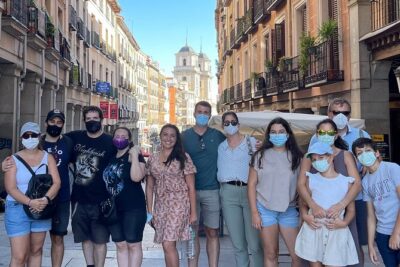
- Madrid Essential: Historic Center, Plaza Mayor & Royal Palace★ 5.0 · 6,416 reviews
- Madrid Historical Tour with Local Guide in Eco Tuk Tuk Private★ 5.0 · 876 reviews
- Madrid Historic Centre Food Tour with Authentic Tapas & Wines★ 5.0 · 814 reviews
- Madrid Historical Walking Tour★ 5.0 · 721 reviews
A sidewalk-to-powerhouse tour built around Madrid’s layering

This is the kind of city walk that helps you stop “seeing” and start understanding. Madrid has a way of looking unified from a distance, but up close it’s a patchwork. A wall segment here, a church tower there, a square that feels familiar because it’s been rebuilt and re-used for generations.
What makes this experience work is the guide’s approach. You do not just read plaques. You look at buildings and then learn the political and social context that shaped them, because that is what explains style changes over time. That connection is the difference between a sightseeing stroll and an architecture story you can actually remember.
Also, the route is practical. It is short enough to keep energy up, about 3 to 3.5 hours, and it ends in the most convenient possible place to keep exploring on your own.
Where you start, how the 3 hours move, and what to wear
You meet at Pl. de Isabel II, 4 in central Madrid, then finish at Plaza Mayor. After that, it is an easy walk to Puerta del Sol where the tour ends at Kilometer 0.
Because this is a walking tour with lots of exterior viewing, you will want comfortable shoes. Madrid sidewalks can be uneven around old streets, and you will be outside most of the time. Bring a light layer, especially if you travel in seasons when the morning and afternoon temperatures swing.
Group size matters here too. This is private, meaning it is only your group, not a big mixed crowd. That usually helps you ask questions and get your exact pace without getting swept along.
Finally, note the tour is in English, and you get a mobile ticket. So, plan to have your phone charged.
Teatro Real and Plaza de Oriente, Madrid starts with culture and city planning

You begin at Teatro Real, where you can get oriented fast. Even if you have never watched an opera, the theater building matters as a statement. It shows how Madrid learned to project culture through architecture, with a major public venue at the center of the action.
From there you head to Plaza de Oriente. This stop is less about one single monument and more about how the square fits into the city’s long-term plan. The guide focuses on urban development, linking how the space evolved from Arab times through later rebuilds.
If you like architecture, but also like to know why a city “arranges” itself the way it does, these first stops are a strong opener. You start to read the street as a timeline rather than a route.


Royal Palace of Madrid exteriors, face-to-face with Bourbons

Next comes the Royal Palace of Madrid. The key detail is what is included: you will admire the facades and learn about the different architects and kings involved in the project. What you will not do is the inside visit.
That choice makes sense for an architecture-focused walk. Facades are where you see intent at a distance, how power wants to look, and how a large royal project tries to shape the public space around it.
For you, the takeaway is simple: you are not just looking at pretty stone. You are learning that major buildings are often political tools, built to broadcast authority. The guide’s plans and historical photos help you connect that big-picture idea to what you can actually see on the exterior.
If you were hoping to tour rooms, think of this stop as the visual and design chapter, then you can decide later if you want an interior visit on another day.
Plaza de Ramales, ruins, and the story behind where Velázquez was laid

At Plaza de Ramales, you shift to the older layers again. Here the tour points out the ruins of the Church of San Juan, including the fact that painter Velázquez was buried there, plus the nearby Church of Santiago.
This is one of those stops where you have to slow down mentally. Ruins can feel like a missed chance if you expect a full building. But architecture tours often work best when they show you how cities delete and preserve at the same time.
You also learn how art history and architecture history overlap in Madrid. A burial site turns architecture into a cultural anchor, not just a construction.
It is short, but it gives you a powerful “Madrid is layered” moment that pays off later when you see how the city reused space and symbolism.
Church of Santiago y San Juan Bautista, a quick reset point

Next, you visit the Real Iglesia Parroquial de Santiago y San Juan Bautista. The stop is brief, about 5 minutes, and the focus is on the church dedicated to the apostle Santiago.
This is the kind of stop that works well inside a longer route. You do not get a long lecture, but you keep contact with the religious architectural thread that runs through the city’s history.
San Nicolás de las Servitas, the oldest church plus a standout Mudejar tower

Then you reach Church of St. Nicholas of the Servitas (San Nicolás de las Servitas), described as the oldest church in Madrid, with a standout Mudejar tower full of horseshoes arches.
This is one of the stops I would circle in green on your mental map. Mudejar architecture is often the bridge where you can literally see cultural contact in form. Horseshoes arches are not an abstract idea here; they are visible geometry you can spot and remember.
Because the stop is also short, come ready to look closely. When the guide calls attention to features, it helps to step back once, then come forward to compare what you saw at a distance versus up close.
If you are taking photos, this is a good place to capture the arches and tower details before you move on.
Cathedral of La Almudena area and the Arab Wall, where you learn to look outward

At Museo de la Catedral de la Almudena, the tour uses a vantage described as a seaview perspective to help frame how the cathedral fits into Madrid. The guide then explains the history of the Cathedral of La Almudena.
After that you stop at the Arab Wall, which is described as the only remaining section of old Arab walls built in the 9th century.
This is the architectural contrast you want on a tour like this: you start with medieval and early layers, you then see how later power centers reorganize the city, and you end with what remains of the older defense and boundary logic.
The Arab Wall stop matters because it anchors everything you learn about the earlier city. When you can point at something that survived, the past stops feeling like a concept and starts feeling physical.
Plaza de la Villa and the buildings around it, old city hall energy
Next is Plaza de la Villa, where you see the old City Hall and surrounding structures like Casa de Cisneros and Casa de los Lujanes.
This stop is about civic Madrid. Squares like this tend to be where architecture becomes governance. They show how space is designed for public authority, negotiation, and social life.
You will appreciate this more if you mentally treat the square like a stage set: who needed to gather here, why they needed formal buildings around it, and how that changes as the centuries pass.
If you like cities that still function as centers, not just museum pieces, this is one of the best “feel it in your bones” moments.
Mercado de San Miguel and Plaza Mayor, from food stalls to a classic Castilian square
Then you reach Mercado San Miguel. The tour highlights it as a market with a structure made of steel, and it is also presented as a practical place to stop for a drink and eat tapas.
This is not a random food break. It is a chance to experience the square and market culture that has shaped daily life in Madrid long after the original political plans were drawn.
A steel market structure also quietly signals modernity, so it works as a bridge between old streets and contemporary Madrid.
From there you arrive at Plaza Mayor, described as the social and commercial center for roughly the last 400 years. This is where Castilla-style square life comes into focus: you get the scale, the geometry of the public space, and a sense of how Madrid makes social life architectural.
If the rest of the tour has you looking upward and outward, Plaza Mayor lets you feel the architecture at human height, the way people actually use it.
Puerta del Sol and Kilometer 0, finishing at Madrid’s most famous marker
You end at Puerta del Sol, specifically at Kilometer 0. This is a smart finish because it gives you a clean transition to whatever you want next.
After a walk like this, you are usually primed to spot layers. Puerta del Sol is crowded and modern, but you now have a better mental lens: you can recognize where the city’s earlier organization influenced what exists today.
It is also an ideal end point for transit and for choosing dinner without scrambling.
What you learn: Arabs, Austrias, Bourbons, told through architecture and power
The title theme is not just marketing. The tour is organized so you can follow a storyline.
- Arab influence shows up in how the city’s early urban footprint developed and in what remains, like the Arab Wall.
- Austrias influence comes through the way later Madrid builds on older street logic and civic symbolism, and through major landmarks tied to state culture.
- Bourbons influence comes through royal building ambition, especially in the Royal Palace exterior facades and the explanation of the different architects and kings who shaped the project.
The guide also uses plans and historical photos so you can visualize what the city looked like in earlier phases. That matters because Madrid’s old spaces often require imagination. Plans and photos remove the guessing.
This is the main reason the tour scores so high. It helps you connect modern streets to the decisions made centuries ago.
Price and value: when 65.89 dollars buys real interpretation
The price is $65.89 per person for a 3 to 3.5 hour tour led by a local architect.
You should think of value here in three parts:
- You get an architect guide, not just a script. The architecture lens changes how you understand every stop.
- Admission costs are mostly handled by you not paying much during the walk. Several stops are listed as free, and the Royal Palace interior is simply not included.
- The tour format is tight. It ends near the city center’s busiest crossroads, so you do not lose an entire day just to learn where things are.
If you normally pay for timed-entry tickets, this tour can feel like a budget-friendly way to get design context without a pile of costs.
Best for: architecture lovers, first-time Madrid planners, and history nerds with good shoes
This works best if you like architecture that makes sense when tied to how a city was run. It is also great for a first visit because it gives you bearings quickly, especially with the route ending at Puerta del Sol.
You might also enjoy it if you are history-minded but you get tired of purely classroom-style lectures. The guiding method stays rooted in what you can see in front of you.
If you want only interior museum-style access, this is not that kind of tour. It is built for facades, squares, and street-scale stories.
Pace, weather, and how to get the most out of exterior stops
Expect a walking pace that fits a 3-hour route with frequent short stops, each designed to give you a takeaway you can spot right away.
Weather is a practical factor. The experience requires good weather, which is a sign you should check forecasts and plan for outdoor time. If it looks miserable, have a backup mindset and dress for comfort.
During the tour, you can also ask for clarifications when something catches your eye, especially at the Mudejar tower and the Arab Wall. The guide is set up to explain how form links to context, so it is worth using that.
Should you book this architect-led Madrid walk?
If your goal is to understand Madrid by reading its buildings, yes, book it. The biggest win is the architect perspective from Emilio, plus the way the route stitches together Arabs, Austrias, and Bourbons through urban form, facades, and major squares.
Choose this tour if you want a smart first-pass orientation that does not depend on expensive admissions. The price is reasonable for an architect-led experience, and the free stops keep it from feeling like a pay-to-enter checklist.
Skip it or pair it with another option if you specifically want interior visits, especially inside the Royal Palace. This tour keeps you outside on purpose. If that matches your travel style, it is a strong, efficient way to see why Madrid looks the way it does.
FAQ
How long is the tour?
The tour runs about 3 hours to 3 hours 30 minutes.
What is the meeting point and where does it end?
You start at Pl. de Isabel II, 4, Centro, 28013 Madrid, Spain. The tour ends at Plaza Mayor, Centro, Madrid, and it finishes at Puerta del Sol at Kilometer 0.
Is the tour in English?
Yes, the tour is offered in English.
Is the Royal Palace interior included?
No. The tour includes admiring the Royal Palace facades, but it does not include the interior visit.
Are admissions included for the stops?
Many listed stops have admission ticket noted as free. The Royal Palace interior is not included. Tips are not included.
Is this a private tour or shared group?
This is private, meaning only your group participates.
Do I need to bring a printed ticket?
No. You get a mobile ticket.
Is the tour affected by weather?
Yes. The experience requires good weather. If it is canceled due to poor weather, you are offered a different date or a full refund.
Can I cancel for a full refund?
Free cancellation is available. You can cancel up to 24 hours in advance for a full refund.
More Historical Tours in Madrid



More Tour Reviews in Madrid



Fresh ways to see Madrid
- Tour to Toledo & Madrid CitySight Seeing Tour
- 2-Day Guided Tour to Cordoba and Seville from Madrid
- Private Transfer from Madrid Airport to Madrid Hotels
- Wine Tasting and Flamenco Master Class in Madrid
- Prado Museum and Royal Palace Private Tour in Madrid
- Monastery Royal Barefoot Visit with entrance without waiting for queues
More ways into Historical Tours
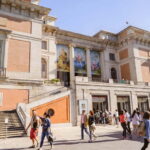
 ★ 5.0Madrid Essential: Historic Center, Plaza Mayor & Royal PalaceFrom $36,416 reviews
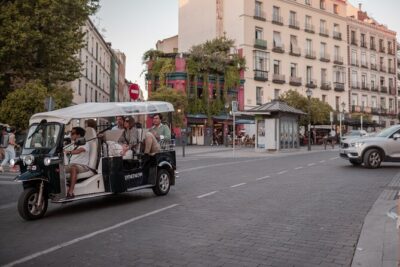 ★ 5.0Madrid Historical Tour with Local Guide in Eco Tuk Tuk PrivateFrom $28876 reviews
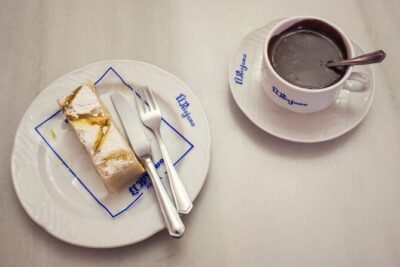 ★ 5.0Madrid Historic Centre Food Tour with Authentic Tapas & WinesFrom $78814 reviews
 ★ 5.0Madrid Historical Walking TourFrom $3721 reviews
 ★ 5.0Madrid in a Day Tour:Royal Palace, Historic Center & Prado MuseumFrom $119628 reviews
 ★ 5.0Madrid Local’s Tapas Tour Dinner with a side of HistoryFrom $114530 reviews
 ★ 5.0Guided Tour of Madrid of the Austrias and the Historic CenterFrom $2520 reviews
 ★ 5.0Segway Private Tour in the Historic Center of MadridFrom $42310 reviews
Try another angle on the same itinerary