

REVIEW · ECO TUK-TUK & ELECTRIC CITY TOURS
Madrid: City Highlights Tuk-Tuk Tour (2 hours)
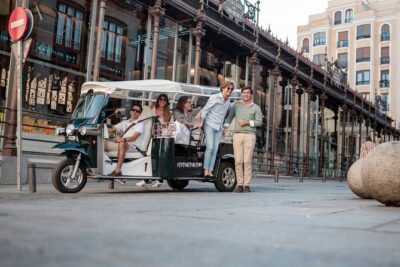
Madrid in 2 hours, on a tuk-tuk, makes sense fast. I like the private, multilingual guide setup, and I like how the route mixes major landmarks with neighborhood color. You get photo stops timed for great viewpoints without turning the day into a museum marathon.
The main tradeoff is also the biggest one: this is a short highlight route, so you will see a lot from strategic stops, but you will not have long waits inside big sights like the Royal Palace or Almudena Cathedral.
I also noticed a pattern in the guide praise: names like Juan Manuel and Federico come up because they connect what you see with clear stories and fun energy, not just a list of facts. If you want hours of deep museum time, plan something else on top. If you want a smart first taste of Madrid, this format is hard to beat.
Key things to love about this Madrid tuk-tuk tour
- Private group pace: you move as a group, not with the crowd shuffle
- Multilingual guide options: Spanish, English, Portuguese, Italian
- Strategic photo stops: timed views at landmarks like Puerta de Alcalá and Cibeles Fountain
- Icon-to-neighborhood mix: Royal Palace area, Prado area, and local districts like La Latina
- Electric tuk-tuk comfort: an easy way to cover lots of ground in just 2 hours
See the centre from a small electric ride
- Madrid Welcome Tour with Local Guide in Eco Tuk Tuk Private★ 5.0 · 2,936 reviews
- Madrid: Private City Tour by Eco Tuk Tuk★ 4.9 · 2,876 reviews
- Madrid Historical Tour with Local Guide in Eco Tuk Tuk Private★ 5.0 · 876 reviews
- Madrid Express Tour with Local Guide in Eco Tuk Tuk Private★ 5.0 · 413 reviews
Why a private electric tuk-tuk is the smart way to start Madrid
Madrid is easy to love and easy to over-plan. The city spreads out, and hop-on bus routes can feel either too slow or too generic. A private tuk-tuk tour solves that by doing the heavy lifting for you: you ride, you stop, you look, you learn.
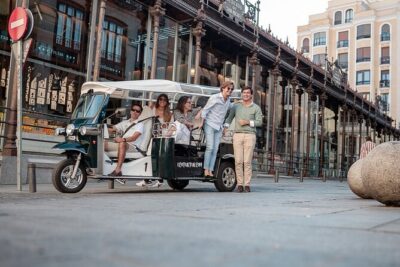
The “private” part matters. With up to four people per group, your guide can answer your questions and shape the vibe. You are not wedged into a bigger tour machine. And because it is a two-hour highlights loop, you can slot it right into the beginning of your trip to get your bearings fast, or place it near the end to connect dots from what you already explored on foot.
The electric tuk-tuk also helps with fatigue. You still walk a bit when you stop, but you are not sprinting between far-apart sights. This route is designed to keep you moving while giving you enough time at key points to enjoy the views and take photos.
Plaza de España to Temple of Debod, the route that sets the tone

Your tour starts at Pl. de España, 18, outside the Hotel Barceló Torre de Madrid area. The first leg is a scenic drive that gets you from the busy center into classic Madrid viewpoints. This matters because your first 15 to 20 minutes are basically orientation. You see the city’s rhythm, how streets slope, and how different neighborhoods feel before you dive into the main monuments.
Stop 2 is Plaza de España itself, a strong “Madrid now” introduction. It is a major crossroads and a good place to start figuring out direction, since you will keep coming back to central zones later in the route.
Stop 3 is the Temple of Debod. This is one of those Madrid sights that feels slightly unusual compared to the standard “palace and churches” lineup. Even if you only catch it from the right viewpoint and learn the story behind it, it gives you a change of pace: a reminder that Madrid’s identity includes history that comes from beyond Spain’s borders too.
Stop 4 is Argüelles, another scenic drive stop that helps you understand the city’s layering. Madrid does not feel like one single neighborhood. It feels like a stack of distinct areas, and that is exactly what this tour helps you notice early.
Almudena Cathedral and the Royal Palace area, where Madrid shows its grand side
Stop 5 is Almudena Cathedral. Even from a strategic view, it is hard not to feel the scale. You get the cathedral as a centerpiece of the skyline, and your guide can connect it to the surrounding royal and administrative symbolism that defines this part of town.
Stop 6 is Palacio Madrid (a photo stop). The palace area is one of those zones where the outside view and the surrounding streets matter as much as the building itself. A photo stop is the practical move here. The palace complex is not a “quick look” kind of site. By keeping this a photo moment, you still get the photo, the context, and the direction without eating up your whole two-hour window.
This segment is where the tour earns its “highlights” badge. It checks off two of Madrid’s most iconic images, but it does so in a way that does not trap you. If you are the type who likes to see the big stuff first, then wander later, this is a great sequence.
Another Madrid route worth weighing up

Plaza de la Villa, San Miguel, and La Latina, old Madrid in human scale

After the royal and cathedral views, the route shifts into neighborhood Madrid. Stop 7 is Plaza de la Villa. This is a calmer, more intimate-feeling area than the mega-plaza zones. It helps you picture how the city functioned before everything got modernized into major traffic loops.
Stop 8 is the Market of San Miguel. Even if you do not plan to eat, it is a classic Madrid stop. It is the kind of place where you get the visual idea of what “street-level Madrid” feels like, and your guide can point out how food culture and daily life shape the city’s atmosphere.
Stop 9 is La Latina, one of Madrid’s most fun districts for walking later. On a tuk-tuk, you get a taste of the street character without spending hours navigating alleys. You also get a practical benefit: your guide can tell you what is worth returning to on foot after the tour ends.
Stops 10 and 11 bring literature into the mix. Stop 10 is Casa de Cervantes, and Stop 11 is Casa Museo Lope de Vega. These are the kinds of stops that help Madrid feel personal. You see the city as a place tied to writers and ideas, not just monuments. It is also a nice break from the “everything is a building” feeling you can get on some sightseeing tours.
Congress of Deputies and the Prado area, power and culture in one flow
Stop 12 is the Congress of Deputies. This is a smart inclusion for a highlights tour because it shifts your viewpoint from royal symbolism to modern political life. Your guide can connect what you are seeing with how Madrid became the seat of national governance.
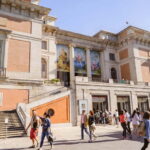
Stop 13 is Museo del Prado (photo stop). The Prado area is a perfect example of how a short tour can still feel meaningful. You get the famous museum zone in your visual memory, then you can decide later if you want the long version inside. That decision becomes much easier after you have seen the area from the outside with a quick story to anchor it.
Stop 14 is Jerónimos (photo stop). You are not paying a time tax here. You are capturing the look and getting the context that will make later visits feel less random. The Jerónimos area also helps you understand how Madrid links different eras through its architecture.
This section is also a good reminder: this tour is not trying to replace your museum day. It is setting you up to choose your museum day with better instincts.
Retiro to Alcala Gate, the views that make the city feel bigger
Stop 15 is Retiro Neighborhood. Retiro is where Madrid can feel more open and more “park-and-stroll” friendly. Seeing it from the route helps you plan where you might want to slow down later.
Stop 16 is Alcala Gate, a photo stop. Puerta de Alcalá is one of the most recognizable images in Madrid, and the stop is timed so you get the classic viewpoint without racing the clock. This is also a good moment to ask your guide for a direction check. Once you know where Puerta de Alcalá sits in the city, navigating later neighborhoods starts to feel easier.
Stops like this are why I prefer guided rides for a first visit. A viewpoint that looks impressive in a guidebook can feel totally different once you understand how it connects to the surrounding streets.
Salamanca District, Cibeles, and Recoletos, Madrid’s polished middle

Stop 17 is Salamanca District. Salamanca tends to read as elegant and ordered, and it contrasts nicely with the older-feeling districts you saw earlier. On a tuk-tuk, you get the vibe shift quickly, so you can feel the city’s variety instead of just collecting monuments.
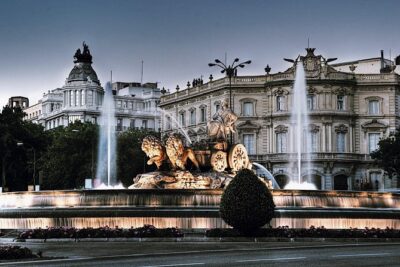
Stop 18 is Cibeles Fountain. This is one of those “you stop because you know it from photos” moments. But the best part is the bigger view and the way the square works as a photo backdrop. Your guide can also help you understand why this spot is so tied to Madrid’s identity in the way locals use it as a reference point.
Stop 19 is Recoletos. Recoletos helps you transition from iconic photo targets to everyday strolling corridors. It is a zone where you might later want to walk, take a break, or connect to cafes depending on what you are in the mood for.
Stop 20 is Plaza de Santa Ana. This is where the tour feels like it shifts into “Madrid after dark and long evenings” mode. Even if your timing is daytime, the square has that relaxed energy, and it makes a strong finish point because it is inviting to linger.
Stop 21 is the tour’s finish at Pl. de Sta. Ana, 14. You end right where you can keep your day going, whether you want a final snack, a drink, or a relaxed walk back into the streets.
Guides make the difference: Juan Manuel, Federico, and what to look for

The best part of this tour is not the tuk-tuk itself. It is what your guide does with it. The route is packed, so your guide’s storytelling turns “a lot of stops” into “a real mental map.”
From the highest-rated feedback, two names come up clearly: Juan Manuel and Federico. The praise points to a few traits you should hope for in any guide on this route:
- Clear, history-linked explanations that do not feel like homework
- Friendly, fun energy that keeps the ride from feeling like a checklist
- A sense of timing, especially for photo stops at the best angles
You should also pay attention to how your guide handles questions. In a private group, you can steer the conversation. Want to know what to return to on foot later? Ask. Curious about why one area feels different from the next? Ask. This is the kind of tour where good answers can genuinely improve the rest of your trip.
Photo stops that actually help your future self

Many city tours promise photos and deliver random snapshots. This one is built around purposeful stops: Palacio Madrid, Museo del Prado, Jerónimos, Puerta de Alcalá, and the Cibeles Fountain area. That matters because Madrid is full of grand architecture, and the angles matter.
If you want practical value, treat the photos like navigation bookmarks. When you get back to your hotel, look at what you took and decide what you want to explore deeper. Did you love the street feel of La Latina? Then plan an evening stroll there. Did Puerta de Alcalá make the city feel bigger? Then build a route that links it to nearby streets and plazas on foot.
In short: the photos are not just souvenirs. They are a tool for choosing what to do next.
Price and value for a private group up to 4
The price is $214 per group, up to four people, for about two hours. That pricing is usually the make-or-break part for many people. Here is how I think about the value.
If you are traveling solo or as a couple, a private tour can feel pricey compared to a bus ticket. But you are paying for three things you often do not get with group transport:
- A guide who can tailor the route and answer questions
- Photo stops at better angles than you will likely find on your own quickly
- Time saved from figuring out connections between far-apart sights
And if you are a small group, the math becomes more comfortable. Splitting the cost can make it feel closer to the price of a couple of standard admissions and transit tickets, except you are also getting orientation and context.
Also, this tour can be better value than a hop-on hop-off style outing when your schedule is tight. In two hours, you either see the highlights with meaning, or you burn time waiting and walking between stops. This tour chooses the first option.
Who this Madrid tuk-tuk highlights tour fits best
This tour fits you if:
- You have limited time and want a smart first overview
- You like guided storytelling tied to places, not just a drive-by
- You want a mix of royal landmarks, big cultural zones, and neighborhood streets
- You prefer comfort and efficiency over long, self-guided wandering
It might not be the best fit if:
- You need long museum time or extended interior visits
- You are expecting an all-day experience with deep stops
- You want wheelchair access, since it is not suitable for wheelchair users
This is also ideal for travelers who enjoy photo moments but still want the “why” behind the views.
Should you book this Madrid City Highlights tuk-tuk tour?
I would book it if you want a high-contrast Madrid sampler that gives you direction for the rest of your trip. Two hours is short, but the route hits the city’s main visual anchors and also touches neighborhoods like La Latina, plus writer-related stops like Casa de Cervantes and Casa Museo Lope de Vega. That blend is exactly what helps Madrid feel real fast.
If you are the kind of visitor who gets more out of guided context than solo wandering, the private, multilingual guide format is your best bet. Guides like Juan Manuel and Federico are praised for history storytelling and friendly energy, and that is the part you cannot easily replicate on your own.
If you tell me your travel dates, the time of day you prefer, and what you care about most, I can also suggest what to do before and after this tour so your full day clicks.
FAQ
How long is the Madrid City Highlights tuk-tuk tour?
The tour duration is 2 hours.
What does it cost, and how big is the group?
It costs $214 per group, up to 4 people.
What languages are available for the live guide?
The live tour guide offers Spanish, English, Portuguese, and Italian.
What are the main sights included in the route?
The tour includes stops for landmarks such as the Royal Palace area, Almudena Cathedral, Temple of Debod, Puerta de Alcalá, Cibeles Fountain, and photo stops near Museo del Prado and Jerónimos, plus neighborhood areas including La Latina, Las Letras-related sites, Retiro, and Salamanca.
Where do you meet and where does the tour end?
You meet outside Hotel Barceló Torre de Madrid. The route starts at Pl. de España, 18 and finishes at Pl. de Sta. Ana, 14, and the activity also notes returning back to the meeting point area.
What is included, and is food included?
Included are the guided private tuk-tuk tour, multilingual guide, photo stops, and travel insurance. Food and drinks are not included.
Are there any restrictions on who can join or what you can bring?
The tour is not suitable for children under 2 years, wheelchair users, and it does not allow pets (assistance dogs are allowed). It also does not allow luggage or large bags. You should bring a passport or ID card.
More Tours in Madrid


More Tour Reviews in Madrid

Electric loops through the centre



Fresh ways to see Madrid
- Tour to Toledo & Madrid CitySight Seeing Tour
- 2-Day Guided Tour to Cordoba and Seville from Madrid
- Private Transfer from Madrid Airport to Madrid Hotels
- Wine Tasting and Flamenco Master Class in Madrid
- Prado Museum and Royal Palace Private Tour in Madrid
- Monastery Royal Barefoot Visit with entrance without waiting for queues
More ways into Eco Tuk-Tuk & Electric City Tours
 ★ 5.0Madrid Welcome Tour with Local Guide in Eco Tuk Tuk PrivateFrom $282,936 reviews
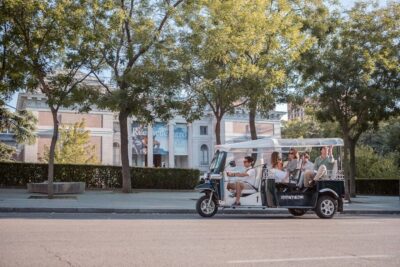 ★ 4.9Private City Tour by Eco Tuk TukFrom $612,876 reviews
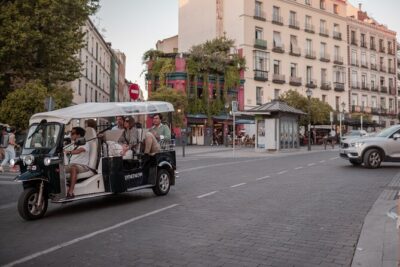 ★ 5.0Madrid Historical Tour with Local Guide in Eco Tuk Tuk PrivateFrom $28876 reviews
 ★ 5.0Madrid Express Tour with Local Guide in Eco Tuk Tuk PrivateFrom $28413 reviews
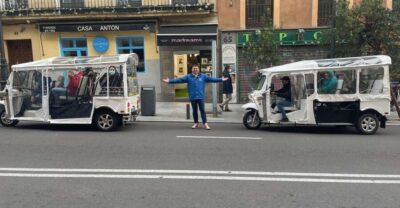 ★ 4.4City Highlights Tuk Tuk TourFrom $94334 reviews
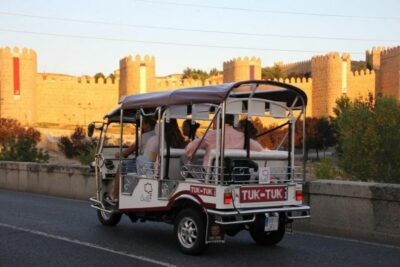 ★ 4.4Tour Guiado En Tuk Tuk Recorre Avila De La Forma Mas ComodaFrom $10235 reviews
 ★ 5.0Madrid Expert Tour with Local Guide in Eco Tuk Tuk PrivateFrom $28220 reviews
 ★ 5.0Madrid Expert Plus Tour with Local Guide in Eco Tuk Tuk PrivateFrom $28162 reviews
Try another angle on the same itinerary