

REVIEW · TOLEDO DAY TRIPS FROM MADRID
Guided Visit to the Toledo Underground
Toledo has a second city underneath. This guided walk through Toledo Underground strings together five underground spaces, each tied to a different chapter of the city’s past. You’re not just looking at old stone, you’re hearing how people lived, prayed, cleaned up, and handled water from deep below street level.
I love the access and the teaching style. You get official-guided entry into areas that are difficult or impossible to see without one, and the tour keeps the momentum going at a small group size (up to 20). I also like how the tour connects daily life to big cultural shifts, from a Holy Brotherhood prison space to a 10th-century hammam world and then into Roman bathing routines.
One thing to plan for: the route includes stairs, climbs, and descents, and the tour asks for moderate physical fitness. If you’re sensitive to heat, note that even in evenings, July conditions can still feel intense.
Key points to know before you book

- Five underground stops in about two hours, with a guided flow that keeps it from dragging
- Access to spaces not normally open, because some parts really require an official guide
- A compact group (max 20), which makes questions easy and the pace feel human
- Real daily-life themes, like hygiene practices, water supply logic, and bathing routines
- Multiple civilizations in one route, so you see Toledo as a layered city rather than one time period
- Built-in variety of spaces, dungeons, bath areas, ritual water, and Roman remains
Take the road south to Toledo
- Guided Walking Tour of Immortal Toledo★ 5.0 · 1,116 reviews
- Toledo Private Tour with Licensed Local Guide★ 5.0 · 884 reviews
- Toledo: City Sightseeing Hop-On Hop-Off Bus Tour & Extras★ 4.3 · 683 reviews
- Madrid: Full-Day Guided Tour of Toledo with Cathedral Visit★ 4.6 · 647 reviews
Toledo underground: a second city under your feet

Toledo is famous for its viewpoints and cathedral light. What I find even more memorable is the city’s quieter side, the one you can only reach by going down. This tour takes you into that underground world and gives it names, dates, and practical meaning.
The format is simple: you follow your guide from site to site, and each stop answers a specific question about how different peoples used this city and its space. The story is not one long speech. It’s more like five short time-travels that add up.
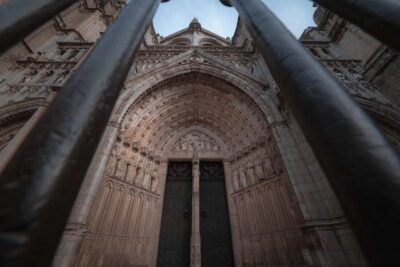
Also, this is a good bet if your schedule is tight. The whole visit runs about two hours, it starts early evening (6:30 pm), and it ends close to the Cathedral area, so you can roll straight into dinner or a nighttime stroll afterward.
Price and value for a 2-hour guided route
At $14.24 per person, this is priced like a “small indulgence” rather than a major splurge. And what helps is that underground entrances are included, meaning you’re paying for the guided access itself, not just someone talking outside the walls.
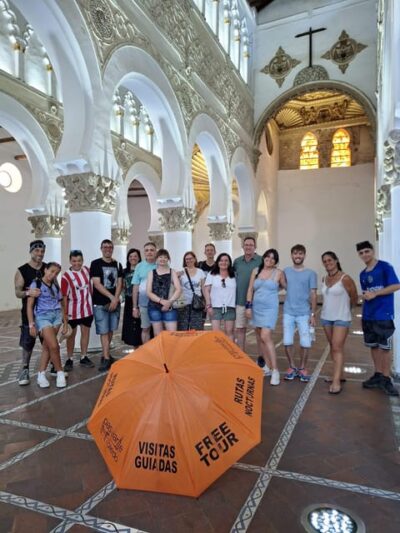
Two more value signals matter. First, the tour is operated by Rutas Guiadas Toledo A Pie, with local official guides. Second, the group size is capped at 20, which usually means you get a better back-and-forth instead of being one face in a crowd.
One practical note: it’s commonly booked about 24 days in advance on average. If you have a fixed travel window, don’t wait until the last minute.
Posada de la Hermandad dungeons and the green mangas story
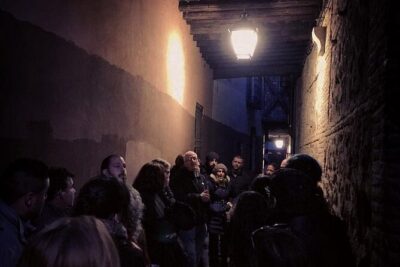
You start at Plaza de Zocodover, a central Toledo meeting point that’s easy to find. From there, the first big moment is the Posada de la Hermandad, where you step into preserved dungeons connected to the Holy Brotherhood.
This stop matters because it gives the underground a purpose, not just a location. You’re not only seeing “old rooms.” You’re meeting a historical setting tied to power, detention, and control, plus the stories that grew around the people involved.
One detail I especially like is that the tour doesn’t shy away from specific local legends and character clues. You’ll hear who the green mangas were, and your guide ties that nickname into what the Holy Brotherhood meant in its time. It’s the kind of specific local thread that makes Toledo feel less like a museum and more like a lived-in place.
The main drawback here is the same one you’ll feel later on. The tour involves moving through subterranean spaces, so wear shoes that handle uneven, old-stone surfaces. Also, if you’re someone who gets claustrophobic, it’s worth mentally preparing for enclosed underground rooms.
Another Madrid route worth weighing up


Baños del Ashen hammam: hygiene, rituals, and social life

Next comes Baños del Ashen, where the tour shifts from punishment and intrigue to something far more human. Here you travel toward the 10th century and into the world of the hammam.
What I like about this stop is that it treats bathing as more than cleanliness. The tour frames hammams as places where hygiene practices, religious rituals, and social relations all lived in the same space. That matters because it changes how you see “bath” architecture. It wasn’t only about washing. It was about routine, community, and belief.
Even if you think you know what a bathhouse is, this stop is worth it because it makes you look for the connections. Your guide points to how people used these rooms and how the space supported daily life. It’s a shift from big-story history into everyday behaviors.
Practical consideration: bath areas in historic sites can feel cooler than the street, but you still move in and out of underground sections. If you’re visiting in warmer months, bring layers you can adjust quickly.
Pozo del Salvador: wells vs cisterns and Toledo’s water logic
Then you hit Pozo del Salvador, and the tour gets wonderfully practical. You learn the difference between a well and a cistern, and why those distinctions mattered for drinking water in a city built on top of rock.
Toledo’s height is a big clue. When your city is perched, water isn’t just something that happens. It has to be stored, managed, and accessed reliably. This stop turns that idea into something you can actually visualize.
What I love here is the focus on essentials. The tour doesn’t treat water as a background topic. It treats water infrastructure as a daily life concern, tied to how communities survived and organized themselves.
The only downside is that this section may feel more “concept-driven” than the hammam or the dungeons. If you like hands-on storytelling and you enjoy architecture that you can interpret, you’ll still be fine. Just know that the payoff is in the water reasoning, not dramatic visuals.
Casa del Judío miqveh from the 14th century

One of the most distinctive stops is the miqveh at Casa del Judío. You’re visiting a traditional Jewish bath dating from the 14th century, and the tour connects it to the idea of ritual and community routines.
This stop works because it shows how different cultures organized their lives under the same city umbrella. Toledo wasn’t one story at one time. It was multiple communities sharing space, with each leaving marks in underground infrastructure, not just above-ground monuments.
If you like cultural contrast, this is a strong point in the itinerary. The miqveh is not just a “different attraction.” It’s a window into a different relationship with water and ritual timing.
As with the rest, you’re moving through tight underground spaces. Keep your pace steady, listen to your guide’s cues, and don’t rush ahead. The best part of this stop is how the explanations connect the space to purpose.
Roman baths of ancient Toletum at Las Termas Romanas
You finish with the Roman baths of ancient Toletum, at Las Termas Romanas de la Plaza de Amador de los Ríos. This last stop brings the underground story to a bathing-and-routine climax, but through a different civilization and a different bathing culture.
This is where the tour explains how Romans used bath spaces and how they fit into daily life. You also get a look at different archaeological stages through the remains you see, which helps you understand that this is not one single intact moment. It’s a site shaped over time.
What I like most is that the tour doesn’t leave the Romans as abstract figures. It talks about how long they spent there and what their routines likely looked like. You come away with a clearer sense of what people did with their time when they entered a bath.
A small caution: Roman bath areas can be uneven and damp in places, even if the overall experience feels comfortable. Again, shoes matter. And if you tend to get tired on stairs, plan to conserve energy for the final segment.
Guides and small group access: getting past the normal route

A big reason this tour scores so well is the guide quality. You might encounter guides like Luis, Mónica, Estefanía, or Diego, and the consistent theme is clear communication, friendly pacing, and strong command of the mix of archaeology and legend.
This matters because the underground can be hard to interpret on your own. Stones don’t label themselves. Dungeons do not hand you timelines. A good guide turns the stop list into an actual story.
Another practical advantage is the cap of 20 people. Smaller groups mean your questions are more likely to get answered in context. It also helps you move efficiently between sites, which is important when you are dealing with stairs and tight spaces.
In short, this is the kind of tour where the guide is part of the product, not an add-on.
Timing, heat, and how to keep the experience comfortable
You start at 6:30 pm. That evening timing is a smart move in a city that can get hot. Still, one of the most repeated practical notes from visitors is that summer heat can be real, even around that time.
So here’s my no-drama advice. Bring water. Wear breathable layers. And if you’re traveling in July or similar peak heat, treat the tour like a workout-light plus walking. You’ll be moving between underground areas, and the route can include climbs and descents.
Also, expect a moderate physical requirement. The tour is not described as extreme, but it is active enough that you should not assume it’s flat and easy.
Who this Toledo Underground tour is for
This tour is a great fit if:
- You like history that connects to daily life, not only dates and kings
- You want access to underground spaces that need a guide
- You’re curious about how different communities shaped Toledo over centuries
- You prefer small groups and Q and A style explanations
It may not be ideal if:
- You dislike stairs and uneven surfaces
- You need fully step-free routes
- You get very uncomfortable in enclosed spaces
If you’re like me and you enjoy seeing a city from an unexpected angle, the payoff is real. Toledo above ground is impressive. Toledo below ground gives you the “how did people actually live” story.
Should you book this Toledo Underground tour?
Book it if you want a high-value evening that turns Toledo into a layered timeline you can actually walk through. The price is reasonable for a guided visit, and underground entrances are included, which is where most of the value sits. The small group size and the official-guide access also make it feel more personal and more complete.
Skip it or choose another day if you know you struggle with stairs or heat. The route includes climbs and descents, and it’s wise to plan for summer conditions even in the evening.
If your goal is to understand Toledo as more than a postcard city, this underground route is one of the best ways to do it in a tight schedule.
FAQ
How long is the Toledo Underground guided visit?
It lasts about 2 hours.
Where does the tour start and end?
It starts at Plaza de Zocodover at 6:30 pm. It ends at Callejón Nuncio Viejo, very close to the Cathedral.
What are the main stops during the tour?
You’ll visit five underground sites: the Posada de la Hermandad dungeons of the Holy Brotherhood, Baños del Ashen (including the hamman theme), Pozo del Salvador (wells vs cisterns), the miqveh at Casa del Judío (14th century), and the Roman baths at Las Termas Romanas.
Is the ticket price only for the guide, or are entrances included?
Underground entrances are included. Admission tickets are included for the stops listed, including Posada de la Hermandad and the Roman baths area.
What kind of physical activity should I expect?
The tour calls for moderate physical fitness. The route includes stairs and changes in level.
Is this tour limited in group size?
Yes. The maximum group size is 20 travelers.
Do I need good weather for it to run?
Yes. The experience requires good weather.
What is the cancellation policy?
Free cancellation is available up to 24 hours in advance for a full refund. If you cancel less than 24 hours before the start time, the amount paid will not be refunded.
Do I need to print a ticket?
No. It uses a mobile ticket.
More Guided in Toledo



More Tour Reviews in Toledo

Toledo above the Tagus
More ways into Toledo Day Trips from Madrid
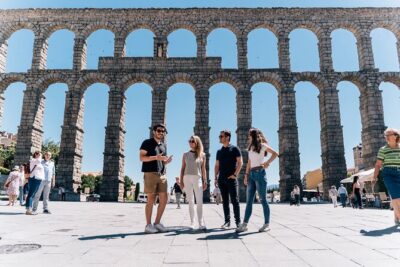 ★ 5.0Three Cities in One Day: Segovia, Avila and Toledo from MadridFrom $1268,402 reviews
 ★ 4.7Segovia and Toledo Tour, Alcazar, and CathedralFrom $487,797 reviews
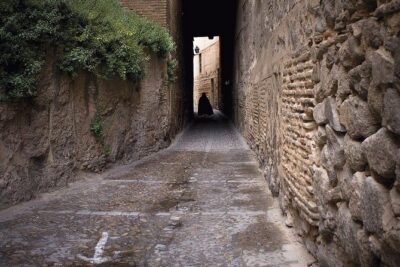 ★ 5.0Toledo Tour from Madrid: Cathedral, Synagogue & St. Tome’s ChurchFrom $816,784 reviews
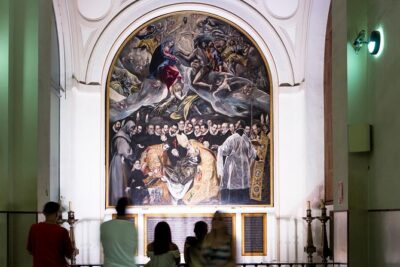 ★ 4.5Toledo Half or Full Day Tour with Optional Lunch from MadridFrom $645,807 reviews
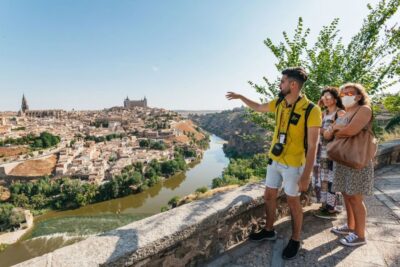 ★ 4.1From Madrid: Guided Day Trip to Toledo by BusFrom $405,280 reviews
 ★ 4.6Toledo & Segovia Full Day Guided Tour with AlcázarFrom $454,394 reviews
 ★ 4.3From Madrid: Toledo Guided Day TripFrom $323,501 reviews
 ★ 5.0Toledo Tour & Vineyard Walk with Wine Tasting from MadridFrom $1332,546 reviews
Try another angle on the same itinerary