

REVIEW · TOLEDO DAY TRIPS FROM MADRID
Guided Tour of Underground Toledo
Toledo has a second, underground life. This 2-hour tour strings together five secret spaces that normally stay off-limits.
I especially like the official-guide access to underground areas you can’t just wander into, and I also like how the route connects the daily routines of the Three Cultures, not just famous names on a wall.
One note before you go: this is not suitable for wheelchair users or for people with mobility impairments, because the experience includes walking and descending in underground spaces.
Key highlights you will care about

- Five underground stops in 2 hours, each with its own story and purpose
- Official accredited guide access to areas that are restricted
- Cenizal Arab baths for a real sense of hygiene, ritual, and social life
- Casa del Judío miqvé from the 14th century, tied to the Jewish community’s practices
- Pozo del Salvador explaining the city’s water system, wells vs cisterns
- Toletum Roman baths showcasing one of the biggest Roman bath complexes in Hispania
Take the road south to Toledo
- Guided Walking Tour of Immortal Toledo★ 5.0 · 1,116 reviews
- Toledo Private Tour with Licensed Local Guide★ 5.0 · 884 reviews
- Toledo: City Sightseeing Hop-On Hop-Off Bus Tour & Extras★ 4.3 · 683 reviews
- Madrid: Full-Day Guided Tour of Toledo with Cathedral Visit★ 4.6 · 647 reviews
A 2-hour walk that leads below Toledo’s streets

This is a walking tour with serious payoff. You start in the center of Toledo, then shift from sunlit streets to underground corridors where history gets physical, not just theoretical. The timing works, too. At 2 hours, you get a full sampler without losing the afternoon to endless stops.
What makes Underground Toledo a good value is that it is not just “see a basement.” The key word here is access. You visit five underground spaces with a live, official guide, including areas that are only accessible through accredited guided visits. That matters because it turns the tour into a guided reading of the city’s subsoil, with context you would miss on your own.
The tone of the tour is practical and human. It keeps returning to daily life: washing routines, water supply, religious practice, and even prison life. That gives you something you can carry with you as you keep exploring Toledo above ground.
Also, the tour is conducted in Spanish with a live guide. If you don’t speak much Spanish, you’ll still likely follow the flow with your eyes and the site visuals, but your comfort will depend on how well you catch explanations.
Where you meet, how the route ends, and how to stay comfortable
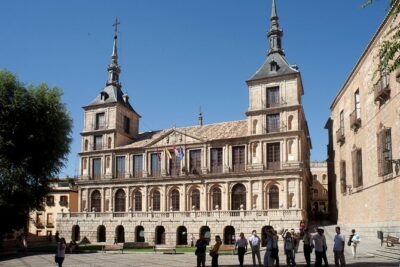
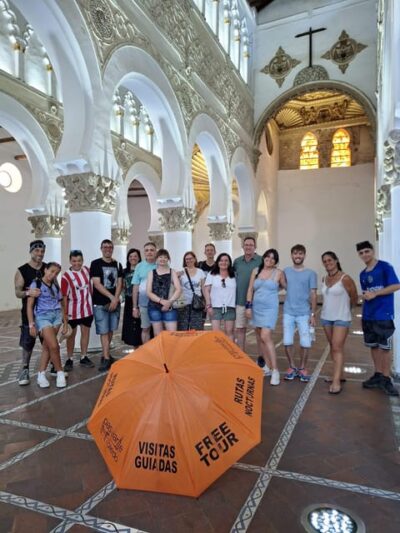
You meet in Plaza de Zocodover, in the middle of the square with a GREEN umbrella. That is your anchor point, and it helps a lot when you are arriving in an old city center where streets can twist fast.
The tour ends back at the meeting point area, but the listed finish is Plaza Amador de los Ríos. Either way, it’s a city-center circuit, so you can keep your day moving after the tour.
The big “comfort” consideration is physical rather than logistical. This experience is not suitable for people with mobility impairments and is not for wheelchair users. Even if you are generally fine on foot, underground areas can involve uneven surfaces, stairs, and tighter movement. I would go into it expecting some limited mobility challenges.
One more small rule: audio recording is not allowed. You can still take notes, watch closely, and use your phone for pictures if you want, but plan to rely on memory and your guide’s narration instead of recording audio.
Posada de la Hermandad, and Toledo’s preserved dungeons

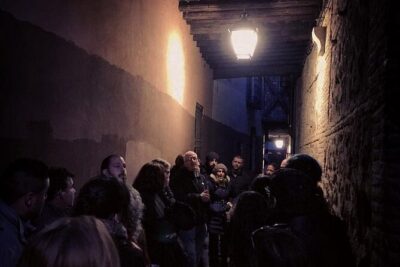
The tour begins with a look at medieval Toledo in a place that still holds onto its original function. At Posada de la Hermandad, you get guided access to dungeons preserved in Toledo, including the story of the Holy Brotherhood.
This section is valuable because it stops you from thinking of prisons as abstract “history.” You learn about prisoner daily life and meet the famous jailers known as Mangas Verdes. That kind of detail changes the atmosphere. It is no longer a dry date-and-king tour. It becomes a sense of routine, confinement, and power.
What to watch for as you listen: how the guide frames the dungeons as part of the city’s social order. Even if you care more about architecture than prisons, the dungeons help explain why certain underground spaces existed and how they were used.
Time-wise, you have about 20 minutes here. That is enough to get oriented and grounded, but not enough to linger like you might in a museum. Come ready to absorb and move on.
Another Madrid route worth weighing up
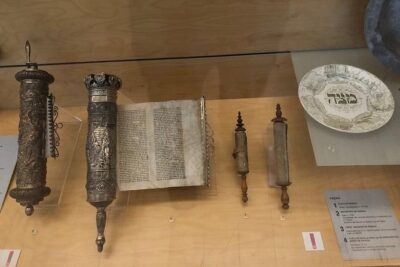
Cenizal Arab baths and Tulaytula, hygiene as culture
Next you descend into Baños árabes del Cenizal, described as the Cenizal Baths tied to Tulaytula, Toledo of the Muslim era. If you want a tour that feels daily-life focused, this is one of the best stops on the schedule.
The guide explains hygiene practices, religious rituals, and social life, with the hammam experience as the centerpiece. In other words, you are not only looking at architectural features. You are learning why washing and ritual mattered, how people organized their routines around the space, and how that shaped community life.
This matters for how you understand Toledo overall. The city gets discussed in broad strokes as a “Three Cultures” crossroads, but the baths give you a more grounded idea of what that meant day to day. Bath culture was not an occasional luxury. It was part of living, and it had rules tied to belief and community.
Potential drawback here is also practical: underground baths are cooler and often echo a bit. Bring your attention, not your expectations for quiet. If you need silence to think, this is a guided space where voices carry.
Plaza del Salvador and the Pozo del Salvador water puzzle
At Plaza del Salvador, you move to the Well of the Savior, where the tour explains the difference between a well and a cistern. That sounds simple, but it is the kind of practical knowledge that makes history stick.
Toledo sits on a rocky high point, so getting water down and distributing it was not a one-time engineering feat. The guide shows how the city solved water shortages during droughts, using underground storage and access points.
Why I like this stop: it turns “cool old ruins” into a survival story. Water is what every civilization had to manage, and the underground infrastructure shows the long-term thinking required to keep people alive on uneven terrain.
If you want photography, this stop can be a bit tighter. You will likely have limited space to get into perfect angles. Instead of fighting for the best shot, focus on understanding what you are looking at.
And remember, you have only about 20 minutes here. The goal is clarity, not a full engineering lecture.
Casa del Judío and the 14th-century miqvé
One of the most memorable parts is the Jewish quarter stop at Casa del Judío. Here you visit a miqvé dating back to the 14th century, a specific place where ritual and daily practice overlap.
This is one of those moments where the tour earns its “underground” theme. You are not just reading about the community. You are inside a space designed for practice, and the guide connects it to legends and history tied to Jewish life in Toledo.
What you should pay attention to is how the guide describes the miqvé as a functional, lived-in tool. Ritual spaces were not only symbolic. They were also practical, built around community schedules and ideas of cleanliness and meaning.
If you have any interest in architecture with cultural purpose, this stop is a standout. It is also a good balance after the baths, because you see a different religious framework for hygiene and routine.
Termas Romanas, Toletum baths, and everyday spectacle in stone

The final major stop is Termas Romanas, the Roman Baths of Toletum. The tour frames it as one of the largest Roman bath complexes in Hispania, and that scale changes what you see. Roman baths were about more than washing. They were social spaces, workout spaces, and public life spaces wrapped in infrastructure.
This stop helps you connect the dots between cultures. Even with different beliefs and different rituals, the idea of gathering in bath complexes keeps showing up. Seeing the Roman layout after the baths of Tulaytula gives you a contrast you can feel: different customs, shared human routines.
The tour gives you a sense of what life might have looked like in the Roman era of Toledo. You are guided through the space, so it is not just “look at ruins.” The guide helps you visualize how people used the baths as part of their day.
Time is still limited, around 20 minutes. So if your brain likes Roman details, I suggest you take quick notes on the key points the guide repeats. You can then ask follow-up questions right there if the group flow allows.
Price and value: why $15 can make sense here

At $15 per person, this tour has a strong value profile, mainly because you are paying for access. You get an accredited official guide and entrance to five underground spaces. That is a big difference from a walking tour where you only get viewpoints above ground.
In practical terms, the cost is buying three things at once:
1) guided interpretation that helps you understand what you are seeing
2) entry to spaces that are restricted to official tours
3) a structured 2-hour route so you do not waste time hunting down underground sites on your own
Also, the reviews highlight that the guide experience is a real part of the value. The guide Mónica is praised for being caring and adapting to the group. One review specifically notes her attentiveness to a husband’s cane needs, which tells you this is not run like an assembly line. You get a guide who watches the room and adjusts when needed.
One practical thing to know: audio recording is not allowed, so rely on listening and your own notes. If you come prepared with curiosity, the guide’s explanations become your “souvenir.”
Who this tour is best for (and who should skip it)
This works best for you if you want:
- a focused 2-hour underground route with five distinct sites
- explanations tied to daily routines, not just big names
- restricted-access experiences with an official guide
It might not be your best fit if:
- you use a wheelchair or you have mobility limitations that make stairs and underground movement hard
- you need to record audio for accessibility or personal learning, since audio recording is not allowed
If you are traveling with limited time and you want a deep sense of Toledo’s Three Cultures without turning your day into an all-day museum marathon, this is a smart pick.
Should you book Underground Toledo?
Yes, if your goal is to see Toledo’s underground life in a way that actually explains what you are looking at. The combination of official-guide access plus multiple underground sites makes the price feel fair, and the focus on everyday practices gives you more than a list of monuments.
Before you book, check two things: your mobility comfort level, and your ability to attend in Spanish. If those fit, you are likely to come away with a much more “complete” Toledo, because you will have learned how water, ritual, hygiene, power, and daily life once worked under the streets.
FAQ
How long is the Guided Tour of Underground Toledo?
The tour lasts about 2 hours.
How much does it cost?
The price is listed as $15 per person.
Where do I meet the guide?
Meet in Plaza de Zocodover, in the center of the square with a GREEN umbrella.
Where does the tour end?
The tour finishes at Plaza Amador de los Ríos.
What underground sites are included?
The tour includes five subways, with visits to the Posada de la Hermandad dungeons, the Baños árabes del Cenizal (Arab baths), the Pozo del Salvador area (well-cistern topic), the Casa del Judío miqvé, and the Termas Romanas.
Is the tour guided, and what language is it in?
It is a live guided tour with an accredited official tour guide, and the language is Spanish.
Is audio recording allowed during the tour?
No, audio recording is not allowed.
Is this tour suitable for wheelchair users?
No, it is not suitable for wheelchair users or for people with mobility impairments.
More Tours in Toledo


More Tour Reviews in Toledo
Toledo above the Tagus
More ways into Toledo Day Trips from Madrid
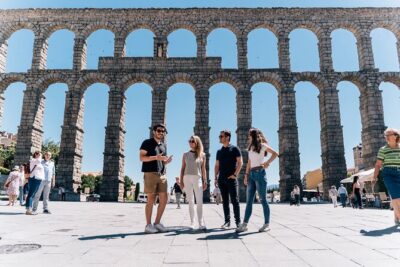 ★ 5.0Three Cities in One Day: Segovia, Avila and Toledo from MadridFrom $1268,402 reviews
 ★ 4.7Segovia and Toledo Tour, Alcazar, and CathedralFrom $487,797 reviews
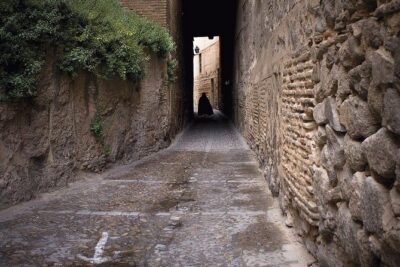 ★ 5.0Toledo Tour from Madrid: Cathedral, Synagogue & St. Tome’s ChurchFrom $816,784 reviews
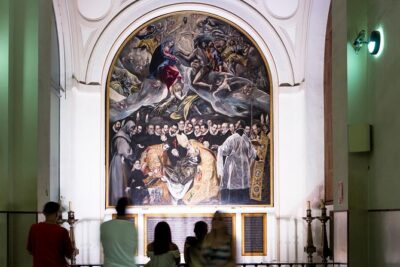 ★ 4.5Toledo Half or Full Day Tour with Optional Lunch from MadridFrom $645,807 reviews
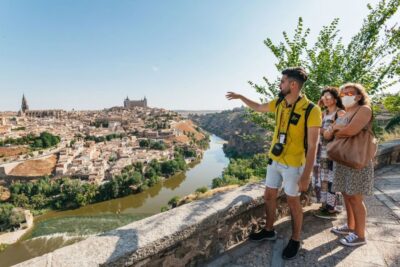 ★ 4.1From Madrid: Guided Day Trip to Toledo by BusFrom $405,280 reviews
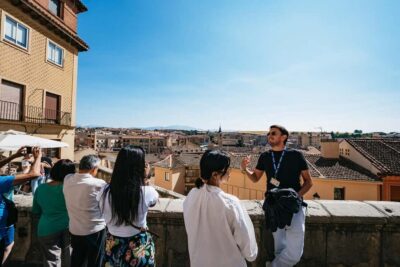 ★ 4.6Toledo & Segovia Full Day Guided Tour with AlcázarFrom $454,394 reviews
 ★ 4.3From Madrid: Toledo Guided Day TripFrom $323,501 reviews
 ★ 5.0Toledo Tour & Vineyard Walk with Wine Tasting from MadridFrom $1332,546 reviews
Try another angle on the same itinerary