

REVIEW · AVILA WALLS & MEDIEVAL DAY TRIPS
Ávila: Tour privado por Murallas y Casco Histórico
Medieval walls in the middle of the day. That is the hook. This private tour helps you read Ávila’s Walls and historic center like a story, with key monuments explained through major figures of the city.
I especially love two things here: the chance to admire Ávila’s Romanesque beauty up close, and the fact it is a true private format for a small group. One possible drawback to plan around, though: cameras are not allowed, so leave your photo obsession at the hotel.
Key Things You Should Know Before You Go
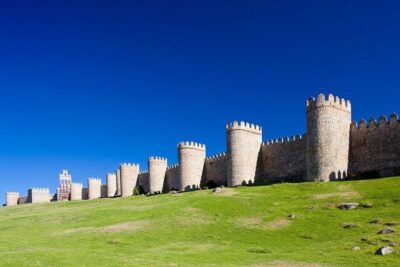
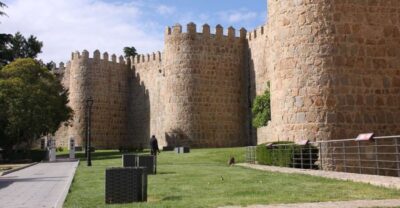
- Europe-style fortifications: You get to see Ávila’s impressive towers and curtain walls as your main viewpoint all tour long.
- Romanesque inside, not just outside: Basilica de San Vicente is explained for what you can see up close, including its crypt and cenotaph.
- A cathedral that also defends the city: Catedral del Salvador includes the well-known cimorro idea as part of the wall defenses.
- Santa Teresa in real place: You visit the Casa Natal area and connect the streets to the international Catholic figure she became.
- Military history in a palace: Palacio de Polentinos links to the quartermaster academy, the General Military Archive, and an army museum.
- Tour ends at the social center: Santa Teresa Square and the church of San Pedro sit in the local market nerve center.
Walk the complete walls of Ávila
- From Madrid: Segovia & Avila Day Trip with Optional Tickets★ 4.3 · 2,161 reviews
- Tour Guiado En Tuk Tuk Recorre Avila De La Forma Mas Comoda★ 4.4 · 235 reviews
- TOUR GUIADO EN TUK TUK POR AVILA 1 HORA★ 4.5 · 45 reviews
- Avila: Cathedral Entry Ticket with Audio Guide★ 4.5 · 34 reviews
Walking Ávila’s Walls Like They Matter
Ávila can feel compact on a map, but up close it is all pressure and precision. You start with the biggest idea first: these walls are not decorative. They are part of how the city survived, and your guide helps you see that without needing a history degree.
If you like architecture, this is a smart way to spend time. You will get context as you move, so Romanesque and Gothic are not random labels. You also get a small-group private experience, so questions do not have to be “save it for the end” questions.
The other thing I like is how the tour treats the city like a living place, not a museum set. Even when the sights are medieval, the walk ends in a square where people still meet.
Starting at Puerta de San Vicente, Then Getting Oriented Fast
Your meeting point is right by the Puerta de San Vicente (Junto a la puerta de San Vicente). That is a good spot because it puts you immediately in the wall story, not halfway through it.
From there, the guide sets the pace. Expect a walk through the historic center that uses main monuments and main characters to connect the dots. This matters because Ávila’s best sights are also very close together, so you will cover a lot without it feeling like a sprint.
Practical tip: wear comfortable shoes. The tour is only about 2 hours, but the cobbled streets and steady walking add up.
Europe’s Best-Preserved Walls, Explained in Human Terms
Ávila is famous for its walls, and the tour leans into that. You will admire towers and long wall sections that help shape the city’s identity. Instead of just pointing out “old stones,” your guide frames what the walls did and why they were designed the way they were.
The most satisfying moment is when you start seeing defensive logic in the details. A tower is not just a tower. It is a lookout, a control point, and a way to manage movement. Even if your interests are photography or vibes, this explanation makes the views more rewarding.
Also, the walls give you a natural rhythm. You can pause, look out, and then step forward again to keep the story moving. That turns a sightseeing list into a route you can remember.

Basilica de San Vicente: Romanesque Beauty with Real Secrets
If you love religious art and architecture, this stop is a key reason to book. Basilica de San Vicente is presented as the pearl of Ávila’s Romanesque heritage, and construction began in the 12th century. It is also tied to archaeological remains found in the area, which adds depth to what you are seeing.
The best part is getting inside. You will likely feel the contrast right away: the basilica’s robust exterior does not prepare you for the light and beauty you encounter within.
Your guide also points out what is often overlooked by casual passersby. The tour includes visits through areas connected to the crypt and the cenotaph, so you are not only looking at surfaces. You are learning how meaning is built into the layout and into what the church holds.
One more practical note: because entry is part of the experience, go in expecting a calm, respectful interior. Comfortable shoes still matter, since you may stand and look longer than you expect in church spaces.
Catedral del Salvador and the Cimorro, a Cathedral with a Job
Catedral del Salvador is described as the first Gothic cathedral built in Spain. That is a big statement, and the tour helps you understand why it is tied to defense as much as worship.
Your guide explains the tower as having a double function. It is a house of God, but it is also part of an important defensive system for the city. The famous cimorro is integrated into the wall as one more tower, which is a wild idea until you see how it fits the overall fortification plan.
This is the moment where Gothic feels different than you might expect. In many places, Gothic is about height and light. In Ávila, it also reads as strategy. The cathedral does not ignore the walls, it works with them.
If you want the city’s big theme in one sentence, this stop gives it to you: Ávila built faith and defense into the same stone plan.
Santa Teresa’s Birthplace Area and the Power of One Person
The tour brings Santa Teresa into the center of the story. You visit the Basilica Casa Natal de Santa Teresa, where the guide connects the site to the figure she became. She is presented as the most relevant and international woman in Ávila, and your walk ties her influence to not only the city and Spain, but also across borders.
The tour also links her to her role as a major reference for the Catholic Church. That framing helps when you are trying to understand why places like this still matter today. It is not just a childhood address. It is a place that became part of a broader religious and cultural impact.
Also, the walking format helps you keep names from turning into trivia. You are hearing the city’s history through major figures rather than only through dates. You will likely leave with a clearer mental map of who mattered and why.
The tour highlights another key historical person, Isabella, as part of the character-based storyline. Even without memorizing every detail, you should come away with a sense of how Ávila’s power and identity were shaped in its medieval era.
Palacio de Polentinos: Where Military Life Meets Architecture
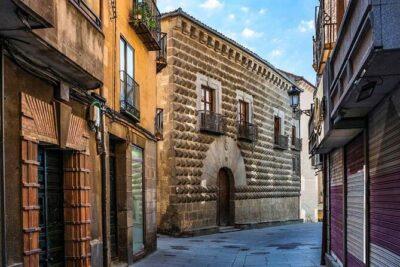
Palacio de Polentinos is one of those stops that changes your attitude toward “old buildings.” The palace is described as one of the best and most beautiful examples of 16th-century palace architecture in Ávila, and it has strong links to military life.
Your guide explains the key historical use: it was a former quartermaster academy of the army. Today, it houses the General Military Archive of Ávila, plus a museum related to the Army. That blend matters because it makes the building feel functional, not frozen.
What to look for here is the relationship between form and purpose. Fortification and defense are not confined to the wall route. The city’s military thinking extends into how institutions were housed.
If you are the type who likes stories behind the stones, this stop pays off. It also helps balance the tour so it is not only churches and towers. You get a different side of the medieval and early modern city.
Santa Teresa Square and the Big Market Area: End Where Life Happens
The tour finishes in Santa Teresa Square, in what is described as the nerve center of the city and the big market area. That is a smart ending because it moves from monuments and symbolism to daily rhythms.
This square is also tied to another Romanesque jewel: the Church of San Pedro. So even at the end, you still close the loop on the tour’s theme, Romanesque beauty across the city center.
I like ending in a place like this because it gives you options afterward. If you want a snack, a coffee, or a slower walk to keep absorbing the streets, you are not stuck at a dead-end viewpoint. You are placed where people actually gather.
Price and Timing: Is This Private Tour Good Value?
The tour is listed at $188 per group, up to 4 people, for about 2 hours. That price can feel high if you are thinking per person in a vacuum. But for a private experience, small-group pricing makes sense, especially when you are getting live explanation tied to multiple major monuments.
Here is what makes it good value for you:
- 2 hours is enough time to connect the walls, churches, and palace without fatigue taking over.
- You cover several high-impact stops, including interiors where the Romanesque story becomes visible.
- The private format keeps the pace human. It is not a cattle-car lesson where you hear only half the details.
It also helps that the tour is built around your preferences and time. If you have a narrow window or specific interests, you are not stuck with a generic script.
If your ideal trip is long, slow, and photo-heavy with lots of stops, this might feel fast. But if you want a strong hit of Ávila’s top themes in one well-led route, it is a great fit.
Who This Tour Suits Best (and Who Should Skip It)
This private Walls and Historic Center tour is a strong match if you:
- Want a guided walk that connects monuments to characters like Santa Teresa and Isabella
- Care about Romanesque and Gothic, including how styles relate to defense
- Prefer a small group experience where questions stay easy
You might want to skip it if you:
- Need time to linger deeply at every stop on your own, without group pacing
- Are traveling with a baby stroller, since strollers are not allowed
- Are determined to take photos during the tour, since cameras are not allowed
Should You Book This Ávila Walls and Old Town Private Tour?
Yes, if you want your time in Ávila to feel organized, meaningful, and efficient. This route gives you the best-preserved walls in Europe as the spine of the story, then anchors that story in Romanesque interiors, a Gothic cathedral with defense built into it, Santa Teresa’s birthplace area, and the military-focused Palacio de Polentinos.
I also like the human element. A live Spanish guide is included, and excellent, comfortable guiding shows up in the way people describe their experience, including strong praise for a guide named Oscar.
Book it if you want a guided framework that you can then build on with your own wandering afterward. If you prefer to photograph everything or travel with a stroller, adjust your plan, because the tour’s rules make those goals harder.
FAQ
How long is the Ávila private tour?
The duration is 2 hours.
What is the meeting point for the tour?
You meet next to the puerta de San Vicente.
How much does it cost?
The price is $188 per group up to 4 people.
What language is the live tour guide?
The live tour guide is Spanish.
Is the tour wheelchair accessible?
Yes, wheelchair access is listed.
What should I bring?
You should wear comfortable shoes.
Are cameras allowed during the tour?
No, cameras are not allowed.
Are baby strollers allowed?
No, baby strollers are not allowed.
Can I book with flexible plans?
Yes, it offers free cancellation up to 24 hours in advance for a full refund, and a reserve now, pay later option is available.
More Tours in Avila



More Tour Reviews in Avila


A full circuit of Ávila
More ways into Avila Walls & Medieval Day Trips
 ★ 5.0Avila & Segovia Tour with Tickets to Monuments from MadridFrom $819,762 reviews
 ★ 5.0Three Cities in One Day: Segovia, Avila and Toledo from MadridFrom $1268,402 reviews
 ★ 4.6Avila and Segovia Day Trip with Tickets to MonumentsFrom $744,568 reviews
 ★ 4.5Avila with Walls and Segovia with Alcazar from MadridFrom $603,293 reviews
 ★ 4.3From Madrid: Segovia & Avila Day Trip with Optional TicketsFrom $592,161 reviews
 ★ 5.0Full Day Tour to Avila & Segovia from MadridFrom $601,133 reviews
 ★ 4.6From Madrid: Avila and Segovia Full-Day TourFrom $481,052 reviews
 ★ 4.7From Madrid: Segovia, Ávila, and Toledo Guided TourFrom $991,011 reviews
Try another angle on the same itinerary