Madrid Expert Tour with Local Guide in Eco Tuk Tuk Private

REVIEW · ECO TUK-TUK & ELECTRIC CITY TOURS

Madrid Expert Tour with Local Guide in Eco Tuk Tuk Private

5.0 · 220 reviews 2 to 4 hours (approx.) From $28 Operated by Eco Tuk Tuk - Spain · Bookable on Viator
Book on Viator →

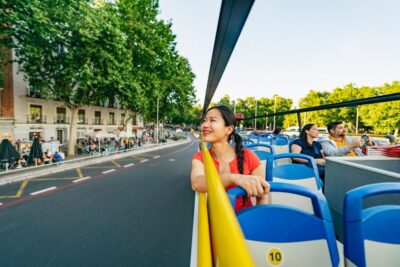
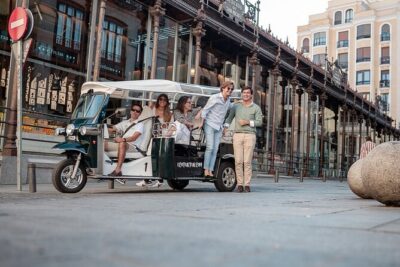
Tuk tuks give Madrid instant bearings. This private eco tuk tuk tour is a fun, quick way to see a lot of major sights in about three hours, with a local guide who ties together landmarks you’d otherwise drive past. I love the 100% electric ride for cutting through traffic without the stress, and I love the comfort touches like blankets in cold weather. One catch: the itinerary is set, photo stops are fixed, and the route can shift on days with street closures or demonstrations.

Guides often bring the city to life with humor and tight pacing. I’ve seen names like Juli, Lucia, Carlos, and Manuel highlighted, and the common thread is how they keep the story going while still giving you time to look around.

If you want hours inside museums and churches, this tour is not that. Think orientation plus memorable highlights, not a deep dive.

Key highlights that make this Madrid tour work

Madrid Expert Tour with Local Guide in Eco Tuk Tuk Private - Key highlights that make this Madrid tour work

  • Private ride, not a shared bus line, so your group stays together and the pace feels smoother
  • No-queue start, meaning you get going fast instead of spending precious time waiting
  • Weather-ready comfort, with blankets and protective layers for rain and wind
  • A smart “see it first” route, hitting neighborhoods from central monuments to the Salamanca streets
  • Fixed photo stops that save decision time, so you do not waste the short time arguing where to stop
  • Templo de Debod is a bonus, with a short stop and free admission

Eco Tuk Tuk and the private pace you will notice right away

Madrid Expert Tour with Local Guide in Eco Tuk Tuk Private - Eco Tuk Tuk and the private pace you will notice right away
Madrid can feel like stop-and-go chaos, especially if it is your first day. This tour uses a 100% electric and sustainable tuk tuk approach that keeps you moving while still letting you enjoy wide views from the street. You are not squeezed into a long bus with strangers, and the private setup helps the guide keep the rhythm.

Comfort matters here. The tour includes blankets and protective layers, which sounds small until you hit winter wind or sudden rain. It also helps that drivers will assist older travelers getting on and off.

One practical detail: each tuk tuk has a legal max of 4 passengers. That keeps groups manageable and helps with smoother boarding and turning through busy streets.

Where the tour meets, and how to find it without stress

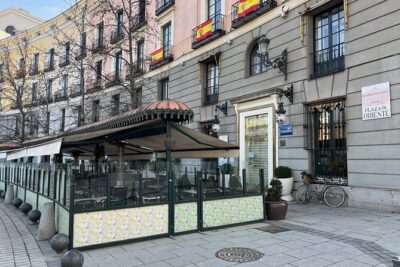
The pickup point is specific, and it can confuse first-timers if you rely on the wrong marker. You meet at C. de Bailén, 4, Centro, 28013 Madrid, at the underground bus station of Plaza de Oriente, right next to the Royal Palace.

There is a handy workaround: search for Calle Bailén 4 or Puerta del Príncipe on Google Maps. You should see the Prince’s Gate area, then stairs to reach the station, and the Eco Tuk Tuk signage to guide you to the exact point.

If you have mobility challenges, you can contact the team in advance so they can help you access the meeting point by elevator.

The “overview of Madrid” route, from Atocha to the Royal Palace zone

Madrid Expert Tour with Local Guide in Eco Tuk Tuk Private - The “overview of Madrid” route, from Atocha to the Royal Palace zone
This tour is designed to give you a clean mental map of the city fast. You cover major transport nodes, royal-era monuments, and art-heavy areas, then you swing through newer Madrid directions like Paseo de la Castellana toward stadium territory.

Stops are pre-selected, and you cannot modify them on the day. That is a trade-off, but it is usually what makes a 2 to 4 hour tour feel efficient.

1) A covered market built around 1916, food and local rhythm

You start at a covered market dating to around 1916. This is the kind of place where Madrid life feels close up, with local food, delicatessens, and events happening in a more elegant setting than a typical market street.

Even if you are not shopping, the guide’s framing helps you understand what markets mean here. You also get a sense of the neighborhoods behind Madrid’s big monuments.

2) Atocha station, where trains and the city meet

Next up is Atocha station, a major rail complex near Plaza del Emperador Carlos V. It is the busiest station in Spain and one of Europe’s main hubs, so it acts like a gateway into and out of the city.

The value for you is simple: Atocha is the place you will hear about on day trips and travel connections. Seeing it early helps later navigation, especially if you plan to go beyond Madrid.

3) Palace of the Spanish Courts, Congress in a building with layers

You then move to the Palace of the Spanish Courts, built on the site of an older convent and tied to Congress seating in the 19th century. From the outside, the neoclassical facade gets attention: the portico, the Corinthian columns, and the triangular pediment with reliefs.

One of the most memorable details is the sculptural work on the lions flanking the entrance. The iron used for them came from cannons captured during the war in Africa. That kind of story is exactly what makes a short stop feel like more than a photo.

4) Plaza de Cánovas del Castillo and the Neptune fountain

You stop at the Neptune fountain, a neoclassical centerpiece in the roundabout called Plaza de Cánovas del Castillo. It was proposed in 1777, construction began in 1782, and it finished in 1786.

This is a classic “spot the style” stop. You will notice how Madrid mixes stone monuments with carefully composed public space.

5) Prado museum area, why this museum matters

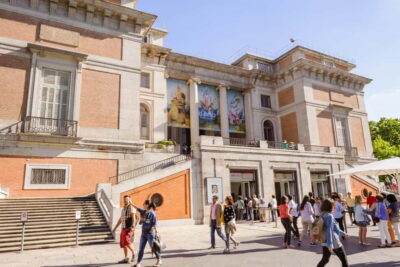
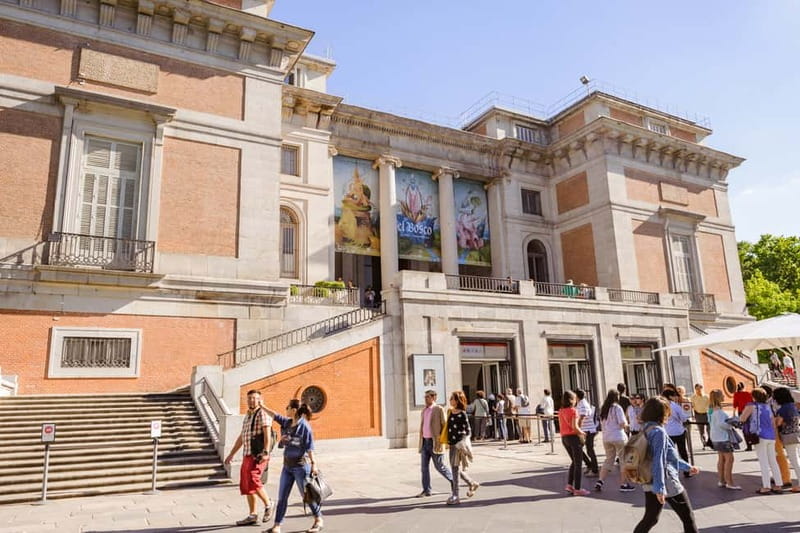
The tour includes the Prado museum area, described as a standout for European paintings from the 16th to the 19th centuries. You get a guided sense of what makes it so important, including the presence of major Spanish names like Goya, and painters such as Velázquez, El Greco, and El Bosco.

Practical takeaway: if you want to actually see the Prado at a serious pace, you will need a separate museum visit later. This tour is the “where it is, what it is, why it matters” version.

6) San Jerónimo el Real, late Gothic with royal connections

Next is the Parish Church of San Jerónimo el Real, often called Los Jerónimos. It sits by the Prado area, with late Gothic design and Renaissance influences from the early 16th century.

The guide framing here matters. This church connects to Spanish royalty: it became a spiritual retreat for monarchs, hosted royal investitures when there was no cathedral, and Alfonso XIII’s wedding took place here. The big stairway leading to the door dates to 1906.

7) Puerta de Alcalá, a triumphal-style gateway

Then comes Puerta de Alcalá, ordered by Carlos III to replace an older 16th-century gate. Designed by Francesco Sabatini, it is a neoclassical granite arc of triumph, considered an early European example after the fall of the Roman Empire.

You get details worth noticing while you stand under it: it has five openings rather than the usual three, and the city-facing side includes the four virtues, Prudence, Justice, Temperance, and Fortress. The interior-facing decoration is easier to read, so it helps to angle yourself toward the side the guide points out.

8) Barrio Salamanca streets, Madrid’s polished shopping side

The tour moves into Barrio Salamanca, including major streets like Velázquez, Ortega y Gasset, and Serrano. This is where you see a different Madrid mood than the grand government and museum belt.

It is also a useful “future plans” stop. If you like shopping, cafes, or a more upscale vibe, you now know where to aim for later.

Madrid’s big monuments: stadium, Columbus, libraries, and fountains

Madrid Expert Tour with Local Guide in Eco Tuk Tuk Private - Madrid’s big monuments: stadium, Columbus, libraries, and fountains
After Salamanca, the route continues along Paseo de la Castellana. This is where you start to see Madrid stretch outward and feel more modern.

9) Santiago Bernabéu stadium, big scale in plain view

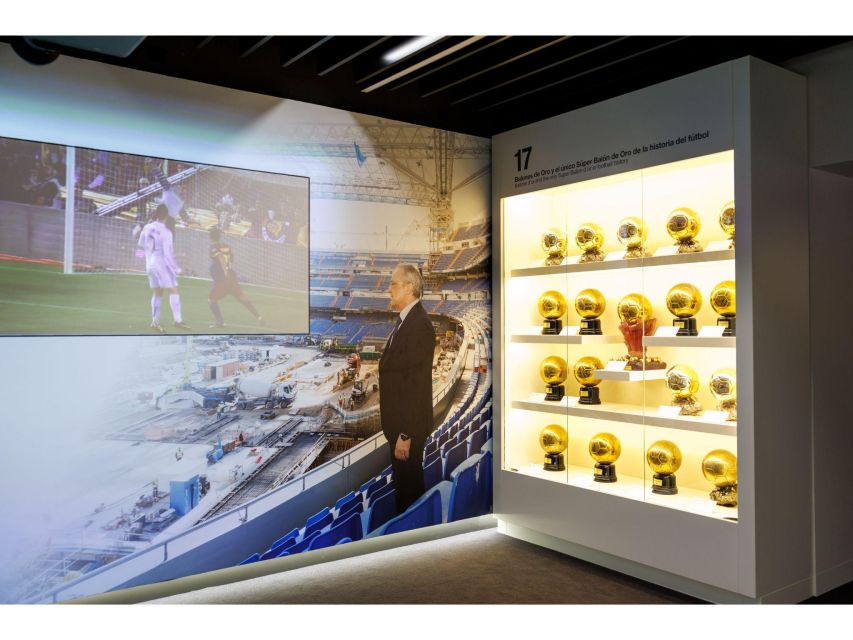
You pass by Santiago Bernabéu stadium, inaugurated on December 14, 1947, with capacity currently listed at 81,044. Even from outside, the size of the stadium helps you understand why the area around it is such a focal point.

10) Plaza around Columbus and the Gardens of Discovery

You also see the Christopher Columbus monument in the square. It is a 17-meter white marble sculpture built in 1885 by Jerónimo Suñol, tied to Alfonso XII’s wedding celebration.

Nearby are the Gardens of Discovery, opened in 1970. You can admire sculptures, and there is also a Cultural Center in the basement area of the complex. If you like little breaks between major monuments, this stop offers that.

11) National Library of Spain (BNE), a museum-like building job

The National Library of Spain is included as well. The tour frames it as Spain’s deposit and conservation hub, with collections described as around thirty million publications since the beginning of the 18th century.

If you are a book person, this is a cool stop. Even without spending hours inside, the context gives you a better understanding of what libraries do here, and why Madrid takes preservation so seriously.

12) Bank of Spain area and palaces you see from the street

You pass a cluster of major buildings: Palacio de Buenavista (Army Headquarters), Palacio de Linares (Casa de América), Palacio de Comunicaciones (formerly the Post Office and now Madrid City Council), and the Bank of Spain.

One useful detail: the Bank of Spain interior generally requires special access. That means you should treat this as an exterior story stop unless you already have a separate plan.

13) Plaza de Cibeles and the lions of football celebration

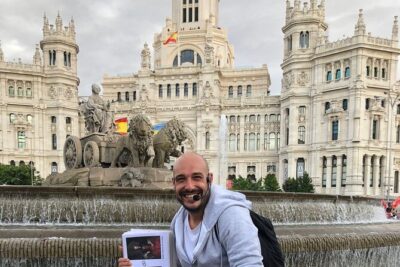
The fountain of Cibeles represents the Roman goddess Cibeles, tied to land, agriculture, and fertility, on a car pulled by lions. The sculpture of the goddess is credited to Francisco Gutiérrez, and the two lions to Roberto Michel.

The guide also connects it to Real Madrid fan culture, since titles and major successes get celebrated here. If you watch football at all, you will see how this public art becomes social shorthand.

Old Madrid charm: Santa Ana, San Francisco el Grande, Almudena

Madrid Expert Tour with Local Guide in Eco Tuk Tuk Private - Old Madrid charm: Santa Ana, San Francisco el Grande, Almudena
This part shifts from grand civic buildings to church spaces and city squares.

14) Plaza de Santa Ana, open space with 1810 roots

Plaza de Santa Ana is an open space in the Cortes neighborhood, dating to 1810, shaped over time by multiple urbanization cycles. For you, it is a quick way to see how Madrid builds social life around squares.

15) Royal Basilica of San Francisco el Grande, Our Lady of the Angels

You stop at the Royal Basilica of San Francisco el Grande, officially Basilica of Our Lady of the Angels. The tour does not promise a long church visit here, but it does give you the chance to orient yourself to one of the historic-center landmarks.

16) Almudena Cathedral, modern consecration and a museum space

Almudena Cathedral is described as Madrid’s most important religious building and was consecrated on June 15, 1993 by Pope John Paul II.

There is also a museum connected to the cathedral, with dozens of objects and twelve rooms, including mosaics and episcopal shields. If you want to see deeper inside, you now know where to return.

Royal Palace views and gardens: Campo del Moro and the Debod finale

Madrid Expert Tour with Local Guide in Eco Tuk Tuk Private - Royal Palace views and gardens: Campo del Moro and the Debod finale
The last stretch is built for big-photo energy and scenic pauses.

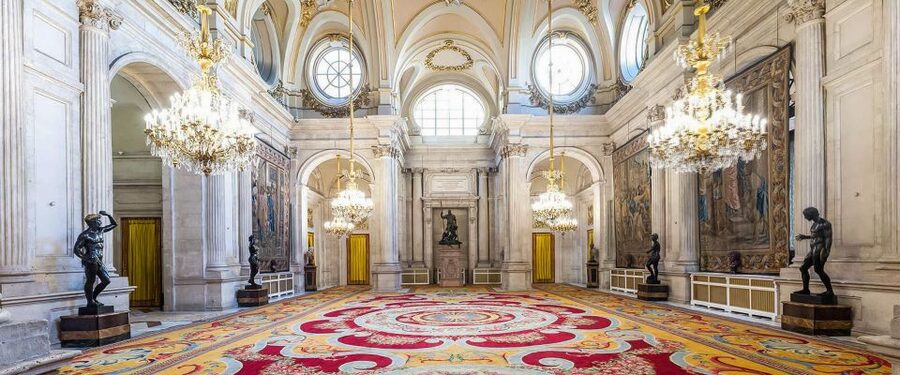
17) Palacio de Oriente, royal residence and formal life

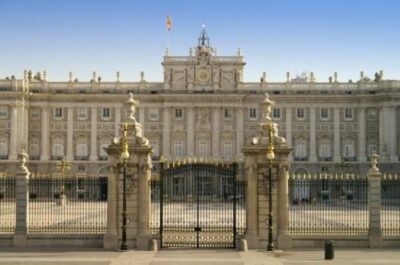
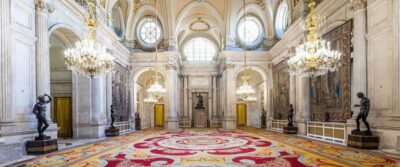
You see the Royal Palace, also called Palacio de Oriente. Construction began in 1738 and lasted 17 years. Carlos III established it as his habitual residence in 1764.

It is surrounded by Campo del Moro gardens and Sabatini gardens. The guide frames the palace’s role today as receptions, ceremonies, and official events, since the kings of Spain live in Palacio de la Zarzuela.

18) Campo del Moro, 20 hectares of royal-green

Campo del Moro is included as well. It is about 20 hectares and runs from the Royal Palace western facade to the promenade of the Virgin of the Port. This is the kind of stop where you can breathe and reset after dense monuments.

19) Templo de Debod, ancient Egypt in Madrid, free admission

The tour includes a stop at Templo de Debod, an ancient Egypt temple located west of Plaza de España near Paseo del Pintor Rosales. The hill location relates to the Mountain Barracks area.

The stop time is listed as about 15 minutes, and admission is free. It is a neat way to end on something unusual, especially if your Madrid trip includes other big history stops.

Comfort tips so the ride feels easy, not rushed

Madrid Expert Tour with Local Guide in Eco Tuk Tuk Private - Comfort tips so the ride feels easy, not rushed
The tour operates in rain and heat, and it can only be cancelled under extreme conditions. That is a good sign for reliability, but it also means you should show up prepared.

  • Wear layers and bring a light rain layer, you will get blankets and protective layers, but you still want dry clothes.
  • If you visit in strong sun, bring what you usually need for daytime walking, one guide tip from the ride experience is hat and sunscreen, plus water.
  • If your group includes older adults, you will likely appreciate the driver help getting on and off, and the mix of short looks plus rides.

One caution from real experience: seating comfort can vary by the specific tuk tuk setup. If you have back or leg concerns, tell the guide at the start so they can position you in the most comfortable way.

Price and value: what $28.67 buys in a 3-hour Madrid orientation

Madrid Expert Tour with Local Guide in Eco Tuk Tuk Private - Price and value: what $28.67 buys in a 3-hour Madrid orientation
At $28.67 per person, you are paying for more than a vehicle. You are paying for a guided route that hits high-value sights across different Madrid zones in a single session.

Here is what makes it feel like value:

  • Expert companion guide and driver, not just a self-guided map.
  • Private vehicle for your group only, which matters a lot when you have kids, seniors, or mixed ages.
  • No-queue start, so time goes to seeing, not waiting.
  • Pre-selected photographing stops, which keeps the pace from slipping into “where should we go next?”
  • Seasonal comfort gear built into the price.

The best bargain is when this is your first activity in Madrid. It helps you decide which places deserve a longer visit, like returning to the cathedral area, planning a Prado museum time slot, or spending a second day in the palace gardens.

Who this eco tuk tuk tour suits best

This is a strong fit if:

  • You want a quick orientation for your first day.
  • You prefer short exterior looks with a guide story, instead of long museum marathons.
  • Your group includes older travelers, since the ride approach can reduce walking stress.
  • You like the idea of moving between neighborhoods, Plaza de Cibeles energy to Salamanca streets to Royal Palace views.

It might not be for you if:

  • You need deep interior time at museums or government buildings.
  • You want to choose stops on the fly, because stops for photographs are fixed.
  • You are traveling with pets, since pets are not allowed.

Also note the age and size rules. The minimum age is two years, and babies are not allowed. There is a minimum weight requirement of 9 kg.

Should you book this Madrid Expert Tour on an eco tuk tuk?

If you want a smart, friendly way to see Madrid highlights without spending your whole day walking, I think this is an easy yes. It is built around a fast overview route, and the guide style you will get is usually the difference between a boring checklist and a ride that helps you understand the city.

I would book it early in your trip, so you can use what you learn to plan your next days. If weather changes or there are extreme conditions, the tour can be cancelled, and if you need flexibility, free cancellation is available up to 24 hours in advance.

FAQ

How long is the Madrid eco tuk tuk tour?

It runs about 2 to 4 hours, with the experience often lasting around three hours.

Is this tour private or shared?

It is a private tour/activity, and your group participates only with your assigned tuk tuks and guides.

What language is the tour offered in?

The tour is offered in English.

Where do we meet for the pickup?

You meet at C. de Bailén, 4, Centro, 28013 Madrid. The pickup point is in the underground bus station of Plaza de Oriente, right next to the Royal Palace. Searching for Puerta del Príncipe on Google Maps helps you find the right spot.

What’s included to help with weather?

Blankets and protective layers against rain and wind are included. The tour also uses a 100% electric and sustainable vehicle.

Can I visit Templo de Debod without paying?

Yes. Admission is listed as free, and the stop is about 15 minutes.

Are pets allowed on the tour?

No. For security reasons, pets are not allowed.

More Tour Reviews in Madrid