REVIEW · ECO TUK-TUK & ELECTRIC CITY TOURS
Madrid Expert Plus Tour with Local Guide in Eco Tuk Tuk Private
Cold streets, warm stories, zero map stress.
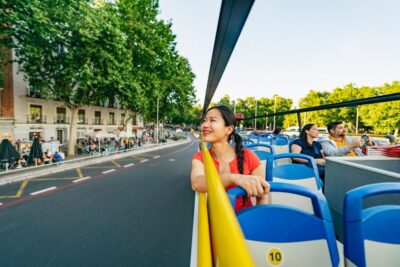
This Madrid Expert Plus ride is one of those rare tours that mixes major sights with actual neighborhood feel, without turning your day into a long slog on foot. I like that the vehicle is 100% electric and covered, so you can still see the city when weather is less than ideal, and the pace stays easy even if you have limited time.
My favorite part is the way the local guide connects landmarks to daily life, not just dates. You also get pre-set photo stops at the places that make you go, okay, I get why everyone stops here. One possible drawback: the route and photo stops are fixed, so if you want to linger longer in a single spot or add a detour, you will not be able to change it on the fly.
Key things to know before you hop in a tuk tuk

- Private vehicle for your group only, not a mixed lineup
- Covered, weather-friendly ride, plus blankets in winter
- Photo stops are pre-arranged, so you spend less time hunting angles
- You’ll hit major stops like Royal Palace area, Plaza de Cánovas (Neptune), Prado zone, and Debod
- Expect a “highlights loop,” not a deep museum day at every stop
See the centre from a small electric ride
- Madrid Welcome Tour with Local Guide in Eco Tuk Tuk Private★ 5.0 · 2,936 reviews
- Madrid Historical Tour with Local Guide in Eco Tuk Tuk Private★ 5.0 · 876 reviews
- Madrid Express Tour with Local Guide in Eco Tuk Tuk Private★ 5.0 · 413 reviews
- Madrid: City Highlights Tuk Tuk Tour★ 4.4 · 334 reviews
Eco Tuk Tuk Comfort, Covered and Electric, with Real Seating Ease

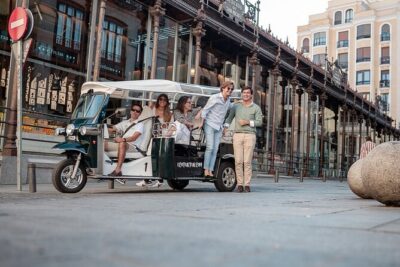
This is not the usual open, bouncy tuk tuk experience. Your ride is 100% electric, and it is designed to be more comfortable for long city-viewing. The vehicle is also covered, and in cold or windy weather you get protective layers, including blankets in winter. That matters in Madrid because weather can shift fast, especially around evening.
Most importantly, the layout is built for easier boarding. If you are traveling with older adults, the drivers will help people get on. It is a small detail, but it changes how relaxed the tour feels, compared with climbing in and out of buses or doing long uphill walks.
One more practical note: the vehicle can come with side curtains down when it is cold or rainy. That helps with warmth, but it can make sights a bit harder to see clearly from inside, depending on how the curtains are positioned that day. If you are the type who hates feeling boxed in, plan on using your photo stops to get the best views.
Meeting at Puerta del Príncipe and Finding Calle Bailén 4 Without Stress

The pickup point is a little odd on paper, but straightforward in real life. You start at C. de Bailén, 4, Centro, 28013 Madrid, then the actual pickup is in the underground bus station near the Royal Palace, right by Puerta del Príncipe.
Because Calle Bailén 4 may not show a clear number on Google Maps, the easiest trick is to search for:
- Calle Bailén 4
- or Puerta del Príncipe
From there, you will see stairs up to the station. Look for the Eco Tuk Tuk signage and head to the exact pickup area.
If you have mobility issues and need help getting down from the pickup point, contact them by phone or WhatsApp. The company specifically mentions you can request elevator access to reach the meeting location.
The Tour Rhythm: How 2 to 4 Hours Changes What You Get

The stated duration is 2 to 4 hours, and you can see why. This route is packed with major landmarks, so the shorter version gives you the “greatest hits” feeling, while the longer version gives you extra time for photos and quick looks.
Here is how I would think about the time:
- 2 hours works if you want a fast orientation, a couple of key photo moments, and a feel for how different neighborhoods connect.
- 3 hours is a sweet spot for first-timers who want the big monuments plus more story time from the guide.
- 4 hours makes sense if you are enjoying the ride and want slightly more breathing room at a few stops, especially around the central palace-Prado area.
Since the tuk tuks are reserved privately for your group, you are not stuck waiting for other travelers. That makes every minute feel more “yours.”
Also keep in mind: the route can shift if streets are closed or blocked by demonstrations. That does not usually ruin the day. Madrid can be unpredictable, and a flexible route helps you still get to the highlights.
Another Madrid route worth weighing up
Covered Market from the Early 1900s: Where Local Food Culture Feels Close

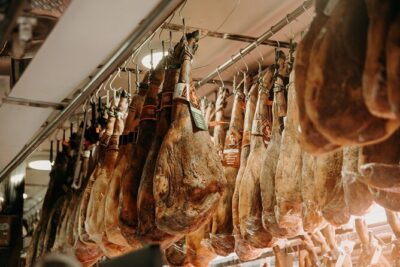
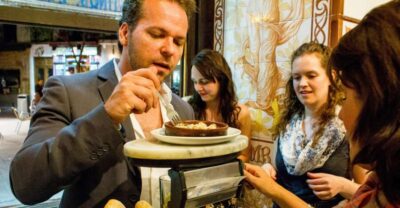
One of the first stops is the covered market dating from around 1916. Think food, delicatessen counters, and an elegant indoor atmosphere rather than a warehouse-style market. Even if you do not plan to buy much, this stop is about understanding how Madrid eats and chats.
What I like about including a market early is how it sets the tone. Before you zoom off to palaces and churches, you get the everyday Madrid vibe, the kind you miss when you only follow museum maps.
It also gives your guide an easy jumping-off point. Expect stories about local specialties and how markets shaped daily routines.
Atocha Station: Spain’s Busiest Railway Hub and a Convenient Landmark

Next up is Atocha station, a railway complex near Plaza del Emperador Carlos V. It is described as the busiest station in the country and also one of the main stations in Europe.
From a tour perspective, Atocha is useful for two reasons. First, it is a real Madrid landmark you can locate instantly later. Second, it gives you a sense of scale. Madrid is not just monuments. It is also a massive movement hub, where millions of journeys start and end.
If you like transit architecture and the way big stations shape city life, this stop feels more meaningful than it sounds. If not, it still works as a landmark reference point.
Palacio de las Cortes and the Lions Cast from War Iron

The tour then moves into political Madrid with a stop at the Palace of the Spanish Courts. It was built on the site of the former convent of the Holy Spirit, which served as the seat of Congress between 1834 and 1841.
A few specific details make this stop more than a quick pass-by:
- The facade has a staircase leading up to a neoclassical porch with six imposing Corinthian columns.
- The emblematic lions flanking the entrance are tied to a dramatic story: they were cast with iron from cannons captured during the war in Africa.
- The bronze door under the pediment opens only on very marked occasions.
Even if you are not a government-history nerd, these details give you an anchor for understanding how power and symbolism show up in architecture. You start noticing motifs and materials, not just shapes.
Neptune Fountain at Plaza de Cánovas del Castillo: A Monumental Pause in the Middle of Traffic

One of Madrid’s easier “wow” photo stops is the Fountain of Neptune in Plaza de Cánovas del Castillo. It is a neoclassical fountain positioned at the center of the roundabout that gives the area its name.
The dates matter because they show how the city’s decorative plans unfolded:
- proposed in 1777
- construction began in 1782
- completed in 1786
I like this stop because it is not one of those hidden backstreets. It is a civic landmark you see right away, even if you are riding through. You get the photo moment without having to plan your day around a museum ticket.
Prado Zone Art Stops: Big Names, and the One Museum People Talk About

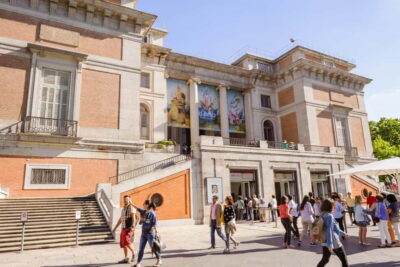
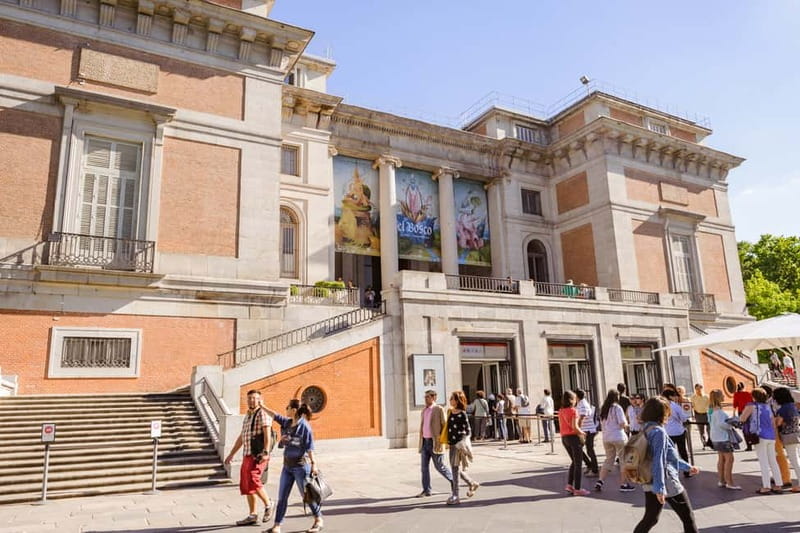
The tour includes a major stop at the Prado Museum area, described as having one of the world’s most important collections of European painting from the 16th to the 19th centuries. The names listed here are the kind that make art history classes feel real:
- Velázquez
- El Greco
- Goya (noted as the most widely represented artist in the museum)
- Tiziano, Rubens, and El Bosco
It also highlights the breadth of other key artists, which is where the Prado earns its reputation: you are not just seeing one style or one school. You are seeing a timeline of European painting through major masters.
What I appreciate, though, is that this tour is still realistic. You are not being pushed into a full museum day on a tight schedule. You get the right context and the sense of where you should return if you want longer time later.
San Jerónimo el Real, Also Called Los Jerónimos: Gothic Meets Renaissance Influence
Just next to the Prado area is the parish church of San Jerónimo el Real, popularly known as Los Jerónimos. It is late Gothic with Renaissance influences from the early 16th century.
This church is included for a reason beyond looks. Even though there is little left of the original building, it has been remodeled and restored many times, so it tells a story of change over centuries.
A detail worth noting: its relationship with Spanish royalty. It was built by order of the Catholic Monarchs, became a spiritual retreat for several monarchs, and served in places of royal ceremonies in the absence of a cathedral. It also hosted the wedding of Alfonso XIII, and a grand stairway leading to its door was built in 1906.
So when your guide talks here, you get a shortcut into how religion and monarchy shaped Madrid’s public spaces.
Royal Palace and Campo del Moro: Where the City Gets Formal
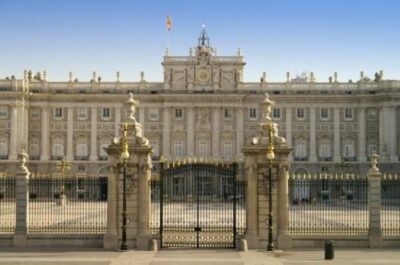
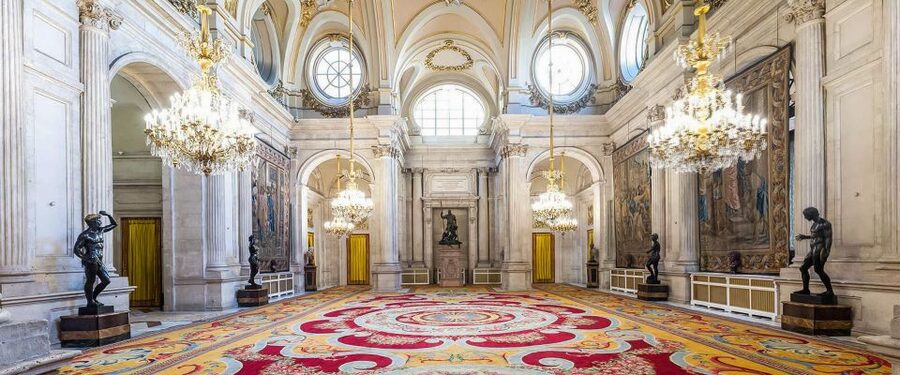
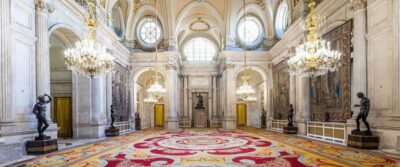
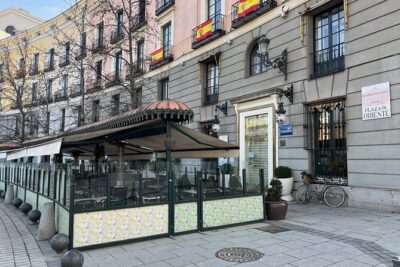
The tour includes the Royal Palace of Madrid, also called Palacio de Oriente, used today for receptions, ceremonies, and official acts. Kings live elsewhere at Palacio de la Zarzuela, but the palace still defines the city’s grand center.
Key facts that help you “read” the place:
- construction began in 1738
- the works lasted seventeen years
- Carlos III established habitual residence in 1764
- it replaced the earlier Palace of the Austrias, destroyed by a fire in 1734
Your ride also connects to the Campo del Moro gardens, a big historical-artistic space of about twenty hectares. The gardens stretch from the western facade of the Royal Palace to the promenade of the Virgin of the Port, and they are visitable during the day.
Why this matters on a tuk tuk tour is simple. You get both the monumental palace feeling and a sense of how Madrid builds breathing room around power. It is not all stone and gates.
Templo de Debod: An Ancient Egypt Stop That Fits a Tight Schedule
Then comes one of the most memorable stops on the whole route: Templo de Debod. This is an ancient Egyptian temple currently located in Madrid, positioned west of Plaza de España on a hill near the Paseo del Pintor Rosales, where the Mountain Barracks used to be.
The tour flags the practical side:
- time on site is about 15 minutes
- admission is free with a ticket
I like how Debod functions for this kind of experience. You get a dramatic change of scene without losing hours. It is the type of stop that makes your day feel varied, like you cheated time.
If you are photo-focused, this is where you will want to step off and take your shot quickly, then let the guide move you to the next highlight.
Cibeles Fountain and Columbus Square: Myth, Football, and City Pride
The itinerary includes two of Madrid’s most recognizable public squares.
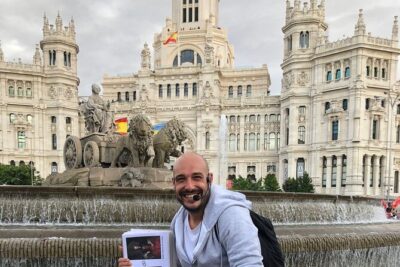
First, Cibeles Fountain. It represents the Roman goddess Cibeles, tied to land, agriculture, and fertility, on a car pulled by two lions (Hipomenes and Atalanta). The goddess and the lions are carved in marble, and the rest is stone. The goddess sculpture is credited to Francisco Gutiérrez, and the lions to French sculptor Roberto Michel.
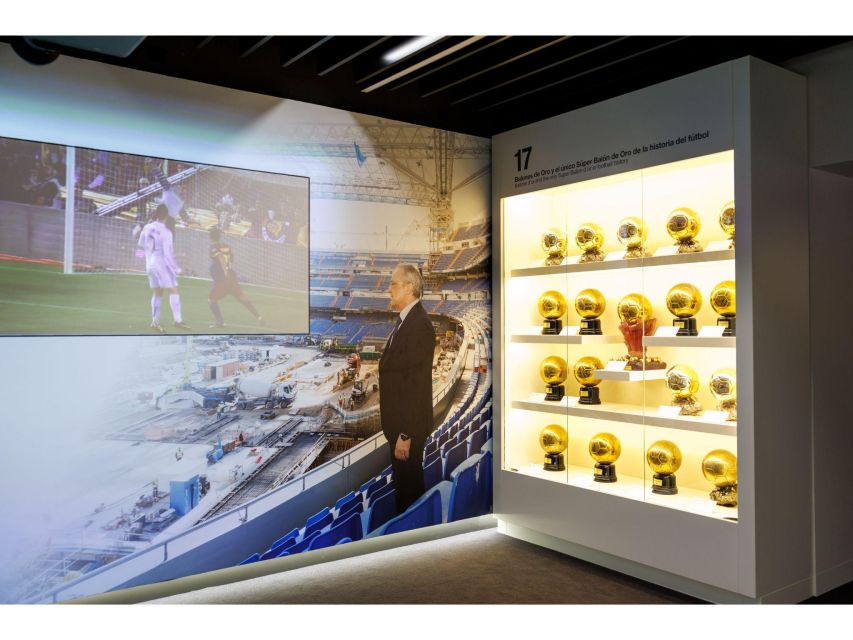
This stop also has a modern cultural layer. Cibeles is an icon for Real Madrid fans, used to celebrate team titles and successes of Spanish soccer teams.
Next, Christopher Columbus Monument near a central fountain and roundabout, in neo-Gothic style. The monument is white marble, measures 17 meters, and was built in 1885 by Jerónimo Suñol for the wedding celebration between Alfonso XII and María de las Mercedes de Orleans. The square also includes the Gardens of Discovery, opened in 1970, where you can admire sculptures, including one dedicated to the discovery of America.
If you are trying to understand Madrid as a place where old symbols and modern fandom overlap, these stops make the point fast.
Bank of Spain Exterior and City Hall Area: Pass the Big Buildings, Know What They Mean
The tour route also passes by major monumental buildings around:
- the Palacio de Buenavista (Army Headquarters)
- Palacio de Linares (Casa de América)
- Palacio de Comunicaciones (formerly the Post Office headquarters, now Madrid City Council)
- and the Banco de España area
One part I found especially interesting is the note about the Banco de España building. The interior can only be visited by groups from educational centers and universities, with limited exceptional access for certain non-profit cultural or associative entities. So on this tour, you mainly get an exterior orientation and historical context.
Even then, it helps to know the intent behind these monuments. You start recognizing Madrid’s identity as a city that formalized itself in architecture as much as it did in politics.
Las Ventas and the Stadium-to-Salon Loop: Sports Madrid from Bulls to Bernabéu
The tour can include a major stop at Las Ventas bullring, described as the biggest bullfighting venue in Spain. It lists the seating capacity as 23,798 and says it is the third largest bullring in the world after venues in Mexico and Valencia, Venezuela. It also notes ring diameter of 61.5 m.
It was inaugurated on December 14, 1947 and capacity is currently 81,044.
From there, the route can continue toward Barrio Salamanca and then to the Santiago Bernabéu stadium along the Paseo de la Castellana. Barrio Salamanca streets included are Velázquez, Ortega y Gasset, and Serrano.
If you want Madrid that feels like the modern city pushing forward, this sports and upscale shopping corridor does the job. It is a clear contrast to the older core stops you visited earlier.
The Cathedral and Church Stops: Almudena and San Francisco el Grande
Madrid is also a cathedral city in a way that surprises people. This tour includes two major religious landmarks.
1) Almudena Cathedral, described as the most important religious building in Madrid. It was consecrated on June 15, 1993 by Pope John Paul II, becoming the first consecrated cathedral outside Rome.
The tour information also references the Almudena Cathedral Museum, with dozens of objects telling the story of the diocese, across twelve rooms with items like mosaics and episcopal shields.
2) Royal Basilica of San Francisco el Grande (officially Basilica of Our Lady of the Angels), in the Palacio neighborhood within the historic center.
These stops work well on a short tour because they give you visible anchors for Madrid’s Catholic story, while still letting you keep a relaxed pace.
National Library of Spain (BNE): The City’s Memory Machine
Another standout included stop is the National Library of Spain (BNE). It is an autonomous body responsible for deposit, collecting, cataloging, and conserving Spain’s bibliographic and documentary heritage.
The tour details that it holds around 30 million publications produced in national territory since the beginning of the 18th century, including books, magazines, maps, prints, drawings, scores, and brochures. It also mentions that collections and operations are disseminated through the museum and exhibition halls.
Even if you do not go inside, knowing what the building represents changes how you see it. It stops being just another grand facade and becomes part of how Spain keeps its public knowledge.
If Weather Hits, You Are Still Covered
Madrid weather can be a test. The tour notes it runs in rain or heat, and cancellation only happens under extreme conditions.
Because you get protective layers and blankets, cold and wind matter less than they would on an open sightseeing ride. One travel reality, though: if it is very windy or rainy, the side curtains can limit sightlines. You will just rely more on the scheduled stops for your best views.
Is This Tour Worth $28.67, or Just Another Sightseeing Sticker?
At $28.67 per person, the value comes down to what you get for your time:
- A private ride for your group, not a crowded bus experience
- An expert guide driving the stories, not just moving you between stops
- Pre-selected photo spots, so you do not waste time figuring out where to stand
- Electric and covered vehicle, plus blankets in winter
For a 2 to 4 hour window, this is the kind of cost that can save you energy and stress. If you are spending money on transit, taxis, or multiple paid attractions just to get an overview, this can be a smarter way to set your itinerary for the rest of the trip.
The main thing to watch for is your expectations. This is not a do-everything tour. It gives highlights, photo points, and context. If you want to stay inside museums for hours, you will still need separate time later.
Should You Book the Madrid Expert Plus Eco Tuk Tuk Tour?
Book it if you:
- want a fast highlights loop that still feels personal
- are traveling with limited time, jet lag, or tired legs
- like your sightseeing with stories, not just facts on a screen
- want the comfort of a covered electric vehicle and winter blankets
Skip or reconsider if you:
- need strict museum time and plan to linger deep inside multiple sites
- hate fixed schedules and prefer to choose your own stops minute by minute
- are very sensitive to reduced visibility when side curtains are down
If you want a practical first look at Madrid that helps you plan the rest of your days, this is an easy yes.
FAQ
What is the duration of the Madrid Expert Plus Tour?
It runs for about 2 to 4 hours, depending on the selected tour length and what the day requires.
Is the tour offered in English?
Yes. The tour is offered in English.
Is this tour private?
Yes. It is a private tour/activity, and your group only will participate.
How many passengers can each eco tuk tuk hold?
The legal maximum is 4 passengers per tuk tuk. The price depends on how many tuk tuks are needed for your group.
What is included in the price?
Included are an expert companion guide, a driver, no-queue starts, a private vehicle for your group only, a 100% electric and sustainable vehicle, pre-selected photo stops, and blankets and protective layers against cold weather like rain and wind.
Are hotel pickup and drop-off included?
No. Hotel pickup and drop-off are not included.
What if it rains or it is very hot?
The tours take place in rain or heat. They can only be cancelled under extreme conditions.
Are pets allowed on the tour?
No. Pets are not allowed for security reasons.
More Tours in Madrid
More Tour Reviews in Madrid
Electric loops through the centre
Fresh ways to see Madrid
More ways into Eco Tuk-Tuk & Electric City Tours
★ 5.0Madrid Welcome Tour with Local Guide in Eco Tuk Tuk PrivateFrom $282,936 reviews
★ 4.9Private City Tour by Eco Tuk TukFrom $612,876 reviews
★ 5.0Madrid Historical Tour with Local Guide in Eco Tuk Tuk PrivateFrom $28876 reviews
★ 5.0Madrid Express Tour with Local Guide in Eco Tuk Tuk PrivateFrom $28413 reviews
★ 4.4City Highlights Tuk Tuk TourFrom $94334 reviews
★ 4.4Tour Guiado En Tuk Tuk Recorre Avila De La Forma Mas ComodaFrom $10235 reviews
★ 5.0Madrid Expert Tour with Local Guide in Eco Tuk Tuk PrivateFrom $28220 reviews
★ 4.6Tour Madrid: Secrets in a Electric Tuk TukFrom $102155 reviews
Try another angle on the same itinerary