

REVIEW · WALKING TOURS
Walking Tour of Madrid Modern
Madrid’s best landmarks sit within an easy walk. This Modern Madrid tour strings together big, recognizable addresses with quick, clear explanations. I love the prime sightline stops from Puerta del Sol through Gran Via and Paseo del Prado, and I also like the fact that you get guided storytelling plus end-of-tour recommendations without committing to museum tickets. One thing to consider: you are mostly seeing exteriors and streets, so if you want hands-on entry time, this format may feel a bit surface-level.
The walk runs about 2 hours 20 minutes and keeps things moving, with a maximum group size of 30. The pace works well because you get short stop times, then you get back on the sidewalk and the city keeps teaching. If you hate standing around in the rain, pack a light rain layer anyway, since it is an outdoor route.
What makes this tour genuinely useful is how it connects modern Madrid to the city’s older bones. You’ll look at banks, language institutions, fountains, and major avenues, then come away with a map in your head, not just photos on your phone.
Key Highlights You’ll Actually Notice

- Puerta del Sol plus Madrid’s Km 0 area, with multiple iconic landmarks in one opening stretch
- Calle de Alcala, often described as Madrid’s longest street, setting the tone for the walk
- Casino de Madrid to Gran Via, a fast run through the city’s high-gloss modern core
- Paseo del Prado UNESCO World Heritage Site, recognized since 25 July 2021
- Cibeles Fountain and Palace of Cibeles, the city’s power and postcard views in one loop
- Small group size up to 30, and guides who stick around for your questions and wrap up with tips
Another Madrid route worth weighing up
- Toledo Tour & Vineyard Walk with Wine Tasting from Madrid★ 5.0 · 2,546 reviews
- Madrid Walking Tour from Puerta del Sol to Retiro Park★ 5.0 · 2,285 reviews
- Madrid Old Town & Royal Palace Walking Tour Skip the Line Ticket★ 4.5 · 1,829 reviews
- Madrid: Spanish Inquisition and Legends Evening Walking Tour★ 4.7 · 1,396 reviews
A Modern Madrid Walk That Actually Gets You Oriented

This tour is built for orientation. You start at Puerta del Sol, then you work through some of central Madrid’s busiest and most visually dramatic corridors. By the time you reach Parque del Retiro, you’ve basically traced a route you can reuse later on your own.
The value is not just the low price. You also get printed materials and teaching tools as you go, plus a link to personalized recommendations on what to do in Madrid. That matters because Madrid is huge in options, and a good guide helps you choose what fits your style and your time.
Also, since the stops are labeled as admission ticket free and you do not need site entry tickets, you avoid the time sink of lines and timed tickets. You get the landmarks, the meaning, and the geography, without the “wait for entry” drag.
Puerta del Sol to Calle de Alcala, Where Madrid Starts Speaking
You kick off at Puerta del Sol, right in the city’s most famous square and a natural starting point for first-timers. Here you’ll take in the Royal Post Office, the Carlos III area, Madrid’s Km 0, the Tio Pepe signage, and the Bear and Madroño emblem. The guide uses these to explain how Madrid brands itself, then connects that identity to the people and power that shaped the city.
This first segment is short, about 15 minutes, but it gives you a mental anchor. If you’ve ever wandered Madrid feeling like every plaza is a little too similar, this is the part that helps you slow down and recognize what is unique.
Next comes Calle de Alcala, often noted as the longest street in Madrid. This is a useful switch from the compact square energy of Sol into a long, structured city spine. You get a sense of scale quickly, and the street itself becomes a “how Madrid grew” lesson.
Practical tip: In this part of the walk, you’ll want your shoes ready for city sidewalks and occasional crowds. It is central Madrid, so be ready to pause without losing the group.
Casino de Madrid, Gran Via, and the City’s Newer Public Face
After the older square and the long street, the tour shifts to one of Madrid’s most recognizable modern corridors. At Casino de Madrid, you’ll focus on the famous building and nearby modern additions, including the Four Seasons Hotel and the BBVA building with its quadrigas. This is where the tour does something smart: it doesn’t treat modern architecture as random. It places it next to older institutions so you can feel the change in one glance.
Then you roll into Gran Via, Madrid’s main artery for theatres, bars, and shops. Even if you skip shopping, Gran Via is an orientation tool. You learn where the action is clustered, and you also learn the right way to cross and navigate it later on your own.
The stop times here are brief, around 10 minutes at Gran Via and about 20 minutes at Casino de Madrid. That’s ideal if you want context but do not want to spend half your day standing still. It also keeps the overall walking tour feeling like a guided route rather than a long lecture.


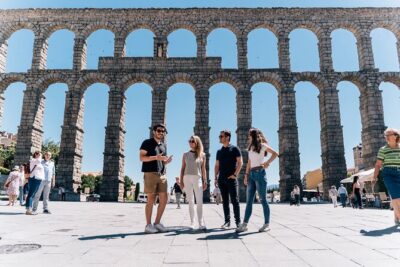


Instituto Cervantes to Banco de España, Culture and Money in the Same Breath
One of my favorite parts of this itinerary is how it mixes culture with finance without turning it into a dry economics class. The stop at Instituto Cervantes, in a former bank building, helps you connect language and national identity. You’ll learn how this prestigious institution relates to key works of the Castilian language, and you’ll see how older civic or commercial buildings can take on a new purpose.
Then comes Banco de España. The tour frames it as the bank where the gold rests, which gives you a simple, memorable way to talk about what the building represents. Even from the outside, the message is clear: this is where national wealth and authority lived, and still influences how the city is organized.
If you like stories that link buildings to power, you’ll enjoy this section. It is also a good pause from the nonstop shopping and signage of the earlier stops. Here, the guide’s explanation makes the architecture feel less like backdrop and more like evidence.
Cibeles Fountain, Palace of Cibeles, and the Classic Madrid Postcard Loop
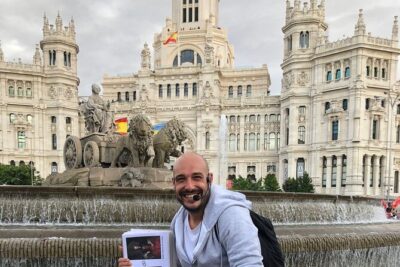
Next you get one of Madrid’s most photographed landmarks: Cibeles Fountain. The tour treats it like an icon you can’t really avoid. When you see it in person, the fountain works as a visual reset, something that feels both historic and theatrical.
A short distance later is Cibeles Lounge, the Palace of Cibeles, currently the seat of the city council. This is a strong pairing. Fountain first, civic power second. You watch how the city uses grand public spaces to project stability.
In a tour like this, the exact buildings matter less than what the guide does with them. You learn how Madrid stages its identity in public view, from symbolism to government presence. You also get time, about 10 minutes, at each stop, so you can look carefully instead of snapping and running.
Paseo del Prado UNESCO World Heritage, Then Into Retiro’s Calm

Paseo del Prado is the “hold onto your camera, but also listen” section. You’ll start near the Charles V Roundabout and move toward Plaza de Cibeles. The boulevard is described as the first example of an urban boulevard since the 16th century, lined with centuries-old trees, and packed with major museums and cultural spaces.
The big context point is that it has been recognized as a UNESCO World Heritage Site since 25 July 2021. That’s not just a title. It signals that Madrid placed this stretch on the map for its cultural and planning value, not just its beauty.
Along the route, you’ll hear about major sites such as the Prado Museum, the National Thyssen Bornemisza Museum, CaixaForum Madrid, and the Royal Botanical Gardens. Even if you do not enter museums on this tour, you walk through the cultural “spine” and understand why this area is always suggested in itineraries.
Then the walk ends at Puerta de Alcala and Parque del Retiro. Puerta de Alcala, built under King Charles III, gives you a ceremonial feeling right before the calm. And Retiro is the payoff, the city’s green lung in the center. Your final stretch includes about 25 minutes at the park, which gives you enough time to decompress and decide what to do next.
If you only have a day or two in Madrid, this is a smart ending. Retiro is the kind of place you can return to on your own, and you’ll know exactly where you are when you do.
Guide Quality Is the Real Difference, from Marta to Tambo

This is the kind of tour where guide quality changes everything. The standout pattern in the experiences people talk about is energy plus clarity. I like when a guide answers questions instead of rushing to the next stop, and this route lends itself to questions because every building points to something specific.
I’ve seen strong examples of guides like Marta, Tambo, Tomas, Maikel, and Alba Gallego delivering that mix of fun and structure. One guide, Maikel, is praised for making Spanish history easier to understand, which is the goal for most first-time visitors. Another, Marta, is highlighted for being knowledgeable and super fun, with extra recommendations at the end.
And that end-of-tour support is not a small detail. You get personalized attention after the tour and a link to recommendations on what to do in Madrid. That helps you turn the walk into a plan, instead of just admiring the scenery.
If you want a tour that feels like a conversation with a local rather than a headset track, this one is built for that.
Price and Logistics, and What to Watch Before You Tip

At $3.59 per person, this tour is priced in a way that screams value. You get a local guide, printed materials, teaching tools, and a follow-up recommendation link. You also get a structured route through central Madrid’s most recognizable modern addresses, plus a big UNESCO boulevard stretch.
What is not included is site entry, and you likely will not be paying museum tickets to participate. That keeps the budget reasonable for the day, especially if you plan to do museums later on your own.
Tipping is mentioned separately. The tour does not include tips, and it also notes that payments only include booking management. That said, one piece of feedback includes an awkward moment when the guide discussed taxes not covered by the original payment and suggested a tip minimum.
Here’s my practical advice: before the tour starts, ask what amount is appropriate to tip based on your understanding of what is included. If you carry a small amount of cash for tipping, you’ll avoid stress at the end. And if tipping expectations are unclear in your specific group, clarify early rather than hoping it works out.
Timing, Weather, and How to Dress for Retiro
The tour runs about 2 hours 20 minutes. That’s long enough to feel like you covered meaningful ground, but short enough that you can still have dinner plans that evening.
Because most of the stops are outdoors and located along major streets, weather matters. Even light rain did not stop people from having a good experience, which tells me the format works as long as you dress for it. Bring a compact rain layer and wear shoes you trust for uneven sidewalks.
Also, since you move through busy parts of town, plan for short waits and crowd moments. This tour gives you time at each stop, so you do not feel like you are constantly sprinting. Still, you should expect central Madrid foot traffic.
Who This Walk Is Best For (and Who Might Want a Different Style)
This walking tour is best for you if you want:
- A guided route through Madrid’s modern landmarks and civic buildings
- Clear context for famous streets like Gran Via and the culture corridor of Paseo del Prado
- A low-commitment introduction that helps you plan the rest of your trip
It is also great if you travel with a teen or someone who gets bored with museums. The route offers enough variety that attention stays focused, and the park ending at Retiro gives a natural breather.
You might want a different type of tour if you specifically crave inside visits to major sites. This one is mostly built around seeing and understanding the city from the street, and that is valuable, but it is not the same as touring interiors.
Should You Book This Walking Tour of Modern Madrid?
Book it if you want the fastest way to get grounded in central Madrid. This tour gives you a clean route: Puerta del Sol anchor, Calle de Alcala and Gran Via energy, civic and cultural stops around Cibeles, then the UNESCO-recognized Paseo del Prado before the reset of Retiro Park.
Skip it (or pair it with other tours) if you’re planning to spend a lot of your time doing paid museum and building entrances, because this route is not built around ticketed entry. Also, bring a plan for tipping, since you may encounter different expectations in the moment.
If your goal is to leave Madrid feeling oriented, with a smarter map and a short list of what to do next, this is a strong pick.
FAQ
How long is the Walking Tour of Madrid Modern?
The tour lasts about 2 hours 20 minutes.
How much does the tour cost?
The price is $3.59 per person.
Is the tour in English?
Yes, the tour is offered in English.
Where does the tour start and end?
It starts at Puerta del Sol (Puerta del Sol, s/n, Centro, 28013 Madrid) and ends at El Retiro Park, at Park Lake (Retiro, 28009 Madrid).
Do I need admission tickets for the stops?
No. Entries are not required because the tour does not include site entries, and the listed stops are free.
What kind of ticket do I get?
You receive a mobile ticket.
What is the group size limit?
The tour has a maximum of 30 travelers.
Is the tour accessible for most people?
Most travelers can participate, and service animals are allowed.
Can I cancel for a full refund?
Yes. You can cancel up to 24 hours in advance for a full refund.
Do I need to tip the guide?
Tips are not included. The tour notes that tipping is at the end based on the value of the guides’ effort.
More Walking Tours in Madrid



More Tours in Madrid




More Tour Reviews in Madrid

Fresh ways to see Madrid
- Tour to Toledo & Madrid CitySight Seeing Tour
- 2-Day Guided Tour to Cordoba and Seville from Madrid
- Private Transfer from Madrid Airport to Madrid Hotels
- Wine Tasting and Flamenco Master Class in Madrid
- Prado Museum and Royal Palace Private Tour in Madrid
- Monastery Royal Barefoot Visit with entrance without waiting for queues
More ways into Walking Tours
 ★ 5.0Toledo Tour & Vineyard Walk with Wine Tasting from MadridFrom $1332,546 reviews
 ★ 5.0Madrid Walking Tour from Puerta del Sol to Retiro ParkFrom $32,285 reviews
 ★ 4.5Madrid Old Town & Royal Palace Walking Tour Skip the Line TicketFrom $401,829 reviews
 ★ 4.7Spanish Inquisition and Legends Evening Walking TourFrom $231,396 reviews
 ★ 5.0Guided Walking Tour of Immortal ToledoFrom $131,116 reviews
 ★ 4.9Welcome to Madrid Guided Walking TourFrom $28984 reviews
 ★ 4.06-Hour Day Trip to Toledo with Guided Walking TourFrom $28865 reviews
 ★ 5.0Madrid Historical Walking TourFrom $3721 reviews
Try another angle on the same itinerary