

REVIEW · SEGOVIA & ALCAZAR DAY TRIPS
Tour Segovia and La Granja de San Ildefonso from Madrid
Segovia can feel unreal at first glance. This semi-private tour keeps the day calm and unhurried, then piles on big sights: the Roman aqueduct and the Alcazar you might have seen in photos for years. I also love that the group stays small, up to 8 people, so you get real time at each stop and fewer rushing moments. One thing to consider is that you do spend a lot of the day on your feet and walking between sites, so moderate fitness helps.
Two other highlights for me were the attention to detail at the waterworks and the way the Jewish quarter is handled with care. You’ll learn about legends and reconstructions tied to the aqueduct, then see the San Gabriel sand trap and how the system worked before the water continued upward. The possible drawback is simple: lunch time is flexible and depends on your group pace, so plan to eat when the tour agrees it’s time.
Finally, the Madrid-to-Segovia-to-La Granja format is a smart use of one day. You get a comfortable ride in a Mercedes Vito, audio support for multiple languages, and a return route with views in the Guadarrama mountain area. Just remember the guide is Spanish, so if you want direct conversation in another language, rely on the audio system.
Key things I’d watch for on this tour

- Max 8 participants for a quieter, calmer pace than typical day trips
- Mercedes Vito with air conditioning, good when the weather is warm
- Corpus Christi church (old synagogue) included, with a strong focus on architecture
- Alcazar of Segovia entry included, plus a scenic Segovia viewpoint stop
- Audio support for non-Spanish speakers while the guide stays in Spanish
- La Granja gardens option plus the chance to add the royal palace on your own
Pair Segovia's aqueduct with its Alcázar
- Avila & Segovia Tour with Tickets to Monuments from Madrid★ 5.0 · 9,762 reviews
- Three Cities in One Day: Segovia, Avila and Toledo from Madrid★ 5.0 · 8,402 reviews
- Madrid: Segovia and Toledo Tour, Alcazar, and Cathedral★ 4.7 · 7,797 reviews
- Madrid: Avila and Segovia Day Trip with Tickets to Monuments★ 4.6 · 4,568 reviews
How this Segovia and La Granja day trip really flows

This tour is built like a long, organized walk with smart breaks, not a sprint from landmark to landmark. You start in Madrid and head out in the morning, then spend the bulk of the day exploring Segovia’s historic center and key monuments. On the way back, you get a sightseeing route through the Guadarrama mountain range, so the ride feels like part of the experience, not just transit.
What makes this itinerary work is that it sequences major themes. You start with Roman engineering, then you move into medieval and early-modern architecture. After that you shift into Segovia’s layered religious history, then finish the urban highlights with the big visual payoff of the Alcazar and views. The day ends with La Granja de San Ildefonso, where the pace naturally slows in the gardens.
The tour runs about 9 to 10 hours, which is a full day. If you’re the kind of traveler who likes to look up at buildings, read small details, and take photos without feeling panicked, this timing suits you well. If you prefer ultra-minimal walking and constant time to sit, you might want a shorter Segovia-only option instead.
Small group calm, plus a comfortable Madrid to Segovia ride
The semi-private setup is one of the best parts. The tour is designed for a maximum of 8 participants, and it also has a minimum of 4 travelers to run. That matters because it tends to keep the group tight and manageable while still giving you the convenience of a guided day trip.
You travel in a comfortable Mercedes Benz Vito (or similar) with air conditioning. That may sound basic, but it changes the feel of the day when you hit Spain’s warmer months. You also get mobile ticket convenience, which helps at attractions where checking in can otherwise be slow.
Your guide works in Spanish, with audios used for other languages. The tour is described as supported by different audios so you can have simultaneous translation. So even if you don’t speak Spanish, you should still follow what’s happening at each stop without relying on your own reading.
Roman engineering at the Segovia Aqueduct and the sand trap

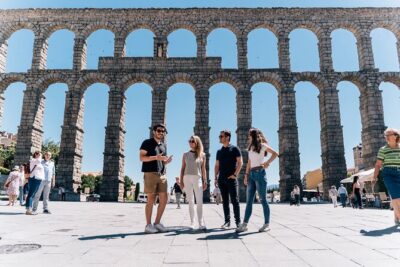
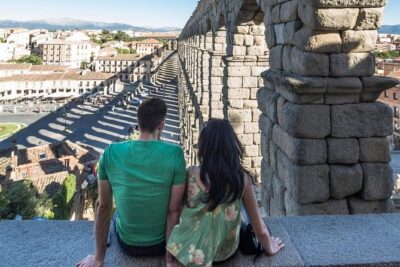
The day starts with the Segovia aqueduct, and it’s a great opener. This ancient Roman aqueduct is one of the city’s most recognizable symbols and remains in very good condition, which makes it easier to picture how it functioned when it was new. You get time to learn the history, hear legends, and understand the story behind reconstructions and the aqueduct’s secrets.
You’ll have about 1 hour 30 minutes here, with an admission ticket marked free. In practice, that long stop means you are not forced to just take a quick photo and go. Use that extra time to watch the aqueduct’s geometry. Even if you are not a “details person,” the aqueduct is easier to understand when you can step back, then move closer, and compare sections.
Next you visit the Desarenador del Acueducto, the San Gabriel sand trap. This is not the most famous sight in Segovia, but it’s a smart addition because it explains the system. You’ll see where a second decantation took place before water continued on its route to the upper parts of the city.
The stop is about 20 minutes and also marked free. If you like how historic infrastructure worked, this tiny detour is a win because it turns the aqueduct from a pretty monument into an engineering system.


From Juan Bravo to Casa de los Picos: Segovia’s story in stone

After the aqueduct, the tour shifts from Roman scale to medieval detail. You’ll take a short pause at the Monumento a Juan Bravo, tied to the War of the Communities of Castilla in the 16th century. The statue depicts Juan Bravo mounted on horseback, and it’s meant to honor his courage and political role during that conflict.
Then you move into the historic center with the Casa de los Picos. This is the one with the façade covered in granite spikes carved as diamonds, giving it its name. You’ll learn that the origin is traced to the 15th century, and that the building blends Gothic and Renaissance styles. Even if you only have a few minutes, it’s the kind of façade that rewards quick, repeated looks from different angles.
The time here is brief, around 10 minutes and marked free. That’s normal for a façade stop, but you can stretch it by taking a moment to notice texture and shadow. The stone pattern changes as you move, and it’s one of those street-level details that makes Segovia feel real.
Churches that show Segovia’s layers: San Martín and the Corpus Christi synagogue

Segovia’s churches can be like time machines, and this tour gives you two different lenses. First is the Church of San Martín, described as Romanesque with Gothic and Mudejar elements. If you care about how architectural styles overlap in one city, this stop helps you see evolution rather than pretending everything is from one era.
You’ll spend about 15 minutes here, marked free. Don’t try to do it all. Instead, pick one area to focus on, like a doorway feature or interior structure if it’s visible, and let the guide explain how the layers connect.
The second church stop is the star for many architecture fans: the Iglesia del Corpus Christi. Here’s the key fact to know before you go in, it’s the old Main Synagogue of Segovia. The exact construction date is unknown, but studies suggest around the 14th century, and it was converted to Christianity in 1410.
This stop is about 20 minutes and the admission ticket is included. Inside, you’ll find architecture tied to Jewish cultural traditions, then later Christian use. The prayer room is divided into three naves separated by horseshoe arches and octagonal pillars topped with pineapple and scroll capitals. There’s also mention of a continuous gallery with horseshoe and pentalobed arches, with intradoses decorated with palmettes.
Even if you don’t memorize every design term, you’ll come away with a clearer sense of what synagogues looked like in this region and how later conversions changed usage. It’s the type of stop that turns “a church” into a specific historical space.
Wandering the Juderia, then getting cathedral time at your own pace

Next comes La Juderia, the Segovian Jewish quarter. You’ll walk through streets tied to Jewish life in the city, described as generally stable with far fewer violent episodes until the 15th century. The guide’s role matters here, because the point is not just to see a neighborhood, it’s to understand how it functioned and what the streets represent.
This walk is about 15 minutes, marked free. Treat it like a slow palate cleanser between bigger monuments. If you rush through, you miss the feeling of the area.
Then you reach the Cathedral of Segovia area, where you get control of your time. You have about 2 hours total, and the structure is flexible: you’ll get 1 hour for the cathedral visit on your own plus 1 hour for meal time. The schedule depends on your group and the pace set by the tour.
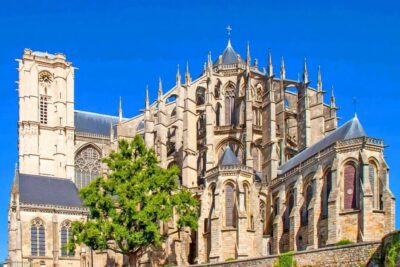
The cathedral is known as the Lady of Cathedrals, and it’s a major Gothic attraction. It’s impressive for size and details, and there are great views from the tower. The key practical point is this: the cathedral admission ticket is not included, so you should budget for it when planning the day.
If you want value, use your cathedral time strategically. Spend a portion looking upward at structural details, then save energy for views. The best photos tend to come from the moments when you pause and look out over old rooftops and the Alcazar’s shape.
Alcazar of Segovia: the fairytale exterior and what you’ll find inside

No matter how many photos you’ve seen, the Alcazar of Segovia hits you in person. It has that distinctive ship-prow shape, and it’s often described as one of the most famous castles in Spain. The tour gives you about 1 hour 30 minutes here, and the admission ticket is included.
Inside, you’ll find rich history and fascinating architecture. The best way to use the time is to connect what you see to what you learned earlier, like how different eras shaped Segovia. Also, take a moment to step back outside if you can. The exterior looks dramatic from multiple angles, and it’s worth comparing views before you focus fully on interior rooms.
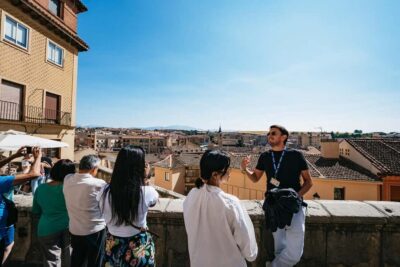
Right before or around this area in the flow, there’s also a viewpoint stop at the Mirador de la Pradera de San Marcos. It’s about 15 minutes and free. From here you get panoramic views of the old town, the Alcazar, and the surrounding scenery. This viewpoint is basically your visual summary of the day’s main landmarks, so treat it like a “reset button” after walking through narrow streets.
A quick Romanesque-Mudejar detour: Iglesia de la Vera Cruz at El Parral

The final Segovia church stop is Iglesia de la Vera Cruz, located in an area called El Parral on the outskirts of the historic center. This one is described as Romanesque-Mudejar style and considered one of the most important examples of that style in Spain.
It was built at the end of the 12th century and has an octagonal plan. The plan is believed to represent the Holy Sepulcher in Jerusalem, which gives the building extra meaning beyond its shape.
You’ll have about 20 minutes here, and the admission ticket is not included. Since time is limited, I’d treat this stop as a targeted photo and architecture moment. Focus on the octagonal shape and any visible structural cues. Even if you skip deeper interior time due to ticket cost, the exterior and setting can still be worthwhile if you enjoy style-specific churches.
La Granja de San Ildefonso gardens, and when to add the Royal Palace
Once the Segovia stops are done, the tour shifts to a very different mood. La Granja de San Ildefonso is a historic royal palace and gardens from the 18th century, used as a summer residence by Spanish monarchs. Here, the pace naturally slows because the gardens are meant for wandering.
You’ll have an option to walk through the gardens with the guide. If you want more, you can also visit the Royal Palace of La Granja de San Ildefonso on your own. The palace add-on is a self-guided choice, so it depends on how much time you want to spend indoors versus outdoors.
The gardens are known for their geometric design and spectacular fountains, plus sculptures, statues, and tree-lined walks. This is where the day becomes a breather after Segovia’s dense historic core. If you like structured design in gardens, it’s a great change of pace. If you prefer pure museum time, you can concentrate on the palace and keep your garden time lighter.
Price and value: what you’re paying for
At about $162.90 per person, this tour is priced for a full-day, guide-led day trip with a semi-private group size and specific ticket coverage. It helps to look at the value in two parts: guided time and included admissions.
You’re paying for a day that includes significant stops inside major sites. The Corpus Christi church (old synagogue) has admission included, and the Alcazar has admission included as well. Several other stops are marked free, like the aqueduct and the sand trap, plus key historic streets and viewpoints. The cathedral is the main monument where the admission is not included.
Also, you’re not just getting a bus ride and a quick walk. You’re getting a calmer pace with a maximum of 8 participants, plus audio support so non-Spanish speakers can follow along. The mobile ticket is also a small but real convenience.
Where the value might feel less strong is if you already know Segovia well and only care about one or two highlights. In that case, a smaller, more focused tour could be better. But if you want the main monuments, the Jewish quarter context, and then La Granja gardens in one day, this pricing starts to make sense.
Who should book this tour, and who should rethink it
This tour fits best if you like a thoughtful pace and you enjoy guided context. It’s a strong choice for first-timers who want a guided framework and for repeat visitors who want a calmer, smaller-group experience rather than a rush.
It also works well for people who care about architecture and historical layers. Stops like the aqueduct’s sand trap and the Corpus Christi church help you understand how places functioned and changed over time.
You should consider another option if you have limited mobility or you hate long days of walking. The tour expects moderate physical fitness, and the itinerary includes many short-to-medium walking sections across Segovia’s historic areas plus the larger garden grounds at La Granja.
Should you book this Segovia and La Granja tour?
Yes, I’d book it if you want a full-day mix of iconic Segovia landmarks and the garden calm of La Granja, with a small group pace. The included entrances at the Alcazar and Corpus Christi church are a big part of the value, and the small size makes it easier to enjoy the day without getting swept into a crowd.
I’d pass or adjust plans if you know you will only use the tour for one site. In that case, you might save time and money with something shorter. But if you’re excited about the aqueduct, the Jewish quarter context, cathedral views, and then fountains and fountains again at La Granja, this is a solid, well-structured way to do it in one go.
FAQ
How long is the tour?
The tour runs about 9 to 10 hours.
What does the tour include in terms of transportation?
You ride in a comfortable Mercedes Benz Vito (or similar) with air conditioning.
What group size should I expect?
It is semi-private with a maximum of 8 participants, and the activity can have up to 14 travelers overall.
Do I need to speak Spanish?
The guide is in Spanish, and audios are used for other languages.
How long do I have at the Segovia cathedral?
You get about 2 hours total for this area, including 1 hour to visit the cathedral on your own and about 1 hour for meal time (timing depends on the group).
Are tickets included for all stops?
Some admissions are included, like the Corpus Christi church and the Alcazar. The cathedral ticket and the Church of the Vera Cruz are marked as not included. Several other stops are marked free.
Is there time for a meal?
Yes, meal time is built into the schedule around the cathedral stop. The exact time is agreed with each group.
Where does the tour start in Madrid?
The meeting point is P.º del Prado, 3, Retiro, 28014 Madrid, Spain.
Is the tour affected by weather?
It requires good weather. If canceled due to poor weather, you are offered a different date or a full refund.
What is the cancellation window?
You can cancel for a full refund up to 24 hours before the experience start time. If you cancel less than 24 hours before, the amount paid is not refunded.
More Tours in Madrid




More Tour Reviews in Madrid


Aqueduct, cathedral and Alcázar


Fresh ways to see Madrid
- Tour to Toledo & Madrid CitySight Seeing Tour
- 2-Day Guided Tour to Cordoba and Seville from Madrid
- Private Transfer from Madrid Airport to Madrid Hotels
- Wine Tasting and Flamenco Master Class in Madrid
- Prado Museum and Royal Palace Private Tour in Madrid
- Monastery Royal Barefoot Visit with entrance without waiting for queues
More ways into Segovia & Alcazar Day Trips
 ★ 5.0Avila & Segovia Tour with Tickets to Monuments from MadridFrom $819,762 reviews
 ★ 5.0Three Cities in One Day: Segovia, Avila and Toledo from MadridFrom $1268,402 reviews
 ★ 4.7Segovia and Toledo Tour, Alcazar, and CathedralFrom $487,797 reviews
 ★ 4.6Avila and Segovia Day Trip with Tickets to MonumentsFrom $744,568 reviews
 ★ 4.6Toledo & Segovia Full Day Guided Tour with AlcázarFrom $454,394 reviews
 ★ 4.5Avila with Walls and Segovia with Alcazar from MadridFrom $603,293 reviews
 ★ 4.3From Madrid: Segovia & Avila Day Trip with Optional TicketsFrom $592,161 reviews
 ★ 4.5Segovia and Toledo Day Tour from Madrid with Optional AlcazarFrom $771,745 reviews
Try another angle on the same itinerary