

REVIEW · TOURS
Tour “Barrio de las Letras” Spanish Golden Age
A good story starts on a street corner. This Barrio de las Letras walk turns Spanish Golden Age names into real people and real places. You’ll follow the author-studded lanes that connect Cervantes, Quevedo, Góngora, and Lope de Vega through monuments, churches, and theater lore.
What I really like is the guide quality. In particular, Marivic keeps the pace friendly and the history clear, and she holds attention the whole way, not just during the big stops. I also like the format: an organized 2 hours 30 minutes with a mobile ticket and a tight route, so you can see a lot without getting lost.
One thing to consider: most of the experience is on foot in the streets and plazas around the center. If you have mobility limits or you dislike walking, plan your energy and wear comfortable shoes.
Key things to know before you go

- Small group, personal feel: Up to 20 travelers, so the tour stays focused instead of turning into background noise.
- Fast, story-first itinerary: Short stops with a clear theme at each place, built around authors and the world they lived in.
- A mix of free and included sights: Most stops are free to access on the walking route, and one key stop (Cervantes’ resting place) is ticketed.
- Literary concepts made visual: You don’t just hear names, you see how devices like trampantojos and literary styles show up in the neighborhood.
- Ends at a major literary landmark: The walk finishes at Lope de Vega’s House-Museum, which is convenient if you want to keep exploring after.
Keep the day moving with these well-rated choices around Madrid.
- Madrid: Tour Bernabéu Entry Ticket★ 4.5 · 21,573 reviews
- Madrid: Prado Museum Entry Ticket★ 4.6 · 17,509 reviews
- Madrid: “Emociones” Live Flamenco Performance★ 4.8 · 12,866 reviews
- Madrid: Panoramic Route City Tour★ 4.1 · 12,259 reviews
Entering Madrid’s literary heart on a guided walk
The Barrio de las Letras is one of those places where the city feels like it’s acting in a play. The streets are narrow, the landmarks are close together, and the names you studied for school suddenly make sense because you’re standing right in their environment. This tour is built for that exact moment: you connect literature to brick, stone, and street layout.
The tour runs about 2 hours 30 minutes, with multiple short stops. That matters because it keeps your attention from fading. Instead of a long lecture, you get a mini scene at each place, then you move on before things get sleepy.
It also helps that the group size tops out at 20 travelers. On a neighborhood walk, that number keeps it easier for your guide to steer you, and easier for you to hear. If you like walking tours that feel structured, this one fits that style.
Price and value: what you’re really paying for

The price is listed as $3.47 per group (up to 6 people). The key detail is that the price guarantees your place on the tour, not that every attraction is billed separately to you.
In practice, you’re buying the storytelling plus the route. Most stops listed on the walk are free to access, which means you’re spending far more time learning than budgeting for ticket lines. One stop is marked as included, at the Convento de las Trinitarias Descalzas de San Ildefonso, where Cervantes rests. That included entrance part gives the experience a strong “anchor” without turning the day into an expensive add-on day.
So if you’ve ever looked at a Madrid walking tour and wondered whether it’s worth paying when so much is free, this is the rare one where your ticket still feels purposeful. You’re paying for a guide to connect the dots among buildings and authors.
The route in plain English, stop by stop

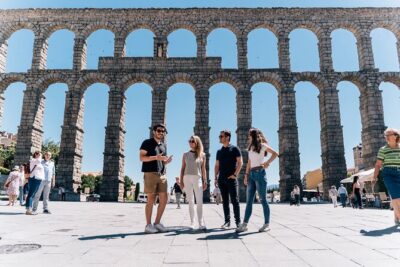
Puerta del Sol: your orientation point for the Golden Age
You start near Puerta del Sol. This is a smart choice because it gives you context before you start bouncing around side streets. The guide uses this first area to introduce what you’re going to see and how the neighborhood fits into the Spanish Golden Age.
At about 15 minutes, it’s not meant to be a deep history seminar. It’s more like getting your bearings fast so the later turns feel meaningful.
Calle de la Cruz: spotting a trampantojos story
Next is Calle de la Cruz, where the tour highlights a striking trampantojos. If you don’t know the term, it’s essentially a fake-out visual trick, like a painted or constructed illusion that looks like something else.
The fun part here is not the illusion alone. It’s the story behind it, and how the city used clever visual effects to entertain or impress. This stop is perfect if you like noticing details you would have missed on your own.
Potential drawback: this kind of street-side sight depends on you looking up and around. If you’re distracted by phones, bags, or crowds, you might miss the effect.
Calle de Álvarez Gato: literature’s esperpentos made street-level
Then you head to Calle de Álvarez Gato. This stop connects the neighborhood to the concept of esperpentos associated with Bohemian Lights. The tour presents how that style shows up in the way stories portray reality, often turning it dramatic and distorted on purpose.
Even if you’re not a literary nerd, this works because the guide frames it through what you see around you: the contrast between real street life and the exaggerated angles writers used. It’s one of those stops that makes you think differently about the words after you’ve heard the local framing.
Plaza de Santa Ana: statues, bohemian energy, and the Corral de Comedias
Plaza de Santa Ana is where the tour slows down a bit emotionally. This square has a bohemian reputation, and the guide uses that atmosphere to set up stories tied to the statues and the Corral de Comedias.
The Corral de Comedias angle is especially valuable if you want culture, not just postcards. It gives you a practical sense of how theater and performance lived close to daily life in earlier Madrid. You start to see why the Barrio de las Letras earned its literary identity in the first place.
Time is short, around 15 minutes, so don’t expect a full theater lecture. Do expect the kind of explanation that helps you recognize what you’re looking at later, even if you walk away quickly.
Iglesia de San Sebastián: a historic church with a specific national title
At the next stop, you’ll visit Iglesia de San Sebastián. The tour focuses on its story and notes it as a National Artistic Historic Monument of Spain. That matters because it signals this isn’t just a pretty church stop. The guide frames it as an established piece of national cultural recognition.
This is also a good moment to pause and reset. Churches give you a break from bright street walking, and a focused guide explanation helps you see beyond the obvious architecture.
Calle de las Huertas: letters, names, and the neighborhood’s “who’s who”
Now you move down Calle de las Huertas, a street the tour describes as full of letters linked to major Golden Age figures. The guide ties the locations to the lives of the characters connected with the area.
This part of the route is one of the most “you’ll remember it later” sections. It’s easy for literary tours to become name drops. Here, the tour pushes names into context, so the street starts functioning like a map of relationships and careers.
Time is about 20 minutes, which is longer than most stops. That extra time usually means you’ll get more coherent connections rather than a quick one-note stop.
Convento de las Trinitarias Descalzas de San Ildefonso: where Cervantes rests
One stop stands out for sheer meaning: Convento de las Trinitarias Descalzas de San Ildefonso, tied to Miguel de Cervantes resting forever. This stop is marked with an included admission ticket and runs about 10 minutes.
Even with limited time, a focused explanation helps a lot. If Cervantes is on your must-know list, this is the moment the tour earns its name. And because it’s ticketed, it usually feels smoother than a free, wandering church stop.
Practical note: it’s only 10 minutes, so if you want extra time inside afterward, you may want to plan for it before or after the tour ends.
Calle de Quevedo: the rivalries you’ll actually understand
Then you’re at Calle de Quevedo, where the guide brings in the story of the rivalry between Francisco de Quevedo and Luis de Góngora.
Rivalries can get abstract when they’re explained in a textbook. Here, the guide ties it to specific place context so you can see how literary culture and social life tangled together. It’s a quick stop, around 10 minutes, but the point is to give you the “why” behind the feud rather than just the fact that it existed.
Casa Museo Lope de Vega: the tour’s grand finish
The tour ends at Lope de Vega’s House-Museum on Calle de Cervantes, 11. The guide closes the walk with stories about the House of the Phoenix of the Wits, and it’s a good final note because Lope de Vega is one of the loudest names of the Golden Age.
This ending is practical too. You don’t just get dropped at a random spot. You finish at a major location you can use as a springboard for more exploration, if your schedule allows.
What the guide does that makes the walking work

A walking tour lives or dies by pacing and clarity. The strongest part of this experience is how the guide keeps the story moving from stop to stop. One highlight from the feedback you’ll likely notice is that Marivic is consistently praised for attention and strong historical knowledge, with a friendly, steady style that keeps the group engaged.
You’ll also benefit from the short, scheduled time at each location. It prevents the common problem where you spend half your tour waiting for one “big” stop and end up rushed everywhere else. Here, the route is balanced: you get orientation first, then street sights, then major anchor moments like the convent.
Best for you if you want…

This tour is a great fit if you:
- love literature and want it connected to real streets
- prefer walking tours with structure and short explanations
- want a tight route in central Madrid without complicated planning
- enjoy hearing how visual tricks and theater culture shaped everyday life
It may not be the best match if you:
- dislike walking outdoors for long stretches
- need a lot of time inside churches or museums beyond a quick guided window
Logistics that matter on the day

Start time is 11:00 am. The meeting point is Trip Tours Madrid, Puerta del Sol, Centro, 28013 Madrid. The tour ends at Lope de Vega’s House-Museum, Calle de Cervantes, 11, Centro, 28014 Madrid.
You’ll use a mobile ticket, and the experience is marked as near public transportation. Service animals are allowed, and most travelers can participate.
Also, plan to bring snacks only if you need them, because snacks are not included.
Should you book Barrio de las Letras?

If your goal is to understand Madrid’s literary past through the places where it happened, I think this is a smart booking. The route covers a well-chosen mix of streets, visual details, theater culture, and the big names you actually care about. And because most stops are free to access, your money goes toward the guide and the cohesion of the story, not toward paying for every entrance.
I’d book it especially if you want a first-time introduction to the neighborhood that still feels specific, not generic. The Cervantes stop, the Quevedo and Góngora rivalry framing, and the ending at Lope de Vega’s House-Museum give the tour satisfying bookends.
If you’re already a super-expert on Spanish Golden Age literature, you might want a deeper, longer museum plan too. But for most people, this hits the sweet spot of value, pacing, and real place connection.
FAQ

Where does the tour start?
The tour starts at Trip Tours Madrid, Puerta del Sol, Centro, 28013 Madrid, Spain. The start time is 11:00 am.
Where does the tour end?
The tour ends at Lope de Vega’s House-Museum, Calle de Cervantes, 11, Centro, 28014 Madrid, Spain.
How long is the Barrio de las Letras tour?
It lasts about 2 hours 30 minutes.
What is included in the tour price?
The price guarantees your place on the tour. An admission ticket is included for the Convento de las Trinitarias Descalzas de San Ildefonso stop.
Are there admission costs for the other stops?
The listed stops on the route are marked as free, except for the included admission at the convent.
How much does it cost?
The price is $3.47 per group (up to 6).
How big is the group?
The tour has a maximum of 20 travelers.
What ticket do I need?
You use a mobile ticket.
Can I cancel for a full refund?
Yes. You can cancel for free up to 24 hours in advance of the experience start time for a full refund. If you cancel less than 24 hours before, it is not refunded.
Are service animals allowed, and is it near public transportation?
Service animals are allowed, and the meeting area is near public transportation.
More Tours in Madrid



More Tour Reviews in Madrid

Fresh ways to see Madrid
- Tour to Toledo & Madrid CitySight Seeing Tour
- 2-Day Guided Tour to Cordoba and Seville from Madrid
- Private Transfer from Madrid Airport to Madrid Hotels
- Wine Tasting and Flamenco Master Class in Madrid
- Prado Museum and Royal Palace Private Tour in Madrid
- Monastery Royal Barefoot Visit with entrance without waiting for queues
More ways into Tours
 ★ 4.5Tour Bernabéu Entry TicketFrom $4121,573 reviews
 ★ 4.1Panoramic Route City TourFrom $3912,259 reviews
 ★ 5.0Avila & Segovia Tour with Tickets to Monuments from MadridFrom $819,762 reviews
 ★ 4.7Segovia and Toledo Tour, Alcazar, and CathedralFrom $487,797 reviews
 ★ 4.7Royal Palace Expert Guided Tour with Skip-the-LineFrom $406,986 reviews
 ★ 5.0Toledo Tour from Madrid: Cathedral, Synagogue & St. Tome’s ChurchFrom $816,784 reviews
 ★ 4.5Toledo Half or Full Day Tour with Optional Lunch from MadridFrom $645,807 reviews
 ★ 4.6Toledo & Segovia Full Day Guided Tour with AlcázarFrom $454,394 reviews