

REVIEW · SEGOVIA & ALCAZAR DAY TRIPS
Toledo and Segovia Tour 8 different places
Toledo and Segovia in one day feels like a sprint. This trip is actually smart and paced, with a small group, a Mercedes V-Class ride, and guided stops that hit the big landmarks plus a few culturally meaningful corners.
I especially like how you get real Toledo and Segovia in a single shot, without spending your vacation logistics juggling trains or transfers. The second thing I like is the comfort factor, Wi-Fi and air conditioning on board, plus bottled water so you stay in “walk and look” mode instead of “refill and reset.”
The main drawback is the length. You start at 8:00am and plan for about 12 to 13 hours, with walking inside old towns and a short stroll to the Alcántara Bridge viewpoint. If you prefer slow travel, this may feel like a lot.
Key highlights to know before you go

- Small group comfort: maximum 7 travelers, in a Mercedes Vito V-Class Tourer with Wi-Fi and AC
- Toledo and Segovia together: two UNESCO World Heritage cities in one guided day
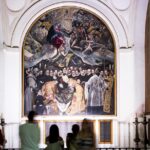
- El Greco link in Toledo: Santo Tomé church is a must for his famous painting, El Entierro del Conde de Orgaz
- Roman engineering in Segovia: a guided look at the aqueduct plus time around the Alcázar and cathedral area
- Lunch is included: an acorn-fed Iberian ham tasting with Manchego cheese and a drink
Take the road south to Toledo
- Three Cities in One Day: Segovia, Avila and Toledo from Madrid★ 5.0 · 8,402 reviews
- Madrid: Segovia and Toledo Tour, Alcazar, and Cathedral★ 4.7 · 7,797 reviews
- Toledo Tour from Madrid: Cathedral, Synagogue & St. Tome’s Church★ 5.0 · 6,784 reviews
- Toledo Half or Full Day Tour with Optional Lunch from Madrid★ 4.5 · 5,807 reviews
A long day, done right: timing, transport, and small-group pacing

This is a full, early start day trip. Pickup and drop-off happen at the same meeting point, and you’ll be back after the final stop, with no dinner included. The upside of a 12 to 13 hour day is that you get a lot of “greatest hits” without having to plan two separate days.
The vehicle matters here. You’re not crammed in a bus. You travel in a high-end Mercedes V-Class setup for up to seven people with Wi-Fi and air conditioning. That means you can recharge between cities and keep energy for the walking and viewing. One review even mentioned how spacious and comfortable the ride felt for resting between stops.
There’s also a translation system built in. The guide is in Spanish with simultaneous translation apps and audio support. In practice, this helps you follow the story at each monument without turning the day into silent wandering.
Stop 1 in Madrid: Museo Naval for context, not a deep dive
You begin in Madrid at the meeting point and your first programmed stop is Museo Naval. The time is short, about 10 minutes, and the admission ticket is not included.
Think of this stop as a warm-up. It helps set a tone for your Spain day, but it is not where you’ll “spend” your time. If you want a museum you can linger in, you’ll probably want a separate visit later. For this tour, your value comes from what happens next in Toledo and Segovia.
Toledo: the UNESCO “three cultures” city, in three focused blocks
Toledo is the kind of place where the streets do half the work for you. It’s a UNESCO World Heritage city tied to the “city of three cultures” story, where Christians, Jews, and Muslims shaped the city over centuries. The tour uses that idea in a clever way: it groups stops by theme, so you understand the city as more than a checklist of buildings.
You’ll arrive for the core Toledo exploration first, with about 3 hours in Toledo itself. This is time for wandering old alleys and absorbing the medieval feel without being rushed out of every square. You’ll also get guided stops that connect architecture to the people who lived there.
Pair Segovia's aqueduct with its Alcázar
Church of Santo Tomé and El Greco: why this stop matters
Next comes Iglesia de Santo Tomé, where you’ll spend about 30 minutes. The big draw here is the El Greco masterpiece El Entierro del Conde de Orgaz. You won’t just see a church. You’re connecting a major art legacy to the city that shaped the artist.
The tour also notes that you can admire other religious artworks and pieces inside, so this isn’t only one painting and done. Since the admission ticket is included for this stop, it’s a good use of time compared with pay-to-enter surprises later.
A practical tip: plan your photos and your viewing. Churches in this part of Spain can shift lighting fast, and you’ll want a calm moment for the details, not just the first glance.
Alcántara Bridge viewpoint walk: short stroll, strong payoff
After you arrive in Toledo, there’s a 15-minute walk to cross and observe the view around Alcántara Bridge, an old Roman-origin structure over the Tagus River dating back to the 2nd century AD, linked to Emperor Trajan.
This part is brief, but it gives you a “big view” reset. When you’ve been inside tight medieval streets, a river crossing view helps your brain stitch the city together. You’re also getting a different angle on Toledo’s layout, not just a close-up alley experience.
Mirador del Valle: the city silhouette moment
Then you’ll pause at Mirador del Valle for about 15 minutes. This viewpoint is designed for that “wow, Toledo is built like a stage” feeling, with the Tagus River winding through the valley and the city’s monuments stacked against the horizon.
Admission is free for this stop. It’s a low-effort, high-reward time window. If your feet are tired, this is where you’ll thank the tour plan.
Santo Tomé isn’t enough: Santa María la Blanca and the Mudejar story

The tour continues with Synagogue of Santa María la Blanca, about 30 minutes. This stop is included, and it’s one of the reasons Toledo feels more layered than you might expect from a one-day visit.
The synagogue is an important example of Mudejar architecture from the early 13th century, built during Muslim domination in the region. The tour also emphasizes the mixed stylistic elements, including Mudejar, Romanesque, and Gothic influences, which reflects that long coexistence theme tied to Toledo.
A big historical shift happened after 1492, when Jews were expelled from Spain. The synagogue was converted into a Christian church, but much of the structure and interior decoration remained. That preservation makes this stop more than a history lecture. You can still read the building’s story in its details.
If you like places where architecture carries cultural memory, this is a top-value stop. It’s also a good complement to Santo Tomé, because it widens the day from art and religion to community and style.
Toledo Cathedral at Lumina Catedral: a basic entry, big visual payoff

Next is Lumina Catedral de Toledo (Toledo Cathedral), where you’ll enter for about 20 minutes. The tour notes that the cathedral was built beginning in the 13th century on the remains of an ancient mosque, and it’s mostly Gothic with Renaissance and Baroque elements.
Art highlights are also part of the pitch. You’ll be able to see works connected to major artists mentioned for the cathedral collection, including El Greco, Velázquez, and Goya, plus an impressive main altarpiece carved in gilded wood.
The catch is that the stop is short and it’s described as basic entrance. This is not the time for a deep architectural study or an hour-long slow walk around every chapel. But it is a smart stop because you get the emotional impact of the space, then you move on before the day turns into museum fatigue.
Segovia: Roman aqueduct first, then cathedral and castle time

After Toledo, you head to Segovia. The tour gives you about 3 hours in Segovia to explore key zones without rushing every single corner.
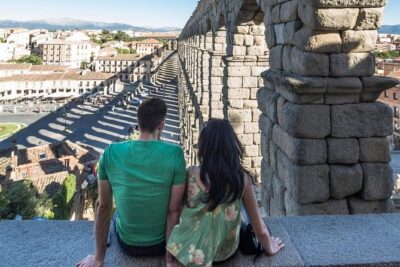
Segovia is famous for its well-preserved Roman aqueduct, and the tour brings you there early with a focused stop. The aqueduct dates to the 1st century AD, and it runs through the city as a symbol of Roman engineering.
Acueduct of Segovia: the “most recognizable” monument you can’t ignore
Your next programmed time is Acueduct of Segovia for about 1 hour. Admission is free here, and the tour emphasizes the aqueduct’s condition and its age, along with legends and “secrets” that are part of how people talk about it.
One reason this matters: the aqueduct is one of those sights where a guided framing helps. Seeing it after someone explains what you’re actually looking at turns it from “wow, big stone thing” into “I get the system.” It’s also a great place to take photos without trying to calculate the angles in a rush.
Streets and viewpoints: Mirador de la Pradera de San Marcos
Then you’ll have a quick viewpoint stop, Mirador de la Pradera de San Marcos, for about 15 minutes. This spot is built for panoramic understanding, letting you see the old town of Segovia and the Alcázar in the same frame, along with surrounding scenery.
Admission is free. Again, you’re getting a short “reset” moment that keeps your brain from feeling trapped in corridors.
The Segovian Jewish quarter walk
The tour includes time walking through the Segovian Jewish quarter. The tour context notes that for most of its existence, the Jewish quarter experienced a climate of relative well-being, with fewer violent episodes until the 15th century.
This stop is more about atmosphere and historical context than a single landmark photo. It’s also a nice change of pace between the aqueduct, the cathedral area, and the castle.
Cathedral time plus a self-guided window

A key part of the Segovia plan is Plaza de Medina del Campo, where you’ll spend about 15 minutes. Then you get an important flexible block: participants have about 1 hour to visit the cathedral on their own, plus about 1 hour for meal time, with timing depending on the group pace.
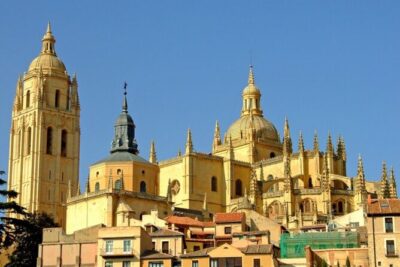
The tour describes the cathedral as the “Lady of Cathedrals,” and notes that you can enjoy views from its tower. The guided element for the broader cathedral experience is shorter earlier in the plan, but this self-guided slot is where you can choose how long you linger, whether you focus on interior details or you go back for one more angle from outside.
Church of La Vera Cruz in El Parral: Romanesque-Mudejar with an octagon plan

Later, the tour includes Church of La Vera Cruz, located in a place called El Parral on the outskirts of Segovia’s historic center.
This is a Romanesque-Mudejar style temple, built at the end of the 12th century, and known for its octagonal plan. The tour notes that the octagon plan is believed to represent the Holy Sepulcher in Jerusalem, which gives the church a strong symbolic reason to exist beyond local architecture.
Details called out include blind arches and horseshoe-shaped windows characteristic of the Mudejar style. Inside, you’ll find an octagonal central nave and an altar housing an image connected to the Virgin of the True Cross.
This stop is valuable because it rounds out Segovia beyond “Roman aqueduct and castle photos.” It’s also a good choice if you enjoy architecture that mixes styles, where the building tells the cultural story without needing a long lecture.
Alcázar of Segovia and Museo de Santa Cruz: castle romance plus museum structure
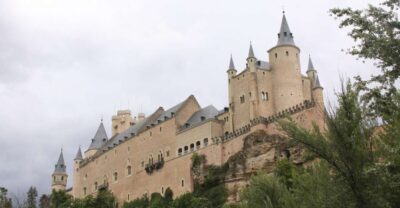
Next is Alcázar of Segovia for about 1 hour, with the admission ticket included. The tour describes it as a medieval fortress that resembles a fairytale castle and has served multiple roles across history.
This is your classic Segovia payoff. If you’re the type who gets joy from strong silhouettes and thick walls, you’ll love how the Alcázar anchors the city’s identity. The tour also uses your time wisely, pairing big visual monuments with calmer indoor time later.
After that, you visit Museo de Santa Cruz in Toledo for about 30 minutes, with the admission ticket included. The museum is housed in the former Hospital of Santa Cruz del Cardenal Mendoza, and it’s presented as one of Spain’s important museums due to both the uniqueness of the building and the variety of its collections.
This is an excellent contrast stop. You get castle scale and Toledo art-and-history scale in one day, instead of repeating the same type of sight three times.
The Iberian ham tasting in Toledo: lunch that actually feels like Spain
Lunch is included as a tasting at Deheseo l Jamón Ibérico de bellota y productos ibéricos de bellota de Extremadura for about 40 minutes. The included tasting includes acorn-fed Iberian ham, acorn-fed Iberian loin, bread, and a drink.
The tour also frames the broader lunch as Spanish tasting with acorn-fed Iberian ham, La Mancha cheese, and consumption of Manchego wine or soft drink.
This is the moment where the day becomes more than sightseeing. You’re not just eating. You’re doing a quick “local products” crash course, with the kind of ingredients Spain is proud of: acorn-fed pork and regional cheese.
One small practical note: since breakfast and dinner are not included, plan to have breakfast before pickup and be ready for dinner after you return to Madrid.
Price and value: what $234.57 buys you, and where it pays off
At $234.57 per person, the value depends on how you measure a day trip.
Here’s what helps justify the price, based on what’s included:
- Transport in a small Mercedes V-Class with Wi-Fi and AC
- Bottled water during the tour and in the car
- Lunch, built around acorn-fed Iberian ham tasting plus bread and a drink
- Entry included at Iglesia de Santo Tomé, Synagogue Santa María la Blanca, and Alcázar de Segovia
- Admission included for Museo de Santa Cruz
- Group size stays small, max 7 travelers, which usually means less waiting and more guide attention
You’ll also notice some stops have admission free or ticket not included. Museo Naval is not included, for example. Toledo Cathedral’s basic entrance is free in the plan. So the price is really buying organization, time-saving guidance, and the specific ticketed experiences that are easy to miss if you DIY.
Also, there is free cancellation up to 24 hours in advance for a full refund. If your dates are flexible, that reduces risk.
Who should book this Toledo and Segovia day trip
This tour is a strong fit if you:
- Want two UNESCO cities in one long day from Madrid
- Like architecture and art connections, especially the El Greco link in Toledo and the aqueduct and castle in Segovia
- Prefer a small group with a driver and a guide who keeps you moving
- Are okay with Spanish-led guiding supported by audio and translation apps
It may be less ideal if you:
- Get cranky when a day runs 12 to 13 hours
- Want lots of free time to wander without any structured stops
- Need an ultra-slow pace with minimal walking
One more comfort note: a review mentioned they had umbrellas when it rained. Weather can happen in central Spain, and it’s a nice sign that the day plan considers it.
Should you book it?
If your goal is a high-value “great day trip” from Madrid with real landmarks and included meals, I’d book this. The combination of Toledo’s major cultural architecture and Segovia’s Roman-to-medieval core is a smart pairing, and the small-group Mercedes ride makes the long day feel manageable.
If you’re the kind of traveler who hates being on a schedule, you might feel rushed. But if you can handle a full day and you’ll enjoy the story behind each stop, this is one of the more efficient ways to hit both cities without the stress of planning connections.
FAQ
What time does the tour start?
The tour starts at 8:00am and runs about 12 to 13 hours.
Is lunch included, and what is it?
Yes. Lunch is included as a Spanish tasting with acorn-fed Iberian ham, La Mancha cheese, bread, and a drink (Manchego wine or soft drink). There is also an acorn-fed Iberian loin tasting as part of the tasting.
Which tickets are included?
Tickets are included for Iglesia de Santo Tomé, Synagogue of Santa Maria la Blanca, Alcázar of Segovia, and admission is listed as included for Museo de Santa Cruz and the ham tasting stop. Museo Naval is listed as admission ticket not included, while the Toledo Cathedral basic entrance and the viewpoints are free in the plan.
What language is the guide, and is translation provided?
The guide is in Spanish, with simultaneous translation applications and audio support during the tour.
How big is the group?
The tour operates with a maximum of 7 travelers, with a minimum of 2 travelers.
Is the tour physically demanding?
The tour is described as requiring a moderate physical fitness level, and it includes walking such as a short walk to Alcántara Bridge and walking through parts of the towns.
More Tour Reviews in Madrid




Aqueduct, cathedral and Alcázar




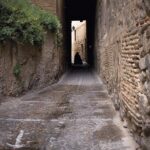
Toledo above the Tagus
Fresh ways to see Madrid
- Tour to Toledo & Madrid CitySight Seeing Tour
- 2-Day Guided Tour to Cordoba and Seville from Madrid
- Private Transfer from Madrid Airport to Madrid Hotels
- Wine Tasting and Flamenco Master Class in Madrid
- Prado Museum and Royal Palace Private Tour in Madrid
- Monastery Royal Barefoot Visit with entrance without waiting for queues
More ways into Segovia & Alcazar Day Trips
 ★ 5.0Avila & Segovia Tour with Tickets to Monuments from MadridFrom $819,762 reviews
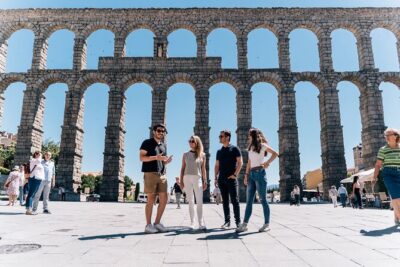 ★ 5.0Three Cities in One Day: Segovia, Avila and Toledo from MadridFrom $1268,402 reviews
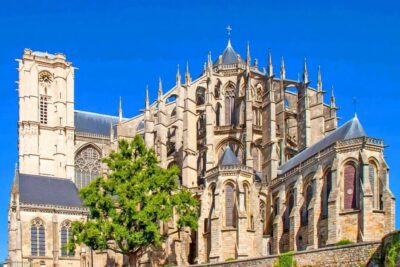 ★ 4.7Segovia and Toledo Tour, Alcazar, and CathedralFrom $487,797 reviews
 ★ 4.6Avila and Segovia Day Trip with Tickets to MonumentsFrom $744,568 reviews
 ★ 4.6Toledo & Segovia Full Day Guided Tour with AlcázarFrom $454,394 reviews
 ★ 4.5Avila with Walls and Segovia with Alcazar from MadridFrom $603,293 reviews
 ★ 4.3From Madrid: Segovia & Avila Day Trip with Optional TicketsFrom $592,161 reviews
 ★ 4.5Segovia and Toledo Day Tour from Madrid with Optional AlcazarFrom $771,745 reviews
Try another angle on the same itinerary