
REVIEW · MADRID
Spanish Civil War start of 2 World War, Guernica Franco
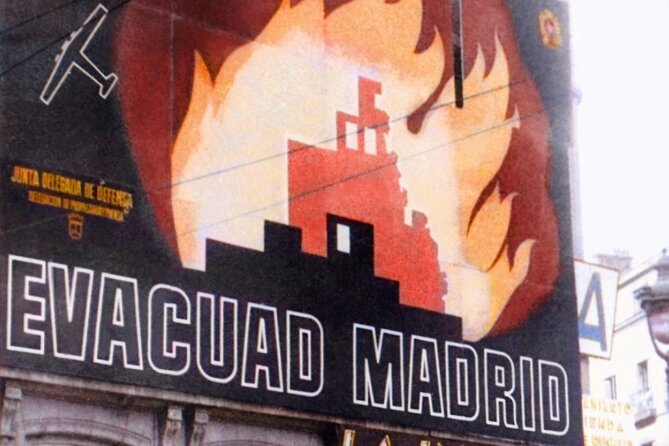
Madrid never forgets its bombings. This Spanish Civil War walking tour in Madrid connects the dots across the city with a clear story thread and free-entry stops, so you are not chasing tickets all day. I also like that the route uses big, recognizable places to explain how the conflict seeped into daily life, and the context keeps you oriented instead of lost in names. One drawback to consider: the themes get heavy, and you will want mentally sturdy shoes and a calm pace.
I appreciate that the guide work is the heart of this tour. You might go with Victor, Maikel, Adria, Guillermo, or Chato, and the common vibe is warm, organized, and sensitive storytelling, not a lecture you have to survive.
At about 2 hours 30 minutes, with a limited group size (and up to 30 travelers total), it fits well between museum visits or a slower evening plan. You get a mobile ticket plus maps, images, audio, and videos, and you also receive a link to personalized recommendations for what to do in Madrid after the tour.
Key things that make this tour worth your time
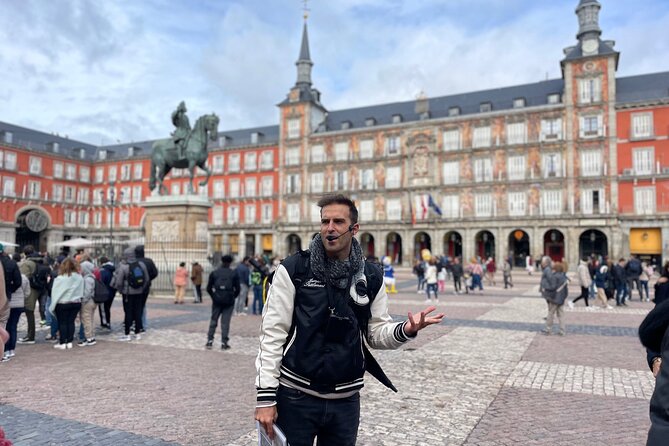
- A tight, landmark-to-landmark route that turns central Madrid into a map of war.
- Franco and the run-up to World War II are treated as part of one long chain of events.
- Guernica and civilian bombing show up through art and ideas, not just battlefield talk.
- Free admission tickets are not required for the stops, so you spend time with the story, not lines.
- Support materials included (maps, images, audio, videos) to help you remember what you saw.
Read the capital through its twentieth century
- Madrid Reina Sofia Museum & Picasso’s Guernica Private Tour★ 4.8 · 3 reviews
Spanish Civil War in Madrid, a route built for understanding
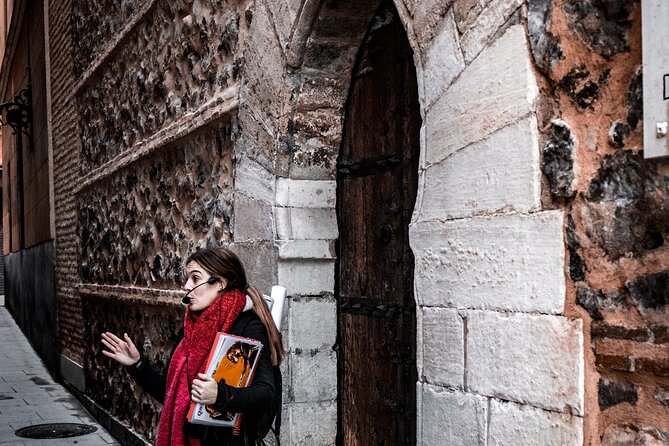
This tour is designed for people who want more than dates. The Spanish Civil War is hard to grasp at first, because it is both personal and political, local and international. The way this itinerary is laid out helps you keep the narrative straight. You start in central Madrid and move through key points that connect bombings, propaganda, and the struggle to control public life.
What I like is the balance between human impact and big-picture cause and effect. The stop titles alone tell you the tour aims to explain how events connect, not just where they happened. You see Madrid under pressure, you hear about divided Spains, and you learn why people interpreted the conflict through ideas, money, and media. That is the practical value for your brain: you walk away with a framework you can use while exploring on your own later.
The pacing also matters. At 2 hours 30 minutes, it is long enough to build meaning across multiple stops, but short enough that you can still move to another plan the same day. And because the tour is offered in English, you can follow the story without fighting language.
What you actually get for the money, and why it feels like a bargain
The price is listed as $3.62 per group, up to 15. That is a big deal for value, because the cost is tied to the group rather than per person, and the tour includes more than a walk and a few facts. You get a local guide, plus exclusive material like maps, images, audio, and videos. You also receive a link to personalized recommendations about what to do in Madrid, and you get personalized attention after the tour.
If you compare what most city tours provide, this adds up. Many tours sell the guide time, but here you are also getting take-home support that can help you connect the dots after you step away. That matters because the Spanish Civil War is not always intuitive when you are just looking at buildings.
Booking matters too. It is commonly reserved about 16 days in advance, which suggests it fills at least during busy stretches. Since you want the guide focus and the flow of a multi-stop walk, I recommend reserving early rather than gambling on last-minute availability.
Where you start, where you end, and how the walk stays manageable
You meet at C. del Postigo de San Martín, 26, Centro, 28013 Madrid. The tour ends at Arco de Moncloa, Av. de la Memoria, 32, Moncloa – Aravaca, 28040 Madrid. The end point is near Metro Moncloa, which makes it easier to grab transit right away.
This matters because the tour is a one-way walk. If you are planning your day, think of it like this: you start in the center, you work outward toward Moncloa, and you finish at a spot that has good transit options. That is a simple planning win, especially if you are pairing this with a museum or a dinner plan.
Group size is capped, with a maximum of 30 travelers for the activity, and the experience is marked as suitable for most travelers. Service animals are allowed, and the meeting area is near public transportation. If you are sensitive to long walks, bring supportive footwear and plan your hydration. The total time is 2 hours 30 minutes, and the tour keeps you moving between stops.

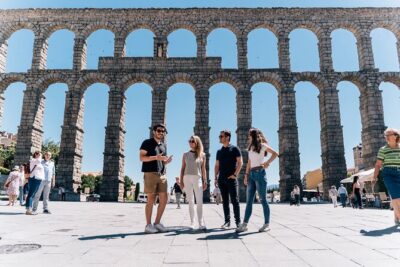
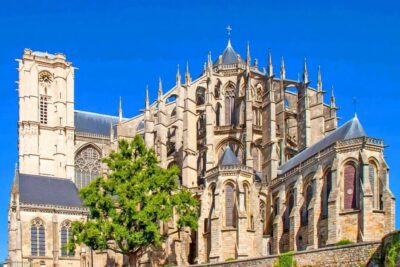

Stop 1, Plaza del Callao: central Madrid under bombing scars
You begin at Plaza del Callao, where the tour frames the Spanish Civil War experience through bombings in central Madrid. The key idea at this stop is physical memory. The buildings with scars are not just background. They are proof that conflict reached the places people associate with normal life.
This is also where the tour leans into storytelling style. The stop notes suggest a contrast between reality and representation, with an angle like The Life of a Spaniard at War, would you go to the movies? That is a useful lens. It nudges you to think about how war gets shown, how it gets consumed, and how the public might process violence through culture and media.
Practical tip: arrive with curiosity, not just fear of heavy themes. In a place like this, you can look at the city like a document. Even if you already know the basic arc of the war, these urban traces make it feel less abstract.
Possible drawback at this stage: if you are emotionally affected by bombing-related topics, you may feel it quickly. The tour is paced to be respectful, but the subject matter is immediate.
Stop 2, Palacio del Senado: the split that sets everything in motion
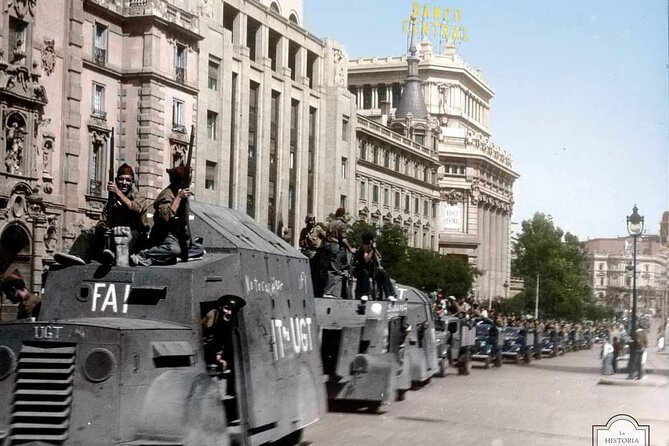
Next is the Palacio del Senado, and the focus shifts to how the conflict begins. The stop title centers on How does the Spanish Civil War start? and Two divided Spains, Civil War. It is the moment where the tour tries to give you the structure behind the chaos.
It also connects Spain’s internal struggle to a wider testing ground idea, with Spain, World War II Test Range noted as part of the narrative. That does not require you to be a specialist. The point for you is understanding that the Spanish Civil War did not stay inside Spain’s borders. The tour is setting up a later takeaway: that the conflict’s end and fallout are tied to what follows.
If you like learning through cause and effect, this is a strong stop. You are not just looking at architecture, you are being guided toward an explanation for why events accelerate.
Stop 3, Plaza de España: Franco and the defense of Madrid
Plaza de España is the next turning point, and it is directly labeled with Francisco Franco. This stop is about the defense of the capital and the long strain of war, including the phrase The defense of the Capital: 900 days of siege.
That number gives you a sense of scale, and the tour’s theme notes make you think about daily survival instead of only dramatic turning points. Madrid under pumps appears in the itinerary, which signals attention to the practical mechanisms of hardship. You also get Wartime sayings, which is a reminder that language changes under pressure. People invent short phrases to cope, warn, joke, or mourn.
This stop is valuable because it helps you understand that dictatorship and conflict did not arrive as a single moment. They formed in the background of prolonged stress, rationing, fear, and propaganda.
One practical consideration: this is a popular Madrid area, so if you want photos without crowd frustration, aim for the group’s natural walking flow and do not try to speed ahead.
Stop 4, Templo de Debod: money, propaganda, and remembering the fallen
Templo de Debod brings the tour into a more reflective mode. The themes shift to Money: Who paid for the war? and Propaganda: War of Ideas. Those two topics are a smart pairing. Money explains power. Propaganda explains persuasion. Together, they show you how conflicts are fought both materially and mentally.
This stop also mentions Temple of Debod and Sculpture to the Fallen of the Civil War. That combination matters. You see how the city holds remembrance in place, not just in textbooks. The tour uses the setting to nudge you toward empathy and context, instead of treating the war like a trivia list.
If you want a moment to slow down and absorb the meaning of what you have been hearing, this is often the best pause in a walking tour. You get a break from purely structural explanations and move back toward the human cost.
Stop 5, Paseo del Pintor Rosales: Guernica, Prado art under fire, and a breather
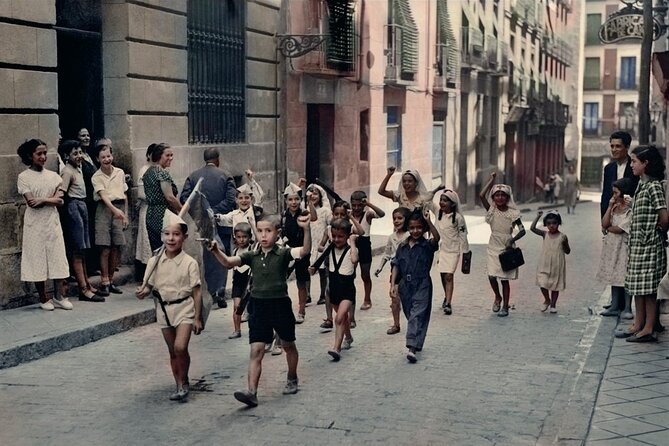
At Paseo del Pintor Rosales, the tour connects war to culture through Picasso and Guernica. The itinerary specifically calls out Picasso, Guernica: Bombing of civilians. That is the key relationship: a civilian bombing becomes an art object and a public message.
It also brings up Prado Museum: Art Under Fire. Even if you are not going inside the museum, the tour uses the area to help you think about how art and institutions respond when violence disrupts normal life.
Then comes Christmas in Tregua: A breather. That note signals a shift from constant pressure to a human moment of relief. I like that the tour refuses to make everything only grim. It keeps the emotional range realistic, which is important when you are learning about years of suffering.
The value here for you: you finish the day better able to recognize how history travels through culture. You stop seeing art as separate from politics. You see it as part of the same story.
Stop 6, Cuartel General del Ejercito del Aire: music, remote transfusions, and what comes next
The tour moves to Cuartel General del Ejercito del Aire, and the stop themes get unusual in a good way. You see Music: They won’t happen, Sun Face listed, and also 1st Remote Blood Transfusion: Life in the Middle of Death.
Those topics can feel like detours if you expect a traditional war lecture. But that is the point. The tour is showing how war touches everyday fields, including science, medicine, and the way people talk and hope. The label Life in the Middle of Death is a strong reminder that progress and horror can sit side by side.
The tour also flags End of the War begins World War II and Dictatorship. This is one of the biggest narrative bridges in the whole itinerary. It ties Spanish events to the next chapter in Europe, and it frames dictatorship as part of the war’s long shadow.
If you are someone who likes your history with connections, this stop is a highlight. You get a sense of continuity instead of isolated episodes.
Stop 7, Arco de la Victoria: destroy or preserve, and why memory is contested
You end at the Victory Arch, also called Arco de la Victoria. The stop is framed with a question: Victory Arc Destroy or preserve it? That is the tour’s clever way of turning your final stop into a conversation about memory.
The itinerary also includes Reflections of Wars, which suggests you leave with questions, not just answers. When a monument is tied to a conflict, it is never just stone. It is part of how societies argue about the past.
This stop closes the loop. Earlier you saw scars on buildings, language under pressure, and propaganda shaping ideas. Now you see how a city decides what to keep. The tour pushes you to think about the ethics of remembrance, not just the aesthetics.
How the guides shape the experience (and why that matters for learning)
A walking tour like this lives or dies by the guide. The best version of this topic is clear and sensitive: firm enough to explain the chain of events, careful enough to handle emotional material.
In this case, the guide style is repeatedly described as welcoming and friendly, with storytelling that stays organized while still feeling human. Names you might encounter include Victor, Maikel, Adria, Guillermo, and Chato. The consistent thread across those guide experiences is that they bring the story to life without losing your place in the big picture.
Another strength is that you get follow-up value. After the tour, you receive personalized attention and a link to recommendations for what to do next in Madrid. That helps if you want your historical learning to steer your next museum stop, walking route, or evening plan.
Who this tour suits best, and who might want a different pace
This walking tour is a great fit if you:
- want a Spanish Civil War overview that stays grounded in Madrid locations
- are interested in how bombing, propaganda, and leadership shaped daily life
- like learning through art angles, like Picasso and Guernica
- prefer a guide-led route rather than trying to piece together everything alone
It may be less ideal if you:
- dislike heavy political and war-related topics
- need a very relaxed pace, since the format moves between several stops in about 2 hours 30 minutes
- prefer a strictly chronological lecture without thematic jumps (this tour uses themes like money, ideas, music, and medicine)
If you are planning a first trip to Madrid, this also works well because it gives you a map of meaning. Later, when you see similar monuments or neighborhoods, you will have a better sense of what you are looking at.
Should you book this Madrid Spanish Civil War walking tour?
I would book this if you want a city walk that teaches you how the war made people think, live, and remember. The route is structured to connect Franco, civilian bombing, propaganda, and the way conflict links into World War II and dictatorship. The biggest practical win is that stops do not require entry fees, so your time stays with the story.
I would hesitate only if you are not ready for emotionally intense themes right away. If that is your situation, you can still do the tour, but you should plan an easy rest of day after, and pick a time when you are not rushed.
If you like your history with clear guidance, a small-group feel, and take-home materials like maps and audio, this one is an easy yes for Madrid.
FAQ
How long is the tour?
The tour lasts about 2 hours 30 minutes.
What language is the tour offered in?
The tour is offered in English.
Is there an admission fee for the sites?
No. Entries to the sites are not necessary for this tour, and admission ticket access is listed as free for the stops.
How many people are in the group?
The activity has a maximum of 30 travelers. The pricing is listed per group up to 15.
Where does the tour start and end?
It starts at C. del Postigo de San Martín, 26, Centro, 28013 Madrid. It ends at Arco de Moncloa, Av. de la Memoria, 32, Moncloa – Aravaca, 28040 Madrid, near Metro Moncloa.
What is included in the price?
You get a local guide, exclusive material like maps, images, audio, and videos, plus a link to personalized recommendations for what to do in Madrid. You also receive personalized attention from your guide after the tour.
Do I get a mobile ticket?
Yes. The tour includes a mobile ticket.
Is the tour accessible, and are service animals allowed?
Most travelers can participate, and service animals are allowed. The meeting point is near public transportation.
Can I cancel and get a full refund?
Yes, you can cancel for a full refund if you cancel at least 24 hours before the experience’s start time. If you cancel less than 24 hours before, the amount you paid is not refunded.
More Tour Reviews in Madrid



Madrid in the modern age
Fresh ways to see Madrid
- Tour to Toledo & Madrid CitySight Seeing Tour
- 2-Day Guided Tour to Cordoba and Seville from Madrid
- Private Transfer from Madrid Airport to Madrid Hotels
- Wine Tasting and Flamenco Master Class in Madrid
- Prado Museum and Royal Palace Private Tour in Madrid
- Monastery Royal Barefoot Visit with entrance without waiting for queues