

REVIEW · SEGOVIA & ALCAZAR DAY TRIPS
Segovia &Toledo
Two cities in one day sounds wild. It works because you get Segovia’s Roman aqueduct right up front and then bilingual walking tours that help you connect the dots in Toledo’s layered past. You’ll see iconic landmarks, but also the smaller churches that explain how different faiths and empires shaped these streets.
The tradeoff is that this is a long day, around 11.5 hours, with a lot of time on the bus and a walking pace that rewards comfy shoes. A few travelers also noted heat and air-conditioning problems on the return ride, so it helps to plan like the weather and traffic can be unpredictable.
Key Highlights Worth Booking For

- Segovia’s Roman aqueduct first, so your day begins with a wow moment.
- Alcázar views from the rocky crag, including that ship-bow shape everyone talks about.
- Toledo’s three cultures route, built around places tied to Jewish, Moorish, and Christian chapters.
- Major Toledo stops on one tight circuit, from Santa María la Blanca to the cathedral.
- Guides that can turn a schedule into a story, with several noted for humor and calm under pressure.
Take the road south to Toledo
- Three Cities in One Day: Segovia, Avila and Toledo from Madrid★ 5.0 · 8,402 reviews
- Madrid: Segovia and Toledo Tour, Alcazar, and Cathedral★ 4.7 · 7,797 reviews
- Toledo Tour from Madrid: Cathedral, Synagogue & St. Tome’s Church★ 5.0 · 6,784 reviews
- Toledo Half or Full Day Tour with Optional Lunch from Madrid★ 4.5 · 5,807 reviews
Two Cities, One Long Day: What 11.5 Hours Feels Like

This is a classic Madrid power day: you leave in the morning, ride to Segovia, then continue on to Toledo, and you’re back at the same meeting spot in Madrid after a full day (about 11 hours 30 minutes, give or take).
Why it’s worth it: Segovia and Toledo both have big visual “anchors.” Segovia has the aqueduct and the Alcázar, easy to understand even if you’re not a stone-and-royalty nerd. Toledo is more complex, but the walking route gives you a sensible backbone, especially around the city’s religious coexistence and later Christian overlay.
The main consideration is stamina. Old-town Toledo involves uphill sections and tight streets. You’ll be walking as a group, not wandering like you would on a self-guided day. If you want deep time in museums or you like lingering for photos, consider doing each city separately.
Price and Value for $77.06: What You’re Really Buying
At $77.06 per person, the headline value is transportation plus two guided walking experiences. The day includes round-trip bus service from Madrid to Segovia and Toledo, plus English and Spanish guided walking tours in both cities.
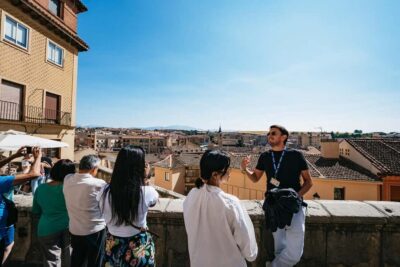
That matters because these aren’t “drive through and glance” stops. The aqueduct, the Alcázar, the cathedral, and the church sites each come with context, and the guides are clearly a major part of why people rate this trip well. If you’ve ever tried to map out Toledo’s key sites yourself, you already know how quickly it can turn into guesswork.
What to double-check when you book: the listing says what’s included (bus plus guided walks), but local extras like lunches and any optional add-ons are not covered by the core inclusions. If you like planning your own meals and museum time, this tour can still work well, as long as you’re comfortable with a set schedule.
Madrid Pickup, Timing, and the Bus Reality Check
You meet at C. de San Bernardo, 5, Centro, 28013 Madrid, with a 9:00 am start. The tour ends back at the same meeting point.
The bus is described as a high-end bus, and plenty of travelers reported comfort and working air-conditioning. Still, heat and air-conditioning complaints did pop up, especially on the return ride. Some people also experienced delays, confusion around which bus was used, or extra waiting time when things didn’t run exactly as planned.
So here’s my practical advice:
- Bring water and sun protection. Even if the AC works, the day is long.
- Keep your phone charged and save the meeting point details. When logistics shift, you’ll want clarity fast.
- Wear shoes you can walk in for hours. You’ll spend more energy than you expect in these old streets.
If you’re traveling with kids or you’re heat-sensitive, it’s smart to mentally budget for possible delays and plan accordingly.
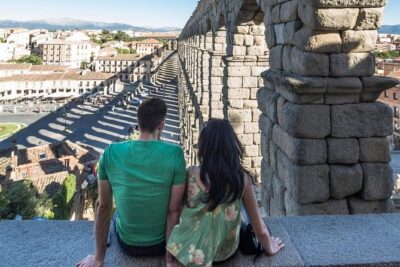
Pair Segovia's aqueduct with its Alcázar
Segovia First: Roman Aqueduct Then the Alcázar’s Ship-Bow Shape
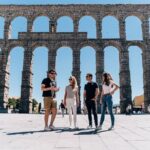
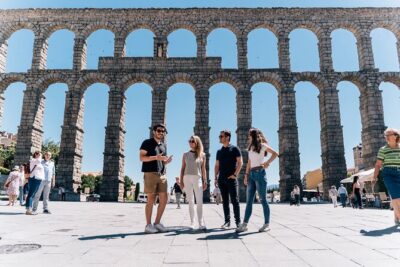
Segovia opens with a statement: one of the best-preserved elevated Roman aqueducts, and the city’s foremost symbol. The aqueduct is not just a photo backdrop. It sets the tone for why Segovia has always been strategic, with water infrastructure and visibility that made it hard to ignore.
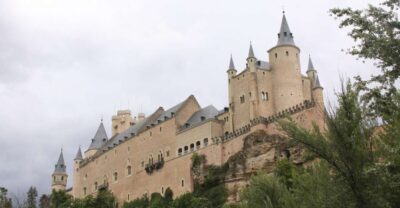
Next comes the Alcázar of Segovia, perched on a rocky crag above the confluence of two rivers near the Guadarrama mountains. The classic description is spot-on: its shape is like the bow of a ship. It’s a medieval alcázar, but it also reflects centuries of changing use. It started as a fortress, then became a royal palace, later a state prison, and even served as a Royal Artillery College and military academy. Today, it’s used as a museum and for military archives.
What I like about doing Segovia early: you arrive before you feel completely cooked by the day. You also get your big images while your mind is fresh, so you don’t rush through the details.
One caution: this sort of day tour is tight. Some travelers found time for interiors limited, and tickets for certain areas can be competitive. If seeing specific interior exhibits is essential to you, build in patience and accept that the group schedule controls the timeline.
Segovia Beyond the Icons: The Romanesque Bell Tower Moment
Segovia isn’t only about the aqueduct and the castle. The tour also includes the Church of St Stephen, a medieval church dating from the 12th century with a noted Romanesque bell tower.
This stop is the kind of thing that makes a guided day tour feel worth it. From the outside, churches can look similar. A good guide helps you see the clues: the age, the style, and why the tower matters.
Also, Segovia can be a short burst of romance and pastry. If you have free moments, you might be able to grab a quick snack, but don’t count on a long food break. Some people missed out on things they hoped to eat because the overall schedule is packed.
If food is part of your travel joy, I’d keep meals simple. Eat close to your guidance stops, then use any spare minutes for a quick local bite.
Toledo’s Three Cultures Walk: Santa María la Blanca to Santo Tomé
Toledo is where the tour turns into a walking lesson. You’ll explore the city of the three cultures, built around the centuries of coexistence between Jewish, Moorish, and Christian communities.
A major anchor is the Synagogue of Santa María la Blanca, originally known as the Ibn Shushan Synagogue. It was erected in 1180, and there’s an inscription on a beam tied to that date. It’s considered, by some sources, one of the oldest synagogue buildings in Europe still standing. Today, it’s preserved and owned by the Catholic Church, and it functions as a museum and a former synagogue.
Then you’ll move to the Iglesia de Santo Tomé. This church is tied to the reconquest by King Alfonso VI of León. The key detail is the layering: it’s built on the site of an 11th-century mosque, and during the reconquest, those buildings were often repurposed without major destruction.
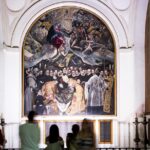
This stop also connects to art. You can admire El Greco’s painting The Burial of the Count of Orgaz in this context, which is a powerful way to understand how later Christian culture reinterpreted earlier physical spaces.
What you should take from this portion: Toledo isn’t just medieval. It’s medieval plus centuries of reuse. If you like seeing how a city can shift meaning without erasing the past, you’ll appreciate this route.
San Juan de los Reyes and Toledo Cathedral: The Big Stone Finale
After the three-cultures circuit, the tour highlights two major “monument” stops that give you Toledo’s Catholic grandeur.
First is the Monastery of San Juan de los Reyes, built in the Isabelline style in the 15th century by the Catholic Monarchs. It was founded by King Ferdinand II of Aragon and Queen Isabella I of Castile to commemorate the birth of their son, Prince John, and their victory at the Battle of Toro (1476) over the army of Afonso V of Portugal.
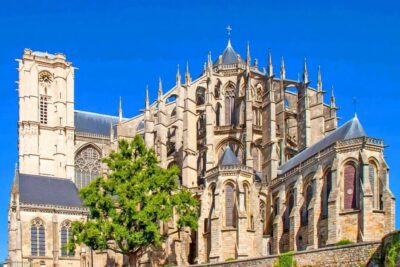
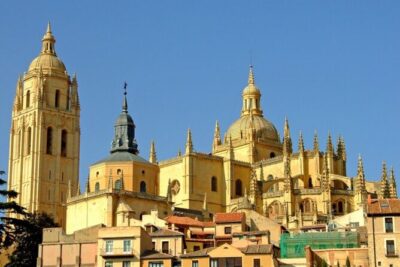
Then comes the Primate Cathedral of Saint Mary of Toledo, the Roman Catholic seat of the metropolitan archdiocese. It’s one of the three 13th-century High Gothic cathedrals in Spain and is considered by some authorities to be the Gothic style’s magnum opus in Spain.
Here’s the real-world value: these places reset your mental compass. Segovia gives you Roman and medieval forms. Toledo gives you Gothic scale and the sense of a city built to reflect religious power and artistry.
One practical heads-up: a cathedral is huge, and a group tour can only skim what’s possible. If you want specific viewpoints or specific chapels, arrive with a priority list in your head. Otherwise, you’ll end up swept along like everyone else, and you may feel shortchanged.
Guide Quality, Group Size, and English Levels That Can Vary
This tour runs up to 55 travelers. That size alone means the guide’s job is half storytelling and half crowd management.
Where this tour seems to shine is guide energy and communication. Several named guides were praised for being friendly, humorous, and able to keep the group moving. Names that came up include Ophelia, Alejandra, Andrea, Melissa, Angie, Ester, Alfredo, Jesus, and Maria. The common thread is that the guide approach made the day feel more human, not just like a checklist.
Still, you should be aware of possible variation in language balance. Some travelers reported English being strong in one part of the day and weaker in another, including situations where they were merged with a larger group. If English is your main requirement, I’d plan to lean on the guide when you’re in the thick of it, and don’t assume you’ll always get the same level of explanation everywhere.
If you do one thing to protect your experience, do this: stay close to your walking guide during the transitions. When groups sprawl, you lose context fast, especially in Toledo.
How to Get More Out of Limited Time (Without Losing Your Mind)
Even when a tour hits the right sites, you can still feel rushed. This day is a tight sequence, and you’ll likely spend less time than you want at any single stop.
Here’s how I’d handle it:
- Decide your must-see interiors before you go. The aqueduct and exterior Alcázar views are easy wins, but cathedral and museum time can be limited.
- Take photos early at each main stop, then use the guide time for meaning. That way you don’t spend your whole visit chasing the perfect angle.
- Expect navigation to be easier as a group. Toledo streets can confuse you, and a tight schedule punishes getting turned around.
Also, keep an eye on logistics during departures. Some people reported that pick-up or drop-off points weren’t perfectly clear when buses changed. When you get instructions, repeat back the key details to yourself: where to meet, what time window, and which landmark to use as your anchor.
Should You Book This Segovia and Toledo Day Trip?
Book it if you want an efficient first taste. This tour is a solid choice for a one-day hit of Segovia’s aqueduct and Alcázar plus Toledo’s three-culture sites, including Santa María la Blanca, San Juan de los Reyes, and Toledo Cathedral. If you like learning as you walk, and you’re okay with a packed schedule, it’s a good value.
Skip it or adjust your expectations if you want slow travel. If you’re the type who hates long bus rides, gets cranky with heat, or needs lots of time in interiors, you’ll probably enjoy doing Segovia and Toledo on separate days more.
If you do book: come ready for a full day. Bring water, wear sturdy shoes, and treat the guided stops as the main event. When the day is long, your best strategy is to let the guide do the explaining, then use your own minutes wisely for what you care about most.
FAQ
What time does the tour start?
The tour starts at 9:00 am.
Where do I meet for the tour in Madrid?
You meet at C. de San Bernardo, 5, Centro, 28013 Madrid, Spain.
How long is the Segovia and Toledo trip?
It runs for approximately 11 hours 30 minutes.
Is the tour offered in English?
Yes. The tour is offered in English, and it includes bilingual English and Spanish guided walking tours in both Segovia and Toledo.
What’s included in the price?
The price includes round trip from Madrid to Segovia and Toledo by high-end bus, plus bilingual English and Spanish guided walking tours in Segovia and Toledo.
Can I cancel for a full refund?
Yes. You can cancel up to 24 hours in advance for a full refund.
More Tour Reviews in Madrid




Aqueduct, cathedral and Alcázar



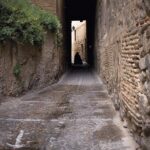
Toledo above the Tagus
Fresh ways to see Madrid
- Tour to Toledo & Madrid CitySight Seeing Tour
- 2-Day Guided Tour to Cordoba and Seville from Madrid
- Private Transfer from Madrid Airport to Madrid Hotels
- Wine Tasting and Flamenco Master Class in Madrid
- Prado Museum and Royal Palace Private Tour in Madrid
- Monastery Royal Barefoot Visit with entrance without waiting for queues
More ways into Segovia & Alcazar Day Trips
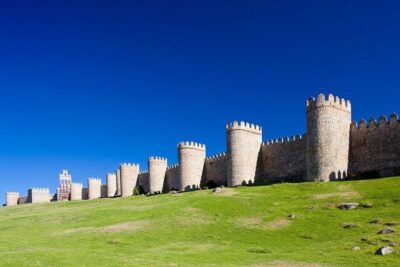 ★ 5.0Avila & Segovia Tour with Tickets to Monuments from MadridFrom $819,762 reviews
 ★ 5.0Three Cities in One Day: Segovia, Avila and Toledo from MadridFrom $1268,402 reviews
 ★ 4.7Segovia and Toledo Tour, Alcazar, and CathedralFrom $487,797 reviews
 ★ 4.6Avila and Segovia Day Trip with Tickets to MonumentsFrom $744,568 reviews
 ★ 4.6Toledo & Segovia Full Day Guided Tour with AlcázarFrom $454,394 reviews
 ★ 4.5Avila with Walls and Segovia with Alcazar from MadridFrom $603,293 reviews
 ★ 4.3From Madrid: Segovia & Avila Day Trip with Optional TicketsFrom $592,161 reviews
 ★ 4.5Segovia and Toledo Day Tour from Madrid with Optional AlcazarFrom $771,745 reviews
Try another angle on the same itinerary