

REVIEW · SEGOVIA & ALCAZAR DAY TRIPS
Segovia Experience
Segovia from Madrid feels like time travel. You get the big visual hits fast, starting with the Roman aqueduct and then moving into the Alcázar and medieval streets with a guided walking pace. I like that the tour adds structured stops plus ample free time at the end, so you can steer the day toward food and the sights you personally care about.
My other favorite part is practical value: round-trip transportation from Madrid, an air-conditioned vehicle, and an official bilingual English-Spanish guide for the walking portions. One drawback to keep in mind is that your schedule can get tight if the bus is late, since the tour still needs to get everyone back to Madrid on time.
Key things I’d pay attention to

- One official bilingual guide for the walking stops, plus a clear run of sights in Segovia
- Roman aqueduct first, so you get the iconic photo moment before the day gets slower
- Three major stops on foot: Cathedral, Church of St Stephen, and the Alcázar area
- Free time at the end so you can eat and wander without being herded
- Small-ish group cap (max 55) which usually keeps the pace comfortable
- Air-conditioned transportation plus a round-trip plan back to your Madrid meeting point
Pair Segovia's aqueduct with its Alcázar
- Avila & Segovia Tour with Tickets to Monuments from Madrid★ 5.0 · 9,762 reviews
- Three Cities in One Day: Segovia, Avila and Toledo from Madrid★ 5.0 · 8,402 reviews
- Madrid: Segovia and Toledo Tour, Alcazar, and Cathedral★ 4.7 · 7,797 reviews
- Madrid: Avila and Segovia Day Trip with Tickets to Monuments★ 4.6 · 4,568 reviews
Segovia from Madrid: the fastest route to a UNESCO-style day
Segovia is one of those places where a little time goes a long way. You can see Roman stonework, Gothic church architecture, and a fortress-like palace all in the same compact area, and the whole town is shaped by its position near two rivers.
This tour is built for people who want the highlights without turning the day into an all-day marathon. You start at 9:00 am in Madrid and end back at the meeting point, with a guided walking tour plus free time to take over from there.
The timing matters because the sites are close enough for walking, but big enough that you still need real pauses. That is where the guide-led structure pays off, then the free time lets you slow down or speed up.
Getting there: comfortable bus, real schedule, and why it matters
You leave Madrid by air-conditioned vehicle and get transportation to and from Segovia included. The bus is a key part of the experience because you are spending much of the day away from your hotel, and comfort helps on travel days.
The meeting point is C. de San Bernardo, 5, Centro, 28013 Madrid, Spain, and the tour ends back at the same spot. The start is 9:00 am, and the total duration is listed as about 11 hours, which usually means you should plan for a long day even if the core walking is shorter.
One caution from past experience with similar day trips: if pickup is late, it can cut into your time in Segovia. Build in a bit of patience on the road, and use your free time efficiently once you arrive.
Stop 1: the Roman aqueduct, still doing its job
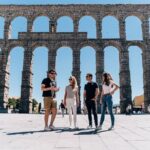
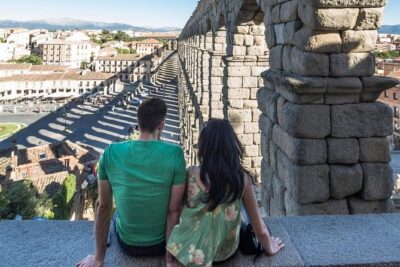
The first stop is Segovia’s famous Roman aqueduct, described as one of the best-preserved elevated Roman aqueducts and the foremost symbol of the city. This is the kind of sight you can’t really appreciate from a distance, because the scale comes from how high the arches run and how the stonework holds together.
What I like about seeing it early is simple: it sets the tone for everything else. When you look at the aqueduct first, the rest of Segovia starts to make more sense as a city that has been important for a very long time.
Practical tip: give yourself a few minutes to look at details, not just the wide view. The aqueduct’s rhythm of arches is the real wow factor, and it is also what makes it feel so different from modern construction.


Cathedral Square: Gothic style in the heart of town
Next up is Segovia Cathedral, the Gothic-style Roman Catholic cathedral in the main square. It is dedicated to the Virgin Mary, and the church was built in Gothic style in the mid-16th century.
Cathedral stops can feel like a quick photo break on some tours, but the payoff here is location. Being in the main square means you naturally see how the church anchors daily life and how the surrounding streets feed into the cathedral area.
A second reason to care about this stop is contrast. You move from Roman engineering to Gothic church design, and you can literally feel how architectural styles changed the city over centuries.
If you are sensitive to indoor temperatures, plan for it. Major churches can be cooler than the street, and you might spend short periods inside depending on what the group is doing at that moment.
Church of St Stephen: the Romanesque bell tower angle
The Church of St Stephen is one of several medieval churches in Segovia, dating from the 12th century. The highlight listed for this church is its Romanesque bell tower.
This is a stop that often gets less attention than the aqueduct or Alcázar, which is exactly why I think it’s worth including. When you look at the bell tower style, you get a different texture of medieval architecture, less monumental than a fortress, but still strong and expressive.
If you like details, take a moment to compare what you are seeing here with the cathedral’s Gothic feel. Even without turning it into a full architecture lecture, you can notice how styles shift from one century to another.
Because it is a shorter stop, use it as a breather. You get a change of pace before you climb toward the Alcázar zone.
Alcázar of Segovia: the ship-bow castle on a rocky crag
Then comes the big one: the Alcázar of Segovia. It is a medieval alcázar, a UNESCO World Heritage Site, rising above the confluence of two rivers near the Guadarrama mountains.
The signature detail is shape. It is described as one of the most distinctive castle-palaces in Spain, shaped like the bow of a ship. Even if you know the story, seeing the silhouette in person is what makes it click.
It started as a fortress and then served as a royal palace, a state prison, and later roles connected to the Royal Artillery College and a military academy. Today, it functions as a museum and a military archives building.
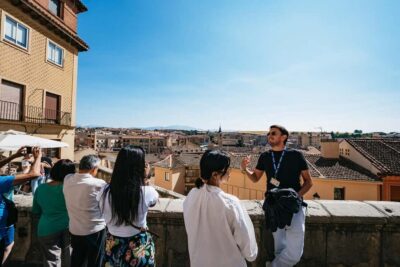
Here is why this stop works within a guided walking tour. The guide-led route helps you approach it with the right sightlines, instead of you guessing where the best angles are. You also get a better sense of why it was built there, on a rocky crag, and how the location supports the fortress feel.
Weather note: the Alcázar area can feel exposed depending on the day. If it is cold or windy, dress for it, because you are outside during key portions of the walk.
The part that makes or breaks the day: free time
After the guided stops, you get ample free time at the end to eat, explore, and sightsee. That free block is not just padding, it is the smartest part of the itinerary because it lets you follow your own priorities.
If you like food, treat this as your chance to slow down. You can choose a place near where you are already walking, instead of trying to coordinate a plan from scratch later.
If you like photos, use the free time to revisit angles from earlier. The aqueduct and castle areas are the kind of sights where the light can change how the stone reads, and a second pass can be worth it.
One small detail worth knowing from reviews: the cafeteria at the palace area served hot chocolate and Irish coffee that impressed at least one visitor, especially on a cold day. Even if you do not plan to sit long, it is the kind of stop that can make the day feel more comfortable.
Transportation and group size: 55 people max, and how that feels
This tour lists a maximum of 55 travelers, which is big enough to cover logistics, but usually small enough that you are not constantly being squeezed. You also get a bilingual English-Spanish official guide and air-conditioned vehicle.
The best tours are the ones where you do not lose time waiting around. In reviews, people praised smooth loading and a comfortable bus experience. That matters because when the group moves efficiently, your free time feels more valuable.
That said, group tours can still have friction if anything runs late. If your schedule is tight, keep that in mind and try not to stack another appointment right after you return to Madrid.
Price and value: what $51.20 actually buys you
At $51.20 per person, the value is in what is included, not just the sticker price. You get transportation to and from Madrid, an air-conditioned vehicle, and a bilingual official guide who covers the walking portions.
That matters because day trips can quietly get expensive once you add transit and guide costs separately. Here, the tour bundles the parts that are hardest to DIY efficiently, especially the guided time connecting you from stop to stop.
Also, the tour format is designed to reduce decision fatigue. You are not mapping your own route for four major stops plus a free period. You are also not relying on luck for timing, since the schedule is set with a 9:00 am start and a return to the same meeting point.
If you already plan to see Segovia on your own, this is still worth comparing because the included transport removes the hardest part: getting there and back reliably in one day.
Who this tour suits best
I think this fits best if you want the key Segovia sights in one go, without turning it into a long, stressful research project.
It is also a good match if you like guided structure for the big landmarks, but still want control later. The free time at the end is ideal for people who want to choose their own pace, wander side streets, or sit down for food without listening to a script.
If you are the type who loves extremely slow travel, you might want more time in each site than this tour gives. The design is highlight-focused, so you should plan to use free time to extend whatever you loved most.
Should you book this Segovia experience?
Book it if you want a straightforward day plan from Madrid that hits Segovia’s headline sights: the Roman aqueduct, Segovia Cathedral, the Church of St Stephen, and the Alcázar, with free time afterward to eat and explore.
Skip or think twice if your schedule is fragile. The one concern to respect is that late bus timing can shorten your time in Segovia, and the experience still needs to return to Madrid on schedule.
If your goal is a smart, cost-conscious Segovia highlight day with transport and guide included, this is a strong option. Just dress for outdoor walking, plan to make the free time count, and go in ready to see Roman, Gothic, and medieval all in one compact city.
FAQ
What’s included in the Segovia tour price?
The tour includes a bilingual English-Spanish official guide, an air-conditioned vehicle, and a bilingual English-Spanish guided walking tour around the city. Transportation to and from Madrid is included as well.
Where do I meet in Madrid?
You start at C. de San Bernardo, 5, Centro, 28013 Madrid, Spain. The tour also ends back at the same meeting point.
What time does the tour start?
The start time is 9:00 am.
How long is the tour?
The duration is listed as about 11 hours.
What stops are part of the guided portion?
The guided stops include the Roman aqueduct, Segovia Cathedral, the Church of St Stephen, and the Alcázar of Segovia.
Can I cancel for a full refund?
Yes, you can cancel for a full refund if you cancel up to 24 hours in advance of the experience start time, based on local time.
More Tour Reviews in Madrid




Aqueduct, cathedral and Alcázar



Fresh ways to see Madrid
- Tour to Toledo & Madrid CitySight Seeing Tour
- 2-Day Guided Tour to Cordoba and Seville from Madrid
- Private Transfer from Madrid Airport to Madrid Hotels
- Wine Tasting and Flamenco Master Class in Madrid
- Prado Museum and Royal Palace Private Tour in Madrid
- Monastery Royal Barefoot Visit with entrance without waiting for queues
More ways into Segovia & Alcazar Day Trips
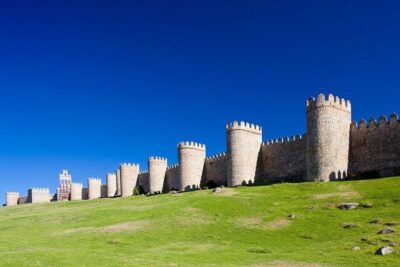 ★ 5.0Avila & Segovia Tour with Tickets to Monuments from MadridFrom $819,762 reviews
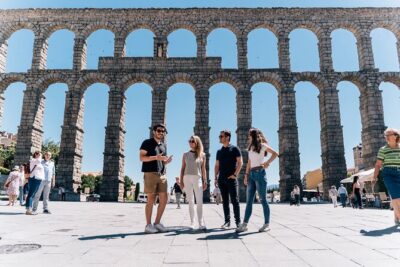 ★ 5.0Three Cities in One Day: Segovia, Avila and Toledo from MadridFrom $1268,402 reviews
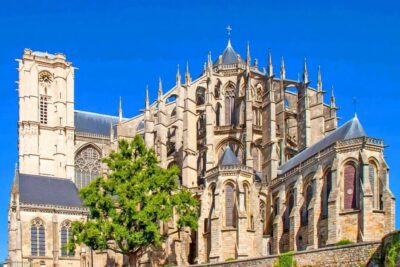 ★ 4.7Segovia and Toledo Tour, Alcazar, and CathedralFrom $487,797 reviews
 ★ 4.6Avila and Segovia Day Trip with Tickets to MonumentsFrom $744,568 reviews
 ★ 4.6Toledo & Segovia Full Day Guided Tour with AlcázarFrom $454,394 reviews
 ★ 4.5Avila with Walls and Segovia with Alcazar from MadridFrom $603,293 reviews
 ★ 4.3From Madrid: Segovia & Avila Day Trip with Optional TicketsFrom $592,161 reviews
 ★ 4.5Segovia and Toledo Day Tour from Madrid with Optional AlcazarFrom $771,745 reviews
Try another angle on the same itinerary