

REVIEW · PRADO MUSEUM GUIDED TOURS
Paisaje de la Luz: Prado Museum and Reina Sofia Museum
Art plus architecture in one go.
This tour pairs a guided walk through Paisaje de la Luz with two major museum visits, and I like that the group stays small (max seven) so the pacing feels human. You also get admission included to the Prado and Reina Sofía, which makes the plan feel straightforward. The main catch is the schedule is tight: you’ll spend about 90 minutes in each museum, so if you like to linger for a long time, you may want a slower add-on afterward.
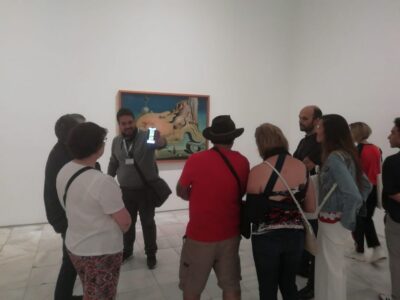
I also like that the guide frames what you’re seeing with Madrid’s cultural story, from the 16th century to today, rather than leaving you alone with museum labels. Inside the museums, audio guides help you catch the explanations clearly, so you’re not constantly fighting for your turn near the guide.
Key highlights you will feel right away

- Small group, up to 7 people means fewer crowds, more questions, and a better match for real conversation.
- Two world-class museums with admission included takes the guesswork out of planning.
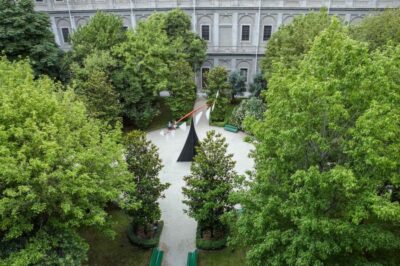
- Guided walk along Paisaje de la Luz gives you architectural context before the paintings start.
- Prado focus on classics like Velázquez and Goya, plus a guided close look at Las Meninas.
- Reina Sofía focus on Picasso’s Guernica and the symbols behind the most famous images in the museum.
- Audio guides inside museums help you hear the guide even when rooms get busy.
Stay on the Paseo del Arte with another Prado route
- Madrid: Prado Museum Entry Ticket★ 4.6 · 17,509 reviews
- Madrid: Small Group of Prado Museum Tour & Optional Tapas★ 4.6 · 2,437 reviews
- Madrid: Prado Museum Guided Tour with Skip-the-Line Ticket★ 4.5 · 2,018 reviews
- Madrid: Prado Museum Guided Tour With Fast Access★ 4.8 · 1,785 reviews
Paisaje de la Luz plus the Prado and Reina Sofía: why this combo makes sense
Madrid art trips can split into two moods: “museum mode” where you’re trapped indoors, or “city-walk mode” where you never get enough time for the big masterpieces. This tour does both, and it’s timed in a way that keeps you moving without feeling like a sprint.
The payoff is that you see Madrid in layers. You start with a guided stroll along Paisaje de la Luz, then you move into the Prado’s world of painting techniques and royal-era court life. Finally, Reina Sofía brings you to the 20th century with Picasso, where art isn’t just about beauty, it’s about shock, politics, and meaning you can argue about afterward.
The max-7 group size: how it changes the museum experience
In big museums, the difference between a good day and a frustrating day is often how you move through the crowd. With a maximum of seven travelers, you’re less likely to get swallowed by the flow of people. That matters because Prado and Reina Sofía are popular, and even with the included entry, you’ll still want a plan for where to look first.
This group size also helps the guide do what matters: explain. A tour like this works best when the guide can point you to specific works, give you a reason to notice certain details, and then let you connect the dots. When the group is small, you can actually follow the thread.
Walking Paisaje de la Luz: the 16th-century to today storytelling trick
The walking portion is not just a break between museums. It’s your setup. The guide introduces Madrid’s history and artistic/cultural evolution from the 16th century to today, and that context changes how the museum paintings land in your brain.
As you walk, you’re effectively training your eye for what you’ll see later: how architecture, power, and culture shape art. You also get to “feel” the city before stepping into the Prado’s carefully lit rooms. When you start with context, you spend your museum time looking at the right things, not just trying to keep up with where everyone else is going.
One practical note: you’ll be walking before the museum visits, and the tour ends at Reina Sofía in Centro. So it’s smart to travel with shoes you can stand in for stretches. You’re not climbing mountains, but the day does require comfort.
Continue from Guernica into the Reina Sofía collection
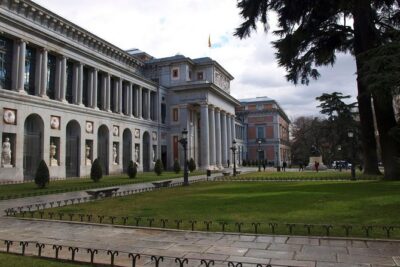
Inside the Prado in 90 minutes: what you will actually notice
The Prado is a serious museum. It opened in 1819, and it houses more than 7,000 paintings. The strategy of visiting for about 1 hour 30 minutes is not to see everything. It’s to learn how to see well, especially through the guide’s focus on major artists and key works.
Velázquez, Goya, and the way the guide teaches technique
The Prado stop centers on major names like Goya and Velázquez. The guide also highlights pictorial techniques, which is a big deal. If you’ve ever stood in a gallery thinking, I get it, it’s a masterpiece, but I’m not sure why, that kind of explanation helps. You start noticing how artists build scenes: light, composition, brushwork, and how figures relate to each other.
The tour also brings in the idea of customs and society from the past, which is what turns portraits and royal-era scenes from “old stuff” into believable human stories. You stop seeing paintings as museum objects and start reading them like documents.
Las Meninas: the perspective lesson that makes the room feel bigger
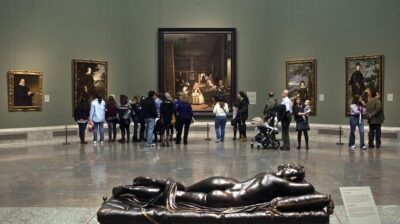
The Prado’s Las Meninas is famous for perspective, and this tour treats it like a guided puzzle. You’ll focus on characters, details, anecdotes, and the smaller “secrets” that you might miss when you’re walking past at normal museum speed.
This is where the small-group approach pays off. When you’re not fighting for space, you can actually pause, look, and let the guide’s explanation anchor what you’re seeing. Then, when you step away, the painting continues to make sense in your head instead of fading into a blur.
Northern Europe and Flemish Primitives, plus Van Dyck
You also get a chance to see the Prado’s range beyond Spanish masters. The tour includes attention to Northern European painting, including Flemish Primitives, and also mentions artists like Van Dyck. That mix is valuable because it reminds you the Prado isn’t only about one national style. It’s about how European art traveled, influenced itself, and evolved.
The downside to only 90 minutes is obvious: you won’t catch every room. But the upside is that you leave with a clearer understanding of how to “read” what you did see.
Reina Sofía in 90 minutes: Picasso’s Guernica and the symbols you can’t ignore
Reina Sofía is where the story shifts dramatically from 17th- and 18th-century painting into modern art that refuses to behave. This tour is designed around Picasso’s legacy, especially his masterpiece Guernica.
The tour frames the visit in part around Picasso’s impact and legacy, including the idea that his death was commemorated 50 years earlier. That helps set expectations: you’re not only viewing a painting, you’re confronting an artistic life that was intense, revolutionary, and constantly in dialogue with the real world.
Guernica: why this painting still causes arguments
Guernica is described as internationally recognized, and this tour specifically focuses on the secrets and symbols behind it. The guide also points to the process of making the work and the historical story connected to it.
Here’s why this stop is so effective for most people: you’re given a structured way to interpret something that many people find intimidating at first. The tour notes that interpretations create controversy and debate because different symbolic figures can trigger different readings. That doesn’t mean there’s no right answer. It means the painting is built to withstand easy conclusions.
What you should do during the visit
Don’t rush to get a final interpretation. Use your time to identify what the guide asks you to look for: recurring visual symbols, how figures are arranged, and how the overall composition communicates urgency. If you go in ready to argue with yourself, you’ll enjoy this stop more.
Also, expect that the tone in the Guernica area can feel serious. That’s normal. Let the emotional weight do part of the work, but still pay attention to the details the guide calls out.
Audio guides and hearing the guide: making sure you don’t miss the point
One of the best practical features here is that audio guides are included inside the museums. That matters because museum crowds are real. Even if the guide is speaking clearly, you can still lose half the explanation when other groups crowd your line of sight.
Audio guides let you stay oriented and focus on the works. You’ll get clearer explanations without constantly turning your head to find the guide. It also helps you keep your place if you drift a step to get a better view.
The tour also notes that it’s conducted in a single language. If you’re choosing this option, make sure the language works for you. It’s one of those small details that can quietly affect whether the experience feels smooth or frustrating.
Price and value: is $143.30 a fair deal for 4.5 hours?
At $143.30 per person for about 4 hours 30 minutes, this tour isn’t the cheapest way to spend a morning in Madrid. But you are paying for structure, time-saving planning, and two major museum entries.
Here’s how I think about the value:
- You get both Prado and Reina Sofía admissions included, which is a big part of the cost in any museum-focused day.
- You get guide-led context that helps you understand major works like Las Meninas and Guernica, not just see them from a distance.
- You get the small-group setup, plus audio guides so you can actually hear the explanations.
If you’re the type who wants to do museums “on your own,” you might spend less. But if you want the guided looking experience, especially at the Prado and Reina Sofía, the price starts to feel like paying for clarity and focus. In Madrid, the best museum days often come from knowing what to look for first, and this tour helps you do exactly that.
Practical logistics that help your day go smoothly
The tour starts at 10:00 am at the Museo Nacional del Prado area near Retiro, then ends at the Reina Sofía location in Centro.
A good way to set yourself up for success is to arrive a bit early and give yourself time to orient. Museum days are easier when you’re not rushing at the start. Since you’re moving from Prado to Reina Sofía after the first museum, consider carrying less. Big bags and clutter are a drag when you need your hands free for museum flow.
Also, the tour is near public transportation, which helps if you plan to take the metro or bus for the start. If you prefer walking between stops, this route is better suited to those comfortable with city walking.
Who this tour is best for, and who should think twice
This is a strong choice for you if:
- You want two top museums in one half-day plan.
- You care about learning what you’re seeing, especially details in famous works.
- You like a small-group pace rather than a large bus tour.
- You want the audio support so you can actually follow the guide inside crowded rooms.
You might want to think twice if:
- You know you need lots of time per painting and hate time limits. Ninety minutes inside the Prado and ninety minutes inside Reina Sofía means you’ll see less than you would alone.
- You prefer to move freely room to room without a structured route.
Should you book Paisaje de la Luz, Prado, and Reina Sofía?
I’d book it if your ideal Madrid morning looks like this: a short guided street walk for context, then two guided museum visits built around the biggest works that people remember for a reason. The combo of admission included, audio guides, and max seven people makes it a practical choice for your time.
If you’re on the fence, here’s the quick test. Ask yourself whether you want the guide to tell you what to notice in Las Meninas and Guernica. If yes, this tour is a smart use of 4.5 hours. If you’d rather spend the whole day wandering, you may get more satisfaction from a slower self-guided approach.
FAQ
What are the tour length and start time?
The tour runs for about 4 hours 30 minutes and starts at 10:00 am.
Where does the tour begin and end?
It begins at the Museo Nacional del Prado, Retiro (28014 Madrid) and ends at Museo Nacional Centro de Arte Reina Sofía, C. de Sta. Isabel 52 (28012 Madrid).
Are museum tickets included?
Yes. Admission tickets are included for both the Prado Museum and the Reina Sofía Museum.
How big is the group?
This is a small-group experience with a maximum of 7 travelers.
Will I be able to hear the guide inside the museums?
Audio guides are included to help you clearly hear the guide’s explanations inside the museums.
What is included during the walking portion?
You get a guided walking tour along the area known as Paisaje de la Luz, with the guide sharing Madrid’s cultural history from the 16th century to today.
More Tour Reviews in Madrid


Modern Madrid at the Reina Sofía
The Prado, room by room


Fresh ways to see Madrid
- Tour to Toledo & Madrid CitySight Seeing Tour
- 2-Day Guided Tour to Cordoba and Seville from Madrid
- Private Transfer from Madrid Airport to Madrid Hotels
- Wine Tasting and Flamenco Master Class in Madrid
- Prado Museum and Royal Palace Private Tour in Madrid
- Monastery Royal Barefoot Visit with entrance without waiting for queues
More ways into Prado Museum Guided Tours
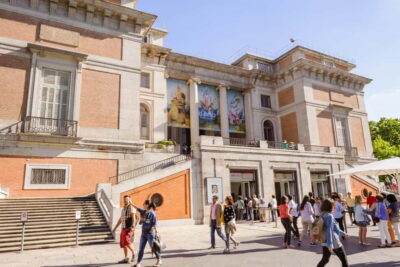 ★ 4.6Prado Museum Entry TicketFrom $2117,509 reviews
 ★ 4.6Small Group of Prado Museum Tour & Optional TapasFrom $532,437 reviews
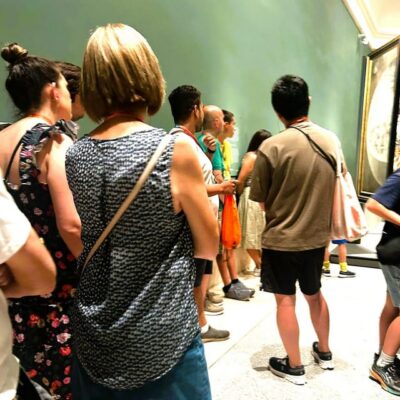 ★ 4.5Prado Museum Guided Tour with Skip-the-Line TicketFrom $462,018 reviews
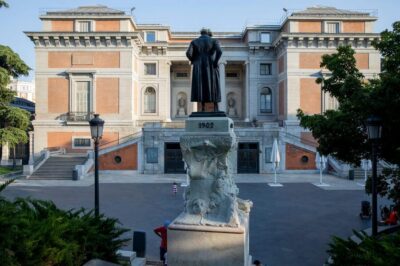 ★ 4.8Prado Museum Guided Tour With Fast AccessFrom $281,785 reviews
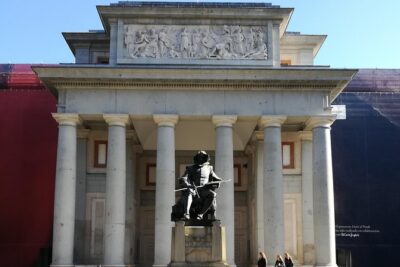 ★ 5.0Prado Museum Small Group Tour with Skip the Line TicketFrom $541,738 reviews
 ★ 4.5Royal Palace & Prado Museum Skip the Line Guided TourFrom $821,347 reviews
 ★ 3.6Prado Museum Ticket with In-App Audio GuideFrom $351,154 reviews
 ★ 4.5Prado Museum Guided Tour with Skip-the-Line TicketFrom $451,146 reviews
Try another angle on the same itinerary