

REVIEW · PRADO MUSEUM GUIDED TOURS
Museo del Prado: visita privada con experto en arte
This is the Prado, but with the right map. You get a private art specialist guide who steers you through European art from the 12th to the 19th century, and you can shape the pace around what you actually care about. I particularly like the custom attention you get in a 2 hour format, plus the way the guide points out the small choices in paintings that change what the work means.
One thing to consider: at 2 hours, you will not see everything. You have to pick your priorities, and the magic is in focusing on a smarter slice of the museum rather than trying to outrun 700 years of masterpieces.
Key things to know before you go

- Private, interest-based route that adjusts on the spot to your questions and comfort level
- Expert interpretation of symbolism, history, and technique, not just a basic tour script
- Skip-the-ticket-line entry and use of the fastest museum entrance for smaller groups
- Focus on European art evolution from the 1100s to the 1800s
- Quality of the experience reflected in guides like Amanda, Ismael, and Enrique, praised for making details click
Stay on the Paseo del Arte with another Prado route
- Madrid: Prado Museum Entry Ticket★ 4.6 · 17,509 reviews
- Madrid: Small Group of Prado Museum Tour & Optional Tapas★ 4.6 · 2,437 reviews
- Madrid: Prado Museum Guided Tour with Skip-the-Line Ticket★ 4.5 · 2,018 reviews
- Madrid: Prado Museum Guided Tour With Fast Access★ 4.8 · 1,785 reviews
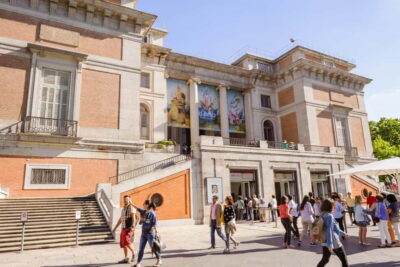
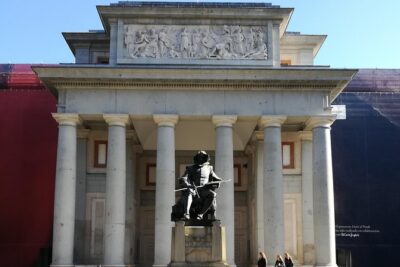
Meeting at the Prado’s Paisaje de la Luz, right by Monumento a Goya

You start at the Prado area known as Paisaje de la Luz, a UNESCO site created by Carlos III to bring artistic, scientific, and natural learning within reach of ordinary people. It is a good mood setter because it frames the museum as more than a building of old stuff. It is part of Madrid’s idea of public education.
The meeting point is usually out front, at Monumento a Goya, near the ticket booths. That matters because it keeps you from doing the first 20 minutes of the day wandering and guessing where the tour starts. If your option lists a slightly different meeting point, follow the details for your booking, but the area will be the same general Prado frontage.
Practical tip: arrive a few minutes early so you can settle in and start your visit on time. In a museum like the Prado, that first rush to find the entrance and gather your bearings can steal energy you would rather spend inside.
A private 2 hour art lesson that adjusts to your pace
The core of this experience is simple: it is private. That changes everything. When you are not in a crowded group, you can ask the “wait, why did they do that?” questions without worrying the whole line behind you will get frustrated.
You also control how interactive you want it to be. If you want lots of back-and-forth, you can do that. If you want a more flowing narrative with occasional questions, you can do that too. Either way, the guide adapts. This is especially helpful at the Prado because the museum is dense, and it is easy to get lost in your own head.
The language options are Spanish and English, so you can choose the level of art context that best fits you. Also, if your group stays under 7 people, the plan aims to avoid long waits that bigger groups can face. That does not mean you skip every line forever, but it usually keeps the start of your museum time from wasting away.
One more practical point: the tour includes time inside and then you can keep exploring after. That means 2 hours is not your hard ceiling. It is your guided start, and then you decide how to continue.
The Prado story your guide tells, from 1100s to 1800s

This is not a random highlights tour. The guide’s job is to walk you through the evolution of European art from the 12th to the 19th century. That timeline is the backbone, and everything else is built around it.
In a normal self-guided visit, you might stand in front of a painting, think, this is beautiful, and then move on. Here, the guide tries to give you the “why.” Why does the style shift? Why do symbols show up the way they do? How do artists respond to earlier traditions and also break them?
This kind of structure helps you connect artists that might feel disconnected when you see them one by one. The museum has major names spanning centuries, and a good guide turns that parade into a story. You get the sense of progress, tension, and influence across time.
The tour also works well if you are not an art-history expert. The art in the Prado can look intimidating because it is so old and so famous. The guide’s job is to translate that intimidation into clarity, using specific details in the works rather than big vague statements.


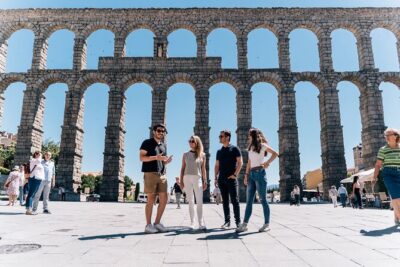


Where the best time-saving really happens: fastest entry, then real looking
A big selling point here is skip the ticket line. In Madrid, that can save a surprising amount of stress, especially when you arrive near peak hours.
After meeting, the plan uses the fastest entry route based on group size. That sounds like a small operational detail, but it is one of those behind-the-scenes things that makes your guided time feel smoother. Less waiting outside means more time actually looking, reading, and asking questions inside the galleries.
Once you are in, expect a guided flow that keeps you moving at a pace designed for understanding. You will not spend the whole 2 hours sprinting across rooms. The goal is to build connections between works, and that takes time.
Also, do not underestimate how much the Prado benefits from looking slower. The museum is crowded with what you could call “hidden knowledge”: symbolism, composition choices, and technique cues. When you are rushed, you miss those. When you have an expert guide, you notice them because someone points you toward what to see.
From El Bosco to Goya: what you learn when someone points at the details
The Prado spans centuries, and it includes major figures like El Bosco, Durero, El Greco, Rubens, Tiziano, Tintoretto, Velázquez, and Goya. Those names can make you think this tour is only about star power. In practice, it is about how those stars got to be stars, and what their works are doing beyond the surface.
One of the most praised parts of the experience is the way guides connect the dots inside the art. For example, Amanda has been highlighted for pointing out details people might miss on their own, plus for explaining history and symbolism. Ismael has been praised for doing a strong job choosing highlights within limited time, while Ismael’s style is described as making the museum feel manageable instead of overwhelming. Enrique has been noted for being entertaining and fun, including for families and kids.
Even without focusing on specific painting titles, you can expect your guide to help you “read” what you are seeing. That might include how religious and myth scenes are staged, how power and personality show up in portraiture, or how brushwork and lighting help tell the story. The tour leans into the secrets within the works, not just the label text.
A practical way to get more value: come with a short list of what you like.
- If you love faces and personality, tell the guide.
- If you like stories and symbolism, tell the guide.
- If you are interested in technique, tell the guide.
Then the route can tilt toward what matches you.
Skipping ahead to your interests: how the guide personalizes the route
This is where the private format earns its keep. The guide can adjust depth and emphasis. If you have kids, you can ask for a kid-friendly pace and more approachable explanations. One review specifically mentions a visit adapted well for children, which is a strong signal that the guide knows how to translate art without talking down.
If you are more into art history, you can go deeper into context and comparisons across periods. If you are more casual, you can keep it simple and focus on what grabs you in the moment.
The tour is also designed around how you move. You can see works at your own rhythm, with as much back-and-forth as you want. That matters because the Prado is huge in terms of experience, even if your time is only 2 hours.
If you are trying to do other things in Madrid the same day, personalization helps. You are not stuck on a rigid list that ignores your schedule or your interests.
After the guide: stay and explore on your own (if your group is small)

When the guided portion ends, you can keep exploring. There is an extra perk for groups of 7 people or less: the provider will share recommendations so you know where to go next.
This is a smart addition. The Prado is one of those museums where self-guided exploring can turn into wandering, unless you have a simple plan. Recommendations can help you aim your remaining time at the kind of works you care about, rather than trying to guess from a map.
So think of this tour as your “best version” of starting the Prado. You get orientation and interpretation from a specialist, then you use what you learned to guide your own choices.
Price and value: what $136 per person buys you

At around $136 per person for a 2 hour private visit, the value depends on how you like to travel.
If you enjoy art and you want context that goes beyond quick label reading, this can be a good use of money. You are paying for three big things:
- A specialist guide who focuses on what the art is doing and why
- Personalization so time does not get wasted on irrelevant stops
- Friction reduction, including skip-the-ticket-line entry and faster routing for smaller groups
If you are the type who enjoys museums solo and you like reading at your own pace, you might feel the price is steep. Also, if you try to see everything in 2 hours, you will feel constrained. This tour is about choosing a meaningful slice and understanding it well.
My advice: if you are spending time in Madrid anyway, and the Prado is a top priority, a guided 2 hours can turn a daunting museum into a clear learning experience. If you are only loosely interested, consider saving money and doing self-guided.
Who this Prado private visit suits best
This tour is a strong fit if you want:
- A focused timeline for European art from the 1100s to the 1800s
- More meaning from paintings, especially through symbolism and historical context
- A guide who can adapt the pace and depth to your group
- A smoother museum entry thanks to skip-the-ticket-line handling
It also works well for families in a way that feels respectful. One review notes it being perfectly adapted for children. And since the museum is wheelchair accessible and the tour notes support for baby cars, this is also a practical option for travelers managing mobility needs.
If your group includes people with different interests, the private format helps you avoid a compromise route that satisfies no one.
Should you book this private Prado art tour?
If the Prado is high on your list, I think booking makes sense, especially for your first visit to the museum. You get a guided story through centuries, plus guidance on what to notice so the art sticks with you after you leave.
Choose it if you want:
- Personal attention and the chance to ask questions
- A smarter way to spend limited time
- A specialist who can explain details and context, not just point and name
Skip it only if you are mainly in a “walk and browse” mood, or if you already know exactly what galleries and artists you want to tackle without help. Otherwise, this is a very practical way to get more meaning per minute at one of Europe’s biggest art draws.
FAQ
How long is the Museo del Prado private tour?
The duration is 2 hours.
What is the meeting point for the tour?
The guide waits at the chosen time in front of the Monumento a Goya, in front of the Prado ticket booths. The exact meeting point may vary depending on the option booked.
What does the tour cover?
It focuses on the evolution of European art from the 12th century to the 19th century, with explanations that connect context, authors, and details in the artworks.
Does the tour include skip-the-line entry?
Yes. It includes skipping the ticket line.
What languages are available?
The live guide is available in Spanish and English.
Is this tour private?
Yes, it is a private group experience.
Can we stay in the museum after the guided part?
Yes, you can stay after the tour if you wish, and the recommendation support applies for groups of 7 people or less.
Is transport included?
No, transport is not included.
Is the museum accessible for wheelchair users?
The museum is wheelchair accessible, and baby cars are supported as well.
More Tour Reviews in Madrid



The Prado, room by room


Fresh ways to see Madrid
- Tour to Toledo & Madrid CitySight Seeing Tour
- 2-Day Guided Tour to Cordoba and Seville from Madrid
- Private Transfer from Madrid Airport to Madrid Hotels
- Wine Tasting and Flamenco Master Class in Madrid
- Prado Museum and Royal Palace Private Tour in Madrid
- Monastery Royal Barefoot Visit with entrance without waiting for queues
More ways into Prado Museum Guided Tours
 ★ 4.6Prado Museum Entry TicketFrom $2117,509 reviews
 ★ 4.6Small Group of Prado Museum Tour & Optional TapasFrom $532,437 reviews
 ★ 4.5Prado Museum Guided Tour with Skip-the-Line TicketFrom $462,018 reviews
 ★ 4.8Prado Museum Guided Tour With Fast AccessFrom $281,785 reviews
 ★ 5.0Prado Museum Small Group Tour with Skip the Line TicketFrom $541,738 reviews
 ★ 4.5Royal Palace & Prado Museum Skip the Line Guided TourFrom $821,347 reviews
 ★ 3.6Prado Museum Ticket with In-App Audio GuideFrom $351,154 reviews
 ★ 4.5Prado Museum Guided Tour with Skip-the-Line TicketFrom $451,146 reviews
Try another angle on the same itinerary