

REVIEW · PHOTOGRAPHY SESSIONS
Mapfre Foundation Madrid – Photography Exhibitions
Photography here feels like time travel. Fundación MAPFRE turns Madrid into a gallery you can actually plan around: you get photography alongside painting and sketches, and the museum’s temporary exhibitions are big enough to feel like their own mini-trip. I especially like that the experience is built for independent looking, with a free audio guide in English and Spanish so you can move at your own speed.
The only real catch is practical. The audio guide works through QR codes, headphones are required, and you’ll need either mobile data or the venue’s free Wi-Fi to get the most from it. (Not hard, just one more step before you settle in.)
Key points to know before you go

- Two major temporary shows run through May 17, 2026: Anders Zorn and Helen Levitt.
- Audio guide in English and Spanish is included via QR code, plus free Wi-Fi if you lack data.
- Headphones are required, so bring your own if you can, or plan for a quick purchase (€1).
- You also get an art background display covering late-19th century to mid-20th century works.
- It is wheelchair accessible, so plan to go at a pace that works for you.
- Expect a mix of documentary and artistic photography, not just one style or one era.
Put the capital in the frame
- IKONO: a Unique Sensory and Photographic Experience★ 4.5 · 1,916 reviews
- Photographic tour of Madrid with a professional photographer★ 5.0 · 104 reviews
- Madrid: Private Photoshoot at the Retiro Park★ 4.9 · 76 reviews
- Photoshoot in Madrid★ 5.0 · 44 reviews
Fundación MAPFRE in Madrid: a smart stop for photography and art

Fundación MAPFRE is one of those places where “photography exhibitions” is only half the story. Yes, you’re there for visual art and photography, but the museum also builds context with works of painting and sketches. That matters, because it helps you see photography as part of a bigger visual conversation, not an isolated genre.
The big-picture range is late-19th century through mid-20th century. So while one room might feel like it belongs to the early modern art world, another might turn toward street life, faces, and everyday gestures. The museum’s layout also supports dipping in and out. You can do a focused route for the temporary exhibitions, then slow down for the permanent displays.
And this is where you get value. The standard ticket includes an audio guide, so you’re not left guessing what you’re looking at. For $5, it is an efficient way to see serious exhibitions without turning it into an all-day class.
Anders Zorn, Traveling the World, Remembering the Land (until May 17, 2026)
If you like artists with a clear life arc, Anders Zorn is a great match. This temporary exhibition traces his career from early watercolors through major European stops and into the United States, then back to everyday Swedish life.
A few things make this show especially worth your time:
- Zorn is presented as a major portraitist, famous for painting celebrities and for being sought out by power, including kings and presidents.
- The exhibition highlights his range in oil, watercolor, and printmaking. You’re not just seeing one technique, you’re watching skill evolve.
- You get Zorn’s celebrated nudes, which are part of his public reputation and also a good test of how the museum frames intimacy versus artistry.
The storyline you’ll follow, even if you only skim the labels, goes something like this:
- Early watercolors and a period in England
- Paris, where his reputation becomes more solid under the influence of Impressionism
- Travels to the United States
- A return to Mora, focused on everyday Swedish life rather than only high-profile commissions
- Spanish works, plus his artistic connection with Joaquín Sorolla
What I’d do when you’re walking through: don’t rush the early rooms. Zorn’s watercolors and prints can be easy to overlook if you sprint. Instead, slow down when the exhibition switches mediums. In printmaking, for example, the line and layering can feel like the rhythm of his travels, not just decoration.
Also, if you notice how the museum threads together portraits, landscapes, and figures, that’s the point. Zorn isn’t shown as one “type of painting” guy. He’s shown as a working artist who learned by moving.
Helen Levitt and the poetry of city street photography

Helen Levitt’s exhibition is the other major temporary show, and it’s a strong counterweight to Zorn’s more famous art-world path. Levitt focused on the streets of New York, starting at the end of the 1930s and building a body of work that lasts more than seven decades.
This show is designed to make you feel how a street photographer can be both personal and social. Her images capture:
- children at play
- everyday gestures and small moments
- scenes from working-class neighborhoods
- a vision that feels poetic, but also socially committed
The exhibition brings together nearly two hundred works across nine sections. That structure is important. It means you’re not seeing a random scatter of photos. You’re seeing a career organized into themes and phases, from early photographs to later, more cinematic explorations.
Practical tip: when you enter, pick one section to start with and give it your full attention for 10 to 15 minutes. The temptation is to scan everything quickly because there are so many images. But Levitt’s power is in repetition of feeling. You’ll learn more by staying with one slice of her New York than by trying to cover the whole show in one pass.
Also, this is a good exhibition if you like urban documentary photography but hate the feeling of doom. The scenes are grounded in daily life. Even when the social layer is there, the images don’t feel like a lecture. They feel like watching someone notice.
Another Madrid route worth weighing up

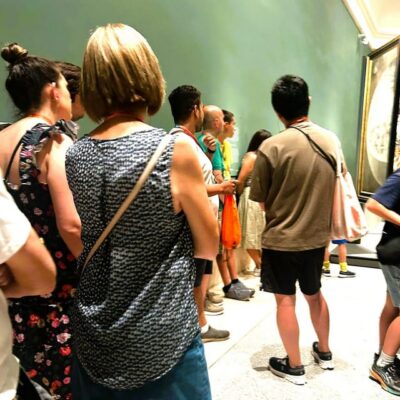

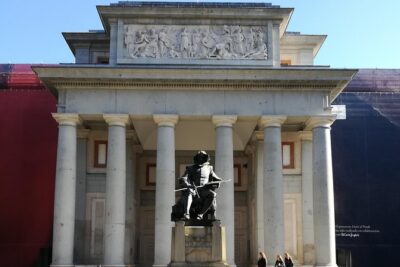

The art background: painting, sketches, and the photo context you can feel
Beyond the two temporary headline exhibitions, the museum includes an art background display focused on late-19th century to mid-20th century works. You’ll see painting, photography, and sketches, and the mix helps you place what you just saw in the temporary galleries.
Why this matters: photography can sometimes get treated like a standalone miracle. But the museum’s approach nudges you to connect styles and themes across mediums. In plain terms, it helps you answer questions like: Where do the visual ideas come from? How does a way of seeing travel from sketch to painting to photograph?
One note from my perspective as a practical art fan: the show can also reward the people who like weird details. In one of the rooms, I can see how a Leonora Carrington-focused display could catch your attention. The way multiple works are presented together can create that surreal, storybook feeling, and for some viewers it even brings to mind El Bosco’s Garden of Delights. If you enjoy art that feels like a vivid dream, make time for the rooms that look slightly less obvious than the biggest photo walls.
Even if Carrington is not your main target, the permanent displays are still useful. They give you contrast. After Zorn’s travels and Levitt’s streets, the broader timeframe helps everything click.
Audio guide and headphones: small rules that change your whole experience
This is where your visit either stays smooth or turns mildly annoying. The standard ticket includes a free audio guide in English and Spanish. You access it through a QR code available in the rooms.
Important practical part: you need a mobile device with an active mobile internet connection. If you don’t have data, you can connect to the free Wi-Fi network in the space. So if your phone often struggles with indoor Wi-Fi, test it before you start your route.
Headphones are required to avoid disturbing other visitors. The museum recommends you bring your own headphones. If you don’t, you can buy them at the ticket counter for €1, jack type. The only drawback here is human nature: if the counter line is long, you might wait a bit before you can press play.
Humor aside, this is worth preparing for. Once you have headphones working, the audio guide becomes the best kind of companion. It is not intrusive. It helps you connect the dots, especially in the Zorn show where the career timeline matters.
A realistic 1-day plan for both shows and the permanent galleries
You have 1 day. That’s plenty, if you don’t try to sprint through everything.
Here’s a sensible way to structure your time:
- Start with one temporary exhibition, give it your full focus, then switch to the second temporary show.
- Save the art background display for after the two headline galleries, so you can use it as your connective tissue.
Order idea #1: Zorn first, then Levitt
Zorn can feel like a structured narrative. If you start there, you build an understanding of artistic identity and technique. Then Levitt shifts you to street life and human moments, which can feel like emotional relief.
Order idea #2: Levitt first, then Zorn
If you already know you’ll spend more time with photography, start with Levitt. Then let Zorn finish the day with career arc and craft.
Either way, you’ll do best if you build in pauses. In both temporary exhibitions, the labels and audio explain context, but the real payoff comes when you stop long enough to compare images. With Levitt, watch for recurring gestures and compositions. With Zorn, compare mediums and subject matter across rooms.
Also, keep your expectations flexible. The museum experience is about visual attention, not speed. If you’re the type who likes to read every label, you’ll naturally slow down. If you’re more of a “stand back and take it in” person, you’ll still get a lot from the audio guide.
Price and value: $5 for major exhibitions is hard to beat
The ticket price is listed at $5 per person, and the standard ticket includes the audio guide. For that money, you’re buying two major temporary exhibitions plus the museum’s permanent art context displays.
That is the core value: you get more than one “thing to see.” Zorn and Levitt alone would often cost more if they were separate ticketed experiences. Here, they sit in the same place, and the audio guide helps connect them.
One thing to watch, based on real feedback: a small number of people have complained about being charged when they believed entry should be free. That tells me to be careful and read your confirmation details before you arrive. If you’re traveling with another person or using a voucher, double-check what that voucher covers. It is a quick check that can save you stress.
If you’re comparing value, also note the museum requires headphones. That cost can stay tiny if you bring your own. If you don’t, the museum sells headphones for €1 jack type. Plan for that small purchase so your first room doesn’t turn into an impromptu detour.
And yes, the overall rating is modest, around 3.3 out of 5 based on a small set of reviews. The pattern isn’t about the art quality. It is more about ticket expectations and the practicalities of entry and equipment.
Who this is best for, and who might find it frustrating

This is a strong fit for you if you:
- want photography exhibitions in Madrid that include real context, not just framed prints
- like career narratives, especially with Anders Zorn’s timeline of travels and techniques
- enjoy street photography and documentary style, especially Helen Levitt’s New York themes
- want an affordable art day with an audio guide included
You might find it less satisfying if:
- you hate QR-code audio systems and don’t want to deal with mobile internet or Wi-Fi
- you dislike wearing headphones in quiet indoor spaces
- you’re expecting a traditional guided tour format (the included help is the audio guide, not a live guide)
If you’re going with family, the Levitt show can be a natural crowd-pleaser because it centers on children and daily gestures. Just remember: headphones are required, so plan accordingly.
And if you have mobility needs, the site is wheelchair accessible, so you can plan your route with more confidence.
Should you book this MAPFRE Foundation photography visit?
If your dates overlap with the temporary exhibitions, I’d say yes, book it. Anders Zorn’s career arc and Helen Levitt’s New York street vision are both substantial enough to justify your time in Madrid. The best reason is simple: for $5, you get two major shows plus an included audio guide that makes the experience easier to follow.
Skip or think twice only if you know you’ll be uncomfortable with QR audio and headphone requirements, or if you arrive assuming entry works like a different ticket type. Do a quick check of your confirmation, bring headphones if you can, and plan to slow down once you get inside.
If you want a day that feels artsy but still doable, this is a solid choice. You’ll come out seeing photography as part of a bigger visual world, not just a single style of images.
FAQ
Where is Fundación MAPFRE located?
It is in the Community of Madrid, Spain.
How much does a ticket cost?
The price is listed as $5 per person.
How long is the experience?
It is valid for 1 day.
What temporary exhibitions are on during your visit?
Two temporary exhibitions are available until May 17, 2026: Anders Zorn, Traveling the World, Remembering the Land, and Helen Levitt.
Is an audio guide included, and what languages are available?
Yes. A free audio guide is included in English and Spanish, accessed via a QR code in the rooms.
Do I need mobile data for the audio guide?
You need a mobile device with active mobile internet connection to access the audio guide. If you do not have data, you can connect to the free Wi-Fi network available in the space.
Are headphones required?
Yes. Headphones are required to avoid disturbing other visitors. The museum recommends bringing your own, or you can purchase them for €1 (jack type) at the ticket counter.
Where do I exchange my voucher?
You exchange your voucher at the ticket desk.
Is this experience wheelchair accessible?
Yes, it is wheelchair accessible.
More Museums in Madrid

More Tour Reviews in Madrid
Madrid through the lens



Fresh ways to see Madrid
- Tour to Toledo & Madrid CitySight Seeing Tour
- 2-Day Guided Tour to Cordoba and Seville from Madrid
- Private Transfer from Madrid Airport to Madrid Hotels
- Wine Tasting and Flamenco Master Class in Madrid
- Prado Museum and Royal Palace Private Tour in Madrid
- Monastery Royal Barefoot Visit with entrance without waiting for queues
More ways into Photography Sessions
 ★ 5.0Photographic tour of Madrid with a professional photographerFrom $108104 reviews
 ★ 4.9Private Photoshoot at the Retiro ParkFrom $7776 reviews
 ★ 5.0Photoshoot in MadridFrom $24044 reviews
 ★ 5.0Vacation photographer. Madrid Photo Shoot. Take home more than just a selfie!From $16740 reviews
 ★ 5.0Madrid Private PhotoshootFrom $13636 reviews
 ★ 5.0Private Vacation Photoshoot with Photographer in MadridFrom $14229 reviews
 ★ 5.0Private Photography Tour of MadridFrom $19227 reviews
 ★ 4.3Exclusive Photo Tour Madrid ⭐️From $8523 reviews
Try another angle on the same itinerary