

REVIEW · WALKING TOURS
Essential Madrid: Walking Tour
Ninety minutes, and Madrid hits fast. This Essential Madrid walk strings together the Royal Palace area with major city center icons like Puerta del Sol and Plaza Mayor, all explained by a professional guide using provided headsets. I also like the tight, stop-by-stop structure that keeps you oriented on foot, but the main drawback is that start details have been known to shift, so you’ll want to re-check where and when to meet right before you go.
The route ends near the Prado zone, which is handy if you want to keep exploring after your walk. You also get a mobile ticket and a max group size of 30, so you are not stuck in a huge stampede around the highlights.
It is a fast tour, with many stops that are each timed around 10 minutes, so you cannot linger for long photos or deep reading at every corner. If you prefer slow museum-style pacing, you might find this one a little too brisk, but if you want a solid overview of classic Madrid sights, it can do the job.
Key highlights worth planning around

- Headsets included so the guide stays audible as you move between crowded squares
- A concentrated Royal Palace finish that sets you up for future exploring nearby
- 11 major stops ranging from art landmarks to politics to the romantic-era squares
- Exterior sightseeing for free-access areas, with some stops that may require tickets on your own
- About 10 minutes per stop, meaning you get context, not extended time at any single spot
- Central start and Prado-area end, useful for chaining this into your day
Another Madrid route worth weighing up
- Toledo Tour & Vineyard Walk with Wine Tasting from Madrid★ 5.0 · 2,546 reviews
- Madrid Walking Tour from Puerta del Sol to Retiro Park★ 5.0 · 2,285 reviews
- Madrid Old Town & Royal Palace Walking Tour Skip the Line Ticket★ 4.5 · 1,829 reviews
- Madrid: Spanish Inquisition and Legends Evening Walking Tour★ 4.7 · 1,396 reviews
The big idea: a classic-Madrid walk you can actually finish
This is built for people who want a quick, orderly introduction to Madrid. In about 1 hour 30 minutes, you move through a well-chosen sequence of places that represent different sides of the city: art, royal power, government, literature, and the lively squares where everyday Madrid life plays out.
The tour is led in English and kept manageable with a cap of 30 travelers. That matters, because the stops are outdoors and the “walking-between-sights” time adds up fast. When the group stays together, headsets and a clear pace make a big difference.
One practical plus: the tour’s ending point is near the Museo Nacional del Prado area (Retiro). After the final guided stop, you are already in the right neighborhood to turn this into a longer day without backtracking across town.
Start at Goya and get your bearings quickly

Your walk kicks off at Estatua de Francisco de Goya, where the guide organizes the group and hands out (or activates) your listening devices. This is a smart opener because Goya connects art and Madrid identity immediately, and it helps you get set for what the rest of the tour is trying to do: translate landmarks into stories you can remember.
Plan to arrive a few minutes early at the stated meeting location: Monumento a San Pedro Palacio, Centro (28013 Madrid). If you show up right on time, you may still be waiting for the group to assemble and receive the headsets.
From here, you leave the “first stop nerves” behind and start moving into the central monuments. If you want the most value from the walking part, this is where you should pay attention and get comfortable with the guide’s style of explanations.
Neptune fountain at Cánovas: where major streets intersect
Next up is the Fuente de Neptuno in the middle of Cánovas del Castillo square. It is one of those Madrid spots that feels like a hub: you have important buildings around you and an obvious sense of “this is a key crossroads.”
This stop is short, about 10 minutes, but it is useful for two reasons. First, you learn how to read the city layout. Second, the guide points out why this fountain belongs in an “essential” walk, not just as a pretty photo.
If you are traveling with someone who wants architecture and symbolism, this is a good meeting point for the “look but also understand” angle of the tour.



Paseo del Prado: a stroll lined with big-name culture
Then you walk along Paseo del Prado, described as a garden-rich avenue with vegetation, monuments, and major buildings. This is also where the Prado National Museum is located.
Even if you do not enter any museum on this specific tour, Paseo del Prado is still valuable because it shows you the cultural spine of Madrid. You are not just seeing one building. You are learning how the city organizes arts institutions along an elegant corridor.
This stop is marked as admission free, which fits the outdoor nature of the experience. You should use this stretch to enjoy the longer sidewalk views, and if you like to take photos, this is one of the better places to do it quickly without feeling like you are interrupting the group too much.
Congreso de los Diputados: where politics becomes a landmark
Your next landmark is the Congress of Deputies building (Congreso de los Diputados), headquarters of one of Spain’s two chambers. This stop is more than a “cool exterior.” It is a reminder that Madrid is not only about palaces and museums. It also runs on decisions made inside serious government spaces.
Like the other timed stops, you should treat this as a context stop. You get the story and the visual reference, then you move on. If you want a long interior visit, you will need to do that separately.
If you care about modern Spain and how power is housed in architecture, this is one of the more interesting pauses in the route.
Cervantes house and Santa Ana: literature and romantic Madrid

Next you visit Casa de Cervantes, the place where Miguel de Cervantes lived and died. This kind of stop is often where a walking tour earns its keep, because it connects a famous name to a specific location in the city.
Then you continue to Plaza de Santa Ana, where you hear histories and legends associated with the romantic period of Madrid. This is where the walk shifts from “official landmarks” to mood and cultural identity.
Two things to know for these stops:
1) You are getting short interpretive comments, not a full deep-dive into every chapter of Madrilene literature and theater.
2) The area around Santa Ana is lively, so it can feel a bit busier than the more formal monumental spots.
If you enjoy learning how writers and eras shaped the streets you walk, you will probably appreciate this pair.
Puerta del Sol and Plaza Mayor: the heart of the center

You will pass through Puerta del Sol, known for the statue of the bear and the arbutus, plus the clock used for the end-of-year chimes. That combo gives you a sense of why Sol is Madrid’s daily gathering point, not just a tourist photo stop.
Then the tour moves to Plaza Mayor, described as the heart of the Austrias neighborhood. Plaza Mayor is one of those spaces where you immediately feel why cities build iconic squares. It is big enough to hold crowds, but still close enough to keep an intimate “people watching” feel.
This part of the route is timed as quick stops with free-access sightseeing. That means the tour works best if you treat these squares as checkpoints: you get the meaning, you snap the essential photos, and you keep moving to the next corner.
Plaza de la Villa and Almudena Cathedral: old streets meet big faith

From there, you head toward Plaza de la Villa, positioned as the center of the Medieval period of the city. This is where the walk tends to feel more old-Madrid. The streets become narrower, the scenery gets more “corner of the city” and less “main boulevard.”
Right after that, you see Catedral de Sta Maria la Real de la Almudena, described as the most important religious building in Madrid. This is a strong visual moment late in the route because you are no longer only looking at plazas and civic buildings. You are looking up at a major landmark tied to the city’s identity.
If you are someone who likes transitions, this segment is a good one. It moves you from medieval center energy into a monumental religious stop before you reach the palace.
The Royal Palace finish: your best pay-off, if time stays on track
The tour ends at the Royal Palace of Madrid, called the largest in Western Europe. This is the biggest visual finish of the whole walk, and it is also the right place to stop because the area around it is naturally “built to explore next.”
A key practical point: admission is marked as not included for the Royal Palace. So you can enjoy the exterior and the setting with your guide, then decide on your own whether to buy a palace ticket later.
Because your guided time at the final stop is still brief, you should think of this as an arrival, not an entire palace visit. If you want to go inside, plan a follow-up time buffer rather than assuming you will have everything handled in the tour duration.
Price and value: what $17.87 gets you in Madrid
At $17.87 per person for about 1 hour 30 minutes, you are paying for a guide plus a structured route that includes headsets. The real value here is not any single building. It is the logic of visiting many top landmarks in a way that keeps you from wasting half a day figuring out what to see and in what order.
You should also weigh the trade-offs. Many stops are marked as admission-free, but several are not included. That means your total day cost depends on what you decide to enter on your own after the tour.
Still, for the combination of guide time, headset convenience, and a route that ends near the Prado area, I think the price is reasonable if you stay flexible and you are okay with quick stops.
Timing reality: when 10 minutes per stop feels tight
This tour is paced so that each stop is about 10 minutes. That is great for moving efficiently, but it also means:
- you will not have long photo sessions at every stop
- you need to stay close to the group so you do not lose the guide’s next story point
- delays can feel bigger than you expect, because the day is already scheduled tightly
Some of the downside you might experience is not about Madrid. It is about operational timing: where the group meets, when you actually start, and whether the tour keeps its planned flow. If you have other timed reservations later that day, I recommend leaving some breathing room.
If you want the smoothest experience, treat this like a “get oriented and learn the names” tour. If you treat it like a “tour the world’s most important buildings in depth” tour, it will feel short.
What to expect from the guide and the headset system
The tour is built around having a professional guide and headsets so you can hear clearly as you walk. In practice, that only works if you use the device properly from the start and keep it on as you move.
You should expect the commentary to be brief at each stop, with the guide hitting key facts and local context. If you are the type who likes long explanations, you may want to follow up later at one or two stops that grabbed you.
Also, since the group moves through busy squares and around major streets, good headset listening helps a lot. When the audio is clear, the whole tour feels more worth it.
Who this suits best, and who should adjust plans
This is marked as suitable for most travelers, but not recommended for people with serious medical conditions. Since it is a walking tour across multiple central stops, you should assume you will be on your feet the whole time.
This tour is a strong fit if you:
- want a one-day overview of key Madrid landmarks
- like guides who help you understand what you are seeing while you walk
- prefer a compact plan over building an itinerary from scratch
It may be a weaker match if you want deep interior visits at several stops, or if you know you will need extra time at each location for slower pacing.
Should you book the Essential Madrid Walking Tour?
I would book it if you want a guided, English-language overview of central Madrid in a short window, and you value having headsets plus a route that ends near the Prado area.
I would hesitate if your day has zero flexibility. Because the schedule is tight and timed per stop, you do not want a late start to ruin your other plans. If you do book, check your start details carefully the day of the tour and keep your next reservation later rather than earlier.
FAQ
How long is the Essential Madrid Walking Tour?
It is listed as approximately 1 hour 30 minutes.
Is the tour offered in English?
Yes, it is offered in English.
What is the price per person?
The price is $17.87 per person.
Do I get a mobile ticket, and will I need it?
Yes, the tour uses a mobile ticket.
Are headsets included?
Yes. You are provided with headsets so you can hear the guide properly.
Where does the tour start and where does it end?
The start is at Monumento a San Pedro Palacio, Centro, 28013 Madrid. The end is at Museo Nacional del Prado, Retiro, 28014 Madrid.
Is admission included for every stop?
Not always. Some stops are marked as admission free, and others are marked as admission ticket not included.
How big is the group?
The tour lists a maximum of 30 travelers.
Is it accessible for everyone?
It is stated as most travelers can participate, but it is not recommended for people with serious medical conditions. Service animals are allowed.
More Walking Tours in Madrid



More Tours in Madrid



More Tour Reviews in Madrid

Fresh ways to see Madrid
- Tour to Toledo & Madrid CitySight Seeing Tour
- 2-Day Guided Tour to Cordoba and Seville from Madrid
- Private Transfer from Madrid Airport to Madrid Hotels
- Wine Tasting and Flamenco Master Class in Madrid
- Prado Museum and Royal Palace Private Tour in Madrid
- Monastery Royal Barefoot Visit with entrance without waiting for queues
More ways into Walking Tours
 ★ 5.0Toledo Tour & Vineyard Walk with Wine Tasting from MadridFrom $1332,546 reviews
 ★ 5.0Madrid Walking Tour from Puerta del Sol to Retiro ParkFrom $32,285 reviews
 ★ 4.5Madrid Old Town & Royal Palace Walking Tour Skip the Line TicketFrom $401,829 reviews
 ★ 4.7Spanish Inquisition and Legends Evening Walking TourFrom $231,396 reviews
 ★ 5.0Guided Walking Tour of Immortal ToledoFrom $131,116 reviews
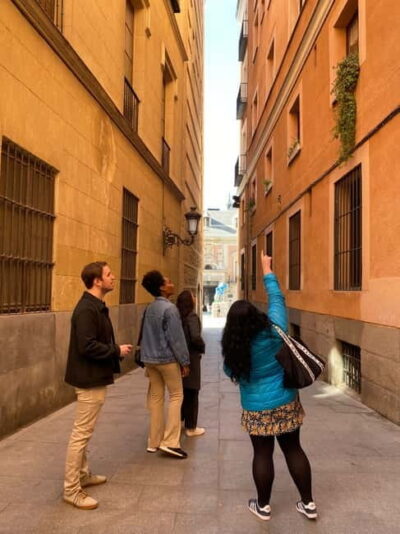 ★ 4.9Welcome to Madrid Guided Walking TourFrom $28984 reviews
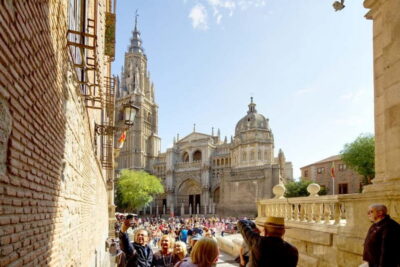 ★ 4.06-Hour Day Trip to Toledo with Guided Walking TourFrom $28865 reviews
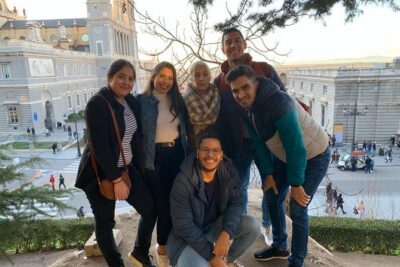 ★ 5.0Madrid Historical Walking TourFrom $3721 reviews
Try another angle on the same itinerary