

REVIEW · TOURS
12-Day Morocco and South of Spain Tour from Madrid
Two countries in one trip can work. This 12-day Morocco and South of Spain tour strings together Andalusia and Morocco with guided sights, hotel stays included, and a memorable Strait of Gibraltar ferry crossing.
I especially love two guided moments: the Mezquita-Cathedral in Cordoba and the morning walk in Fez’s Medina (including the Mellah area and key gates). You also get major set pieces on schedule, like Seville’s Cathedral and the Alhambra in Granada.
One drawback to plan for: you spend a lot of time on the coach, and Morocco adds extra transit time for ferry, customs, and transfers. If you hate travel days, this itinerary may feel like it is always in motion.
Key highlights to know before you go

- Cordoba Mezquita, Seville Cathedral, and Alhambra are included with entrance tickets.
- Ferry crossing the Strait of Gibraltar sets up the Morocco leg in a big, visual way.
- Imperial cities in Morocco are grouped logically from Fez to Rabat to Marrakech, then Casablanca and Tangier.
- Casablanca’s Hassan II Mosque is on the route, plus stops around the Corniche and other districts.
- Granada and Toledo close strong with the Alhambra complex and a guided old-town walk.
- Bilingual escort and guided visits run in English and Spanish, with a maximum of 50 travelers.
Keep the day moving with these well-rated choices around Madrid.
- Madrid: Tour Bernabéu Entry Ticket★ 4.5 · 21,573 reviews
- Madrid: Prado Museum Entry Ticket★ 4.6 · 17,509 reviews
- Madrid: “Emociones” Live Flamenco Performance★ 4.8 · 12,866 reviews
- Madrid: Panoramic Route City Tour★ 4.1 · 12,259 reviews
The big idea: Spain plus Morocco, with the ferry doing the heavy lifting
This tour is built around a simple rhythm. You start in southern Spain, then cross to Morocco by ferry, and later return through Granada and Toledo before heading back to Madrid.
That middle section matters, because it shapes your expectations. In Spain, the sights feel walkable and compact. In Morocco, you will move fast between cities, and the main “experience” is often the contrast of streets, markets, and monuments from place to place.
The payoff is that you do not just see one country. You compare them in the same trip, with Moorish-era architecture, Islamic-era city planning, and very different travel textures all in one plan.
How the 12 days actually feel: lots of seeing, plus some needed breathing space

The itinerary is intense but not chaotic. Most days pair a guided segment with time to wander on your own, and you get hotel nights in central areas.
Still, you should expect full travel days. The coach takes you between cities, and Morocco includes time tied to customs and ferry schedules. One practical trick is to treat your free time as “window-shopping, not deep exploration,” especially in Morocco where the day can start early and end late.
Walking is described as moderate, so you are not looking at full-day hikes. But you are on your feet for medina streets, viewpoint stops, and old-town wandering, so comfortable shoes are not optional.
Day 1 into Day 2: La Mancha intro, then Cordoba and Seville’s big monuments
The first day starts with a drive through La Mancha, Don Quixote country, with a short stop at Puerto Lápice. You also pass through the Despeñaperros natural border on the way into Andalusia, which helps turn a long drive into something you can actually look at.
Then comes Cordoba, and this is one of the clearest “worth it” moments on the whole trip. The tour includes an entrance visit to the Mezquita-Catedral de Córdoba, plus time moving through nearby areas like the Jewish Quarter streets. If you love architecture that looks layered, this is the right place to start.
By the end of Day 1, you ride on to Seville for your overnight. On paper it is just transit, but in practice it helps you arrive in the evening and wake up ready for the city.
Day 2 is Seville at full volume. You start with the Cathedral of Seville, described as the second-largest Catholic cathedral in the world after St. Peter’s in Rome, and that scale hits you even if you are not a cathedral nerd. After that you head into Barrio Santa Cruz, then slow down with Maria Luisa Park and the Plaza de España.
My practical take: this day gives you both the “wow” buildings and the softer strolling moments. It is a strong way to acclimate after the travel day and before the pace spikes again.

Day 3: Ronda’s viewpoint, then Costa del Sol for a night of coastline calm

Day 3 shifts gears. After breakfast you drive past typical villages and reach Ronda, with free time to admire the valley and mountain views. Ronda sits up in a way that makes short stops feel dramatic.
In the afternoon you continue to the Costa del Sol area for your hotel night. This is a useful placement because it gives you a quieter base before you cross into Morocco. It is not a deep beach holiday, but it does let you reset your body clock a bit.
If you want one gentle tip, it is to use this day to plan your ferry day essentials. Make sure you know where your passport is, you have any medication ready, and your day bag is easy to grab.
Day 4: Tarifa and the Strait of Gibraltar ferry, then Fez arrives
Day 4 starts on the Spanish side at Tarifa (or Algeciras), with a short ferry crossing toward Africa. You will also clear customs and then continue by bus via Larache to Fez, described as one of the Imperial Cities.
There are two things to understand about Fez when you arrive. First, the city is old and traffic patterns can be confusing, so transfers matter. Second, your first day in the medina rhythm is usually more about orientation and getting settled than soaking in everything in detail.
The itinerary keeps you moving, but it also sets up a good structure: you arrive, you settle, and you get a real guided day the next morning.
Day 5: Fez Medina, Mellah, and Bab Bou Jelous, with a built-in walking plan

Day 5 is a highlight day for many people for a reason. You have a guided morning city tour that includes major areas of old Fez, with stops tied to history and city layout.
You visit the 7 gates of the Royal Palace area, you see the Mellah (the Jewish Quarter), and you head toward Bab Bou Jelous. Then you do a walking tour of the Medina, noted as a World Heritage Site.
This is where you should pay attention to how your guide frames the streets. In Fez, it is less about checking off landmarks and more about understanding how the city functions, why certain gates matter, and how neighborhoods were shaped.
Your afternoon is free, and that is important. It lets you process what you saw in the morning and come back to the parts you care about most, like crafts, alley views, or the energy of the souks.
Day 6 and Day 7: Rabat’s monuments, then Marrakech’s squares and souks

Day 6 begins in Rabat, Morocco’s diplomatic and administrative capital. Your visit includes exterior views of the Royal Palace, the Mausoleum of Mohamed V, and the Hassan Tower.
Then you move on to Marrakech for dinner and overnight. The transition is quick, but it works because each city is giving you a different “face” of Morocco.
Day 7 is Marrakech with a classic mix. You start with Menara Gardens and Pavilion, then see the Koutoubia Mosque from the outside. In the afternoon you walk around the Medina and head to Jma El Fna Square, with entertainers and street life that turns the plaza into an open-air stage.
One detail I like about this setup is that it does not demand you plan an evening. The square is part of the day’s structure, so you get the atmosphere without hunting for it.
Day 8: A full Marrakech day at leisure, and how to use it well

Day 8 is your flexibility day in Marrakech. You get a day at leisure, and the tour mentions optional excursions if you ask staff on site.
This kind of day is not just downtime. It is where you decide what Morocco means for you. If you love architecture, you can focus on palace-style exteriors and nearby areas. If you love crafts, this is when you can spend real time in market alleys.
My advice: use at least some of the day to slow down and sit. Jma El Fna is loud and visual, but you also need quieter breaks so the trip does not feel like constant motion.
Day 9: Casablanca panoramic city view, including Hassan II Mosque
Day 9 takes you to Casablanca, described as Morocco’s industrial and economic hub. You get a panoramic visit, including the Great Mosque of Hassan II, plus stops around the Corniche and other notable districts like United Nations Square, Habbous neighborhood, and Anfa residential areas.
Even if you are not a mosque devotee, Hassan II Mosque is a strong sight stop because it is about scale and setting. You are also seeing how Casablanca differs from the older medina cities. It feels more cosmopolitan and spread out.
Day 10: Tangier Casbah, then back to Costa del Sol by port transfer
Day 10 starts with Tangier. You go to the Tangier Casbah, then transfer to the port for the departure back to Tarifa.
The itinerary then routes you to your hotel in the Costa del Sol. This is a long transition day, so it helps to keep your expectations simple. Think of it as “finish Morocco strong, then rest in Spain.”
When you return to Spain, you are not just changing countries. You are switching travel pace and language context again, so give yourself an evening to settle in.
Day 11: Granada’s Alhambra and Generalife, plus an optional Sacromonte flamenco night
Day 11 is your major Spain finale. You head to Granada and visit the world-famous Alhambra complex, including the Generalife Gardens.
The Alhambra and Generalife combination is exactly the kind of pairing that makes this tour feel complete. The complex gives you the defensive, royal side. The gardens give you the water, views, and calmer geometry that made the site famous enough to inspire writers.
After the main visit, you get afternoon leisure. There is also an optional Gipsy Flamenco show at Sacromonte Square if you want that cultural extra.
My practical note: if you choose the flamenco, keep the timing in mind so you do not feel rushed right after the Alhambra day. You will be tired in a good way, and you want your evening to be fun, not a sprint.
Day 12: Toledo old town, where three cultures meet on the streets
Day 12 returns you to Spain’s older layered identity with Toledo, listed as a World Heritage City. You get a short guided tour through the old town’s narrow streets.
The tour framing points to the way Christians, Moorish, and Jewish communities historically shared space in Toledo. Even with a short visit, you feel the mixture in the city’s architecture and layout.
This last day is a nice way to end. It brings you back to the “history you can walk through” style of sightseeing, just before you head back to Madrid.
Guides, language, and group size: what you can reasonably expect
The tour includes a bilingual escort during the trip in English and Spanish. In the Spain portion, guides named in past experiences include Ismael, Ellie, Grace, and Margarita, and they are described as helpful and organized.
In Morocco, there can be different local guides in each city, and one escort name that shows up in past experiences is Larami. This matters because your experience depends on how smoothly the language handoffs work on the days with more transfers.
The tour also caps group size at 50 travelers. For an itinerary this big, that is a workable number. It keeps you from feeling lost in a huge crowd, but it still means you are not getting private-speed touring.
Practical tip: if you speak Spanish, you will get more from Medina time. If you do not, the coach days and the guided monuments become even more important. Plan to ask questions when you have the guide’s attention, not when you are stuck in a line.
Price and value: what $2,425.18 buys you, and what to watch for
At $2,425.18 per person, you are paying for a lot more than city sightseeing. You are covering cross-border travel, coach transport from Madrid to Morocco and back, ferry crossing, and a full set of hotel nights.
You also get tangible inclusions. The tour includes lunch, breakfast (11), and dinner (5). Guided visits are included for Cordoba, Seville, Granada, Toledo, Fez, Meknes, Marrakech, Casablanca, and Tangier. Entrance tickets are included for the Cordoba Mosque (Mezquita), Seville Cathedral, and the Alhambra.
There is also travel insurance and air-conditioned coach transportation.
What you should watch: hotel class varies by country, and hotels are described as 3 or 4-star centrally located. Some past experiences flagged that comfort can differ, especially in Morocco when it comes to room condition and climate control. If you travel with strong needs around air conditioning or quiet rooms, plan to double-check your expectations and pack light comfort items.
Also, not all meals are included. The tour lists food inclusions, but it also says beverages are not included unless specified. In practice, you will want spending money ready for lunches or drinks on free-time stretches.
Where the itinerary can feel tight: bus time and long transfer days
Even when everything is organized well, this route is big. You cross multiple regions in Spain, then you chain together several Moroccan cities, then you return and still fit Alhambra and Toledo.
The longest-feeling parts are usually the days around the ferry and border crossing, plus the coach segments that connect cities. If you are sensitive to travel fatigue, you will feel this most during Morocco’s middle stretch.
A good strategy is to keep a consistent routine. Sit near the front if you can for smoother rides, bring something for motion comfort, and keep your day bag packed so you are not rummaging during tight transitions.
Also, the itinerary includes a moderate amount of walking. That is manageable, but it means you should avoid arriving at your next stop with blisters or worn-out shoes.
Money-saving mindset: how to spend your free time wisely
The free afternoons are real chances to make the day yours. In Fez, your afternoon free time can help you revisit the Medina areas you liked best. In Marrakech, leisure time is ideal for choosing between market time and quieter sightseeing.
In Seville and Granada, free time is shorter but useful. You can take advantage of the parks and viewpoints, or just slow down with a drink and watch how the city flows.
If you plan optional activities, the tour mentions possible choices like an optional dinner with show in Fez and an optional flamenco show in Sacromonte. I would treat these as add-ons, not requirements. If you keep them flexible, you will enjoy the day more because you are not pressured to fit one more thing in.
Should you book this tour?
Book it if you want one trip that checks off major icons in both Andalusia and Morocco. The included visits to Cordoba’s Mezquita-Cathedral, Seville’s Cathedral, and Granada’s Alhambra make the route feel efficient, and the itinerary covers a wide range of city styles, from medinas to modern districts in Casablanca.
Consider alternatives if you want a slow travel pace. This is a “see a lot” itinerary, and the coach time plus Morocco transfers can feel heavy if you prefer lighter days.
My final take: if your idea of a good trip includes big monuments, medina wandering, and the thrill of crossing to Africa and back in one sweep, this tour is a strong value for what it includes. Just go in with realistic expectations about travel time, pack comfortable shoes, and keep your passport details ready early.
More Tours in Madrid


More Tour Reviews in Madrid

Fresh ways to see Madrid
- Tour to Toledo & Madrid CitySight Seeing Tour
- 2-Day Guided Tour to Cordoba and Seville from Madrid
- Private Transfer from Madrid Airport to Madrid Hotels
- Wine Tasting and Flamenco Master Class in Madrid
- Prado Museum and Royal Palace Private Tour in Madrid
- Monastery Royal Barefoot Visit with entrance without waiting for queues
More ways into Tours
 ★ 4.5Tour Bernabéu Entry TicketFrom $4121,573 reviews
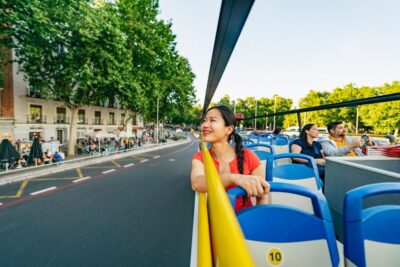 ★ 4.1Panoramic Route City TourFrom $3912,259 reviews
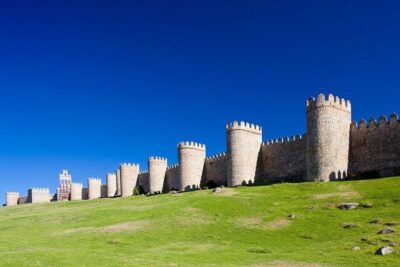 ★ 5.0Avila & Segovia Tour with Tickets to Monuments from MadridFrom $819,762 reviews
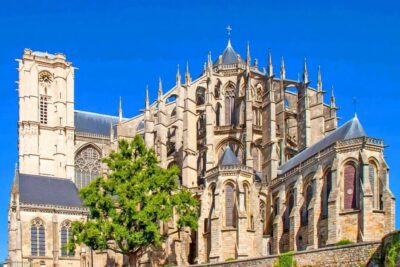 ★ 4.7Segovia and Toledo Tour, Alcazar, and CathedralFrom $487,797 reviews
 ★ 4.7Royal Palace Expert Guided Tour with Skip-the-LineFrom $406,986 reviews
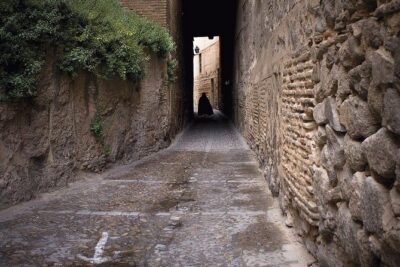 ★ 5.0Toledo Tour from Madrid: Cathedral, Synagogue & St. Tome’s ChurchFrom $816,784 reviews
 ★ 4.5Toledo Half or Full Day Tour with Optional Lunch from MadridFrom $645,807 reviews
 ★ 4.6Toledo & Segovia Full Day Guided Tour with AlcázarFrom $454,394 reviews